Manila & nearby
Adding a Battery to Existing Solar in Manila: A Retrofit Buying Guide
Want to add a battery to existing solar in Manila? Check inverter compatibility, backup circuits, warranties and the complete retrofit scope.
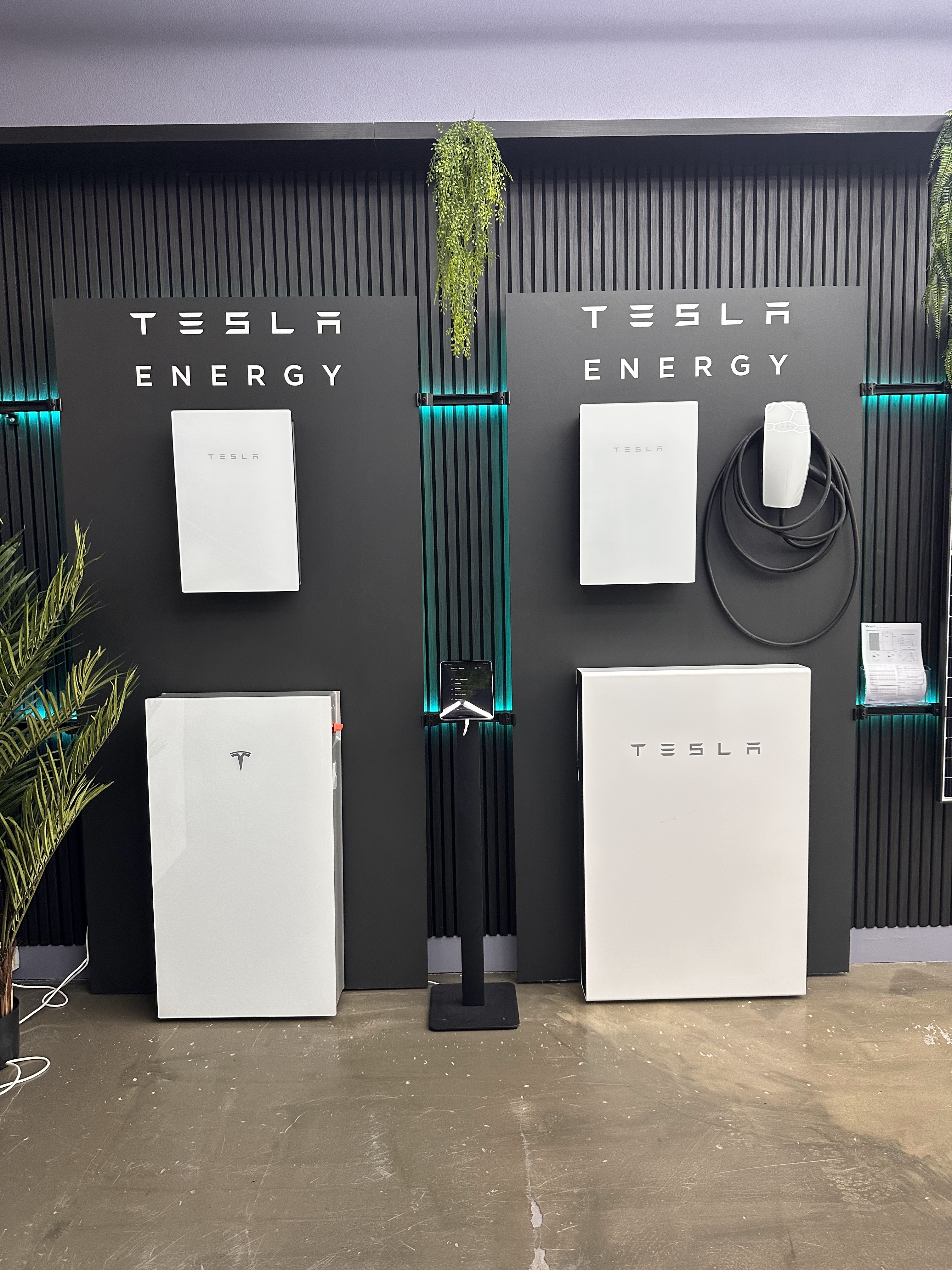
Adding a battery to a working solar system can be a different purchase from buying solar and storage together. The existing inverter, electrical layout, approvals and warranties shape the options. A battery advertisement cannot establish that it will connect to the equipment already on your wall.
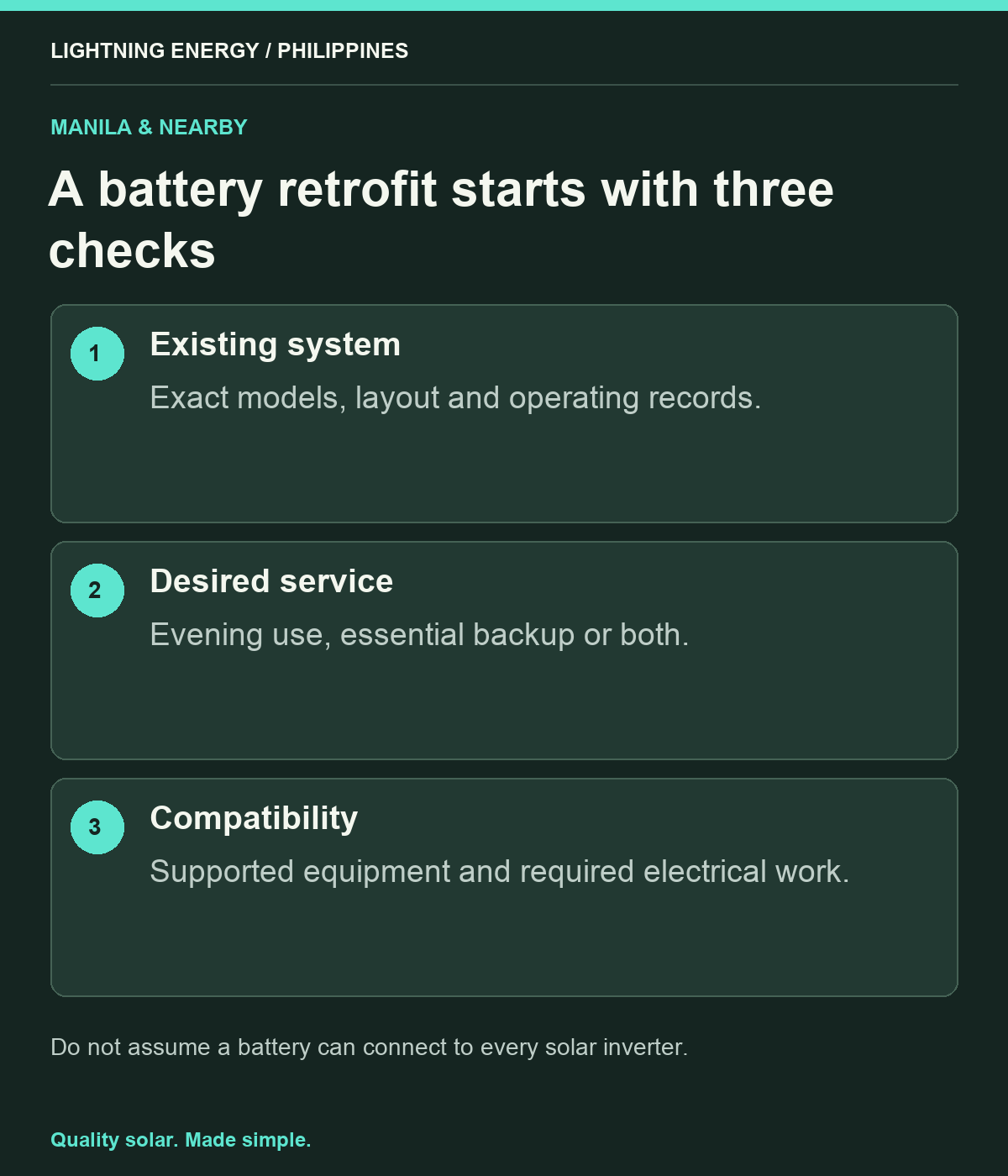
For a Manila household, the first useful step is an audit of the current system and a clear statement of the service you want: evening energy use, selected-load backup, or both.
Identify the existing system accurately
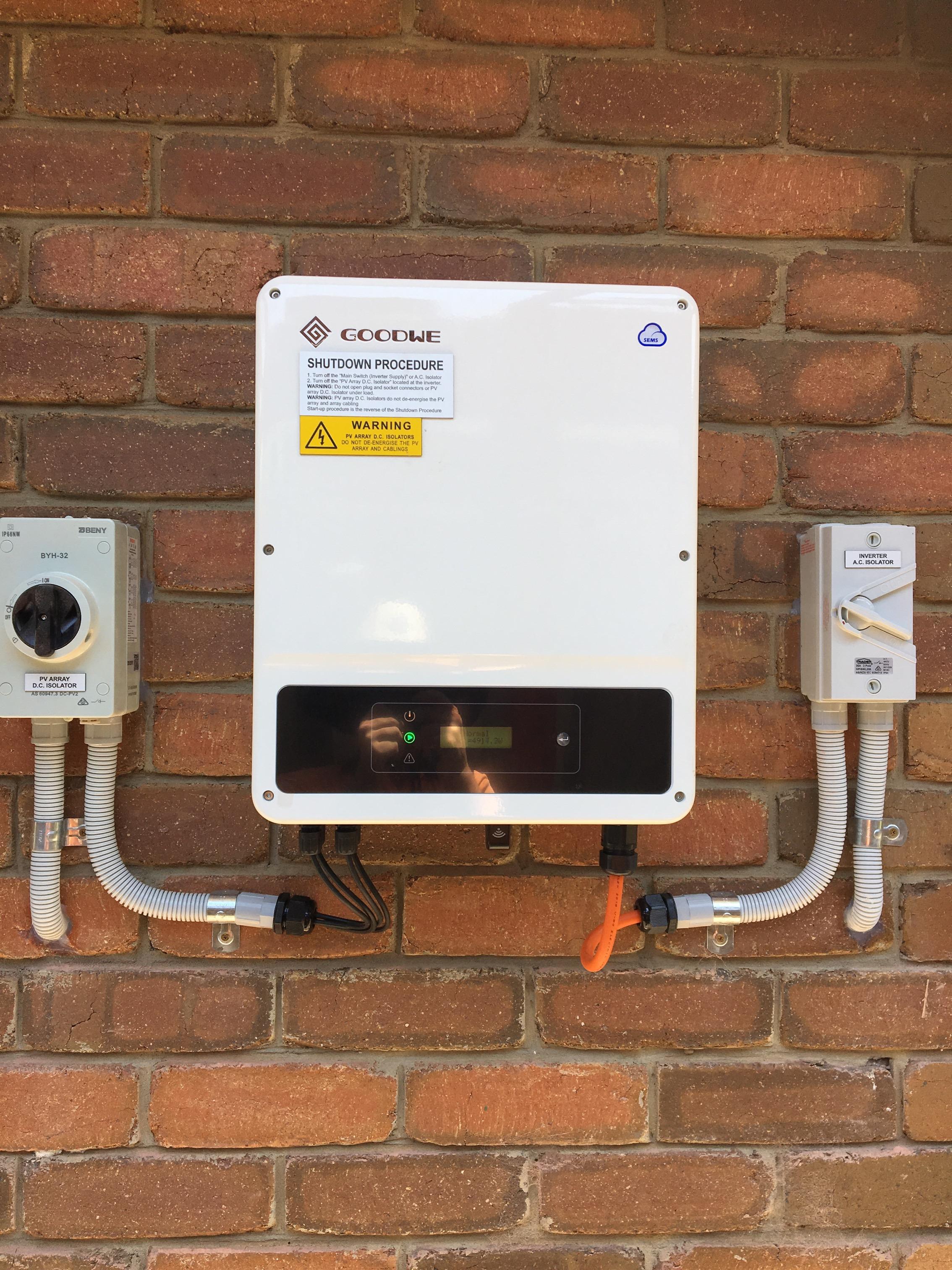
Collect the inverter model and suffix, panel schedule, commissioning documents, monitoring history and current utility arrangement. Include the installation date and any changes made since handover. Safe label photographs can help identify equipment without opening electrical enclosures.
The US Department of Energy’s guide to existing solar systems recommends reviewing production and warranty records. [1] For a retrofit, those records also provide a baseline against which the new work can be evaluated. Ask the original installer for missing documents before accepting a proposal based on assumptions.
Define what the battery should accomplish
Write an evening-use target separately from the outage-backup brief. Shifting some stored energy into the evening and keeping selected circuits running through a brownout may require different settings and electrical work. Tell the designer which outcome matters most if there is a trade-off.
For example, a fictional home may prioritise connectivity and refrigeration during outages while using only surplus capacity for routine evening consumption. Another home may accept a smaller emergency reserve. Ask the proposal to show the chosen operating strategy rather than describing every available kilowatt-hour as serving both purposes simultaneously.
Require compatibility evidence for the exact models
Ask the designer to identify the supported battery-inverter combination, communications requirements and any firmware conditions using current manufacturer documentation. A shared brand name, nominal voltage or connector appearance is not sufficient proof. Record the exact equipment that will be supplied.
If replacing the existing inverter is proposed, ask why that option was selected and what it changes in warranty, monitoring and system operation. If an alternative coupling arrangement is proposed, request a clear explanation of its limitations. The homeowner should understand the design choice without being expected to configure electrical equipment.
Include the backup function in the actual scope
The US Department of Energy explains that outage operation depends on the appropriate inverter and storage configuration. [2] Do not assume that connecting a battery alone creates household backup. Ask which circuits will be supplied and what switching and protection work is included.
Request a load assessment covering simultaneous demand and starting requirements. Ask how the system behaves at low charge and whether the selected equipment supports the required transfer characteristics. If an appliance cannot tolerate an interruption, raise that requirement explicitly rather than assuming a household battery acts as a dedicated UPS.
Check warranties and approvals before changing equipment
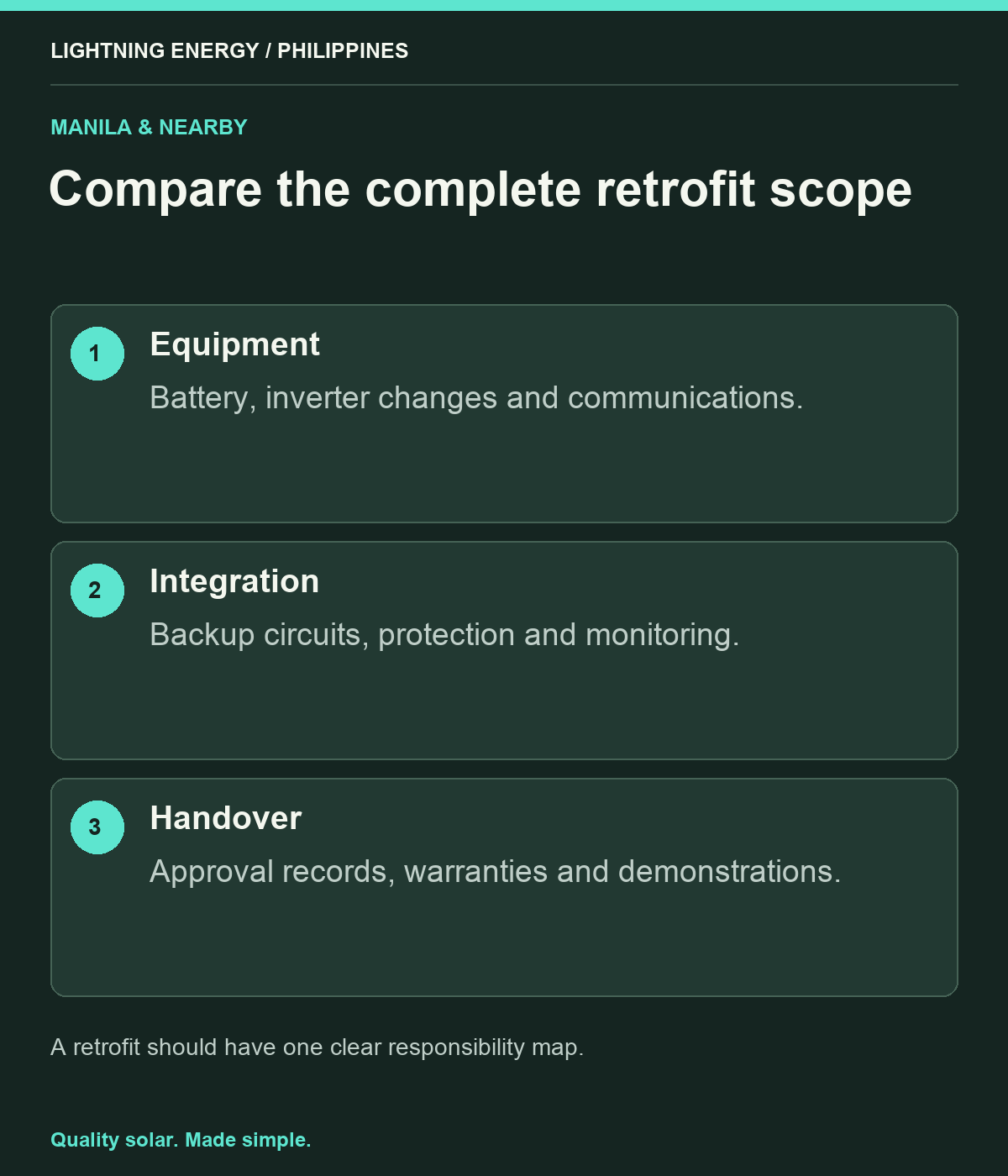
Ask both the retrofit provider and the relevant warranty issuer how the proposed modification affects existing coverage. Keep equipment warranty, installation workmanship and any new contractor responsibilities separate. The quote should identify who investigates a fault if old and new equipment are involved.
Have the responsible professional confirm any utility or local approval updates required by the revised system. Keep the as-built documents current after the work. An existing solar installation is useful background, but it does not automatically authorise every later capacity or operating change.
Compare the complete retrofit with the alternative
Request an itemised price for equipment, electrical modifications, monitoring integration, commissioning and any removal or disposal work. Compare the retrofit against a clearly defined alternative, such as retaining the current system or replacing specified components. Use the same load and backup brief for each.
For a Lightning Energy Philippines enquiry, provide your Manila-area address, exact inverter model, system records and the service you want from storage. Confirm whether the team supports that equipment before arranging a visit. A useful retrofit recommendation explains compatibility, operating limits and responsibilities in writing, then demonstrates the agreed function at handover.
Sources & further reading
Sources used for this guide. Policy and product details should be checked for your particular installation.
- US Department of Energy — Buying a House with Solar PanelsAccessed 27 September 2026
- US Department of Energy — Solar and Resilience BasicsAccessed 27 September 2026