Product reviews
AIKO-G650-MCH72Dw Review: Does a 650W Panel Suit Your Philippine Roof?
A research-based review of the exact 650W AIKO module, focusing on roof fit, rear-side assumptions and electrical compatibility.
A high-wattage module can look compelling in a solar quotation. On a residential roof, the more useful question is how many correctly installed modules fit the usable area. The AIKO-G650-MCH72Dw illustrates why module efficiency, dimensions and handling deserve attention alongside the wattage headline.
This is a research-based review prepared on 27 September 2026, with no hands-on testing. Lightning Energy Philippines publishes this guide as a solar installer, so it has a commercial interest in installation enquiries. The assessment separates documented features from our judgement about household fit.
The exact product and Philippine listing
SolarMall PH lists a 650W AIKO-G-MCH72Dw panel offer; confirm the complete G650 nameplate before purchase. [1] This records an online offering visible during our research, not confirmed inventory, an endorsement of the seller, or a claim that Lightning Energy stocks the product. Obtain a dated quotation with the complete model code before paying.
The technical reference for this review is AIKO — AIKO-Gxxx-MCH72Dw datasheet, 12 June 2024. [2] A similarly named model, a regional revision or an updated generation may have different limits. Require the delivered nameplate and supplied documentation to agree with the quotation.
The verified specification and its limits
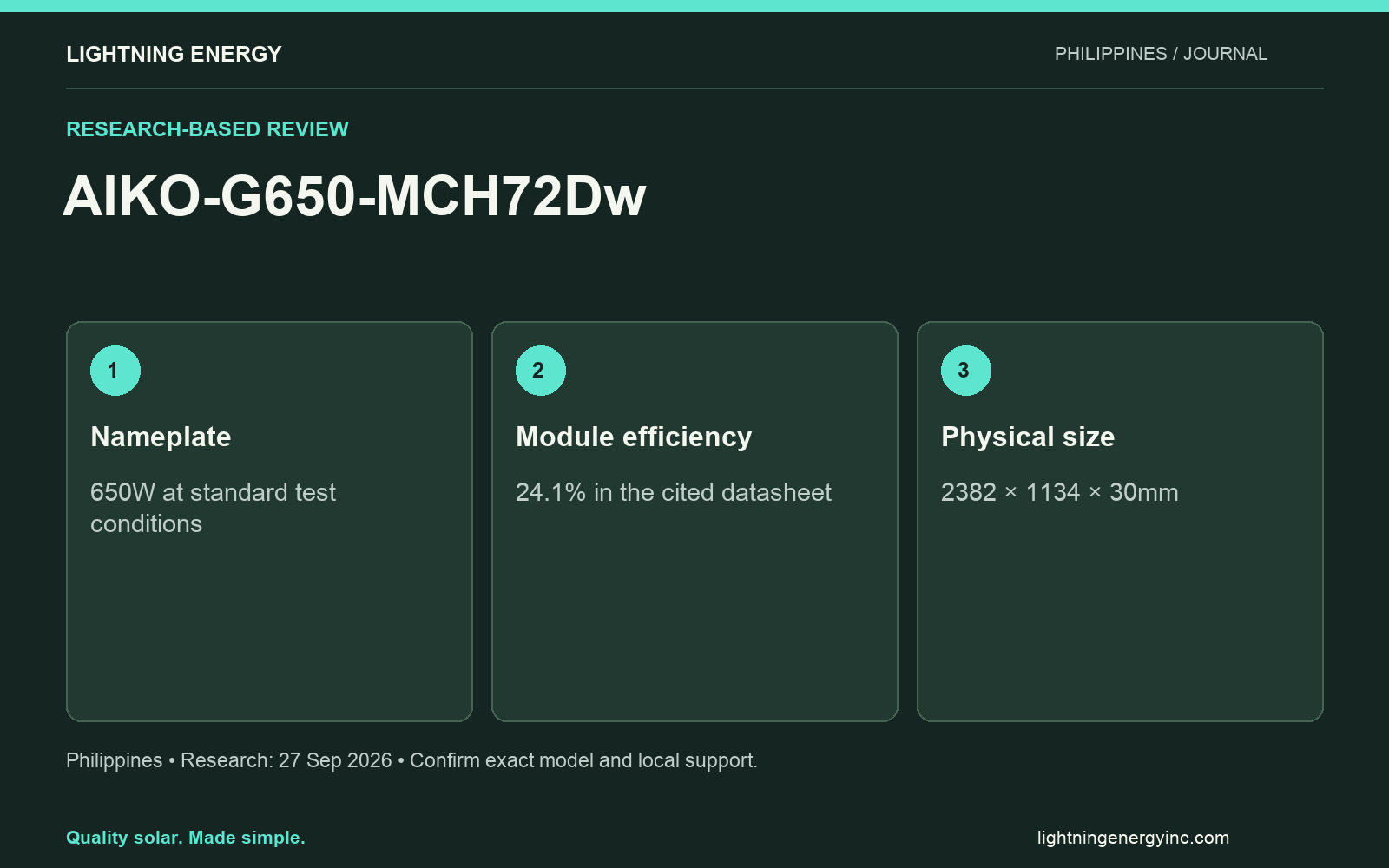
The manufacturer’s cited datasheet includes AIKO-G650-MCH72Dw at 650W under standard test conditions, with 24.1% module efficiency and dimensions of 2382 by 1134 by 30mm. It identifies the family as an N-type ABC dual-glass product. [2] These figures describe a particular documented module, not continuous output on a hot rooftop.
The source is an Australian-market datasheet. We use it to identify the exact technical variant, not to imply that Australian warranty or approval arrangements apply in the Philippines. Ask the local supplier for the documentation governing the actual imported batch.
Why a large panel can help—or complicate—a roof
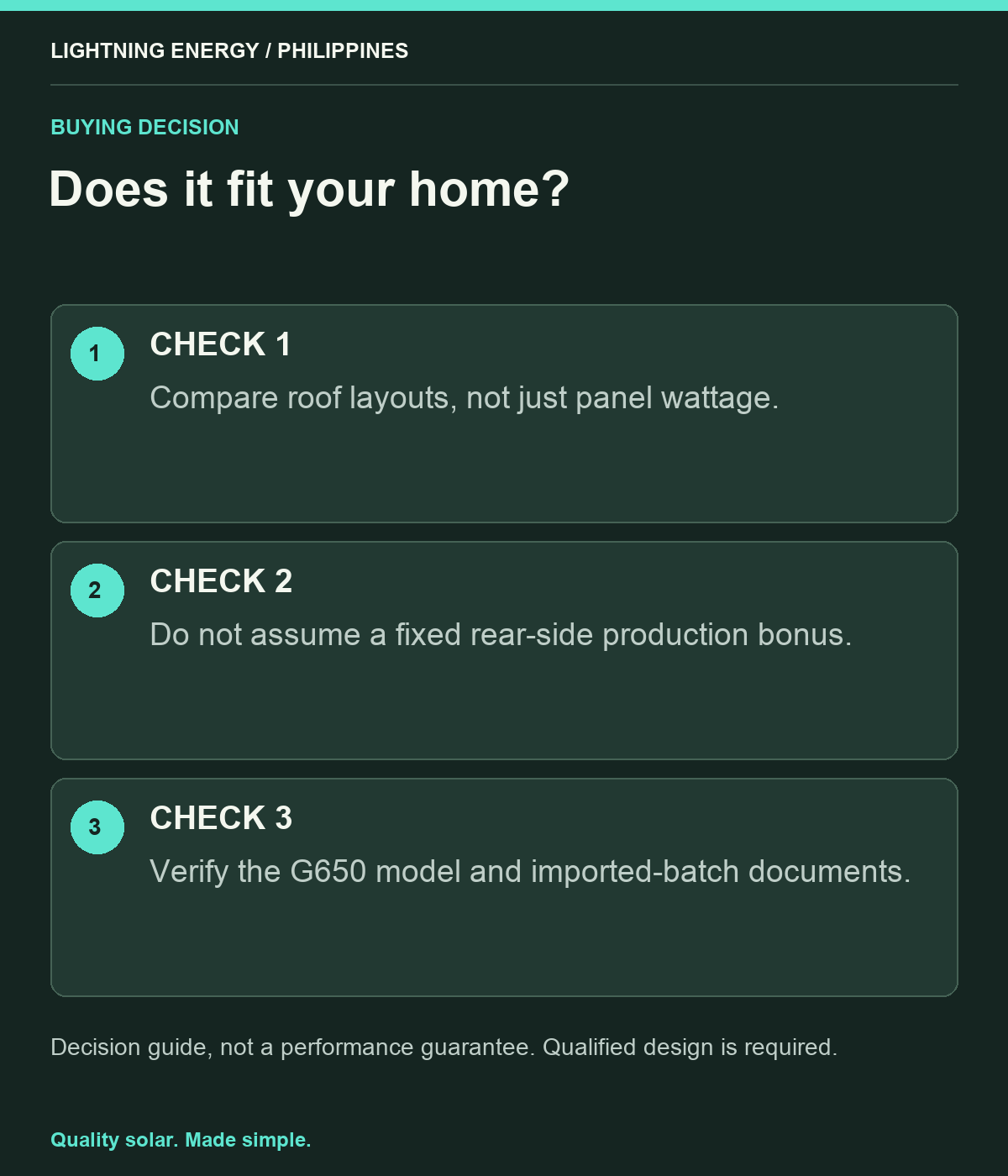
A relatively high output per module may reduce the module count for a target array rating. That can be useful on a sufficiently large, uncomplicated roof. It does not automatically produce the best layout on a small roof interrupted by hips, vents or access requirements.
Ask your designer to compare the actual drawing with a smaller-format alternative. A larger rectangle can leave unusable strips where a different format might fit better. The winning design is the one that fits legally and physically, controls shading and supports practical installation, rather than the one with the largest individual label.
Rear-side production needs a credible physical explanation
The manufacturer identifies this as a bifacial product. [2] Any claimed benefit from the rear needs an explanation of the proposed mounting arrangement, clearance and light reaching that surface. A close-mounted residential roof is not equivalent to an open elevated array with a reflective surface underneath.
Ask for the estimate with the rear contribution removed as a sensitivity check. If the project still works under that conservative assumption, the decision is easier to defend. Avoid paying a premium solely on a generic bifacial percentage that the installer cannot connect to your roof conditions.
Check the inverter and mounting system before ordering
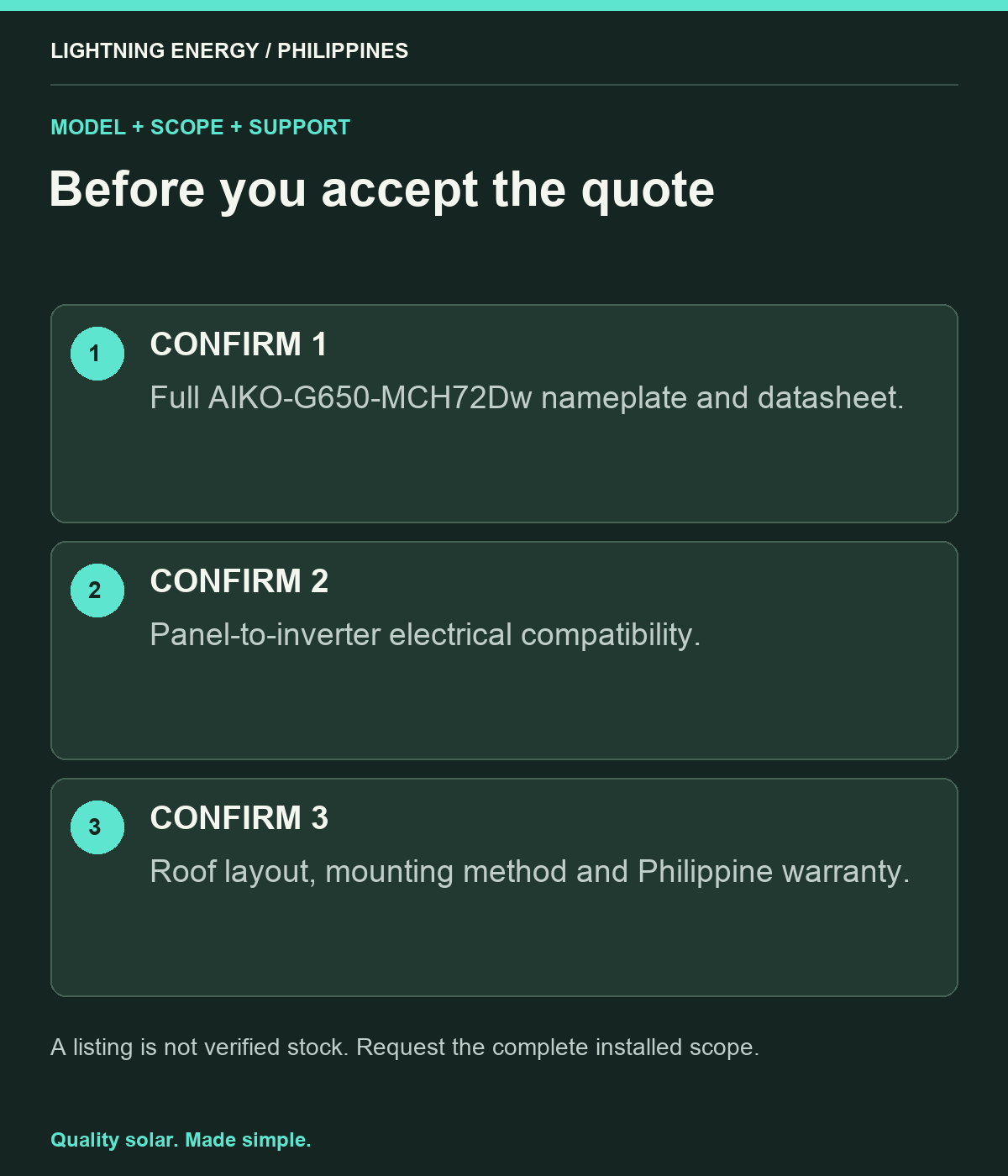
A module’s power rating does not tell you whether it fits the selected inverter input. Require calculations using the exact module voltage and current, planned string length and the relevant site conditions. The mounting supplier must also support the module dimensions, approved clamping arrangement and the proposed roof structure.
Handling deserves a practical conversation. Ask how modules will be moved onto the roof and protected during installation. A larger-format panel may influence access equipment and labour. These details belong in the installed quote, especially for narrow residential access or multi-storey properties.
Our verdict: promising on the right roof, not a universal upgrade
The G650 variant is worth evaluating where high module efficiency and a large clear roof plane can be used effectively. We would be more cautious on fragmented roofs or when the seller cannot tie the generic listing to the full model code. An exact delivered model is the foundation of a meaningful comparison.
Compare annual useful production and complete installed cost against a lower-wattage alternative using the same assumptions. Avoid ranking panels from wattage alone. The practical strength of this product becomes relevant only when the roof layout, electrical design and local supply documentation all agree.
What to put in your quotation request
The AIKO order should specify G650-MCH72Dw, the applicable batch paperwork and a scaled mounting layout. Ask the installer to record module serial numbers and photograph the finished array from a safe position. Resolve any changed wattage, dimensions or model suffix before accepting a delivery substitution.
For a roof-fit comparison, send Lightning Energy Philippines roof plans or photos and ask for layouts using this large module and a suitable smaller-format alternative.
- Full AIKO-G650-MCH72Dw nameplate and datasheet.
- Panel-to-inverter electrical compatibility.
- Roof layout, mounting method and Philippine warranty.
Sources & further reading
Sources used for this guide. Policy and product details should be checked for your particular installation.
- SolarMall PH — Philippine offeringAccessed 27 September 2026; stock not verified
- AIKO — AIKO-Gxxx-MCH72Dw datasheet, 12 June 2024Accessed 27 September 2026; verify delivered revision