Care & performance
Coastal Hotels: Make Solar Serviceability Part of the Specification
For coastal properties, exposure, equipment location and practical access belong in the purchasing decision.
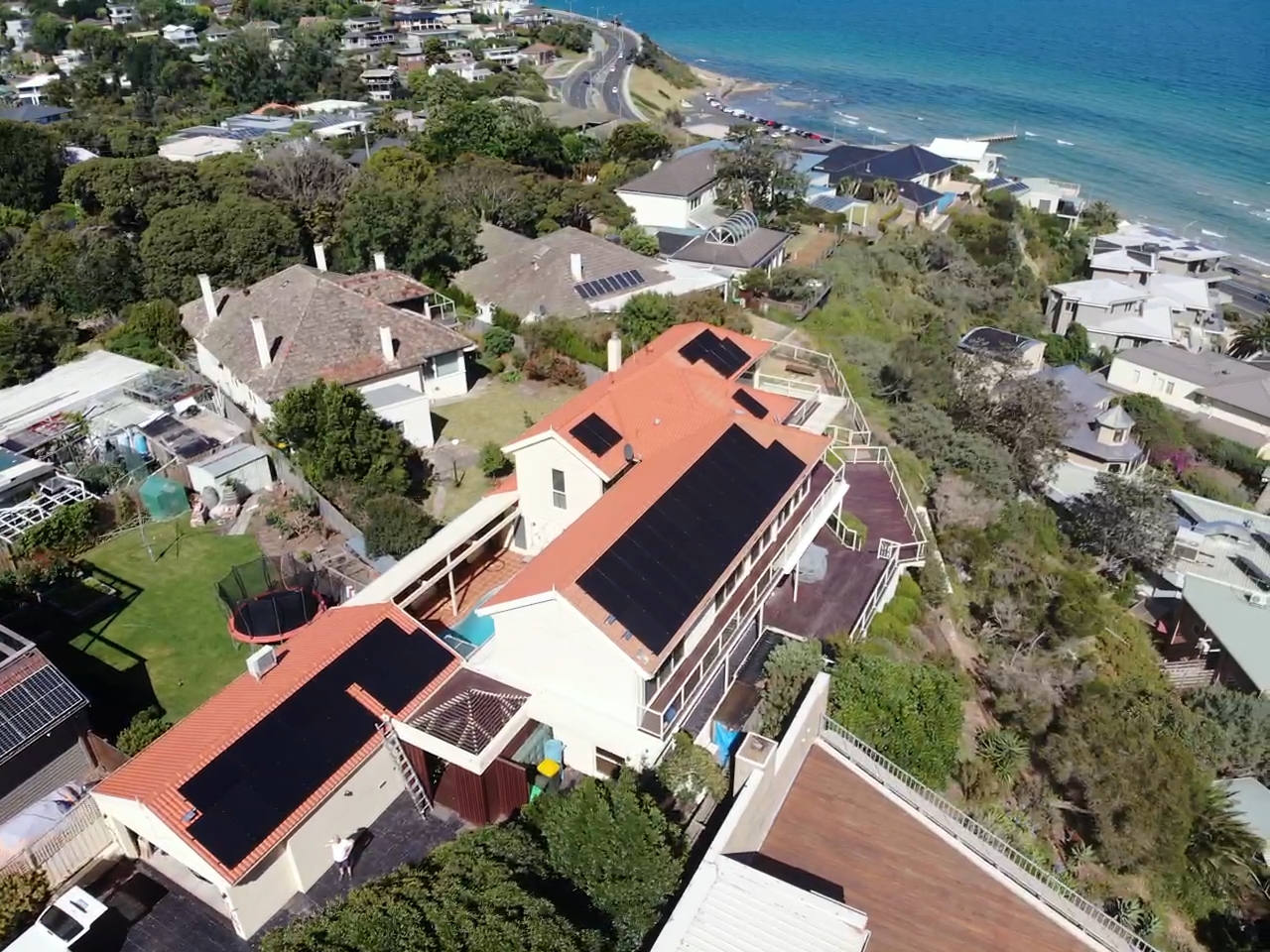
A coastal hotel is judged by its outlook and guest experience. Its solar system, however, must be judged by the conditions in which it operates and the support available when something needs attention. An attractive roof photograph does not reveal the full maintenance environment.
For Philippine coastal properties, the procurement brief should describe the site clearly and ask suppliers to respond with evidence for the proposed equipment and installation. The objective is not to label every coastal project difficult; it is to make location-specific responsibilities visible before the purchase.
Describe the actual exposure
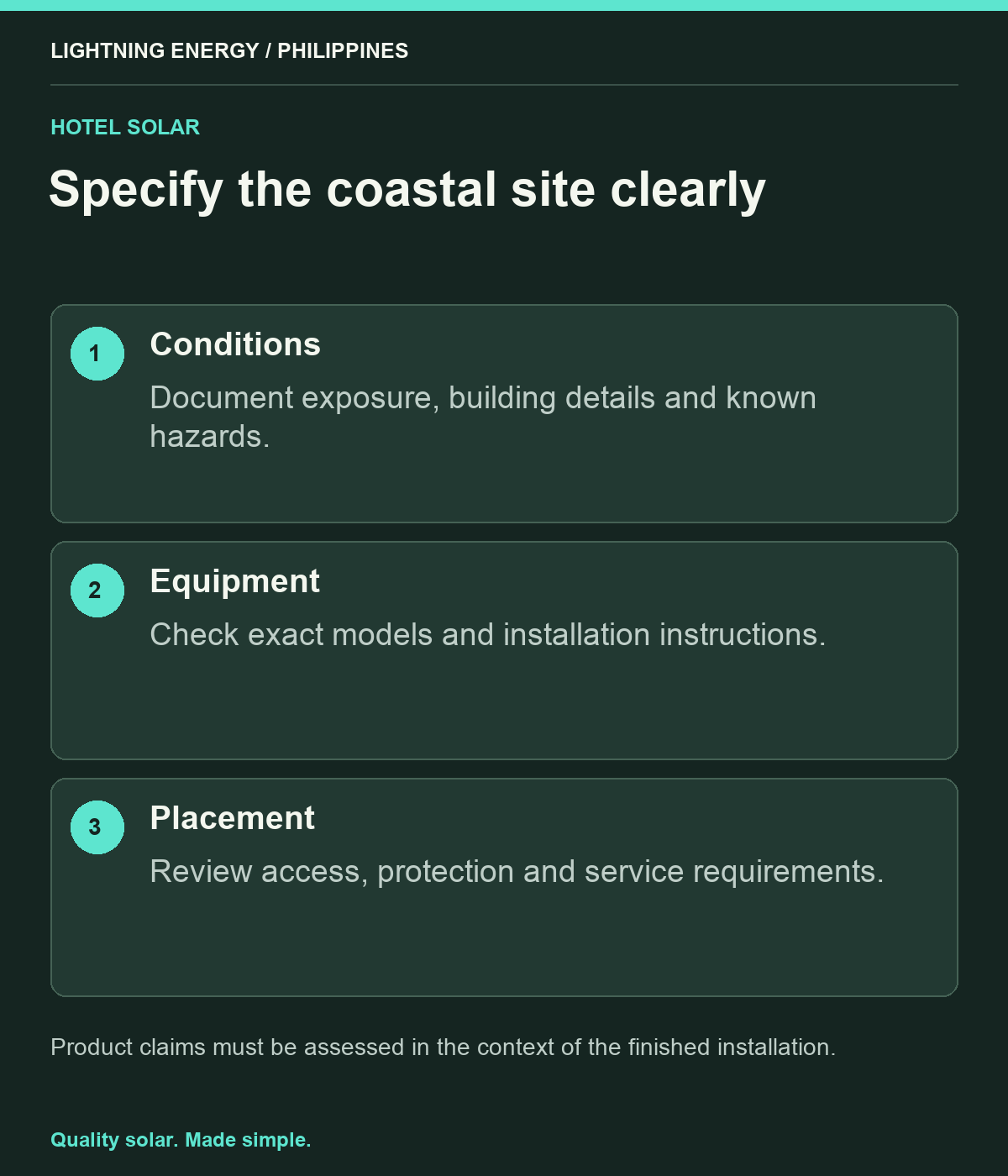
Give the designer the property's location, surrounding conditions, known flooding history and relevant building information. Do not substitute a generic distance from the sea for a professional site assessment. IEA's Southeast Asian climate work discusses heat, heavy rainfall and flooding risks to energy infrastructure. [1] Our practical recommendation is to document the conditions the project team must evaluate. The hotel's own records and the relevant professional assessments are more useful than a sales claim that a product is universally weatherproof.
Ask for equipment evidence that matches the installation
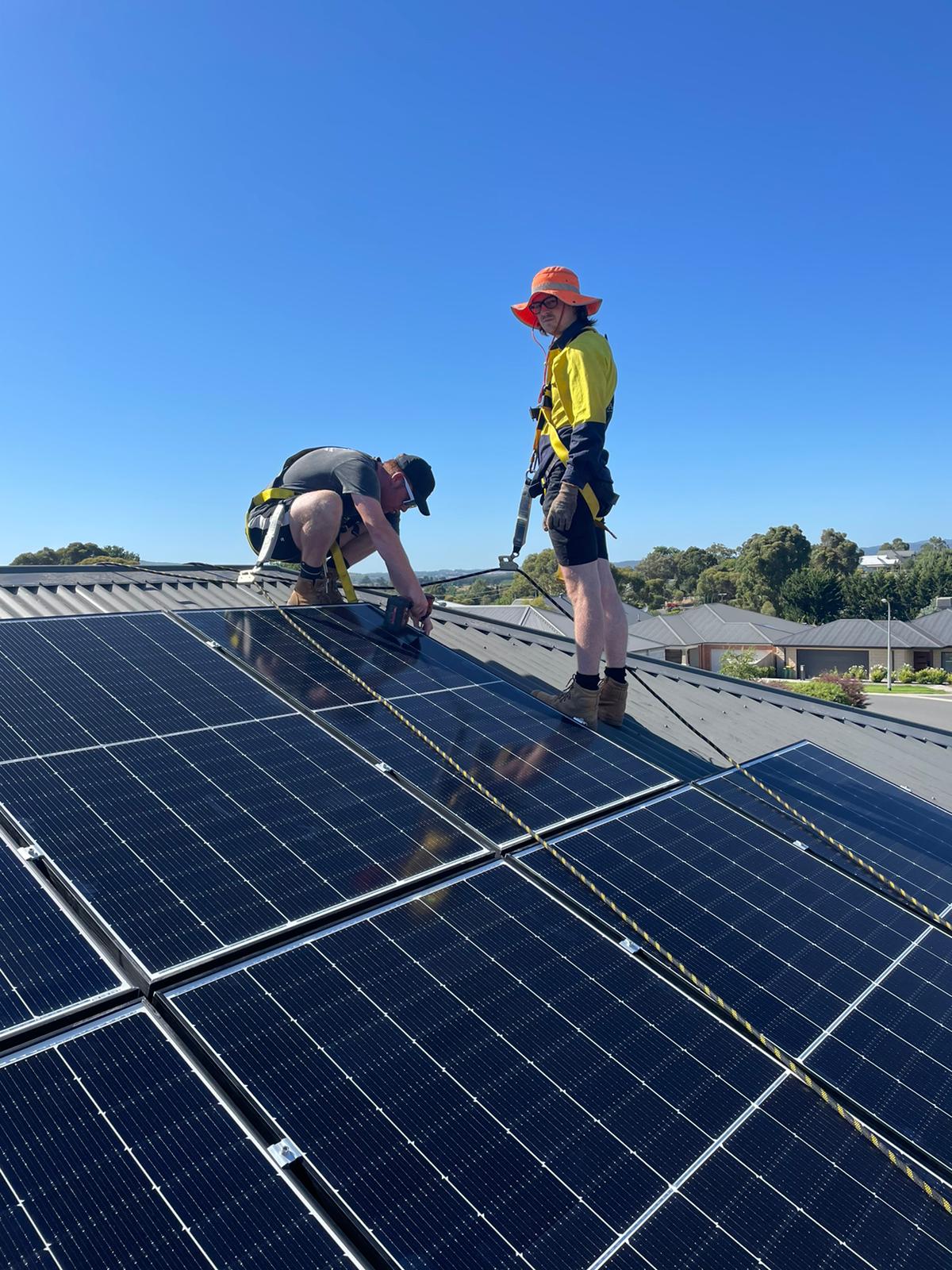
Request the exact model identifiers, manufacturer instructions and applicable documentation for the proposed location. Ask the supplier to explain any restrictions affecting placement, exposure or maintenance. Keep claims about product testing separate from claims about the finished installation. A suitable component still needs an appropriate arrangement with compatible connections, mounting and other site-specific details. The owner should receive a written explanation of the proposed scope rather than be expected to interpret a collection of certification logos alone.
Make access a design requirement
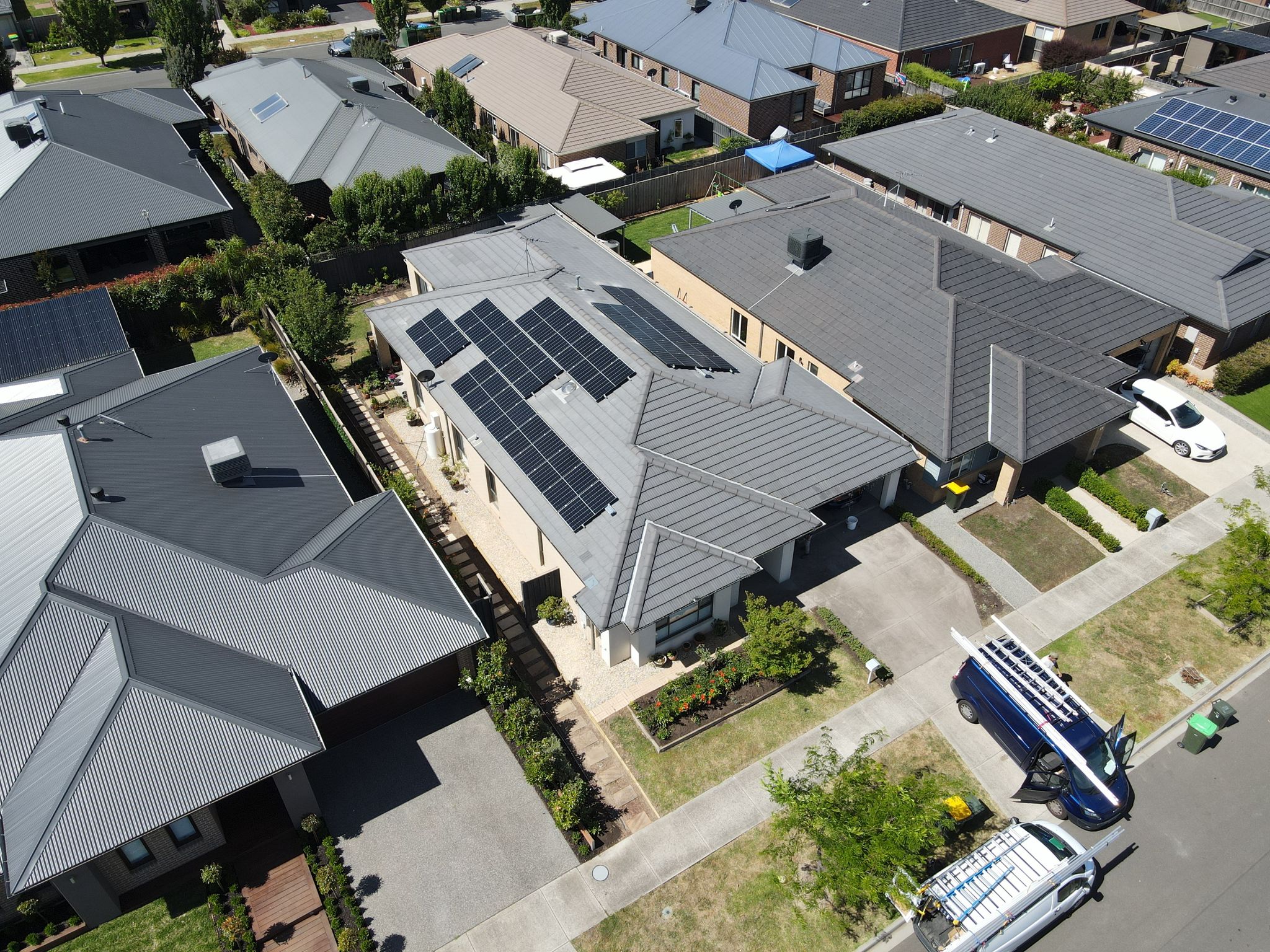
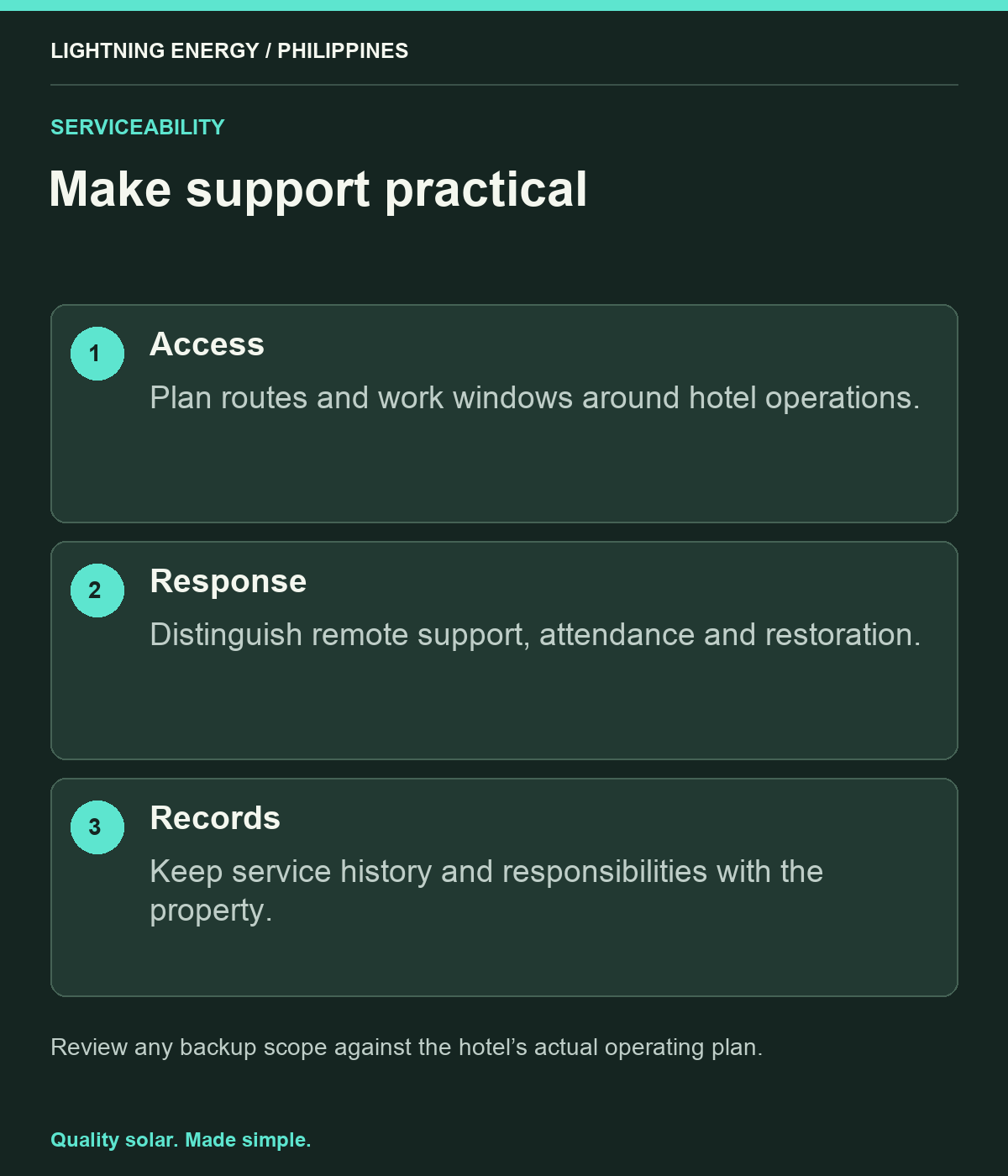
NREL's maintenance guidance connects system design and equipment specification with lifetime operating performance. [2] For a hotel, that means thinking about how qualified people will reach equipment without unnecessary disruption to guests. Identify routes, work areas and times when access is practical. Keep the relevant building and electrical professionals involved. A location that looks tidy in a rendering may be inconvenient to inspect or service; resolve that tradeoff while drawings can still be changed.
Separate guest comfort from protected services
If storage is proposed, define its role precisely. Supporting selected reception and communications functions is different from supporting every guest room or large building systems. Ask the designer to identify the actual circuits, operating limits and relationship with existing backup. Do not let an undefined promise of continuity become part of guest-facing marketing. The hotel's emergency and operating plans should be reviewed by the responsible people and remain aligned with what the installed system has been designed and tested to do.
Compare support at the property's location
Ask where service personnel and replacement parts would come from, what costs are included and how attendance is arranged. Distinguish a remote response from a site visit and from restored operation. Consider access constraints during busy periods and adverse weather without assuming a guaranteed delivery time. A maintenance agreement should name responsibilities and exclusions clearly. The most useful support promise is one the property team understands and can activate, not simply the longest warranty headline in a proposal.
Keep a record that explains changes
Track professional inspections, repairs and any alterations to the roof or nearby equipment. Note changes in hotel occupancy and operating hours when reviewing electricity performance. This helps distinguish an equipment issue from a change in the business. Keep records in the property's management system rather than only with an individual employee. When a manager leaves, the next person should be able to find the model list, service contacts and agreed process for arranging access without reconstructing the project from old messages.
Buy an ownership plan with the hardware
Bring the site's exposure information, bills, guest-service priorities and access constraints to Lightning Energy and the relevant project professionals. Ask for a proposal that explains equipment selection, installation scope and ongoing service. A coastal hotel solar project should fit the property throughout its operating life. The useful outcome is not a broad assurance that nothing can go wrong; it is a well-assessed installation with clear records and a practical way to maintain the services the hotel values.
Sources & further reading
Sources used for this guide. Policy and product details should be checked for your particular installation.
- IEA: Climate Resilience for Energy Security in Southeast Asia2024; accessed 27 September 2026
- NREL: Best Practices for Operation and Maintenance of Photovoltaic and Energy Storage Systems, third edition2018; accessed 27 September 2026