Across Asia
Indonesia’s Rooftop Quotas: A Reminder to Check the Connection First
Indonesia’s 2024 rooftop framework illustrates why a good roof and available panels do not settle every project condition.
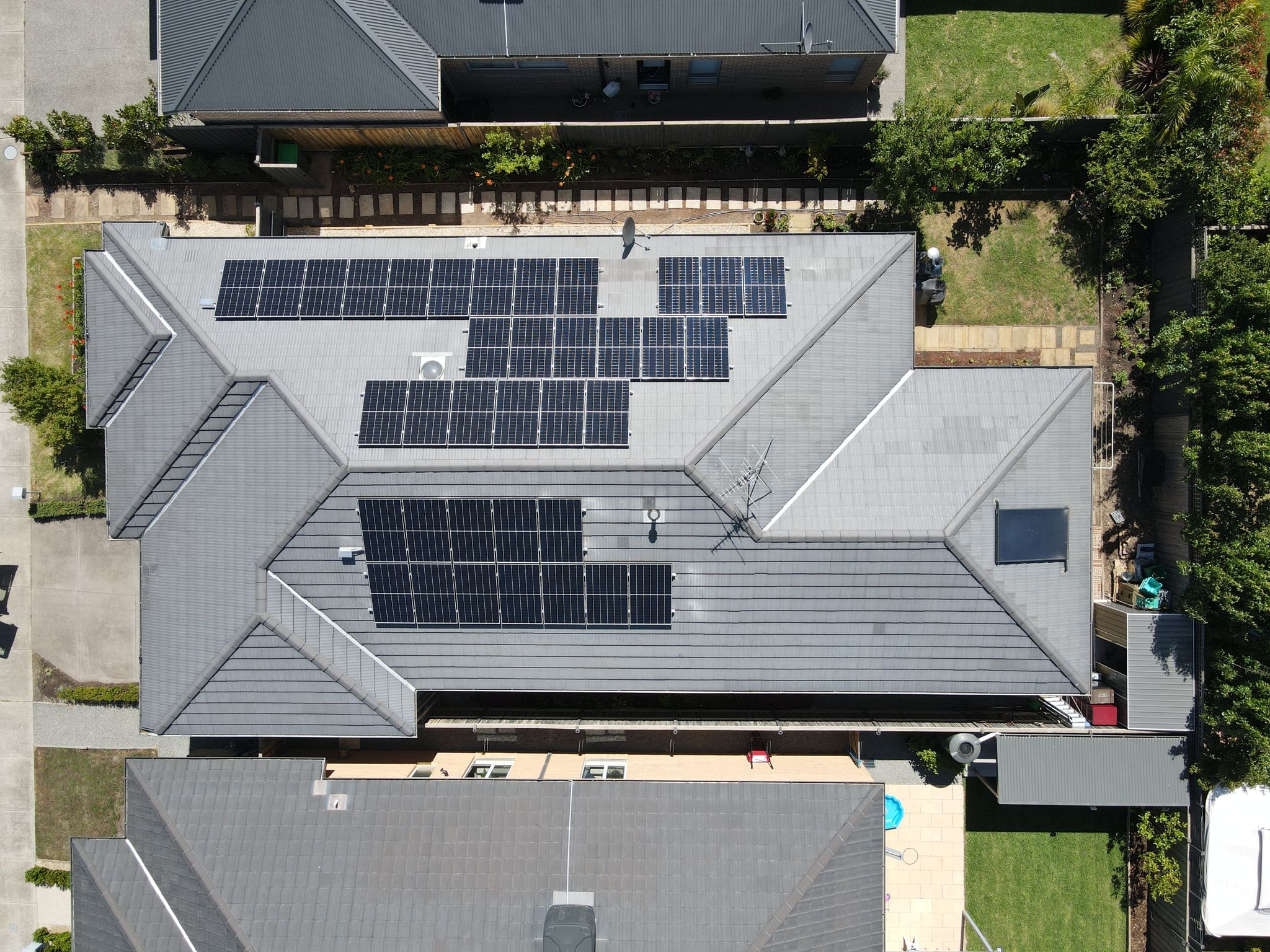
A rooftop solar project needs more than a suitable surface and a supplier with equipment in stock. Its relationship with the electricity network can shape what is approved and how surplus generation is treated. Indonesia's 2024 regulatory changes provide a clear regional example.
This article examines the planning lesson from that dated framework. It is not a current application guide for Indonesia and does not translate Indonesian requirements into Philippine law. For a Philippine buyer, the practical message is to verify the local connection arrangement before relying on a sales model.
Understand the dated policy example
Indonesia's energy ministry explained in March 2024 that rooftop capacity under its revised framework would depend on available quotas and that surplus exported electricity would not reduce the customer's bill under that arrangement. [1] These are features of the announced Indonesian framework, with its own scope and transition details. They show why a solar proposal cannot assume that technical generation automatically carries a particular financial value. The rules attached to the project matter.
Use the official rule as a reference point
The Indonesian government publishes Ministerial Regulation No. 2 of 2024 in its official regulation register. [2] Anyone acting in that jurisdiction should consult the applicable current requirements and relevant authorities. For readers in the Philippines, the value of the source is methodological: trace an important claim back to the rule or responsible institution. A social-media summary or a neighbouring country's experience should not substitute for the requirements that govern the actual meter and premises.
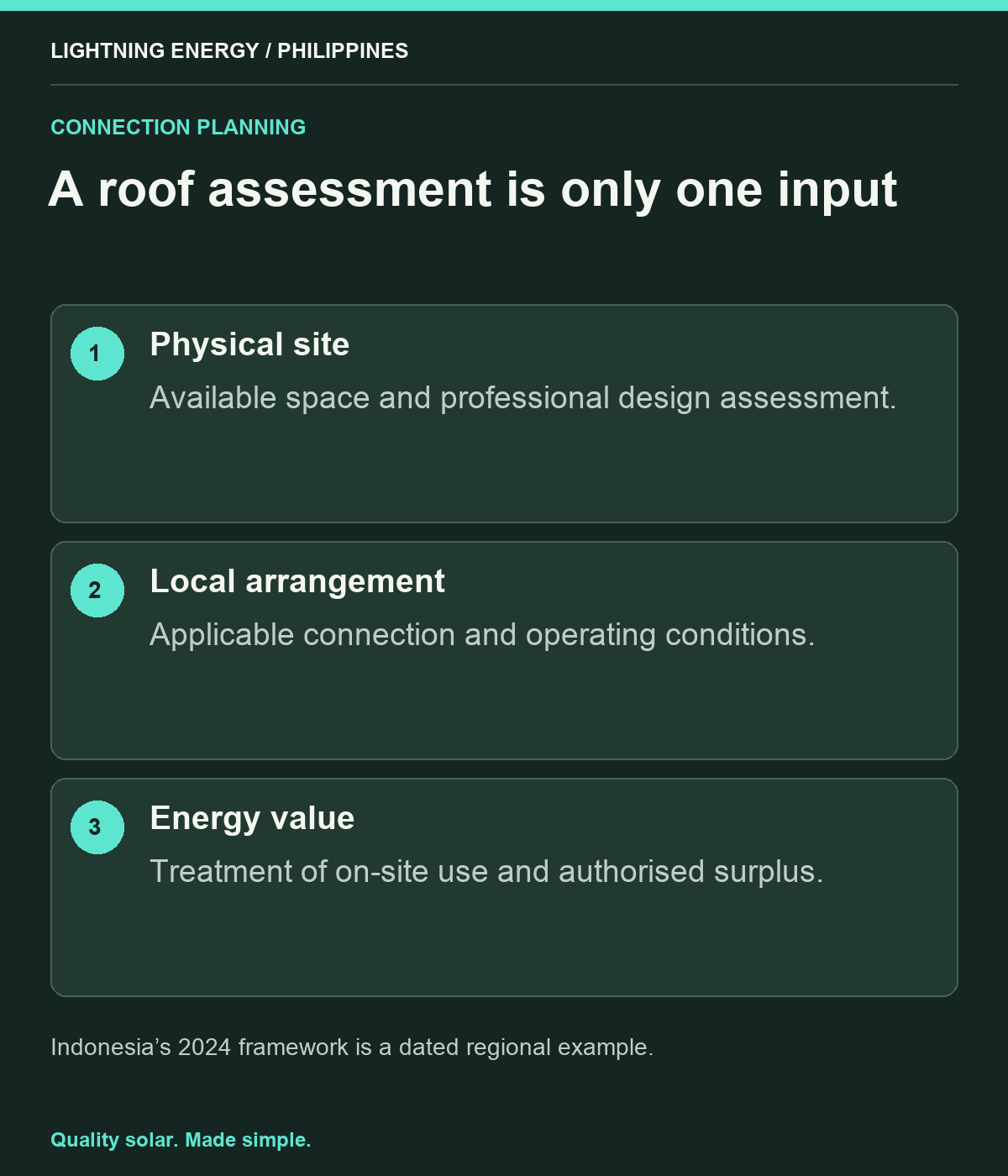
Keep roof potential separate from connection conditions
Ask the designer to distinguish physical capacity, proposed installed capacity and the operating arrangement being sought. A large roof can be technically attractive while another factor constrains the project scope. Do not treat those distinctions as evidence that solar is unsuitable. They are inputs to a design that may use a different size, consumption pattern or approved mode. The owner should understand which factors are confirmed and which remain subject to assessment or approval before ordering equipment.
Model the treatment of surplus explicitly
Request separate figures for energy expected to be used on site and any energy exported under an authorised arrangement. State how each is valued and identify the supporting tariff or agreement. Use a low-demand day as a test. A hypothetical office that closes on weekends may have a different outcome from a continuously operating facility with the same roof. The example illustrates a modelling question; it does not predict the economics of either property or establish a universal best system size.
Avoid buying around an unverified future change
A supplier may expect policies, quotas or export arrangements to become more favourable. Keep those expectations outside the confirmed base case unless an applicable change has been established. Ask whether the project remains useful under today's verified conditions. Future compatibility can be considered separately, with its costs and limitations explained. This is a practical way to preserve options without making the investment depend on a regulatory event the customer cannot control.
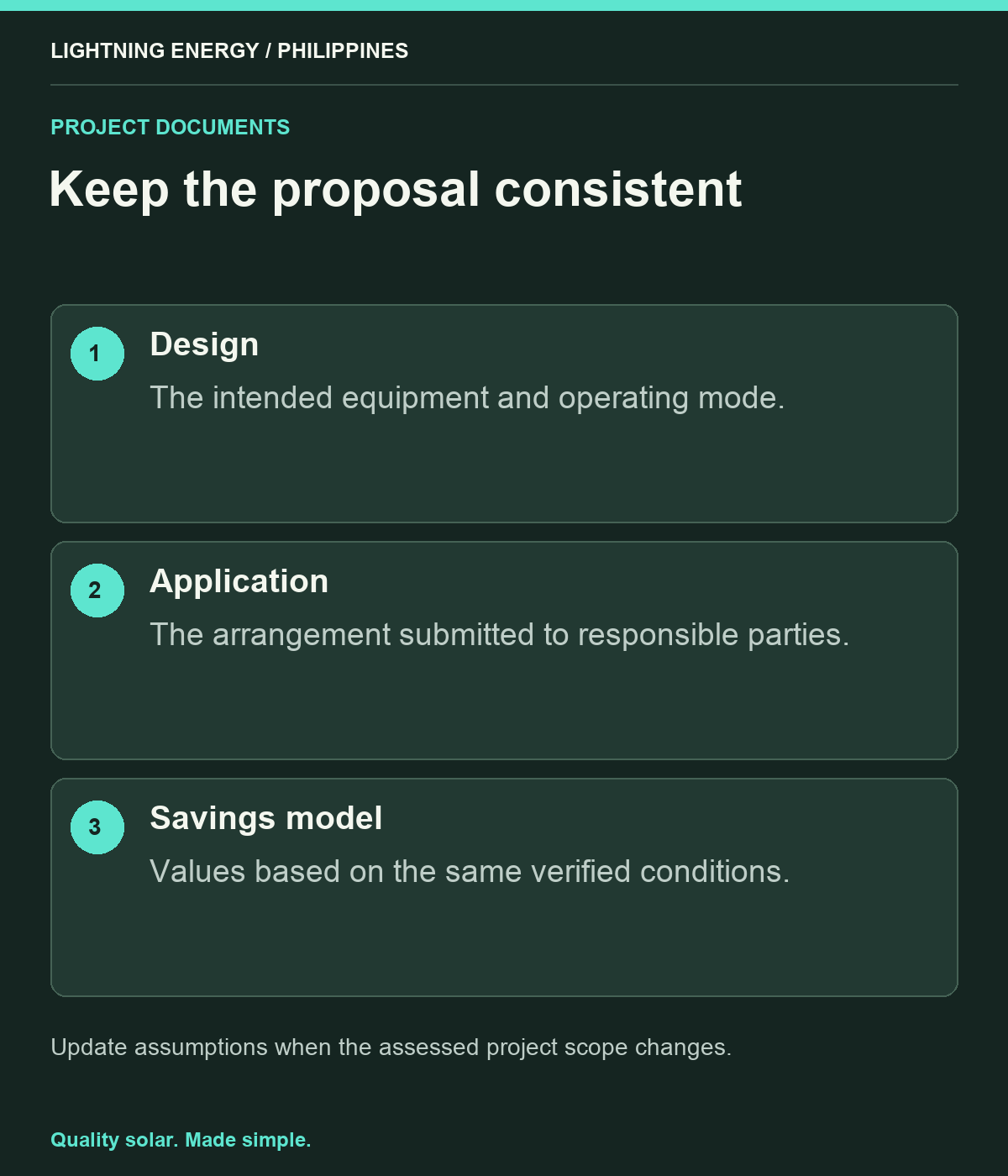
Keep the project documents aligned
The quotation, design, application information and savings model should describe the same intended arrangement. If a requirement changes during assessment, update the relevant documents rather than leaving the original financial promise untouched. Record who communicates with the utility and who is responsible for each submission. The owner should have a clear view of outstanding conditions and the point at which equipment procurement becomes appropriate under the actual project process.
Apply the lesson locally
Bring the property's bills, meter information, operating schedule and proposed roof area to Lightning Energy. Ask which local connection conditions need verification and how the design responds to them. Indonesia's example is useful precisely because it differs from other markets: solar economics are not determined by module price alone. A sound Philippine project starts with its own rules and demand, then selects equipment that can deliver a clearly described service within those conditions.
Sources & further reading
Sources used for this guide. Policy and product details should be checked for your particular installation.
- Indonesia ESDM: Rooftop solar regulation announcement5 March 2024; accessed 27 September 2026
- Indonesia: Ministerial Regulation No. 2 of 20242024; accessed 27 September 2026