Across Asia
Japan’s EV Backup Story: A Car Battery Still Needs a Complete System
Nissan’s Japanese emergency-power examples show the potential of vehicle batteries—and why compatibility and operating plans matter.
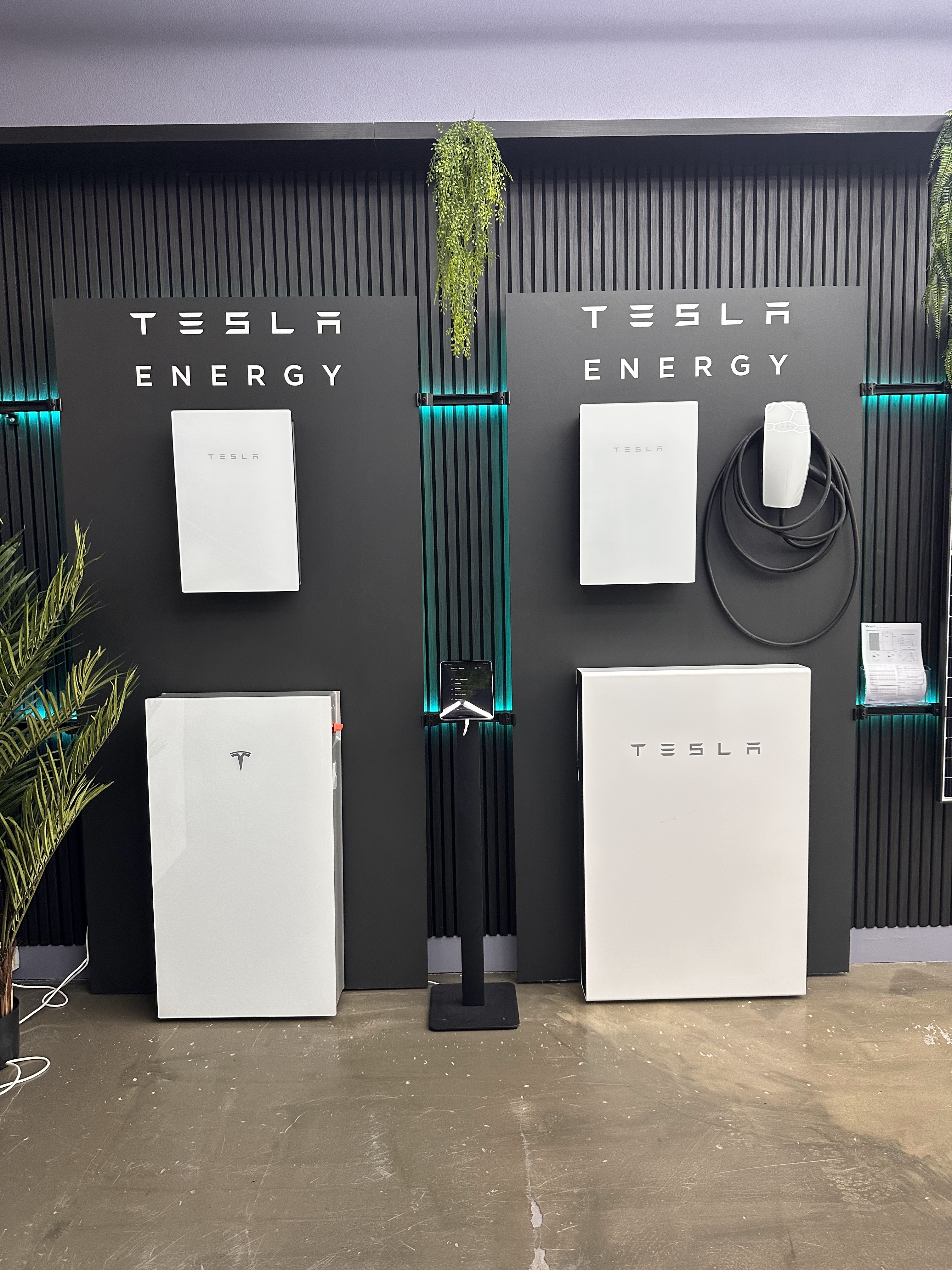
An electric vehicle carries a battery that moves with its owner. That makes it an interesting potential source of electricity during a disruption, but the ability to drive and the ability to supply a building are different functions. Japan's experience provides a useful example of the distinction.
For Philippine households considering solar and an EV, the right question is not simply how large the vehicle battery is. Ask whether the particular vehicle, conversion equipment, property and operating arrangement can safely deliver the intended service. This article is a planning discussion, not connection instructions.
Read the Japanese case with its equipment context
Nissan's December 2020 Blue Switch account describes LEAF vehicles supplying electricity during Japanese disaster-response activities through suitable conversion equipment. [1] It is a manufacturer account of specific applications. It does not establish that every EV can power every house or that identical equipment is available and approved in the Philippines. The useful lesson is that the vehicle is one part of a deliberately arranged service, with people and equipment prepared before it is needed.
Distinguish charging from supplying electricity
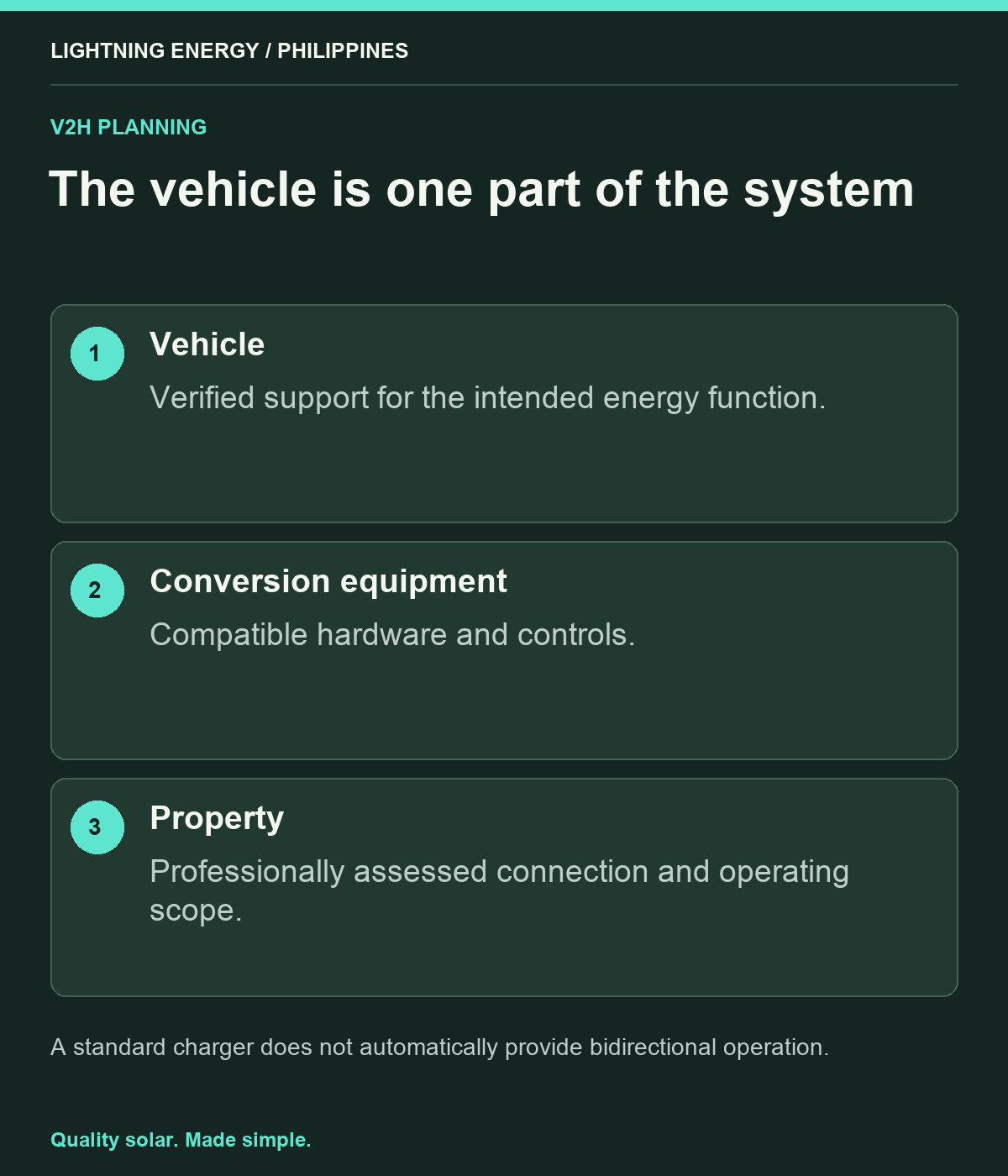
Nissan's V2H explanation describes a compatible vehicle supplying a home through bidirectional charging, with solar potentially charging the vehicle. [2] A conventional charger that only charges the car should not be assumed to provide that reverse function. Ask the vehicle and equipment suppliers for exact compatibility documentation. Have qualified local professionals assess the property arrangement and applicable requirements. Similar connector shapes or a general marketing term are not enough evidence that the proposed combination can perform the intended duty.
Protect the vehicle’s first job
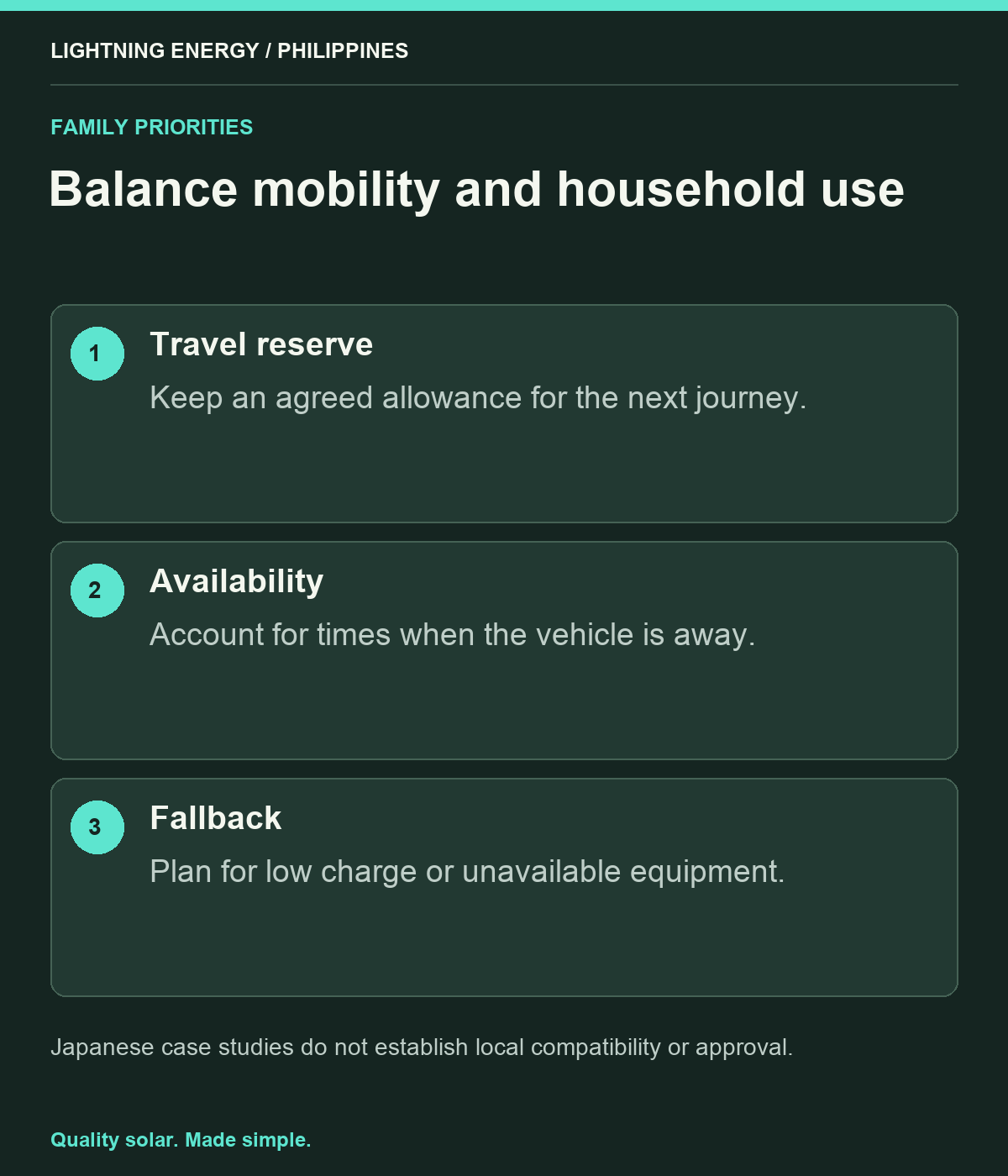
The car may need to leave for work, school or an urgent trip. Build that requirement into any home-energy discussion. Use a hypothetical evening in which the household needs electricity but the vehicle must depart early the next morning. What reserve is retained, who sets it and what happens if plans change? The example is not a runtime prediction. It highlights the difference between a stationary battery that remains at the property and a mobile resource whose availability depends on family routines.
Compare the available services carefully
Portable power for selected devices, supply to a dedicated circuit and a whole-building arrangement can involve different equipment and requirements. Ask the responsible professionals to define the proposed scope precisely. Do not describe a vehicle's outlet as automatic household backup. The written design should explain supported loads, operating limits and the process for safe use. Any arrangement that connects with building wiring needs appropriate professional assessment; a general-interest article should not be used as a wiring guide.
Keep the financial case separate from the emergency case
If the vehicle is already needed for transport, an owner may consider whether an additional energy function is useful. That does not make the extra equipment free. Compare the cost, service support, warranty conditions and operational demands with other ways of meeting the desired backup objective. Avoid counting speculative grid payments unless an applicable programme and contract are verified. A decision can value preparedness without pretending that every possible use creates a predictable cash return.
Test the whole operating plan
Ask how the arrangement would be demonstrated and commissioned by the appropriate professionals. Include account access, settings, approved user actions and support contacts in the handover. Consider what happens when the car is away, the battery is low or the property has no suitable recharge opportunity. The household should understand the fallback plan. Japan's mobile-power examples are interesting precisely because they involve organised deployment, not simply the presence of an EV somewhere in the community.
Plan the home and vehicle together
Bring the vehicle model, travel routine, solar proposal and desired continuity service to Lightning Energy and the relevant vehicle and electrical specialists. Ask for a compatibility-based assessment rather than a promise built on battery capacity alone. The practical opportunity is to coordinate transport and household energy where a complete supported arrangement exists. The sound decision remains specific about what is available locally, what has been verified and what the family will do when the car is needed on the road.
Sources & further reading
Sources used for this guide. Policy and product details should be checked for your particular installation.
- Nissan: Electric cars in disaster recovery16 December 2020; accessed 27 September 2026
- Nissan: Connecting society with EVsAccessed 27 September 2026