Across Asia
Japan’s Solar Sharing: Keep the Farm in Agrivoltaics
Japan’s agrivoltaic approach shows why crop production, machinery access and local evidence must remain central to a dual-use project.
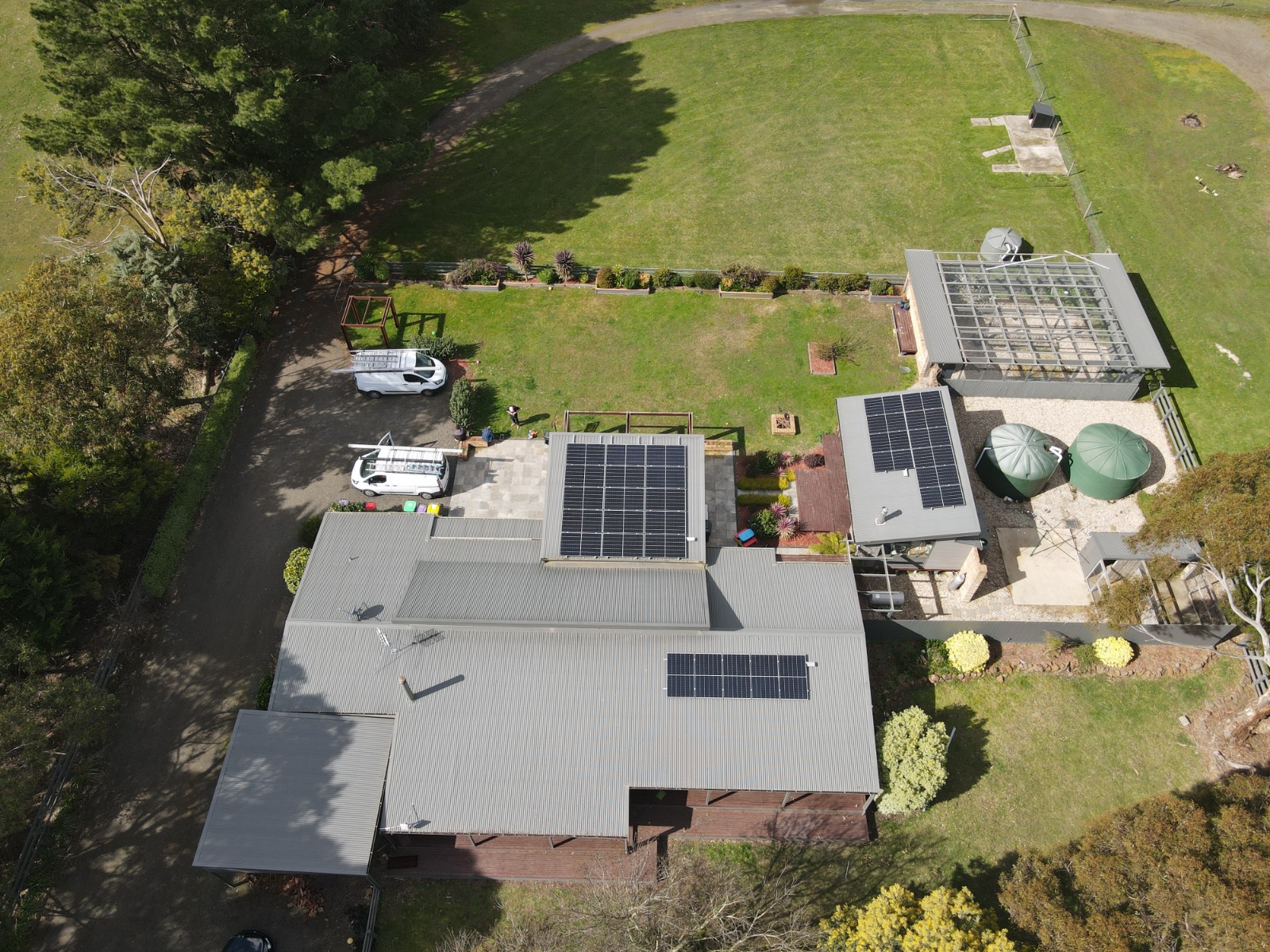
Putting solar above farmland creates a visually striking idea: use one area to produce both crops and electricity. The difficult part is making the arrangement work for the farm that occupies it. Crop needs, work patterns and the structure itself all influence the result.
Japan's approach to agrivoltaics, often discussed as solar sharing, offers useful context for Philippine agricultural businesses. The transferable lesson is to begin with the agricultural operation and evaluate the energy addition around it. A photograph from another climate is not a crop-performance guarantee.
Understand the Japanese example
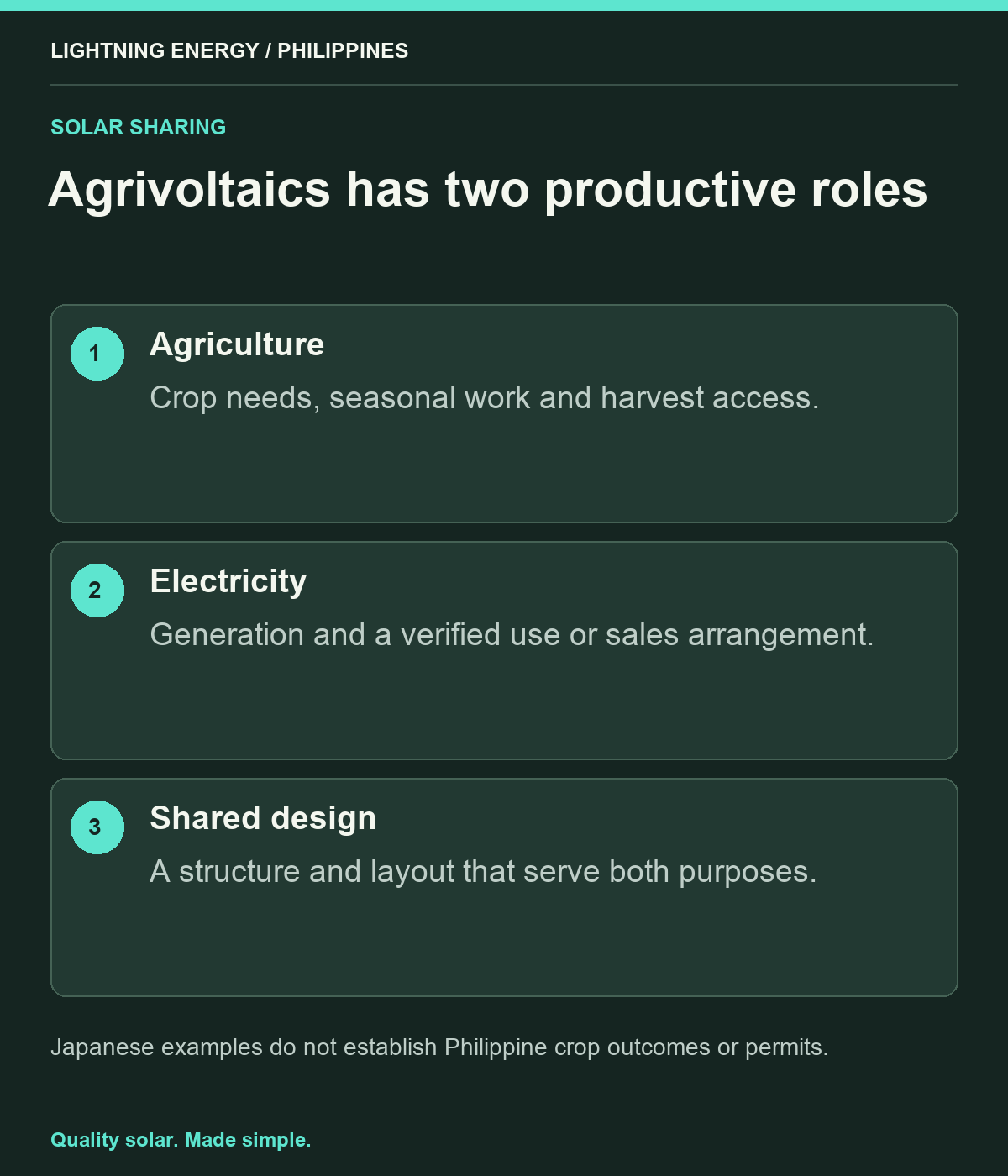
Japan's agriculture ministry describes spaced panels above farmland that permit cultivation below, with dimensions that can accommodate farm machinery. [1] Its page also identifies a Japanese land-permission requirement. That requirement is jurisdiction-specific and should not be presented as Philippine procedure. The practical design insight is that the space beneath the modules remains a working farm. Height, layout and access must be considered for the actual agricultural activity, rather than borrowed from an ordinary ground-mounted solar layout.
Give the crop a voice in the design
Involve the grower and an appropriate agricultural specialist before fixing the array. Record crop choice, season, working methods and the evidence needed to assess a change in sunlight. A 2021 research preprint by Riaz and colleagues examines crop-specific sunlight sharing and PV layout. [2] It is modelling research, not proof of a result on a Philippine farm. It supports treating crop response as a specific design variable rather than assuming every crop benefits from the same shade.
Compare the whole land-use outcome
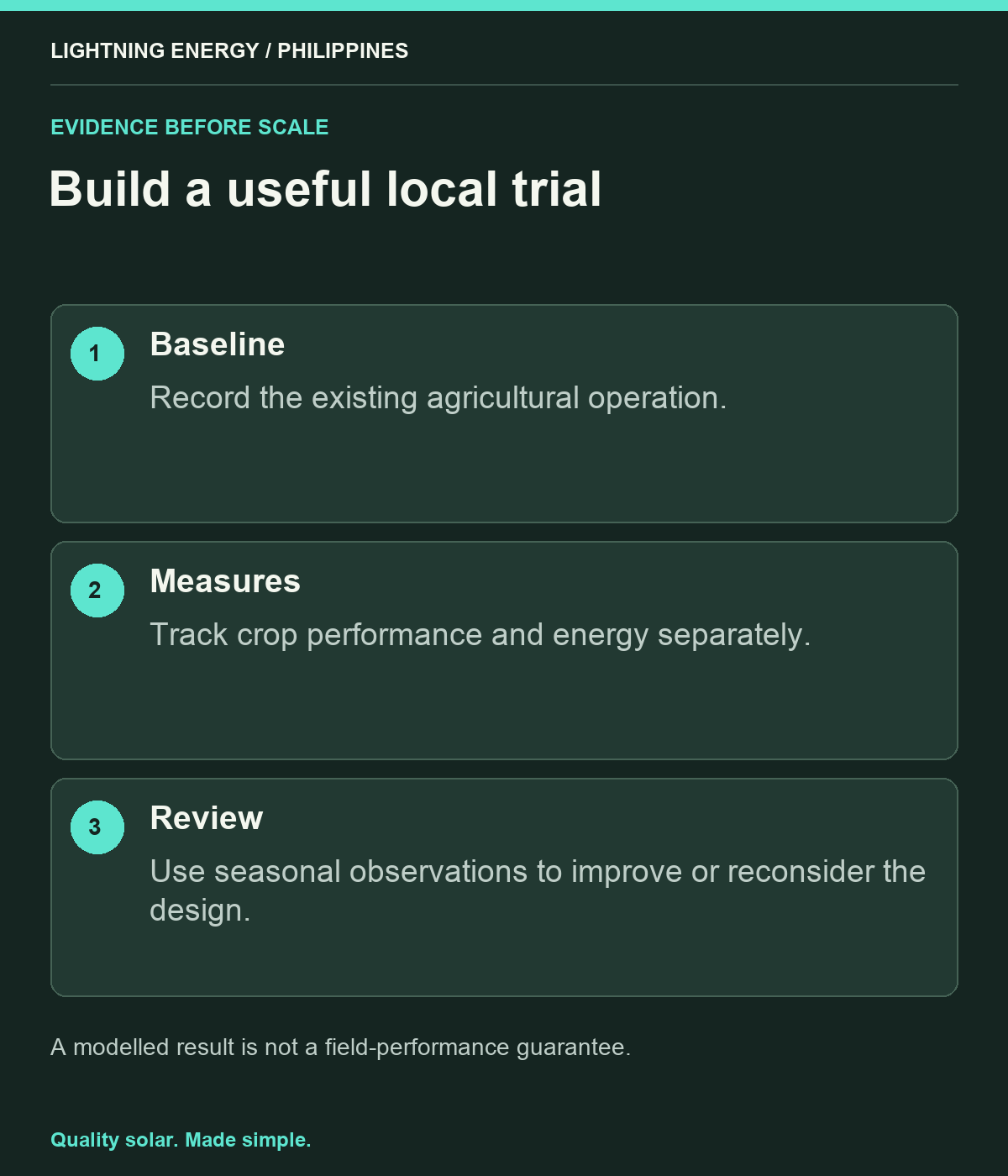
Assess agricultural output, farm access and electricity together, but keep their records separate. An improvement in electricity production does not automatically compensate the business for a difficult harvest route or an unsuitable crop environment. Use an explicitly labelled trial plan with criteria agreed before installation. The grower should know what will be measured, over which seasons and against what baseline. A project can then be judged on its actual dual purpose instead of on the more easily displayed solar generation alone.
Protect ordinary farm operations
Map machinery movement, irrigation infrastructure, storage areas and maintenance access. Ask the structural and electrical professionals to coordinate their work with the farm team. Avoid layouts that rely on workers making awkward adjustments around equipment every day. Consider how modules and crops will be serviced independently. The installation should not turn routine agricultural work into an unplanned access problem. These are site-specific decisions that require practical observation, not a universal spacing recommendation from a general-interest article.
Keep energy demand and sales assumptions grounded
Determine whether electricity is intended for on-site use, another approved arrangement or a combination. Record when the farm's electrical activities occur and distinguish them from seasonal possibilities. Do not assume that every generated unit earns a retail-equivalent credit or that Japanese support mechanisms apply locally. If the project depends on a particular contract, obtain the relevant professional review. The energy business case should be clear enough to assess separately from any hoped-for improvement in crop performance.
Start small enough to learn where appropriate
A pilot can be useful when local agricultural evidence is limited, but its design and scale should be agreed with the responsible experts. Identify a meaningful comparison and allow for seasonal variation. Keep the results honest if a crop performs differently than expected. A trial is valuable when it resolves uncertainty, even if it leads to a revised layout or a decision to use a different site. It should not be described as a proven success before the relevant observations exist.
Ask for a farm-led feasibility study
Bring the crop calendar, land-use information, machinery requirements and electricity records to the project team. Lightning Energy can discuss the energy component alongside agricultural, structural and other relevant professionals. Japan's solar-sharing experience provides a useful question to carry into the Philippines: does the proposed installation preserve a workable farm while adding useful generation? Answering that with local evidence is more important than reproducing the appearance of an overseas project.
Sources & further reading
Sources used for this guide. Policy and product details should be checked for your particular installation.
- Japan MAFF: AgrivoltaicsAccessed 27 September 2026
- Riaz et al.: Crop-specific Optimization of Bifacial PV Arrays for Agrivoltaic Food-Energy Production2021 research preprint; accessed 27 September 2026