Across Asia
Malaysia’s SELCO Model: A Lesson in Designing for On-Site Use
Malaysia’s self-consumption approach highlights the importance of matching solar output with demand and defining export assumptions.
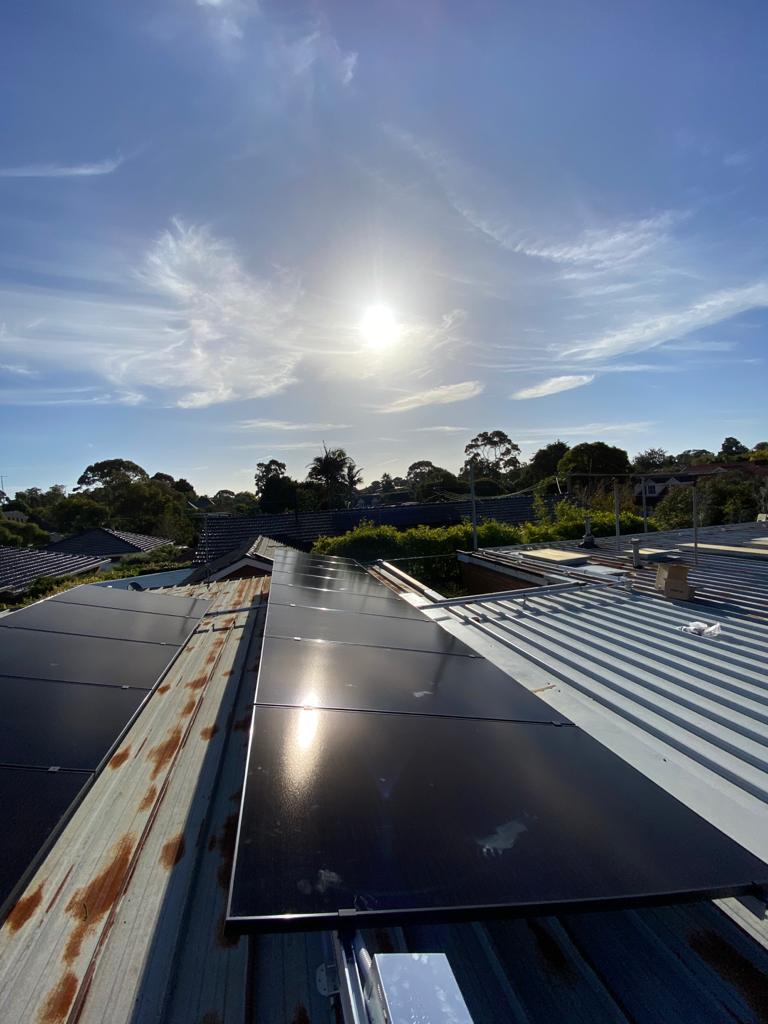
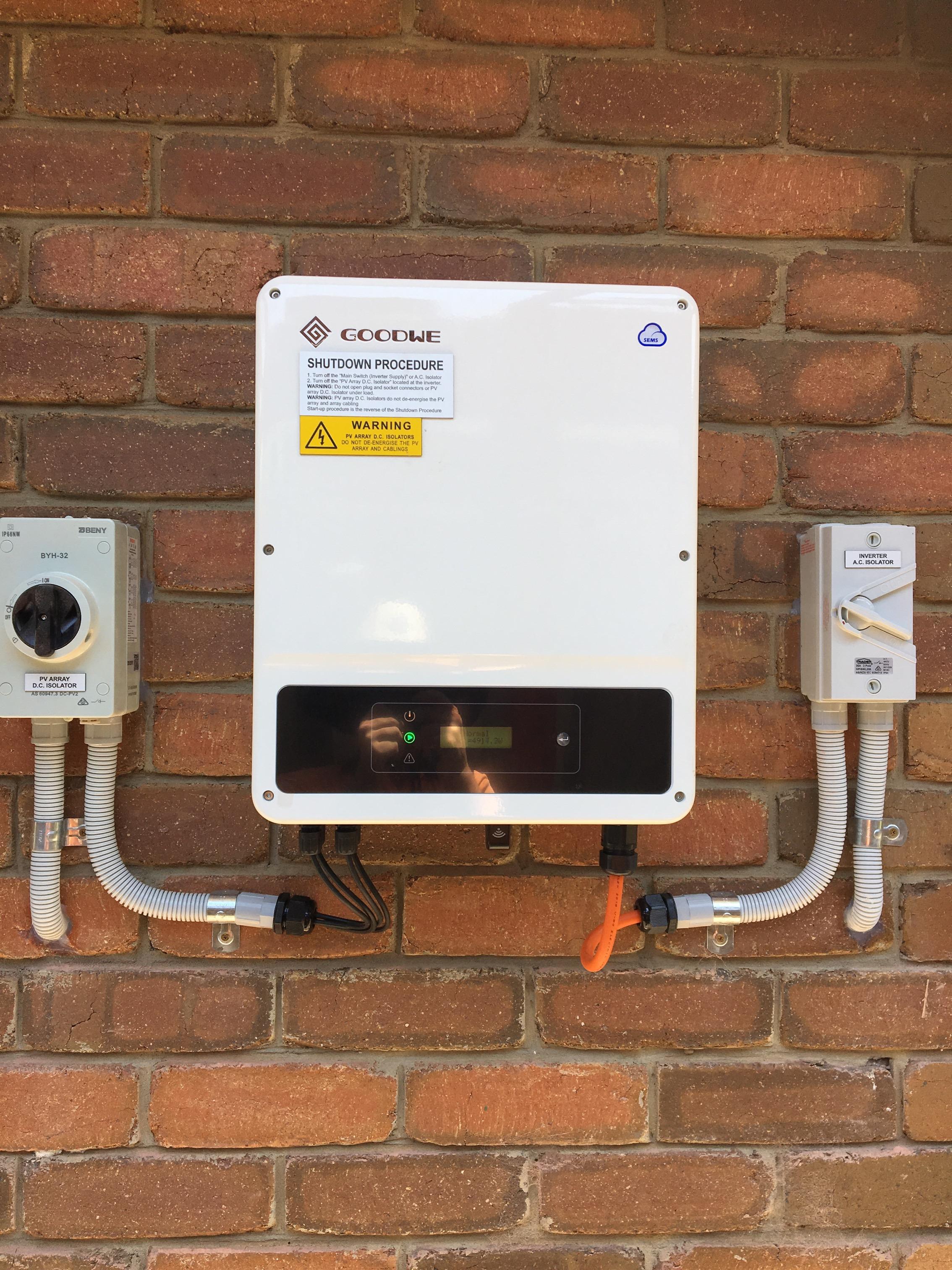
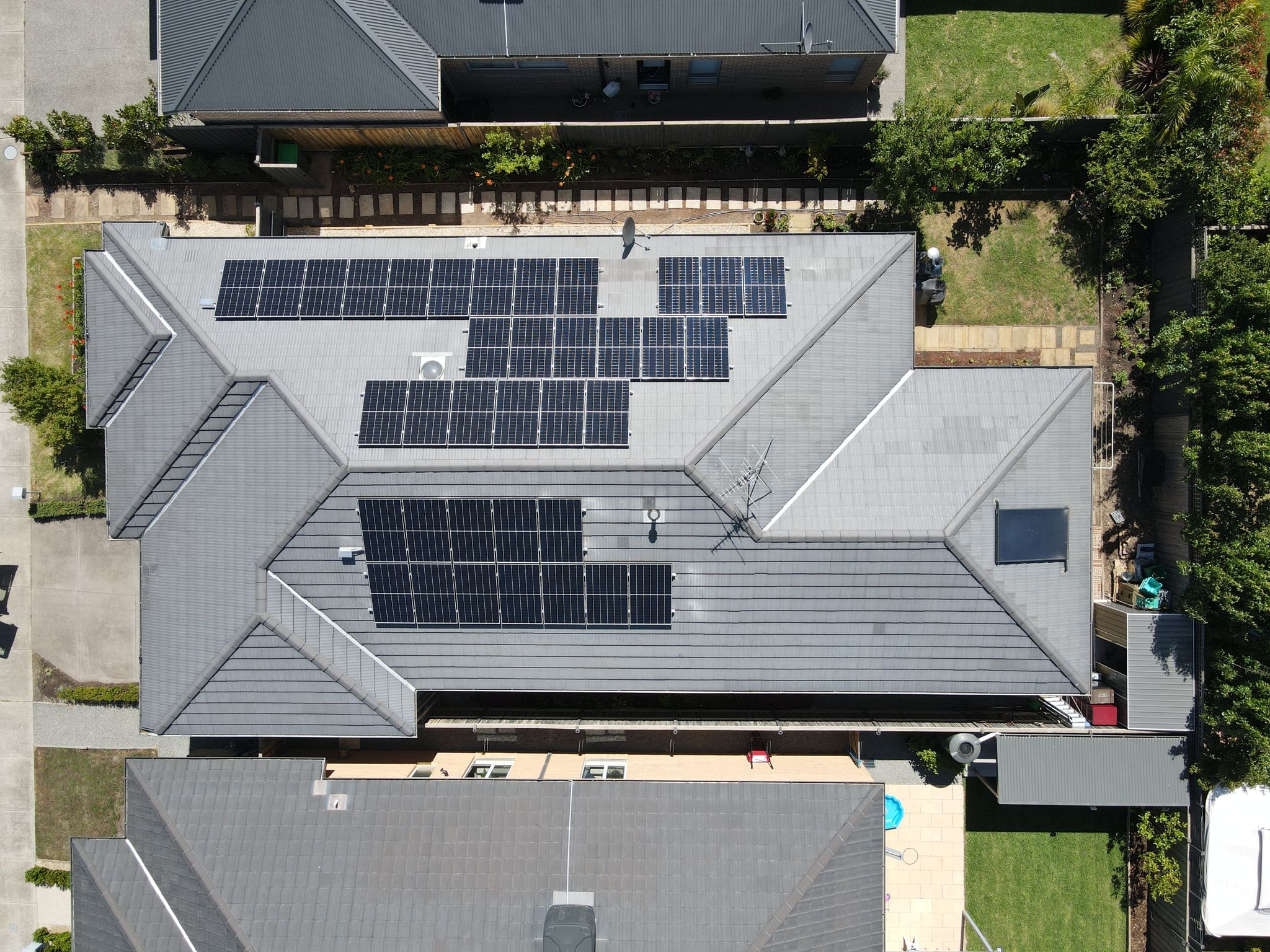
Solar can be discussed as a way to produce electricity for the premises or as a way to send electricity elsewhere under an approved arrangement. Those are different operating and commercial questions. Malaysia's self-consumption framework offers a useful example of why the distinction matters.
For Philippine households and businesses, the transferable lesson is about the quality of the design brief. Identify the electricity the site can use, then establish what happens to any surplus. Do not assume that a foreign programme describes local approvals, billing or eligibility.
Read SELCO within its own jurisdiction
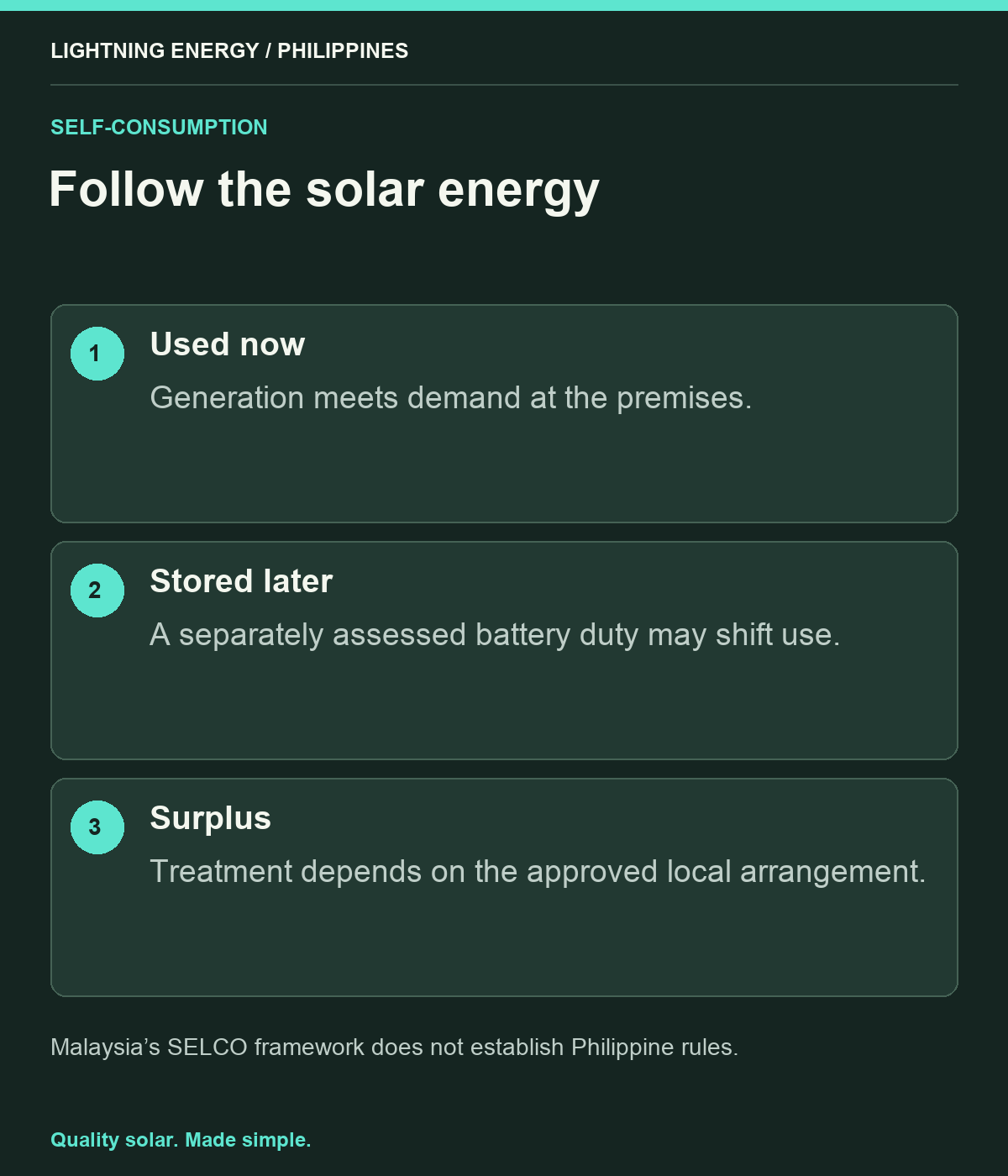
SEDA Malaysia describes SELCO as generation for self-consumption with surplus export not permitted under that arrangement. [1] That statement belongs to the Malaysian framework described on the cited page. It is not a Philippine rule or an instruction to bypass local approvals. The useful comparison is conceptual: a system intended around on-site use must be assessed against the site's demand pattern and the controls and connection conditions that apply to the actual property.
Measure the demand that exists during generation
Ask the assessor to use representative time-based consumption information where available. Explain weekends, holidays and seasonal closures. A factory that operates five weekdays may have a very different low-demand day on Sunday. A household can change when residents return to office work. These are original planning examples, not claims about Malaysian programme performance. Their purpose is to show why an annual bill total does not describe how much solar energy a site can use as it is produced.
Make surplus assumptions visible
Request a model that distinguishes directly used energy, any approved export and any energy that cannot be used under the proposed arrangement. Ask the designer how the system will operate when demand falls. The answer should identify the actual equipment and applicable requirements. Avoid accepting a savings estimate that values every generated unit as if it displaced a full-price purchase. That assumption can hide the practical effect of a mismatch between the roof's production and the property's daytime activity.
Give storage a separate assessment
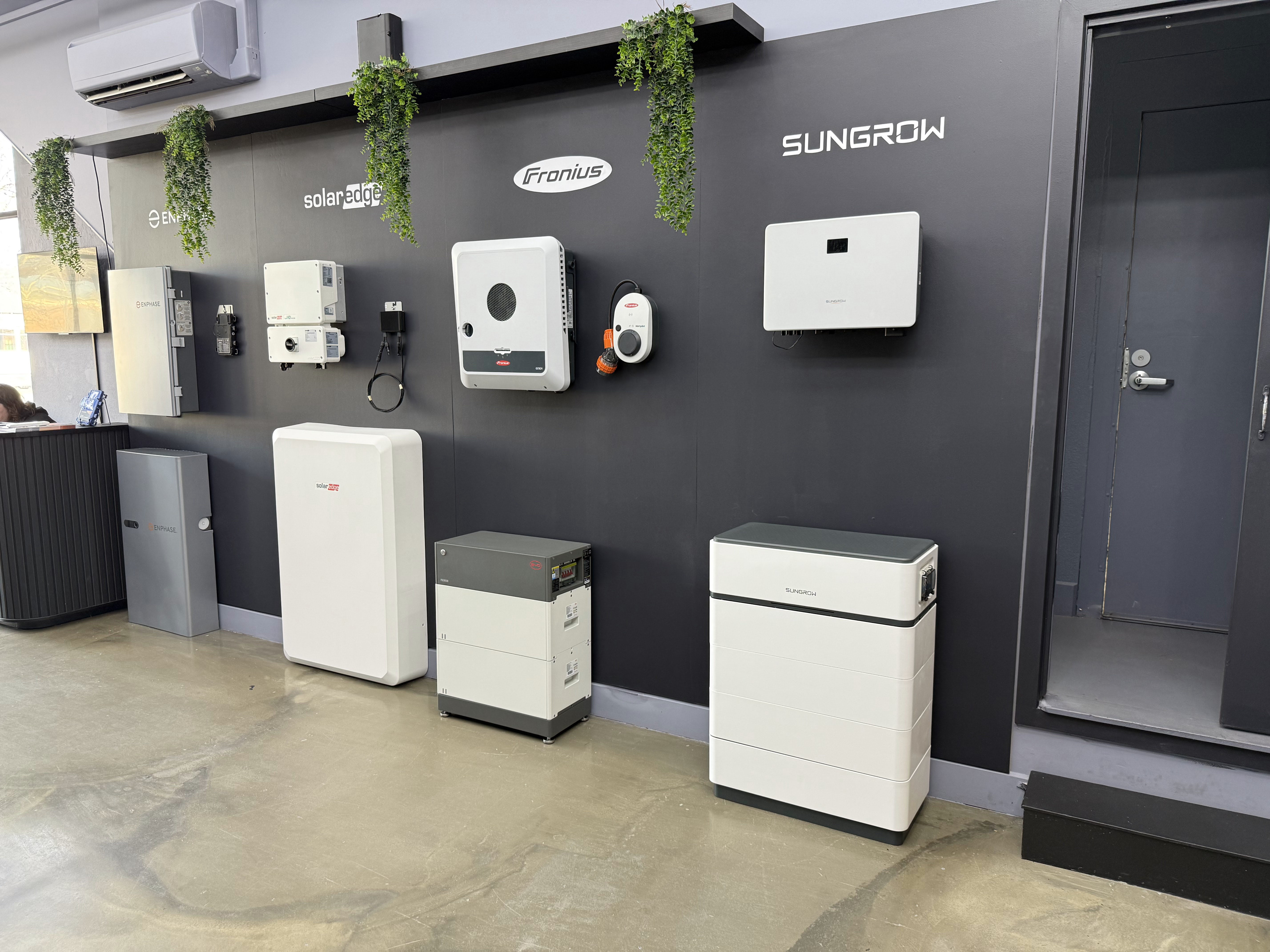
IRENA discusses storage applications that include increasing rooftop self-consumption. [2] A battery can therefore be evaluated as one possible response to a timing mismatch, but the additional cost and operating conditions still need assessment. Ask what charges it, when it discharges and which benefit is being counted. Compare that option with a different array size or realistic load scheduling. The existence of surplus does not, by itself, prove that storage is the best economic or operational choice for the owner.
Test the quiet-day case
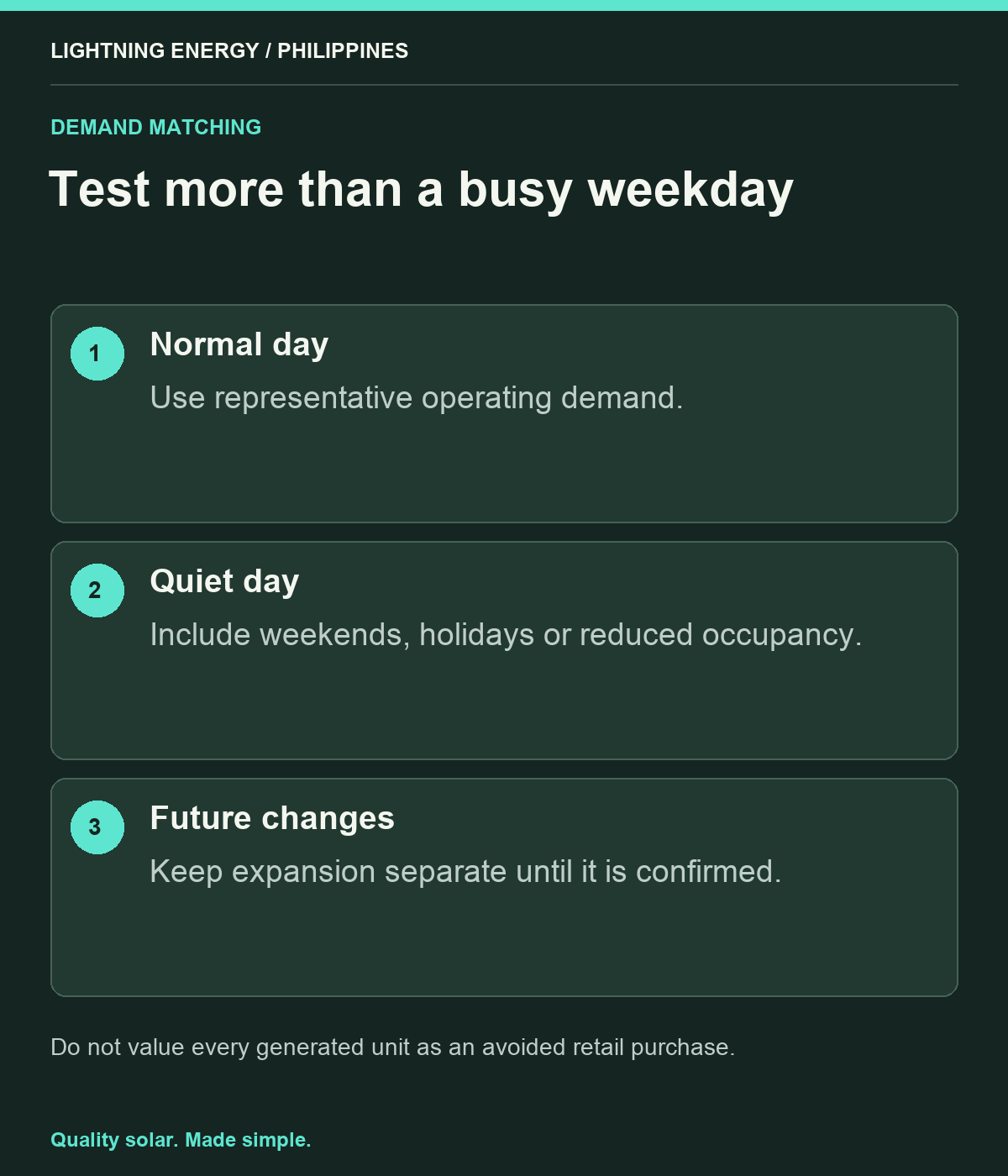
Use an illustrative business that reduces activity during a holiday week. Ask bidders to show how the proposed system behaves then, rather than presenting only a busy weekday. Keep the results labelled as modelled scenarios. This can expose dependence on future expansion or on a particular export arrangement. A design should be understandable across ordinary variation, with limitations stated clearly. It does not need to produce identical value every day to be useful, but the owner should know why the value changes.
Confirm the local path before purchase
For a Philippine project, obtain advice on the relevant utility and installation requirements and document the proposed operating mode. Do not treat the term self-consumption as an exemption from all connection or safety obligations. This article is a comparative planning feature, not an approval guide. Ask the responsible local professionals to identify which steps apply to the premises and retain those requirements with the proposal so that the design and savings model describe the same arrangement.
Use the comparison to improve the brief
Bring bills, operating schedules and questions about surplus to Lightning Energy. Ask for an explanation that follows electricity from generation to use, storage or any authorised export. Malaysia's SELCO example is useful because it keeps the purpose of the installation explicit. Philippine buyers benefit from the same discipline: choose a system around verified demand and an understood operating arrangement, with optional future changes shown separately from the benefits the project can support today.
Sources & further reading
Sources used for this guide. Policy and product details should be checked for your particular installation.
- SEDA Malaysia: Self-Consumption (SELCO)Accessed 27 September 2026
- IRENA: Energy storage costsAccessed 27 September 2026