Care & performance
Roof Renovation and Solar: Plan the Two Projects Together
When a roof needs work, coordinated timing can clarify costs, access and responsibilities for a future solar installation.
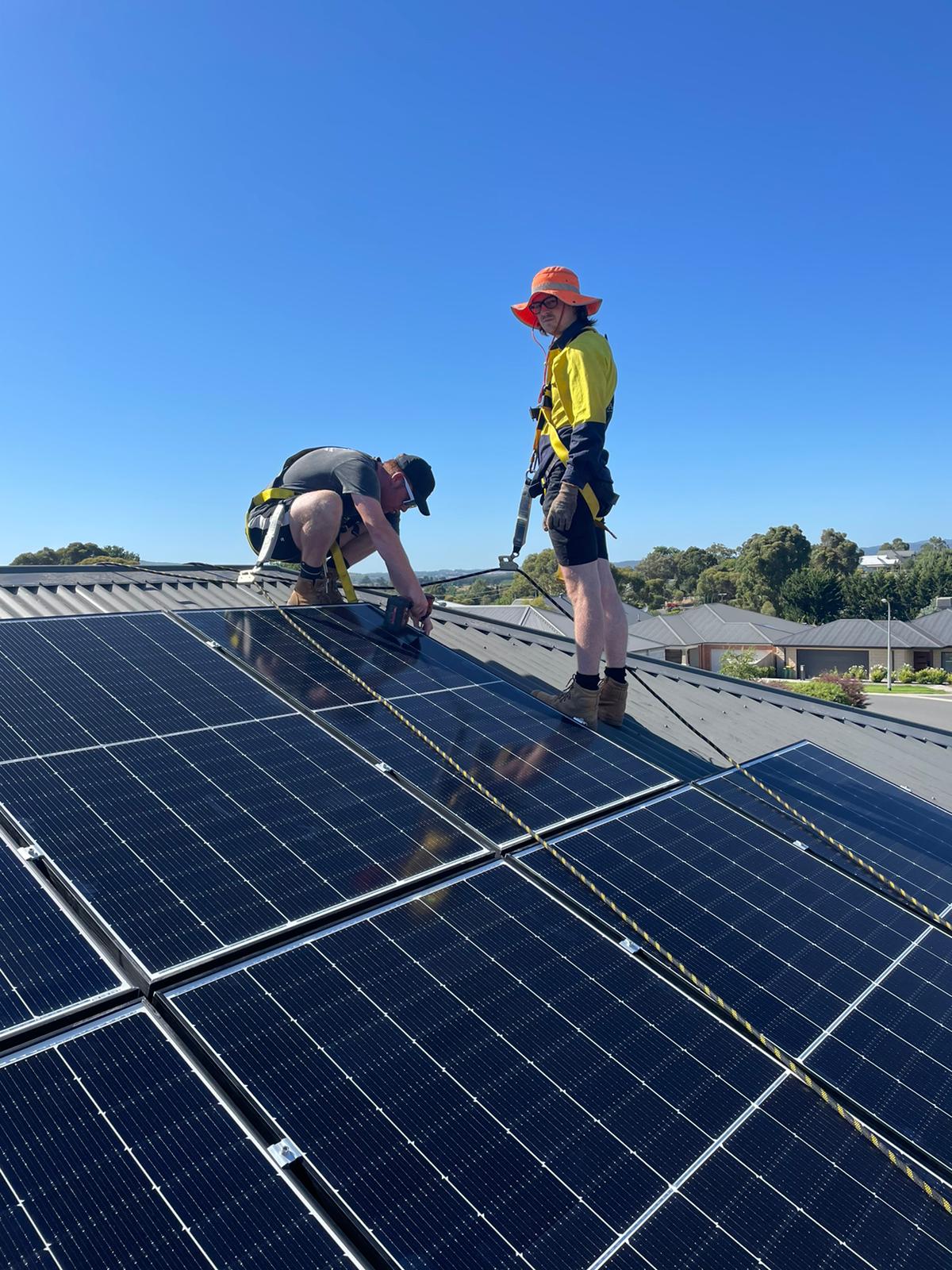
A roof renovation is a useful moment to think about solar because several decisions will affect both projects. Roof condition, access, equipment placement and the timing of electrical work can be considered before either contractor starts. That does not mean every renovation should include solar immediately.
For a Philippine property owner, the aim is to avoid two unrelated plans competing for the same roof. Establish the building work that is needed, then assess how a solar installation could fit the completed structure and the household or business using it.
Let the roof assessment establish the starting point
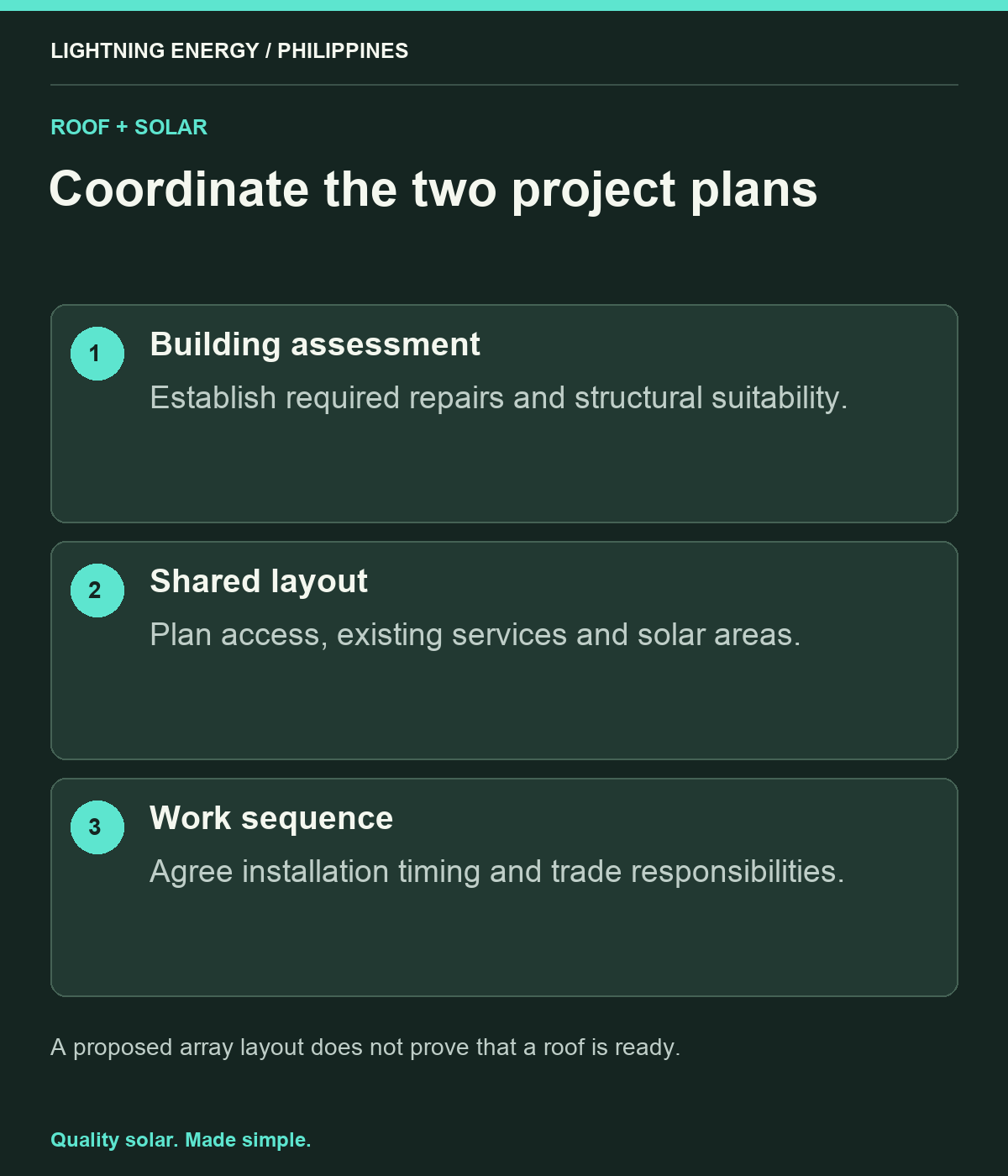
Ask the appropriate building professional to assess condition, structural suitability and the scope of required repairs or replacement. Share that assessment with the solar designer. ADB's rooftop handbook includes site preparation and system design as separate stages. [1] Apply that sequence rather than treating a proposed panel layout as evidence that the roof is ready. Decisions about the building should be made on their own requirements, with solar considered as an additional design input.
Coordinate the final roof layout
Identify other roof uses, access routes and equipment that must remain serviceable. Discuss the proposed solar area while the renovation drawings can still change. Avoid assuming that every available surface should be covered. A maintenance route or future building requirement may be more valuable than another row of modules. The coordinated plan should show which professional is responsible for each part of the design and how proposed changes are reviewed if the renovation uncovers conditions that differ from the initial assessment.
Compare doing the work together with staging it
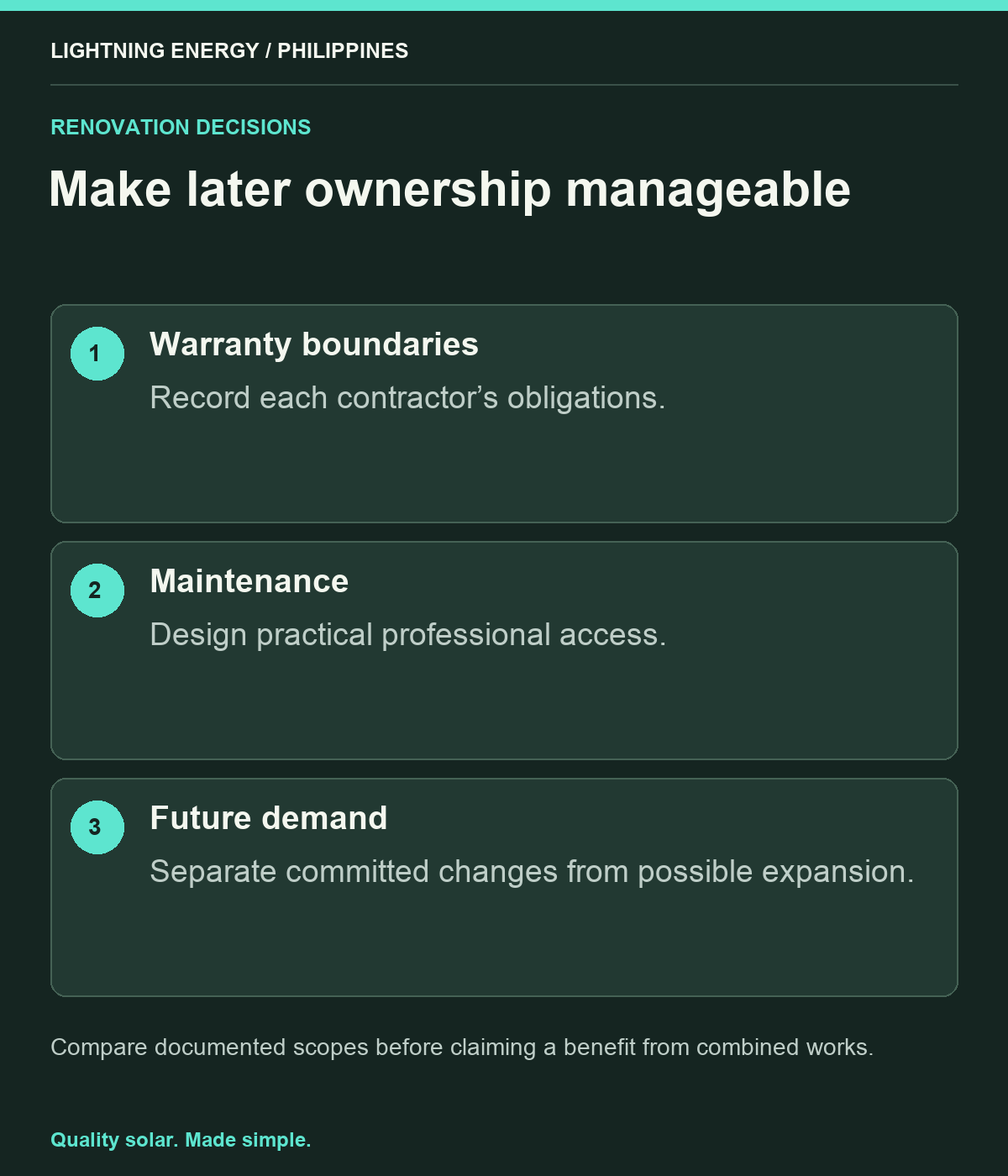
Request scopes for installation after the roof work and, if appropriate, for a later solar stage. Identify which access or coordination costs are shared and which remain separate. Do not claim savings from combined work unless the quotations actually show them. An illustrative owner may need to finish urgent roof repairs first and assess solar after more electricity data is available. Staging can be reasonable when its implications are understood; the important point is to avoid silently assuming that future installation requires no additional work.
Clarify warranty boundaries
Ask the roof contractor and solar contractor to explain their responsibilities in writing. Record how mounting, penetrations if applicable, access and future repairs will be handled under the proposed design. A roof warranty and a solar warranty should not be assumed to cover each other's work automatically. Have the relevant professionals resolve uncertainties before construction. The owner should receive a clear route for reporting an issue and a practical method for coordinating assessment when its cause is not immediately obvious.
Design for maintenance from the start
NREL's guidance links equipment specification and system design with the effectiveness of future maintenance. [2] In a renovation, that is an opportunity to make professional access and service practical. Ask where electrical equipment will sit and how it can be inspected under the manufacturer's requirements and site conditions. Consider future roof work as well as routine solar service. A layout that is easy to maintain can be more useful than one chosen only to maximise the number of modules shown in an early drawing.
Keep the electricity assessment current
A renovation may coincide with changes in occupants, appliances or business activity. Model the existing demand and any committed changes separately. Do not size the solar project solely from an old bill if the building's use is changing substantially. Ask the designer to state assumptions about new cooling, work areas or other planned loads. If those plans remain uncertain, retain a clear base case and discuss what would be required to reassess the system later rather than promising unlimited expandability.
Bring the project teams into one conversation
Share the roof assessment, renovation schedule, electricity records and future-use plans with Lightning Energy and the building professionals. Ask for a coordinated sequence of work and a named contact for cross-trade decisions. The outcome should explain what happens first, what each contractor delivers and how the finished installation will be documented. Planning the projects together makes the roof an understood part of the solar investment, with responsibilities that remain clear when the next maintenance or renovation decision arrives.
Sources & further reading
Sources used for this guide. Policy and product details should be checked for your particular installation.
- ADB: Handbook for Rooftop Solar Development in AsiaDecember 2014; accessed 27 September 2026
- NREL: Best Practices for Operation and Maintenance of Photovoltaic and Energy Storage Systems, third edition2018; accessed 27 September 2026