Across Asia
Singapore’s Virtual Power Plants: The Value of Coordinating Small Assets
Singapore’s VPP experiments show why software, permissions and operating agreements matter alongside solar and batteries.
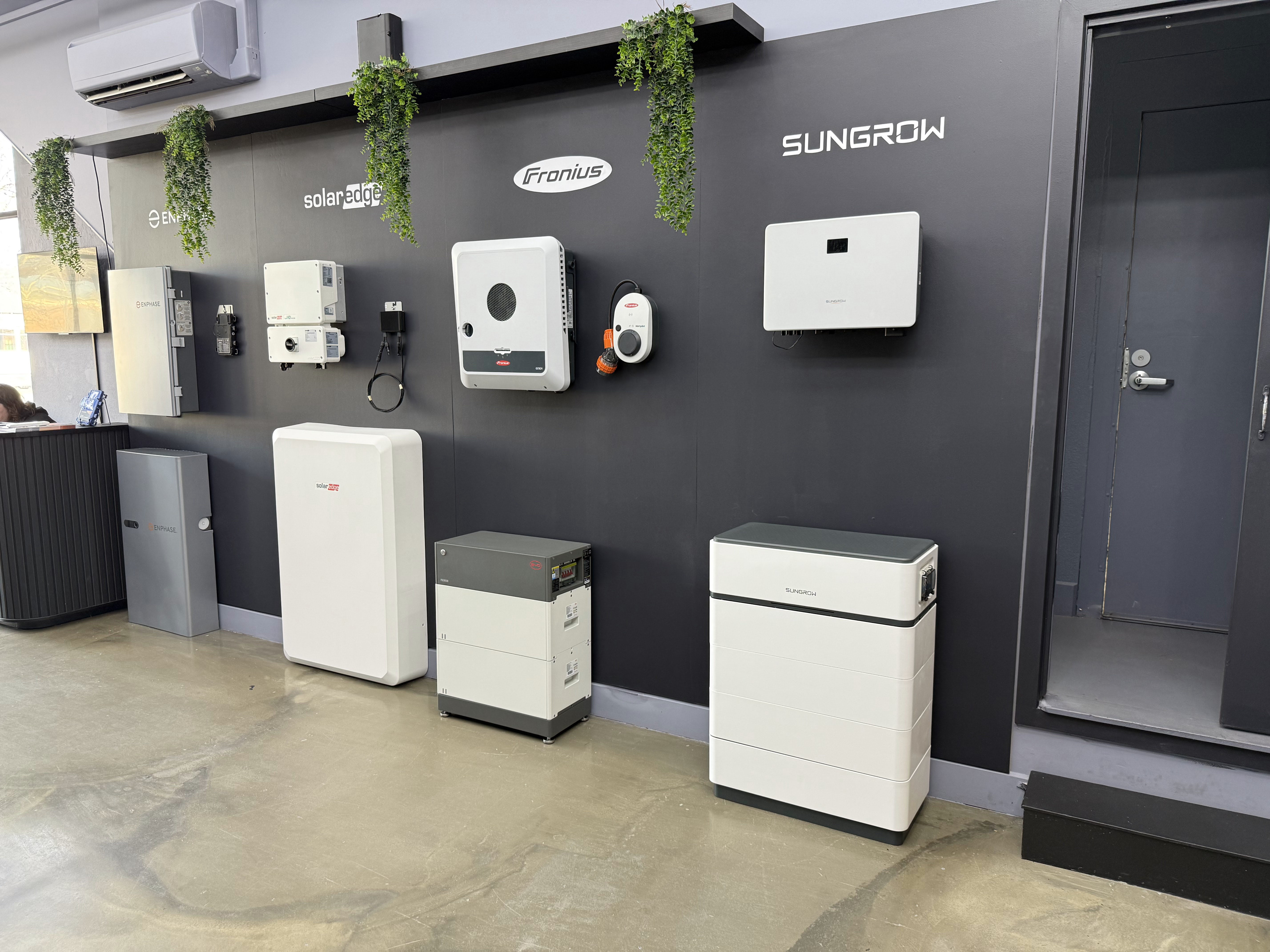
A household battery can serve one property. Coordinating many batteries, solar systems and flexible loads creates a different proposition: an organised resource that can respond to wider electricity-system needs. Singapore's work on virtual power plants provides a useful case study in that transition.
For Philippine buyers, the lesson is to examine coordination claims carefully. A device being technically capable of remote control does not establish access to a paying programme. The commercial arrangement, the owner's permissions and the effect on everyday use all deserve attention.
Understand what is being aggregated
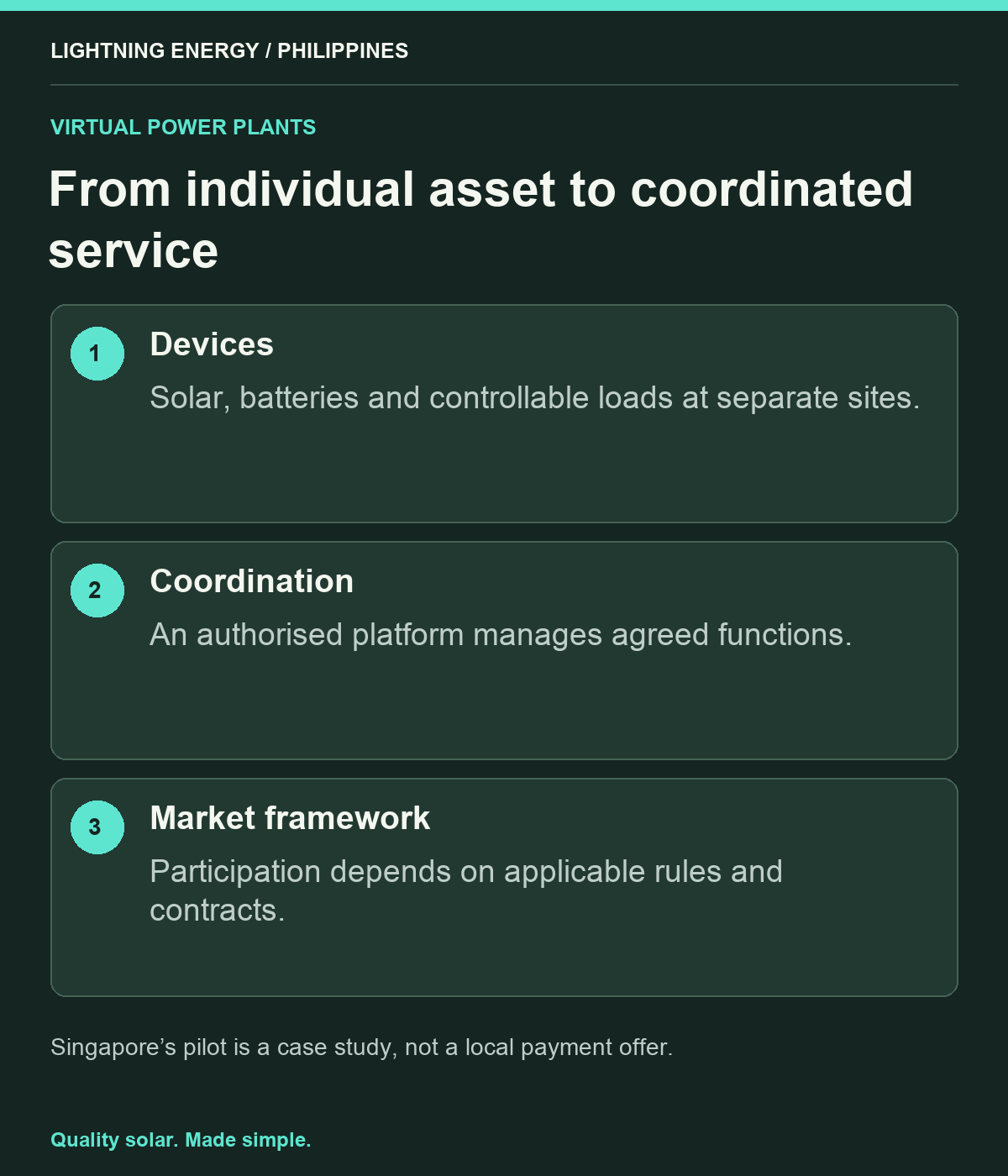
Singapore's Energy Market Authority describes a virtual power plant as distributed resources managed together, including solar, batteries and flexible charging. [1] The electricity equipment remains in separate locations, while coordination allows the portfolio to offer a combined service. That description helps distinguish a VPP from a single large battery or a simple monitoring app. For an owner, the important question is which functions another party can control and what obligations accompany that access.
Read the pilot as a pilot
EMA announced a two-year VPP regulatory sandbox in October 2025 to test energy and ancillary-service participation. [2] That is a defined Singapore initiative, not a promise of universal availability or a Philippine revenue stream. The dated announcement matters because trials test arrangements that may still evolve. Buyers should distinguish an operating, applicable contract from a manufacturer's statement that equipment is ready for a possible future programme. Readiness can be useful, but it is not the same as income.
Ask who chooses the battery’s priorities
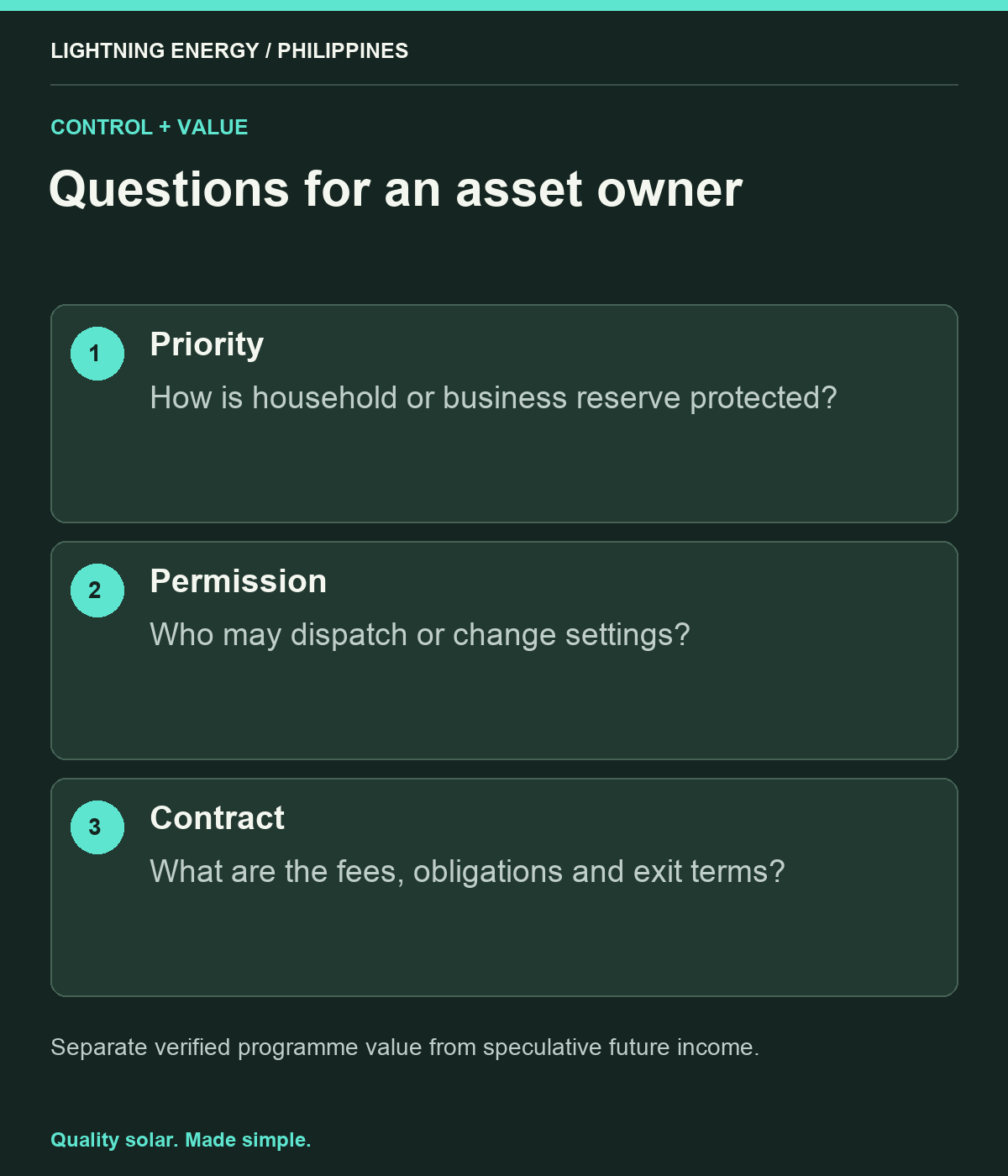
A homeowner may want reserve energy for selected backup loads while an aggregator wants to dispatch energy for another service. Those objectives need a clear operating agreement. Request an explanation of reserve settings, override rights and the conditions under which remote action occurs. Use a hypothetical evening outage to discuss the consequences, without assuming a particular VPP empties batteries or guarantees backup. The point is to make the allocation of control visible before choosing a device around a future participation claim.
Look beyond the headline reward
If a local offer includes payments, obtain the actual eligibility rules, fees, performance obligations and withdrawal terms. Ask how battery use, warranty conditions and communications requirements interact with the programme. Model verified compensation separately from ordinary solar savings. Do not count a potential future market as necessary income in a purchase decision unless the owner understands the uncertainty. A small monthly benefit can be outweighed by an arrangement that does not fit the household's priorities or the business's operating constraints.
Treat communications as part of the system
Coordination depends on information and control pathways, so ask what happens when connectivity fails or an account changes hands. Clarify data access, authorised users and the process for updating software. These are procurement questions, not an invitation to change inverter settings independently. The owner should know which party supports the equipment and which supports participation. If the two are different, the escalation route should remain clear when an issue could belong to either side.
Keep Philippine decisions grounded locally
Singapore's regulatory structure cannot be assumed to apply to a Philippine utility area. Ask the relevant local parties to verify any proposed grid-service arrangement and connection requirements. In the meantime, assess the solar-and-battery system on the services it can demonstrably provide at the property. An illustrative buyer might value compatible communications for future options while still requiring the initial investment to make sense without them. That separates useful flexibility from speculative financial dependence.
Buy understandable control
Bring any VPP proposal to the same discussion as the ordinary solar and backup design. Lightning Energy can help explain the equipment scope and identify which claims require confirmation from a programme operator or other responsible party. Singapore's case shows that aggregation is an operating and market project as well as a technology project. The best household or business decision preserves a clear answer to a simple ownership question: who can do what with this equipment, under which conditions, and for whose benefit?
Sources & further reading
Sources used for this guide. Policy and product details should be checked for your particular installation.
- EMA: Virtual Power PlantsAccessed 27 September 2026
- EMA: New Initiatives to Future-Proof Singapore’s Power Grid27 October 2025; accessed 27 September 2026