Care & performance
Solar sa Tag-Ulan: What Changes During the Rainy Season?
Rainy weather changes solar production, but one cloudy day does not tell the whole story. Use local monthly expectations, simple monitoring and sensible maintenance to stay informed.
A week of grey skies can make a new solar owner nervous. Is the system working properly? Will the bill suddenly climb? The useful answer starts with realistic seasonal expectations and a little monitoring, rather than comparing every day with the sunniest afternoon you remember.
Solar responds to the light reaching the panels. Clouds can reduce that light and make output more variable. The right question is how your actual production compares with the conditions at your site and the assumptions in your proposal.
Use your location, not one national rainy-season rule
PAGASA describes substantial regional variation in rainfall and recognises four climate types. Its broad wet-and-dry seasonal description should therefore be read alongside local conditions, rather than treated as an identical calendar for every Philippine roof. [1]
For a homeowner in Metro Manila or Rizal, ask for a model using the property location and relevant weather data. A chart copied from another island or a different country may not represent your seasonal pattern. Roof direction, surrounding shade and the chosen equipment add further differences even between homes in the same neighbourhood.
Understand what a cloudy-day graph is showing
A solar monitoring app may show power rising and falling as clouds pass. That changing kW figure is the rate of generation at that moment. The day's accumulated kWh tells you how much energy was generated over the entire day. Both are useful, but they answer different questions.
For example, a low reading during a heavy afternoon shower does not mean the system produced nothing that morning. Conversely, a brief bright interval does not establish a strong daily total. When evaluating a bill or a month's performance, start with energy accumulated over the matching period rather than a screenshot of one instant.
Ask for the twelve-month picture before purchase
A preliminary tool such as PVWatts estimates output from weather and system assumptions. Its modeled monthly profile is a planning reference, not a promise about each day's weather or actual future production. [2] Ask the installer to explain the data source and the main assumptions behind your estimate.
Keep the monthly table from the proposal. It should make clear whether the financial estimate uses an annual average, a particular month or a more detailed calculation. Multiplying an attractive sunny-day figure by every day of the year hides the very seasonal variation you are trying to understand.
Match household tasks to available production sensibly
If laundry, pumping or other flexible tasks can move into periods with available solar, you may use more generation directly at home. That does not require chasing every cloud or changing family life around an app. Choose routines that are convenient, safe and useful.
Avoid assuming that noon always provides enough power for every appliance. On a cloudy day the grid may supply part of the load in a grid-connected home. If you have backup storage, ask how normal household use and charging priorities interact. A full explanation of energy flows is more helpful than a blanket instruction to run everything at midday.
Keep generation and outage resilience separate
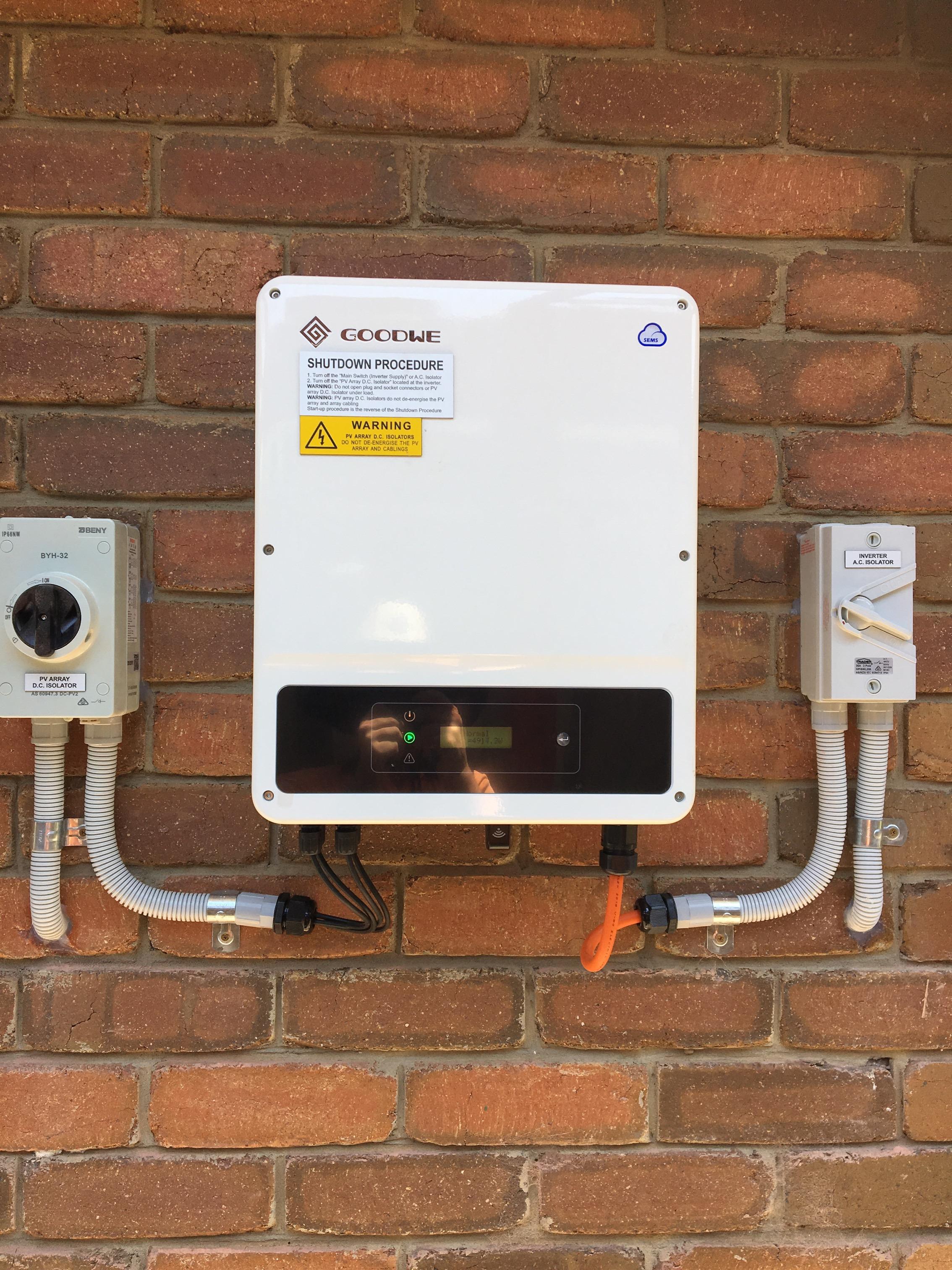
Rainy weather and a power interruption are different events. A grid-connected system may continue contributing during cloudy daylight while the grid is available, but its outage behaviour depends on the installed equipment and configuration. A solar roof alone does not establish a backup supply.
For a battery system, ask how several low-generation days affect recharge and the energy left for an evening outage. Review the essential-load plan and realistic starting-charge assumptions. This is especially useful before storm season, when household preparedness should include official weather guidance as well as the operating instructions for the solar installation.
Do not confuse rainfall with a maintenance service
Rain may wash away some loose surface dirt, but it does not inspect fixings, check drainage, remove every deposit or repair damaged wiring. Follow the manufacturer's and installer's maintenance guidance for the actual property. A site near trees, traffic or construction may need a different plan from an unobstructed roof.
From ground level, note new shading, visible debris or a roof leak and report concerns. Do not climb onto a wet roof to improve output or use a pressure washer on electrical equipment. If cleaning or inspection is needed, arrange a suitable professional visit and ask for a record of the work performed.
Know when a low-output pattern deserves attention
A few cloudy days can be normal. Persistent unexpected zero output, equipment alarms, missing monitoring data or a sustained change after a storm deserves investigation. First record the dates, the app message and the weather you observed. Missing internet data should be distinguished from confirmed loss of generation.
Send that information to the installer with your system details. It gives the technician a useful starting point without asking you to diagnose electrical equipment. When speaking with Lightning Energy Philippines about a new installation, request both monthly production expectations and a simple aftercare plan. Tag-ulan is easier to understand when you know what to compare and whom to contact.
Sources & further reading
Sources used for this guide. Policy and product details should be checked for your particular installation.
- PAGASA — Climate of the PhilippinesAccessed 20 September 2026
- National Laboratory of the Rockies — PVWatts CalculatorAccessed 20 September 2026