Across Asia
Southeast Asia’s Solar Outlook: Why the Next Decade Matters for the Philippines
Regional solar headlines are useful context, but they need careful reading. Separate forecasts, installed capacity and local rules before applying them to your own property.
A regional solar headline can sound enormous: more investment, more installations and a very different electricity system within a decade. For a Philippine homeowner or business, the next question is practical. Which parts of that story should influence a decision about one roof?
The answer starts by separating three levels: the direction of the region, the way Philippine projects are implemented and the design of your own system. They are connected, but a strong forecast at the first level does not automatically settle the other two. Here is a way to read the outlook without losing sight of the property in front of you.
Read projections as conditional pathways
The IEA’s June 2026 Southeast Asia outlook describes growing electricity demand and continued exposure to imported fuels. It projects the region’s renewable capacity, recorded at 120 GW in 2024, to nearly triple by 2035 under today’s policy settings, or grow fivefold if announced targets are achieved. These are different scenarios, not two guaranteed outcomes. [1]
When sharing a forecast, carry the condition with the number. “If announced targets are achieved” changes the meaning of a sentence. It tells a reader that policy delivery and investment still matter. Treating a target as installed equipment skips the work that must happen between the announcement and operation.
Know what the numbers measure
IRENA’s Renewable Capacity Statistics 2026 reports data for 2016–2025. Its capacity measure concerns generating capability; for most countries and technologies, it reflects installations connected at the end of the calendar year. That is different from the electricity those installations actually produced over a year. [2]
For readers, this creates a useful habit: check the unit and the date before comparing headlines. MW or GW describes power capacity. MWh or GWh describes energy over a period. Also check the geography. A result for all of Asia should not be relabelled as Southeast Asia, and a regional total does not reveal the conditions at one Philippine distribution connection.
Look for local implementation signals
In August 2026, the Philippine Department of Energy announced simplified rules for specified own-use solar categories that do not export surplus electricity to the distribution grid. The announcement also retained technical safeguards and described coordination with utilities and local authorities. [3]
For a prospective customer, the practical lesson is to ask which current process applies to the proposed system. A national policy headline is the start of that conversation. Your property type, electrical design and chosen operating arrangement still need to be understood. Ask the installer to identify the applicable steps in writing and distinguish a confirmed requirement from a point still awaiting clarification.
Recognise commercial projects as evidence of activity
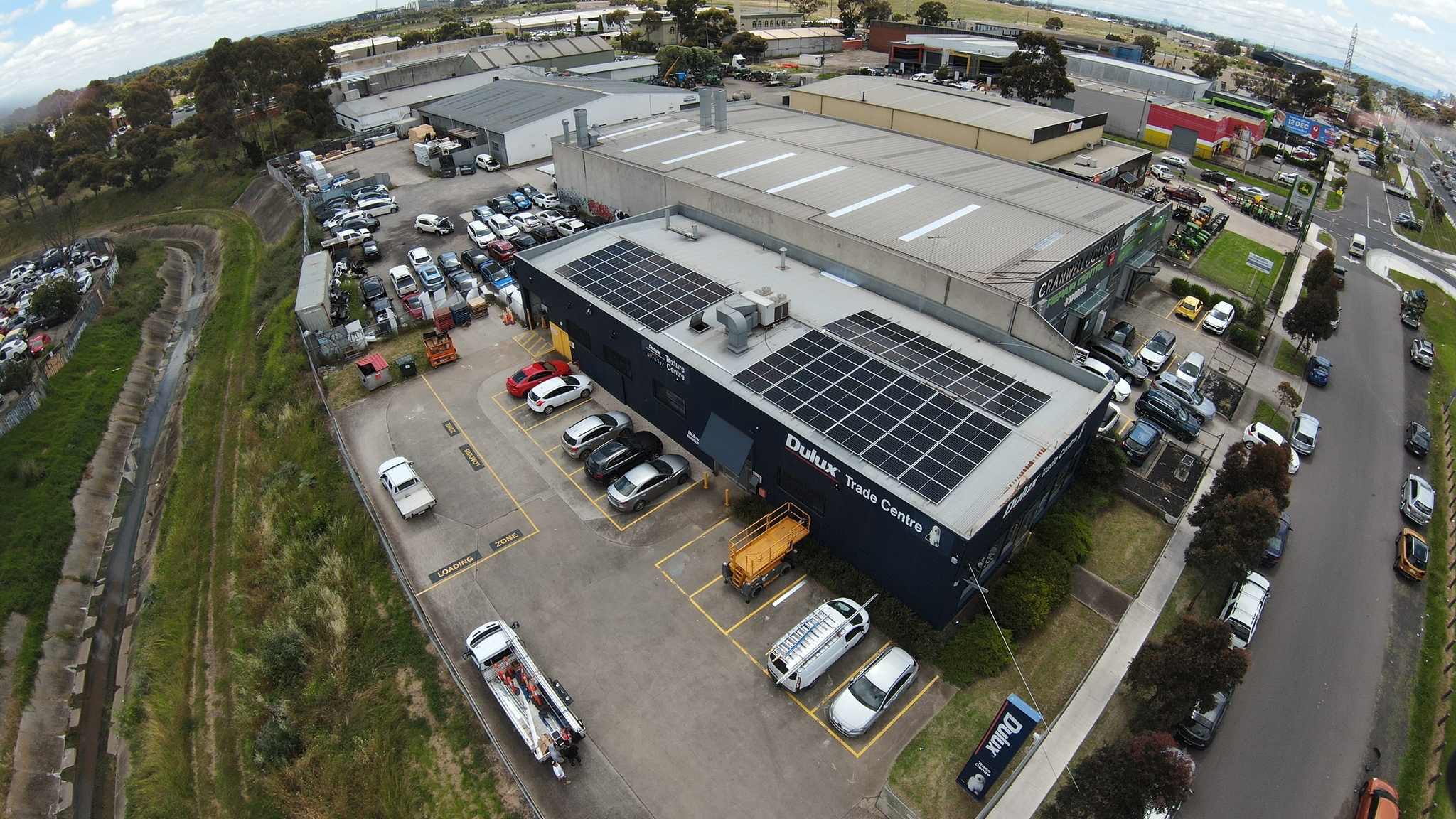
ADB’s Buskowitz Rooftop Solar Project provides a Philippine example of financing directed at commercial and industrial rooftops. Its project record concerns development, construction and operation of a portfolio of installations. It demonstrates an active project model, not an offer available to every building owner. [4]
This distinction matters when a news story mentions a large financing package. The total may cover multiple properties and a particular developer’s obligations. It is not a residential package price. For your own business, ask how the proposed contract deals with roof access, maintenance, changing demand and the length of your occupancy. Those details determine how the arrangement fits your operations.
Watch the supporting system, too
The IEA also identifies electricity networks, storage and flexibility as necessary parts of the region’s transition. Adding generation and making that generation useful across different times and locations are related tasks. [1]
Our practical reading is that customers should watch more than panel announcements. Utility implementation, connection capacity, service availability and equipment support all affect the path from interest to a working installation. A warehouse roof can be physically suitable while still requiring careful electrical coordination. Ask what has been checked at your site and which dependencies could affect the programme, rather than assuming regional growth eliminates local constraints.
Translate the outlook into a better brief
Regional momentum is a reason to get informed, not a reason to accept an unexplained return estimate. Start with your bills, daytime demand, roof condition and future plans. Request a design whose assumptions remain visible if tariffs, household habits or business activity change.
For a family, that may mean comparing daytime generation with a separate backup option. For a business, it may mean modelling a normal operating week and a quieter one. Bring that brief to Lightning Energy. The most useful connection between Asia’s solar future and your own roof is a well-grounded decision made with current local information.
Sources & further reading
Sources used for this guide. Policy and product details should be checked for your particular installation.
- IEA — Southeast Asia Energy Outlook 2026, Executive Summary16 June 2026
- IRENA — Renewable Capacity Statistics 2026March 2026
- Philippine DOE — Simplified Rules for Own-Use Solar20 August 2026
- ADB — Buskowitz Rooftop Solar Project, 57065-001Project record updated 28 July 2026