Across Asia
Thailand’s Flexibility Lesson: Contracts Can Matter as Much as Hardware
Thailand’s power-system studies show why available technical flexibility may remain unused when commercial arrangements do not support it.
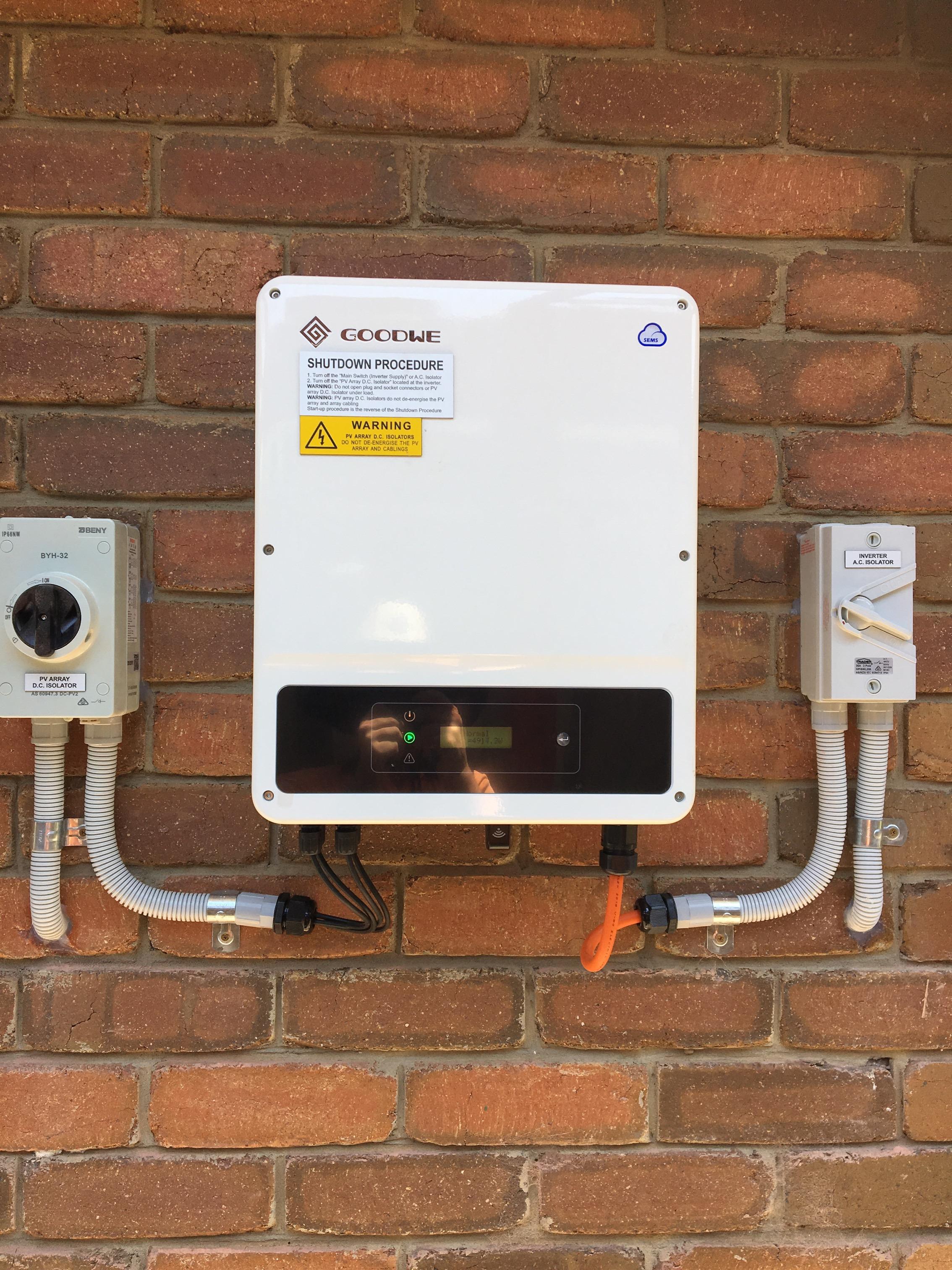
When more solar enters a power system, the discussion often turns immediately to batteries. Thailand's experience offers a broader lesson: existing equipment can sometimes do more, but the arrangements governing its operation may limit how it is used.
For Philippine solar buyers, this is a useful way to think about the gap between capability and value. A battery, inverter or controllable load may have an impressive technical specification. The actual benefit still depends on permissions, contracts and the operating decisions made around it.
Separate technical possibility from practical availability
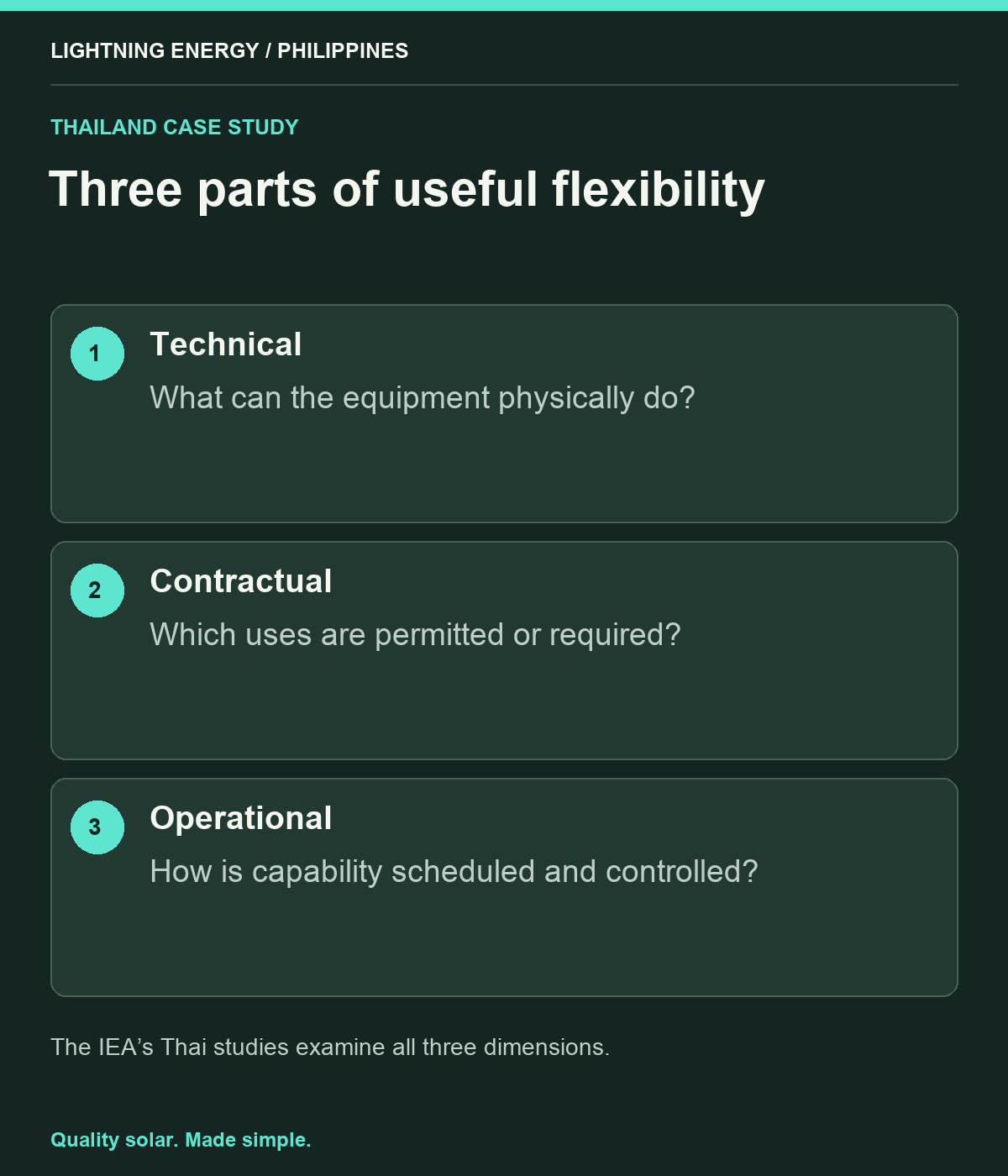
The IEA's 2021 Thailand study examined both technical flexibility and contractual constraints in the power system. [1] It is a dated system study, not a description of every current Thai arrangement. Its enduring analytical distinction is useful: equipment may be able to change output, yet commercial obligations can restrict when that capability is used. A buyer should therefore ask two different questions about any proposed function: can the equipment do it, and is the intended use actually available under this arrangement?
Read system findings at the right scale
A national power-system analysis considers fleets of generators, networks and coordinated operation. A household proposal concerns one property and its utility relationship. Do not turn a result about national flexibility into a claim that a home needs no battery, or that every home should have one. The relevant connection is the decision process. Start with the service required, identify the resources available and establish the rules that govern their use before assigning a financial benefit.
Consider operating practice alongside investment
The IEA's later Thai hybrid-PV analysis includes operational practices as well as technical and contractual flexibility. [2] For a business, our suggested analogue is to review actual schedules and control arrangements before purchasing additional equipment. A machine that can run within a genuine daytime window may offer an option, while a customer-critical process may not. Keep the comparison honest: an operational change must be acceptable to the people running the business, not merely possible in a spreadsheet.
Inspect the assumptions in a battery offer
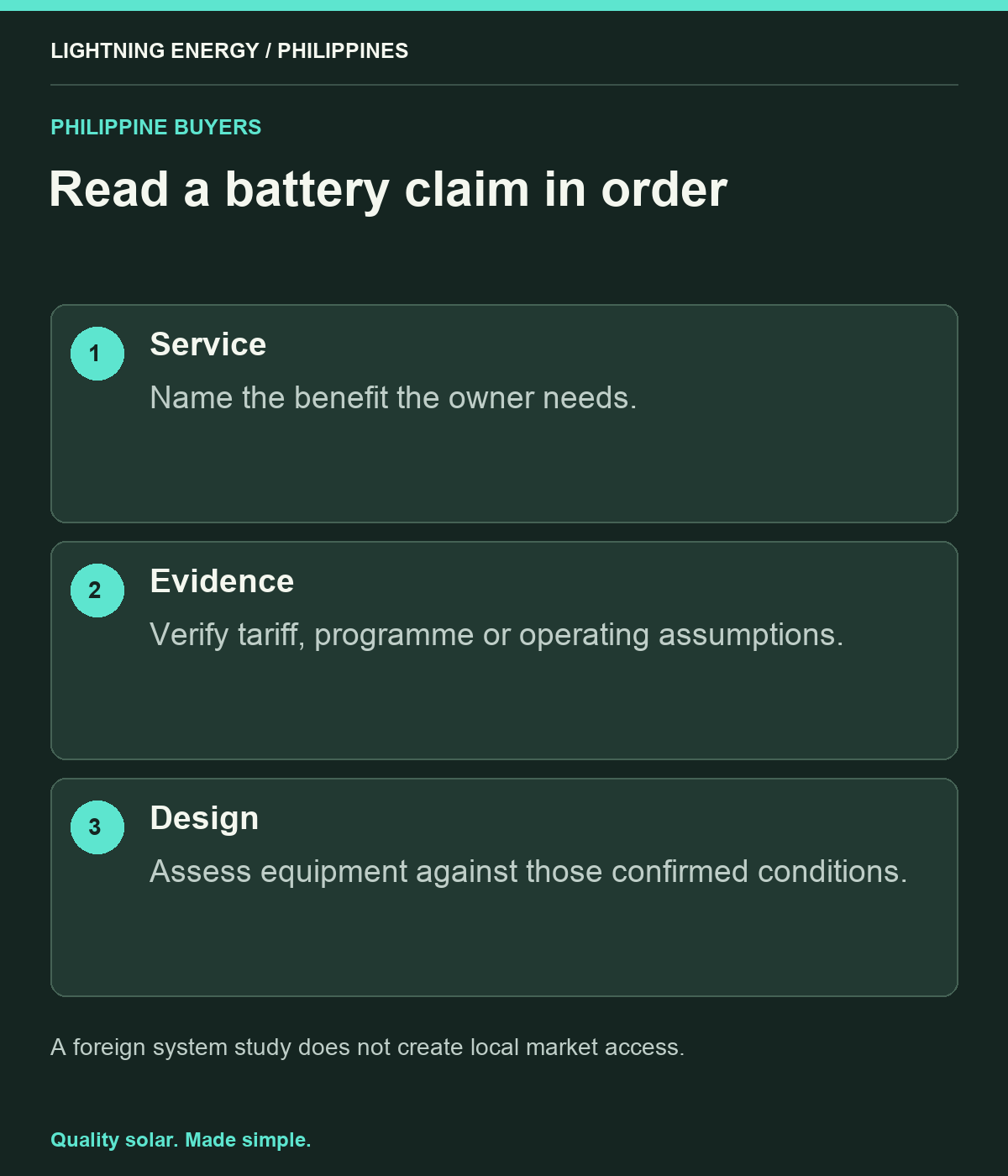
Ask which tariff, export condition or programme produces the proposed benefit. Request the applicable documents and separate confirmed arrangements from possible future developments. If a model assumes remote dispatch, verify who has control and how the owner's reserve priorities are handled. A technical phrase such as market-ready does not establish a paying contract. The proposal should explain how the system earns or saves money under the conditions actually available to the customer at the time of purchase.
Test an operational constraint explicitly
Consider a hypothetical workshop whose production schedule cannot move during its busiest season. Compare that condition with a quieter period when some tasks can be scheduled. The battery assessment should use the same constraints in each option. This exercise does not forecast savings; it identifies whether a proposed benefit depends on flexibility the business does not consistently possess. If it does, the owner can decide whether controls, a revised scope or a different operating assumption is more appropriate.
Keep local professional review in the process
Thailand's contracts and system architecture do not determine Philippine utility rules or a specific customer's rights. Ask the relevant local parties to confirm connection, metering and programme requirements. Have commercial terms reviewed where the investment depends on them. Retain the evidence alongside the design so that a future change in tariff or occupancy can be assessed against the original assumptions. This makes it easier to distinguish an equipment problem from a changed operating or commercial environment.
Buy the service that can actually be delivered
Bring the proposed functions and their supporting assumptions to Lightning Energy when discussing solar and storage. Ask for a clear account of equipment capability, authorised operation and expected value. Thailand's case encourages a useful habit: look at the whole arrangement before deciding which new asset to add. A well-matched project is one whose technical design and commercial conditions support the same objective, with uncertainty visible rather than hidden behind a large capacity number.
Sources & further reading
Sources used for this guide. Policy and product details should be checked for your particular installation.
- IEA: Thailand Power System Flexibility Study31 May 2021; accessed 27 September 2026
- IEA: How Hybrid PV Technologies Can Contribute to the Decarbonisation of Thailand’s Power System23 November 2022; accessed 27 September 2026