Care & performance
The Solar Handover Pack: Turn Procurement into Verifiable Ownership
Commissioning records, drawings, access and support responsibilities make a solar project usable long after installation day.
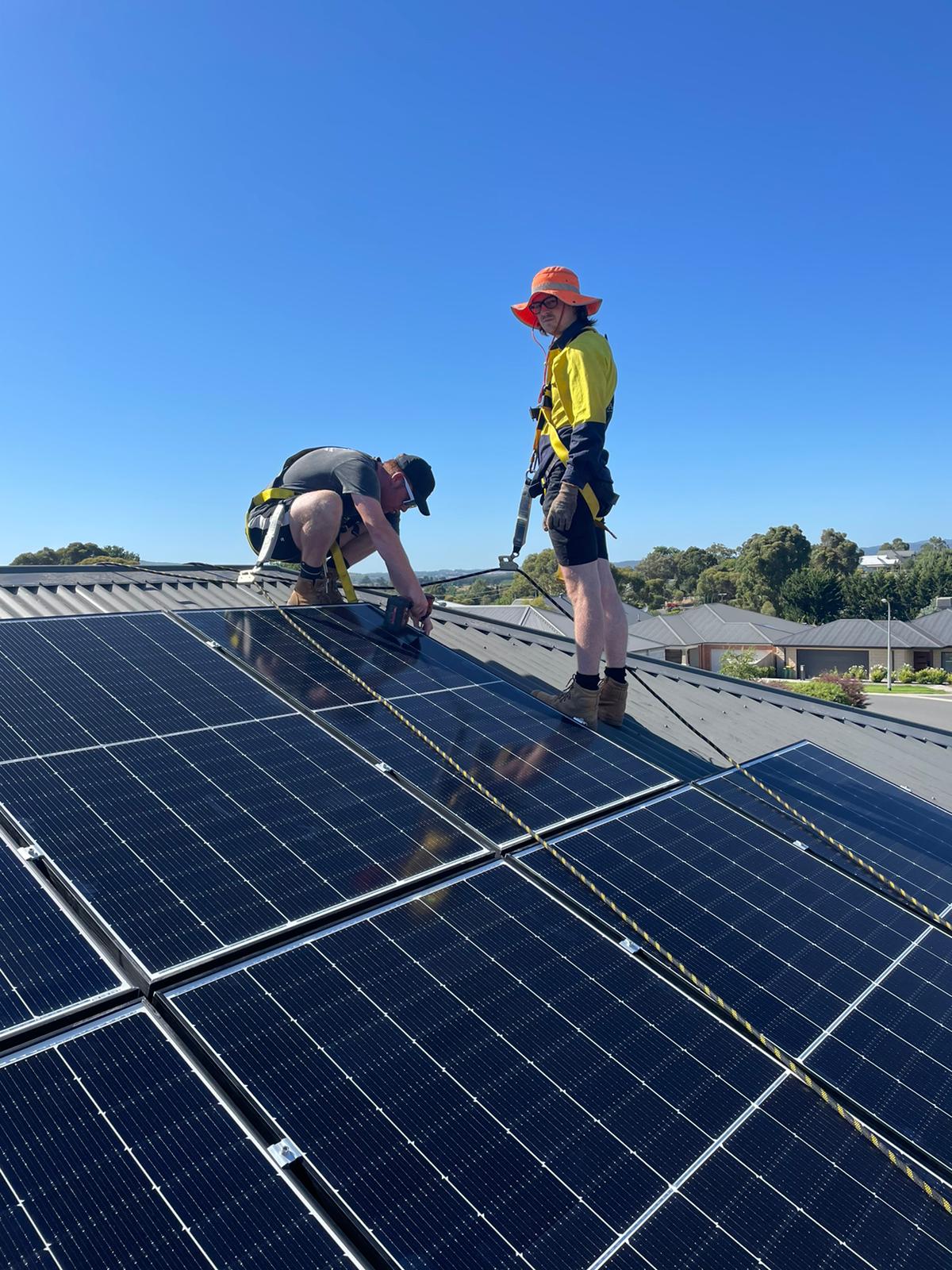
A solar project can look finished before the owner has everything needed to operate it confidently. Panels are visible; a missing drawing, unclear alarm process or inaccessible monitoring account is easier to overlook. Those gaps can matter later when staff change or equipment needs attention.
For Philippine homeowners and businesses, define the handover requirements while comparing proposals. The objective is not paperwork for its own sake. It is to retain enough evidence to understand what was installed, what was checked and who is responsible for the next step.
Specify the deliverables before ordering
Ask the supplier to list the drawings, equipment records, commissioning evidence, operating information and access credentials that the owner will receive. ADB's rooftop handbook treats implementation and operation as connected stages. [1] Our recommendation is to make the transition between them explicit in the scope. A contractor should know what constitutes complete handover before work begins, and the customer should not need to invent an acceptance checklist while standing beside newly installed equipment.
Identify the system that actually arrived
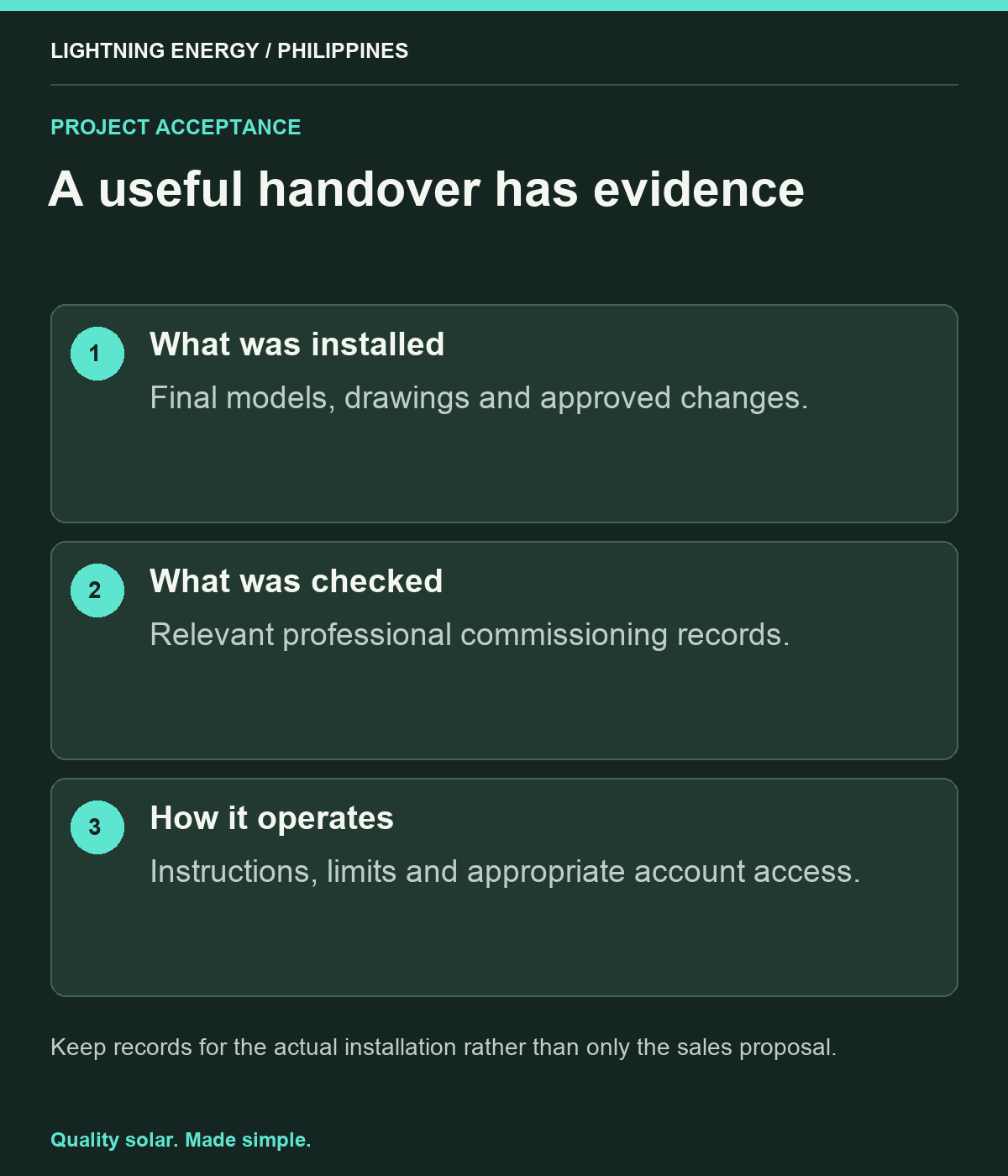
Retain the final equipment model list and relevant serial records where supplied. If a component changed during delivery, record the approved substitution and its supporting documentation. Keep the as-installed information separate from an early sales layout. The owner may otherwise be left with an attractive drawing that no longer describes the roof or electrical arrangement. This is particularly important for future service, when a technician needs to identify the actual system rather than infer it from an old quotation.
Obtain the appropriate commissioning evidence
Ask qualified professionals to explain and document the checks required for the installation and its intended functions. NREL's maintenance guidance connects quality deployment with future performance and operating costs. [2] A handover should therefore preserve the relevant test and inspection records, not merely a photograph of an illuminated display. If backup is included, ensure the documented scope identifies what was tested and the operating limits. The customer should not be asked to perform electrical tests personally.
Confirm useful monitoring access
Check that the owner can access the agreed information and knows how to recover the account through the proper process. Identify any subscription, communications or third-party dependencies. Ask what information remains available if a connection is interrupted. A demonstration should use the account and device the owner expects to use, not only the installer's phone. Keep technical control permissions appropriate to each person's role while preserving the customer's access to the performance information promised in the offer.
Make operating limits easy to find
Provide a concise explanation of the system's normal behaviour and the boundaries of any battery-backed service. Name the appropriate response to alarms and the actions reserved for qualified personnel. The household or facilities team should know whom to contact and where the instructions are stored. Avoid a handover that consists solely of several manufacturer PDFs with no explanation of how the installed components work together. The useful document describes this system and the responsibilities of its actual users.
Close the remaining items visibly
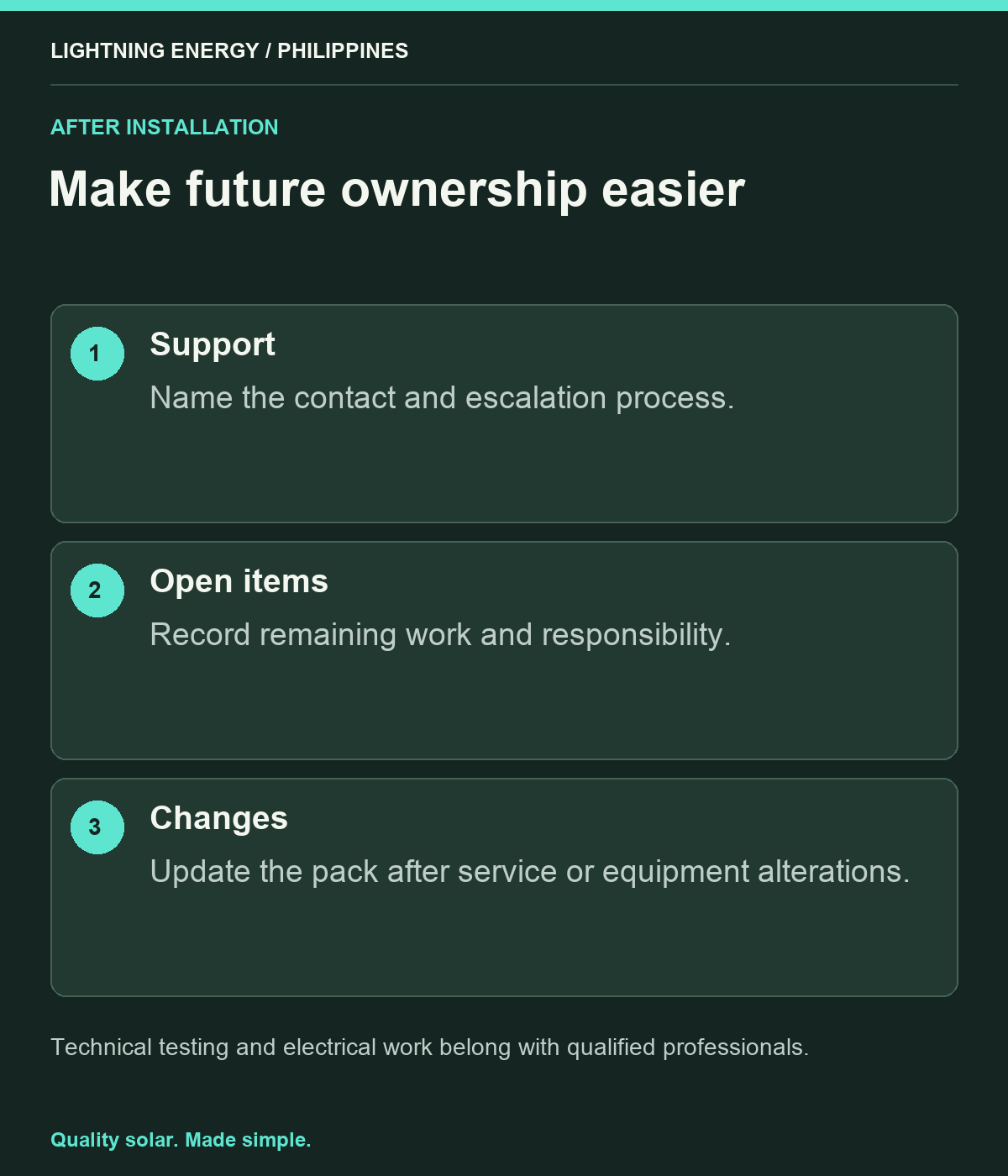
If something is incomplete, record it with a responsible party and an agreed resolution process. Examples might include a missing document, an account-access issue or a follow-up inspection required under the project arrangements. Do not let an informal verbal promise disappear into the installation day. The owner and supplier should have the same view of what remains. Keep contractual payment and acceptance decisions tied to the actual agreement and obtain advice where needed rather than relying on a generic checklist as legal authority.
Preserve the pack through changes in ownership
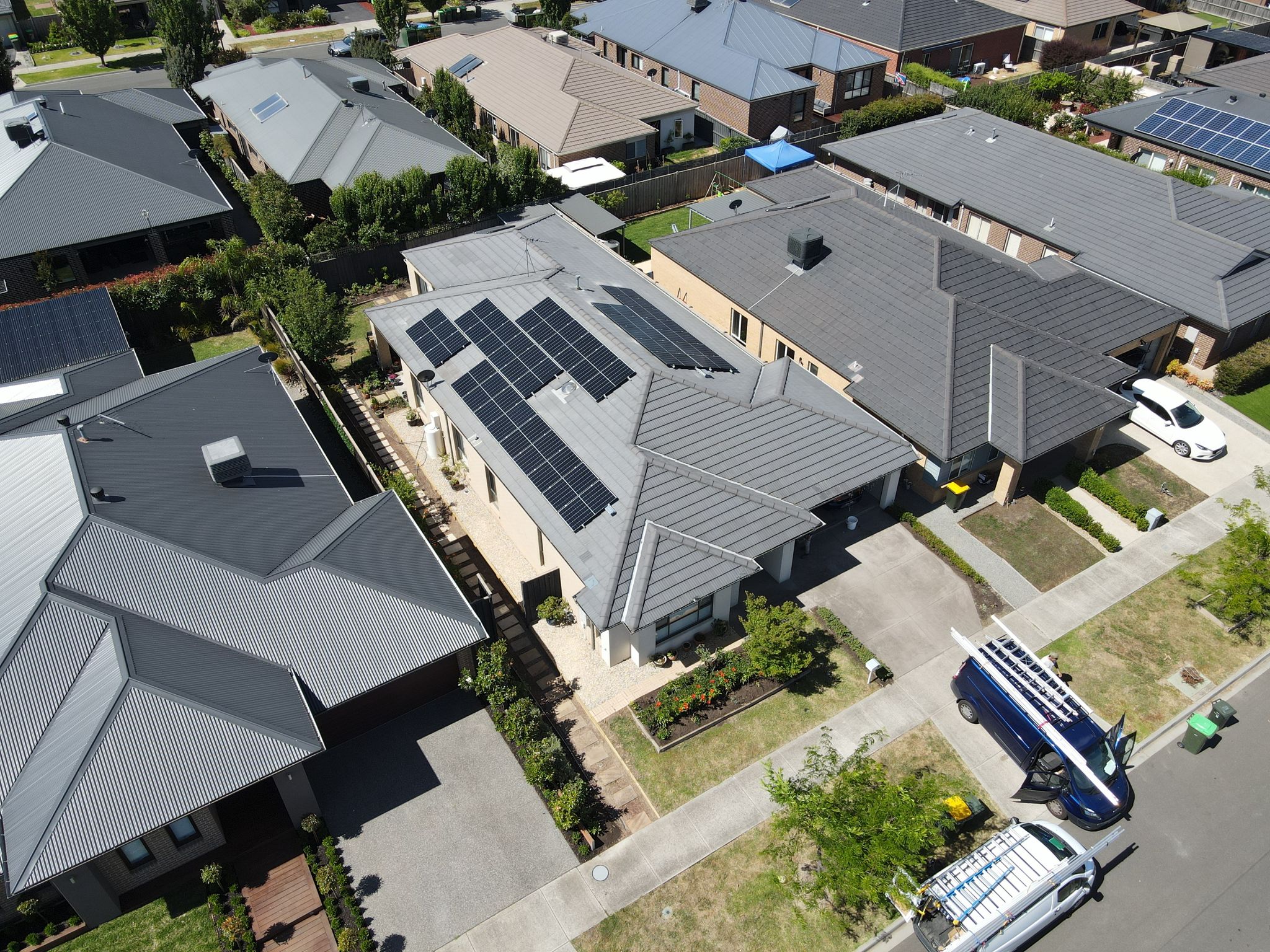
Store the final records where the household or business can find them, with a backup copy under appropriate access controls. Update the pack after repairs, equipment changes or a property transfer. Lightning Energy can explain the installation and support process as part of a clear handover. A well-documented project gives the next owner or facilities manager a reliable starting point. That continuity is part of the value of solar ownership, even though it never appears in the rooftop photograph.
Sources & further reading
Sources used for this guide. Policy and product details should be checked for your particular installation.
- ADB: Handbook for Rooftop Solar Development in AsiaDecember 2014; accessed 27 September 2026
- NREL: Best Practices for Operation and Maintenance of Photovoltaic and Energy Storage Systems, third edition2018; accessed 27 September 2026