Bills & savings
Will More Solar Bring Down Electricity Prices in the Philippines?
More solar can help reduce exposure to fuel costs, but your electricity bill involves much more than panels. Understand wholesale prices, grid costs and what changes for a rooftop owner.
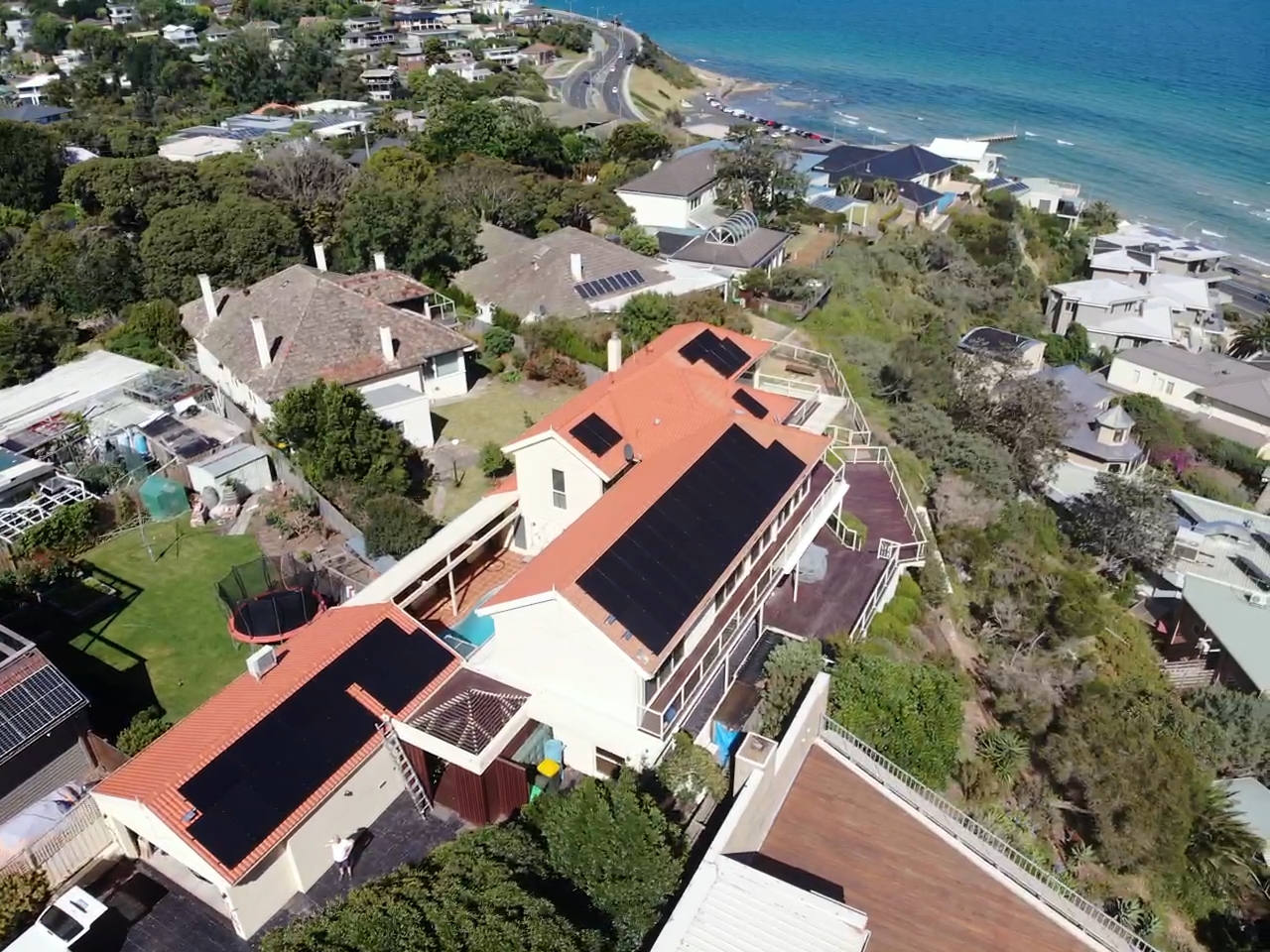
More rooftops with solar panels is an encouraging sight. The natural next question is whether that growth will make electricity cheaper for everyone. For a household considering its own installation, there is a second question: should you wait for national electricity prices to fall before making a decision?
More solar can help reduce fuel costs and household grid purchases. Whether that becomes a lower retail electricity rate depends on supply contracts, grid costs and other bill components. [1][3][4] The useful answer separates the cost of producing electricity, the price charged for electricity delivered through the grid, and the number of units your household buys.
Start with the bill that actually reaches your home
Meralco’s explanation of residential charges includes generation, transmission, distribution, system losses, taxes and other regulated charges. Its generation charge reflects electricity sourced through supply agreements, the spot market and eligible customer exports. [1] Your own utility and account determine the applicable amounts; a Meralco example is not a nationwide tariff.
That distinction explains why cheaper electricity from one source does not make the whole bill fall by the same percentage. Think of a purely fictional ₱3,000 bill: ₱1,800 for generation and ₱1,200 for all remaining items. If generation alone fell by 10%, with consumption and every other item unchanged, the bill would fall by ₱180, or 6%. This is teaching arithmetic, not a forecast or a representation of current charges.
When you read a price headline, ask which part of the chain it describes. A factory panel price, a power plant’s contract price, a wholesale trading price and a residential bill are four different measures.
Why a wholesale price headline is only part of the story
IEMOP, the Philippine spot-market operator, explains that WESM prices vary by location and reflect transmission losses or congestion, while bilateral contract quantities are settled outside the spot market. [2] In its September 2026 reporting, it also explains that consumers’ exposure depends on their supplier’s particular mix of contracts and spot purchases. [3]
For a household reader, the practical lesson is to resist applying a national or regional trading-price change directly to the amount due. A published wholesale average describes a particular market and period. It does not reveal your supplier’s complete purchasing arrangements or the charges on your next statement.
Compare like with like: the same utility, customer class, consumption level and billing period. If an announcement uses a sample household, check whether that household’s consumption matches yours. A useful explanation should show how the published rate becomes a bill, rather than leaving that step to guesswork.
Solar can reduce fuel exposure without fixing every cost
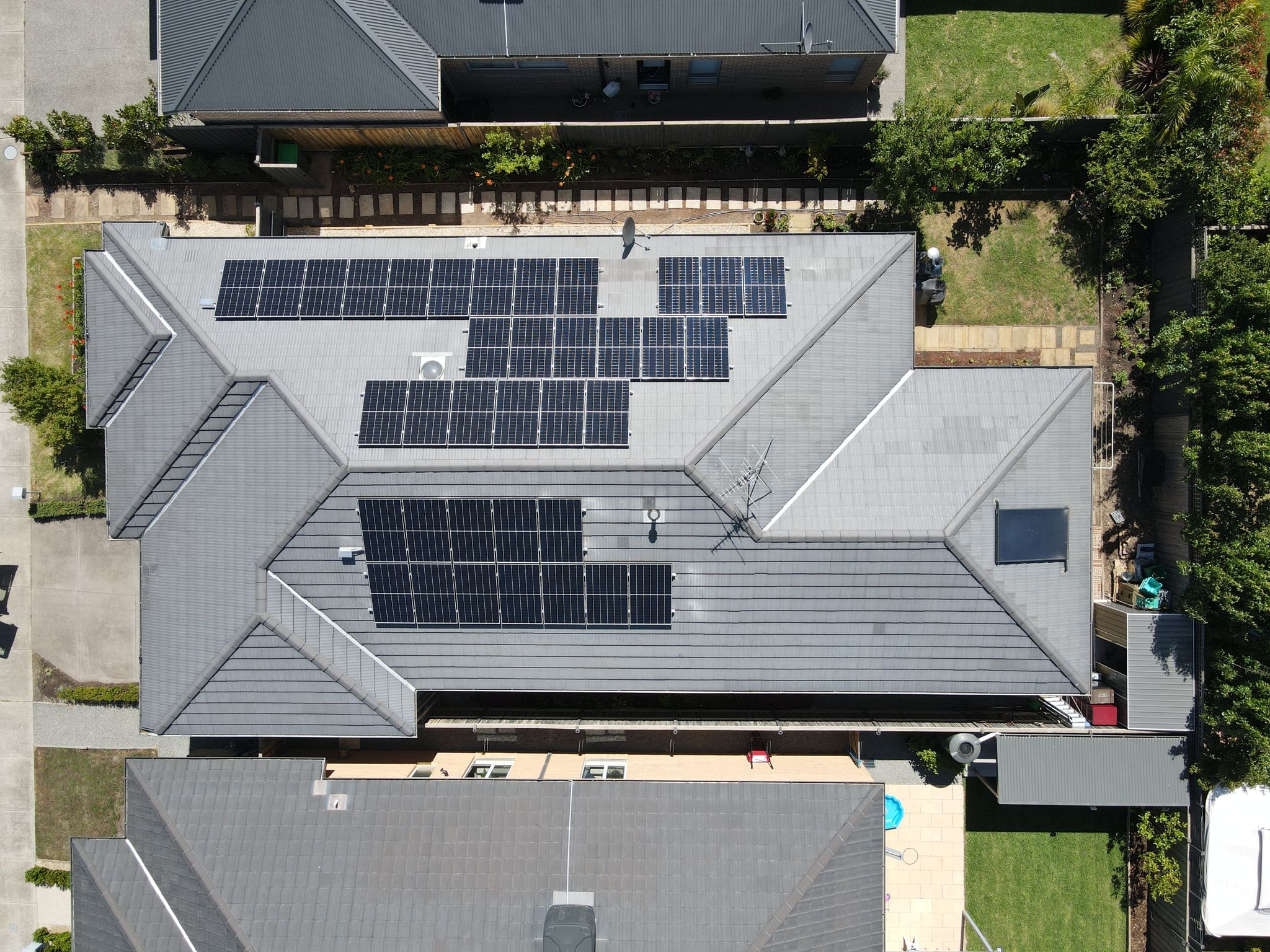
The International Energy Agency’s Renewables 2025 analysis estimates that renewable deployment avoided additional coal and gas imports for electricity generation. It compares actual developments with a scenario without new non-hydro renewable capacity after 2010. [4] This supports an important direction of travel: producing more electricity from local renewable resources can reduce reliance on repeatedly buying imported fuel. It does not establish a specific Philippine household saving.
Our interpretation is that fuel exposure and final affordability should be evaluated separately. A project may improve the supply mix while still needing financing, maintenance and delivery infrastructure. Those costs must be recovered somewhere. A credible affordability claim should explain both the avoided expense and the new expense, over the same period.
When a proposal says it will protect you from price volatility, ask what part of your spending becomes more predictable. For a rooftop owner, that might be a share of daytime electricity production. Grid purchases, equipment service and any finance payments still deserve their own assumptions.
Timing and grid capacity determine how useful new solar becomes
The IEA’s work on integrating solar and wind identifies storage, flexible demand, grid improvements and other flexible resources as ways to manage variable supply. [5] Its renewables analysis also describes curtailment: available renewable generation may be reduced when networks or operating conditions cannot accommodate it. [4]
Those findings suggest a better public question than simply asking how many panels have been installed: can the additional electricity be used where and when it is needed? For an individual household, the equivalent question is whether the proposed production matches useful demand, permitted exports or properly designed storage.
Consider a family that is away through the middle of most weekdays. A drawing showing annual solar production alone leaves their most important question unanswered. They need an estimate of the energy used at home, sent to the grid, stored or restricted. The relationship between those quantities matters more to their decision than a national installation milestone.
A lower bill can come from buying fewer units
A rooftop decision does not require predicting the future national tariff. It can begin with a narrower question: how many grid units could a suitable system reasonably replace, and what avoidable charges apply to those units? This separates the household’s energy use from broader electricity-market movements.
Imagine two months with the same fictional avoidable purchase rate of ₱10 per kWh. In one month, a household buys 400 kWh. In the second, useful solar production reduces those purchases to 250 kWh while household needs remain the same. The avoided energy purchase is 150 kWh, worth ₱1,500 under that assumption. We have not calculated the complete bill, export credits, capital cost or operating expenses.
Now suppose the avoidable rate were ₱8 instead. The same 150 kWh would be worth ₱1,200. That ₱300 difference is a useful sensitivity check: a system’s value can change with tariffs even when its useful production does not. Both rates here are invented, not current Philippine prices.
Do not treat a national trend as your roof assessment
National growth is a reason to investigate, not a substitute for checking the property. Ask for a proposal using the actual roof layout, shading observations, electrical requirements and household schedule. Keep planned changes visible, including a home office, a different air-conditioning routine or a likely move.
Build at least two household scenarios. One can reflect your expected routine; another can use lower daytime consumption or a lower avoidable tariff. Ask whether the project still fits your budget in the second case. If the answer depends entirely on electricity becoming much more expensive, the uncertainty should be explicit.
The same discipline applies to waiting. If you expect national prices to fall, write down the assumed change and test its effect on your own calculation. Do not postpone a decision indefinitely on the strength of an unspecified future saving. A review date and a stated assumption make the choice easier to revisit.
Judge energy-price claims with five practical questions
Before sharing a headline or accepting a sales projection, identify what it measures and what remains outside the calculation. This short checklist works for both a national energy announcement and a rooftop quotation.
- Which price is changing: equipment, wholesale electricity, a supplier contract or the delivered retail tariff?
- Which place, customer class and dates does the claim cover? A figure for another grid or billing period needs context.
- What is held constant? Consumption, exchange rates, financing terms and operating conditions can change the comparison.
- Which costs remain? Ask whether the calculation includes maintenance, grid charges, taxes, finance and replacements where relevant.
- What evidence would change the conclusion? Request a less favourable scenario and a clear explanation of its effect.
Make the decision at a scale you can check
More solar is part of a larger electricity-system transition. The route from additional renewable generation to affordable, reliable service involves procurement, networks, operations and customer behaviour. The sources above explain why progress in one area does not supply a precise date for cheaper bills everywhere.
For your household, begin with documents you can verify: recent bills, a practical daytime-use schedule, a roof assessment and a dated installation scope. Ask Lightning Energy Philippines to explain the expected energy flows and compare a range of tariff assumptions. That gives you something firmer than a prediction about the next national price announcement.
Malinaw dapat ang numbers. A useful solar conversation connects the proposed equipment to your property and budget, shows what the calculation includes, and gives you room to test a different outcome. That is how a broad energy opportunity becomes an informed household decision.
Sources & further reading
Sources used for this guide. Policy and product details should be checked for your particular installation.
- Meralco — Breakdown of ChargesUpdated 1 May 2026; accessed 21 September 2026
- IEMOP — About the Philippine Electricity MarketAccessed 21 September 2026
- IEMOP — Tight Regional Supply Conditions Pushed August WESM Prices Higher in Visayas and MindanaoNews report published 10 September 2026; accessed 21 September 2026
- International Energy Agency — Renewables 2025: Renewable Electricity2025; accessed 21 September 2026
- International Energy Agency — Integrating Solar and Wind: Executive Summary2024; accessed 21 September 2026