Solar for business
Apartment Solar: Start with the Common-Area Meter
For apartment buildings, a shared roof needs a clear ownership and metering plan before a solar proposal can be useful.
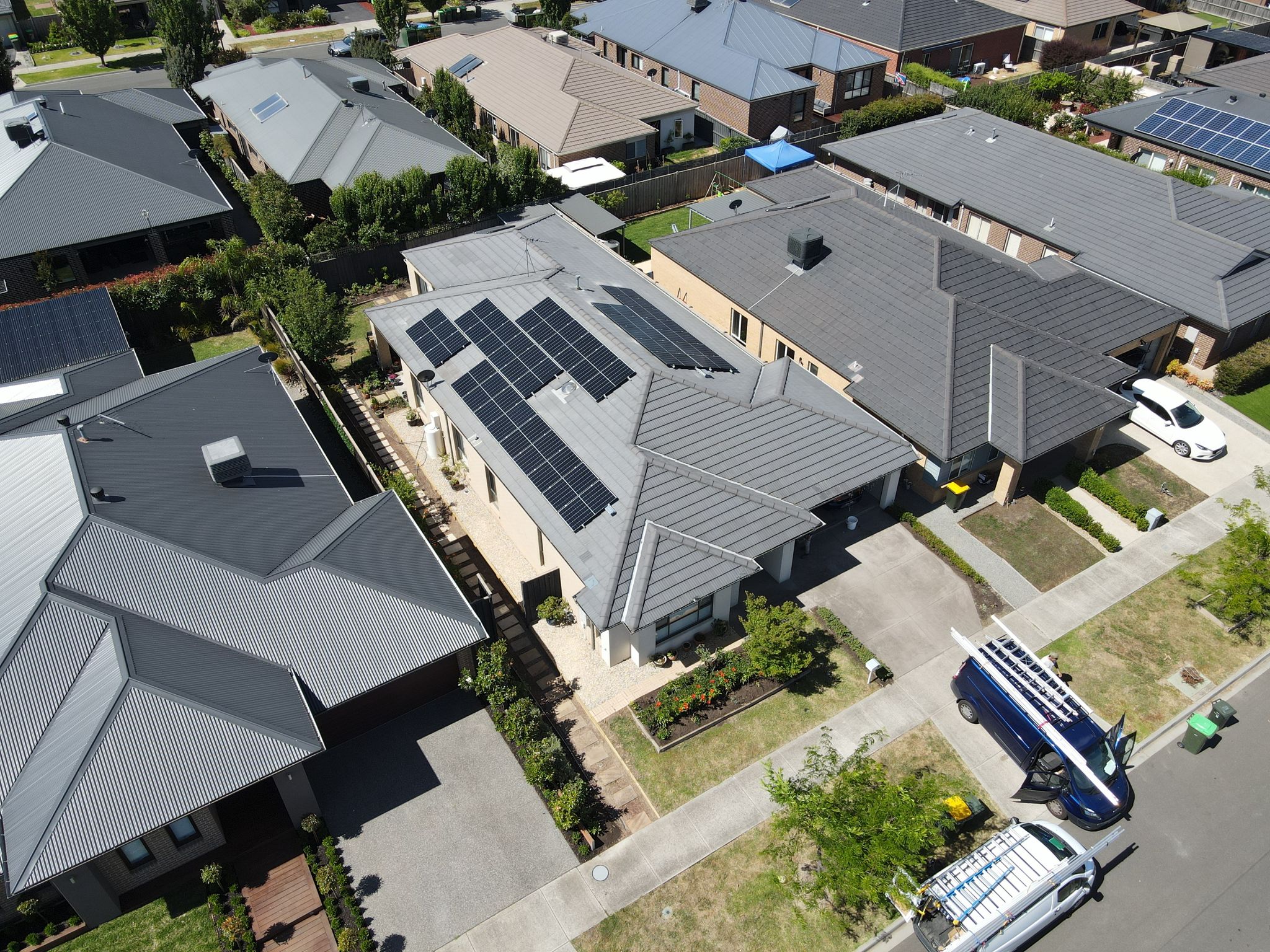
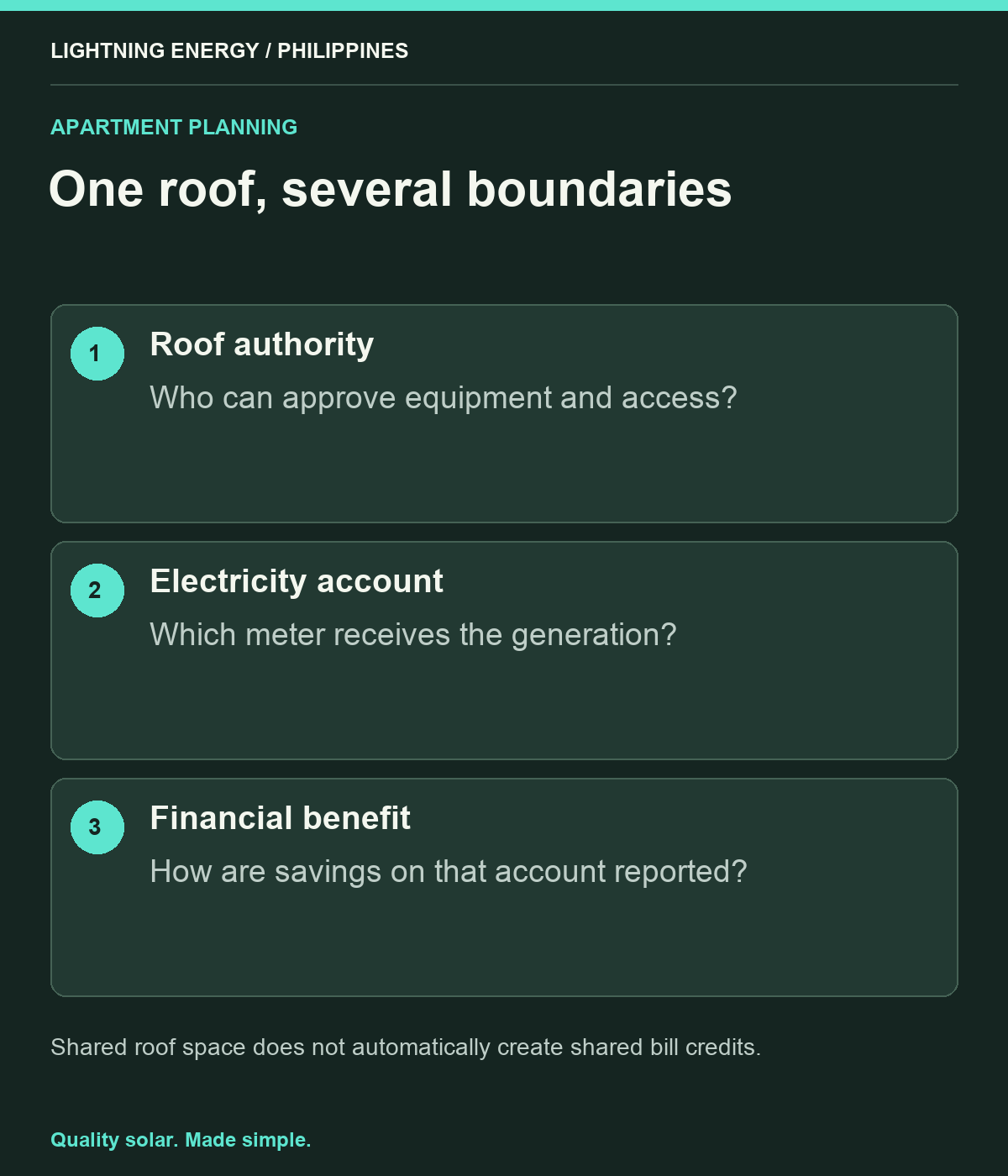
A shared roof can create a shared opportunity, but it does not automatically create a shared electricity bill. Apartment residents, landlords and building managers may pay through separate accounts. Solar mounted above them needs a clearly identified customer and a clearly identified load.
For a Philippine apartment building, a manageable first assessment is often the common-area account. That might include administration, corridors, pumps or other shared services, depending on the property. This is a planning starting point, not a claim that every building has the same metering or legal arrangements.
Draw the meter boundary
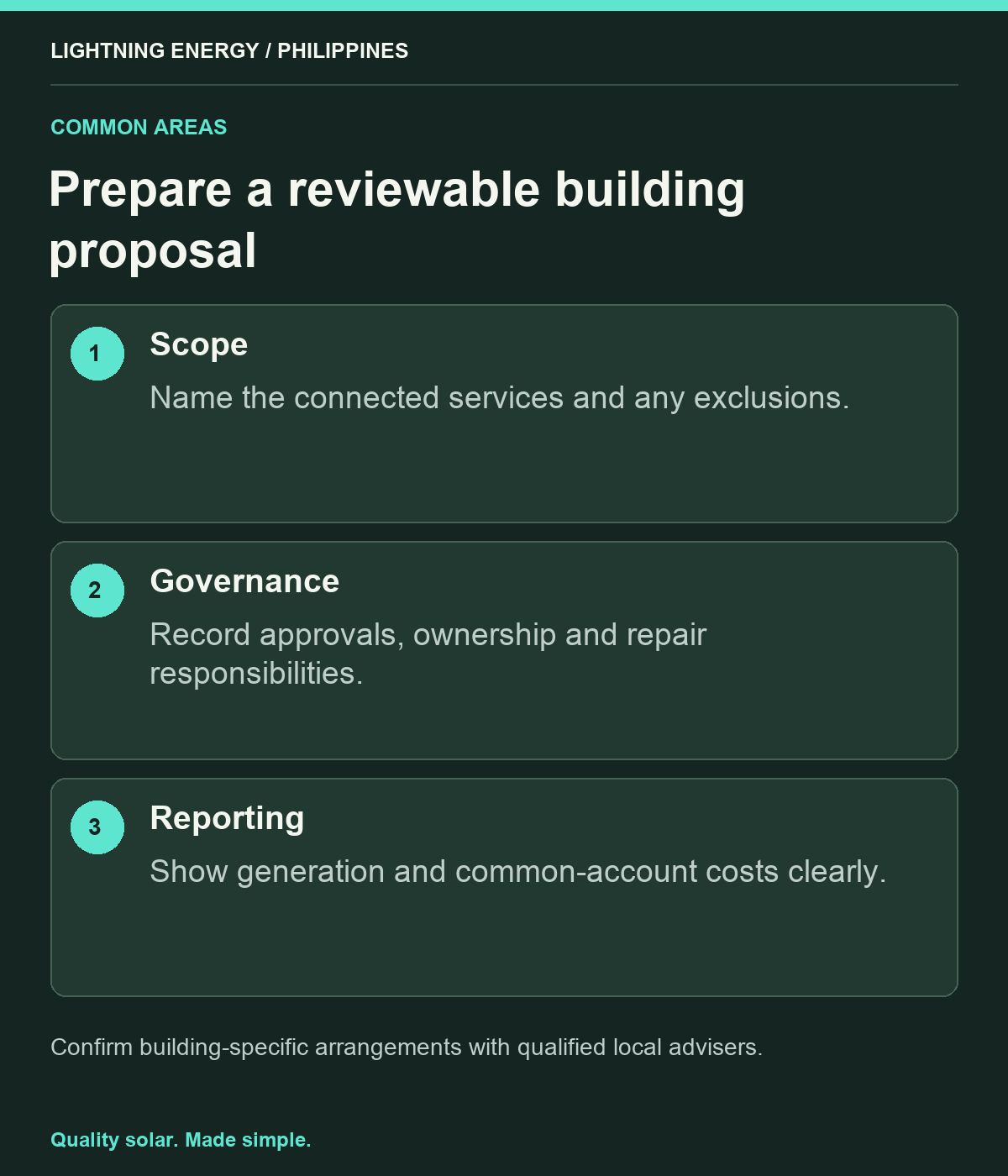
Ask the building's qualified electrical professional to map the relevant accounts and the services each account supplies. Record who pays each bill and who may authorise changes. The ADB rooftop handbook separates project preparation from design and procurement. [1] Apply that discipline before discussing panel counts. A proposal for one meter cannot be assumed to offset the bills of every resident, and an association should not promise individual savings before the arrangement has been confirmed.
Establish the authority to use the roof
Gather the documents that show who controls the roof and who can approve installation, access and future alterations. Ask the responsible property adviser to resolve any uncertainty. Include maintenance access, existing equipment and planned repairs in the discussion. A resident's enthusiasm is useful, but the project needs an authorised counterparty. Record the decision and its scope so that a later change in building management does not leave the installation without a clear owner or operating contact.
Match the proposal to shared activities
Make a diary of common-area demand, with separate attention to daytime and evening use. Some services may operate on schedules, while others respond to occupancy. Use actual measurements where available rather than adding equipment nameplates and calling the result annual consumption. ADB's Philippine Buskowitz project illustrates financing across commercial rooftops. [2] It does not establish a ready-made apartment scheme or eligibility for this property; local metering and ownership still need individual assessment.
Decide how benefits are reported
If savings accrue to a common account, explain how the building intends to use them through its normal financial processes. Possibilities might include a reduced common expense or a maintenance reserve, subject to the building's governance. Avoid promising an equal monthly reduction to each resident without a documented basis. An illustrative reporting sheet could show purchased electricity, solar generation and changes in occupancy separately, helping residents understand why a bill moves without assuming every change came from solar.
Keep storage tied to a defined service
A building may value continuity for selected shared equipment, but that requirement needs its own engineering brief. Do not imply that a battery on the common meter powers every apartment or a lift. Name the intended services, their equipment requirements and the desired continuity standard, then obtain a professional design. Ask bidders to separate the cost of ordinary generation from the cost of the proposed backup arrangement. That makes association decisions easier to explain and later verify.
Agree on access and responsibility
Write down who checks monitoring, who may approve service work and how contractors gain access. Include roof repair coordination, emergency contact details and the destination of warranty records. Residents should know the appropriate reporting channel without needing access to control settings. If equipment sits in a shared space, the building team should review its suitability and access requirements with the designer. An installation that is easy to administer is more likely to remain understood as residents and managers change.
Present a proposal the building can actually vote on
Bring a roof plan, common-area bills, ownership documents and a clear benefit-reporting proposal to the assessment. Request drawings that identify the connected meter and the services covered. Ask for assumptions about export, financing and future repairs in writing. Lightning Energy can then discuss the physical installation while the building's authorised advisers settle governance. A useful shared-roof project starts with agreement on who is buying what and how its performance will be visible to the people paying for it.
Sources & further reading
Sources used for this guide. Policy and product details should be checked for your particular installation.
- ADB: Handbook for Rooftop Solar Development in AsiaDecember 2014; accessed 27 September 2026
- ADB: Buskowitz Rooftop Solar ProjectAccessed 27 September 2026