Solar for business
Barangay Energy Resilience: Design Around Essential Services
A community solar-and-storage project needs agreed services, trained operators and a plan for difficult days.
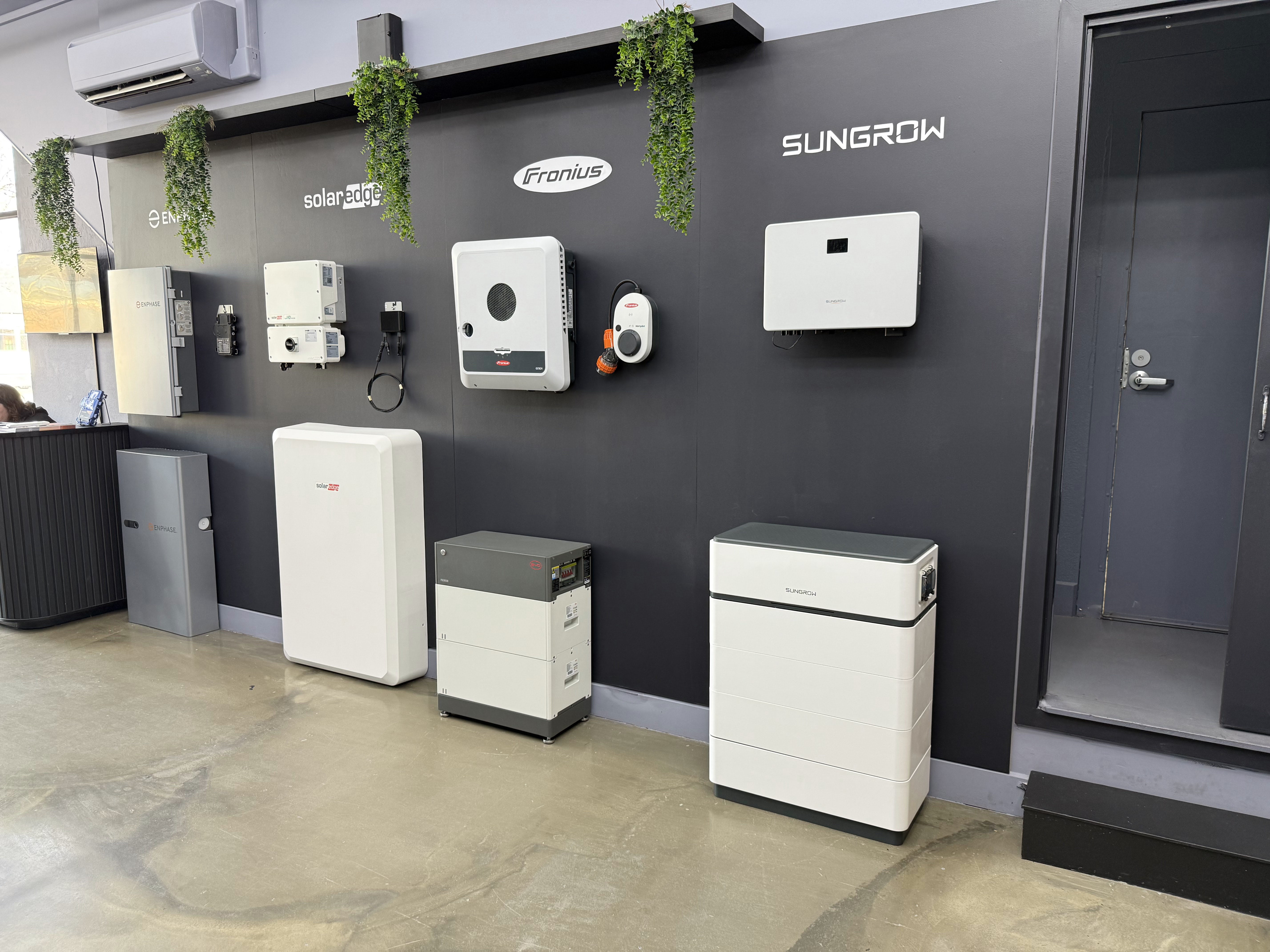
A barangay building may be an office on an ordinary day and a gathering place when the community faces disruption. Those roles can call for different electricity arrangements. A roof assessment is useful, but it is not the first decision in a resilience project.
Begin by agreeing what the facility is expected to do when normal services are interrupted. The community team, building operator and qualified professionals should define that role together. Solar and storage can then be considered as part of a broader operating plan rather than as a symbol of preparedness.
Define the service rather than the equipment package
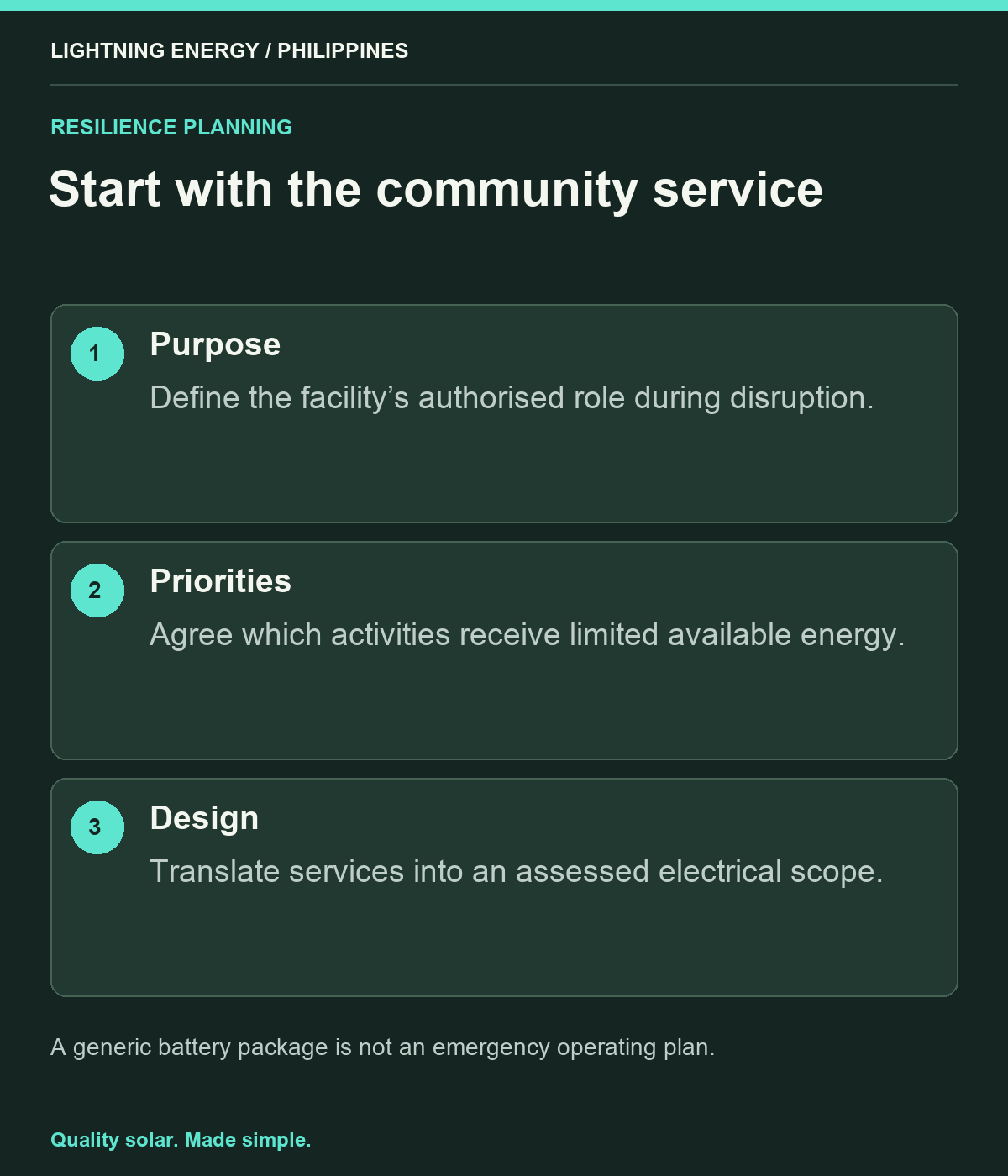
List the activities the building is authorised and prepared to support: communications, lighting, selected administrative functions or another agreed purpose. Name the responsible person for each. The US Department of Energy describes solar-and-storage applications for critical community facilities. [1] That establishes a technical possibility, not a guaranteed outcome for this building. Ask the designer to translate the agreed services into an assessed electrical scope, including any requirements that go beyond ordinary rooftop generation.
Distinguish routine and emergency demand
Collect electricity records for normal operations, then prepare a separate list for the building's intended emergency role. More people, longer hours or temporary equipment can change the demand substantially. Use a labelled planning exercise rather than treating an ordinary monthly bill as an emergency specification. Decide which activities take priority if available energy is limited. That prioritisation should be agreed in advance with the responsible community and facility teams, not improvised by an installer after a battery is chosen.
Assess the site as well as the electricity
IEA's Southeast Asian climate-resilience work identifies risks to energy infrastructure from heat, heavy rainfall and flooding. [2] Ask the appropriate professionals to assess the building, equipment locations, access and relevant hazards. A backup system is useful only within the conditions for which it is designed and safely operable. Consider how staff reach the building and how support reaches the equipment after a disruption. Do not assume that a battery eliminates every vulnerability associated with the site.
Make limited-energy operation understandable
Request a written explanation of the supported circuits, operating limits, reserve policy and what happens when energy runs low. Ask for labels that match the language and responsibilities of authorised users. A hypothetical response team might prioritise communications and a small coordination area before other uses; that example is a discussion prompt, not a prescribed emergency plan. The actual priorities must reflect local duties and a professional design, with an escalation procedure that staff can follow.
Practise the handover before it matters
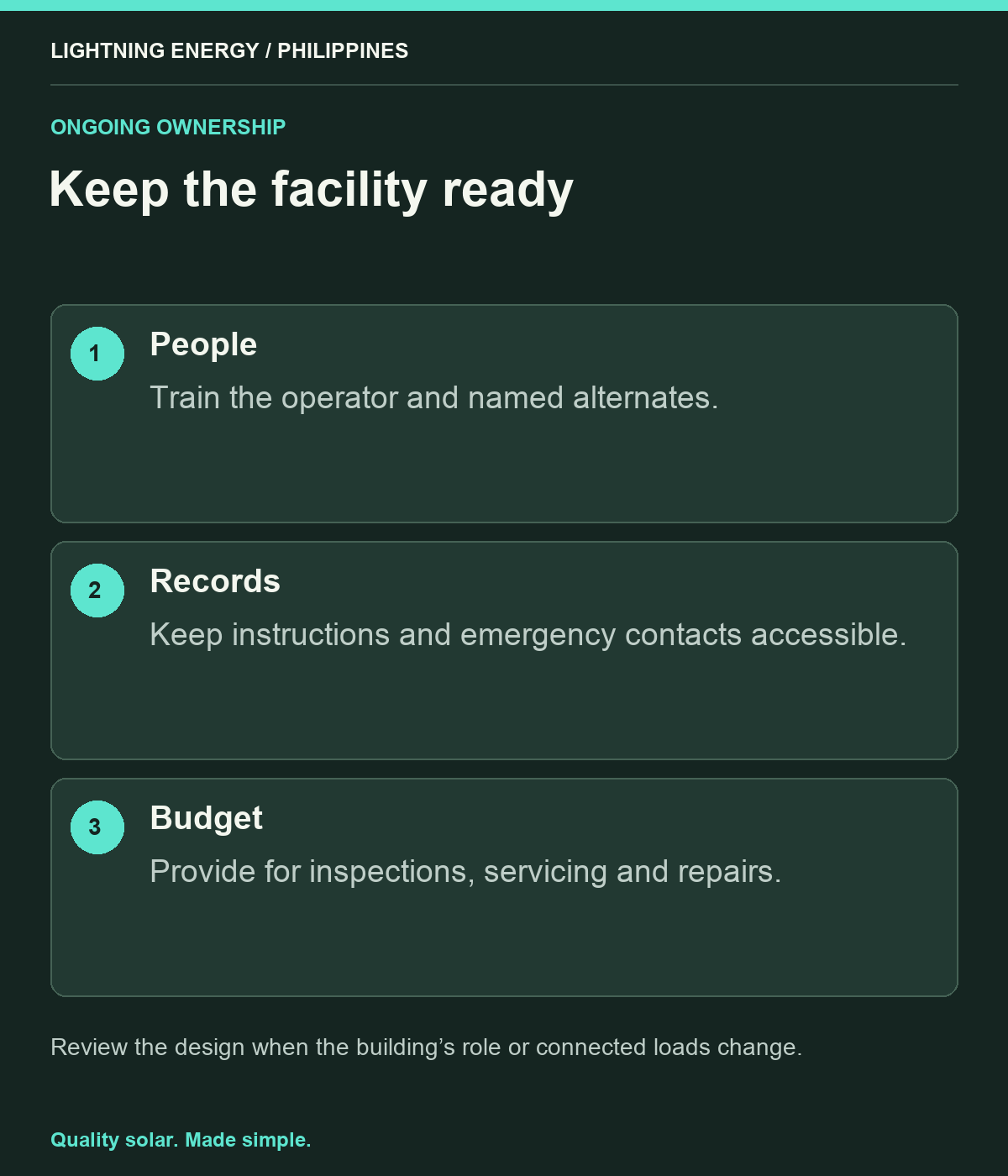
Arrange a supervised commissioning and familiarisation session with the people who will actually operate the facility. Ask the responsible professionals to demonstrate approved modes and explain alarms. Record attendance and identify alternates for staff who may be unavailable. Keep emergency information accessible without relying on a single phone or cloud account. A project is not operationally complete when equipment is mounted; the facility team needs an understood way to use it within its authorised role.
Fund support beyond installation day
Identify the budget for inspections, servicing and eventual repairs. State who can authorise work and how performance will be reviewed between emergencies. A donated or publicly funded system still needs ownership after the opening ceremony. Include a simple record of service events and changes in equipment connected to protected circuits. If the building's role changes, have the design reassessed rather than assuming the original backup scope automatically expands with new community expectations.
Prepare a service-led project brief
Bring the building's authorised role, ordinary bills, proposed emergency activities and known site constraints to the assessment. Lightning Energy can discuss solar and storage within that brief while the relevant professionals and community authorities resolve facility requirements. The strongest resilience project is specific about what it supports and honest about its limits. It leaves the barangay with trained people, accessible records and an operating plan that remains useful long after the installation photograph is taken.
Sources & further reading
Sources used for this guide. Policy and product details should be checked for your particular installation.
- US Department of Energy: Solar and Resilience BasicsAccessed 27 September 2026
- IEA: Climate Resilience for Energy Security in Southeast Asia2024; accessed 27 September 2026