Across Asia
China’s Distributed Solar Boom: The Grid Connection Is a Local Question
China’s integration experience shows why national solar growth and one property’s connection conditions are different matters.
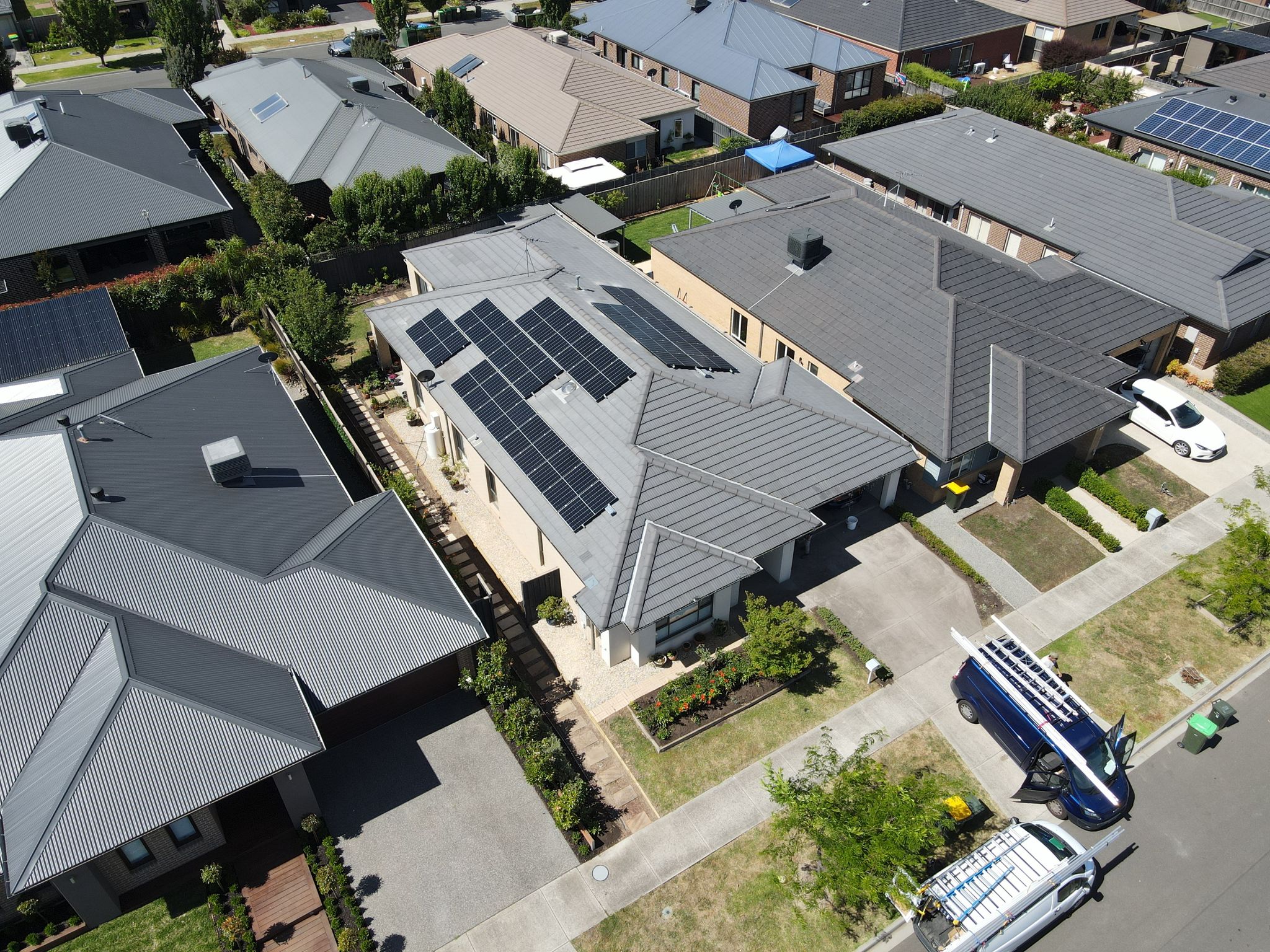
National solar growth can be impressive while individual neighbourhoods still face practical connection questions. China offers a useful example because its distributed resources have expanded across homes, businesses and rural areas at a scale that makes local network coordination increasingly important.
For Philippine buyers, the lesson is to keep two conversations separate: the broad opportunity for solar and the assessed conditions at a particular property. A strong national market does not remove the need for a clear local design, connection process and operating arrangement.
Read the evidence at distribution level
The IEA's 2025 China report identifies local network constraints associated with rapid distributed-resource deployment. [1] It discusses visibility, demand timing and the ability of networks to accommodate additional generation. This is a national analytical report, not evidence that a particular Philippine street has the same constraint. The useful lesson is that a rooftop connects to a specific network location. Decisions made at that location can matter even when the country as a whole has ambitious solar growth.
Separate capacity from the ability to use it
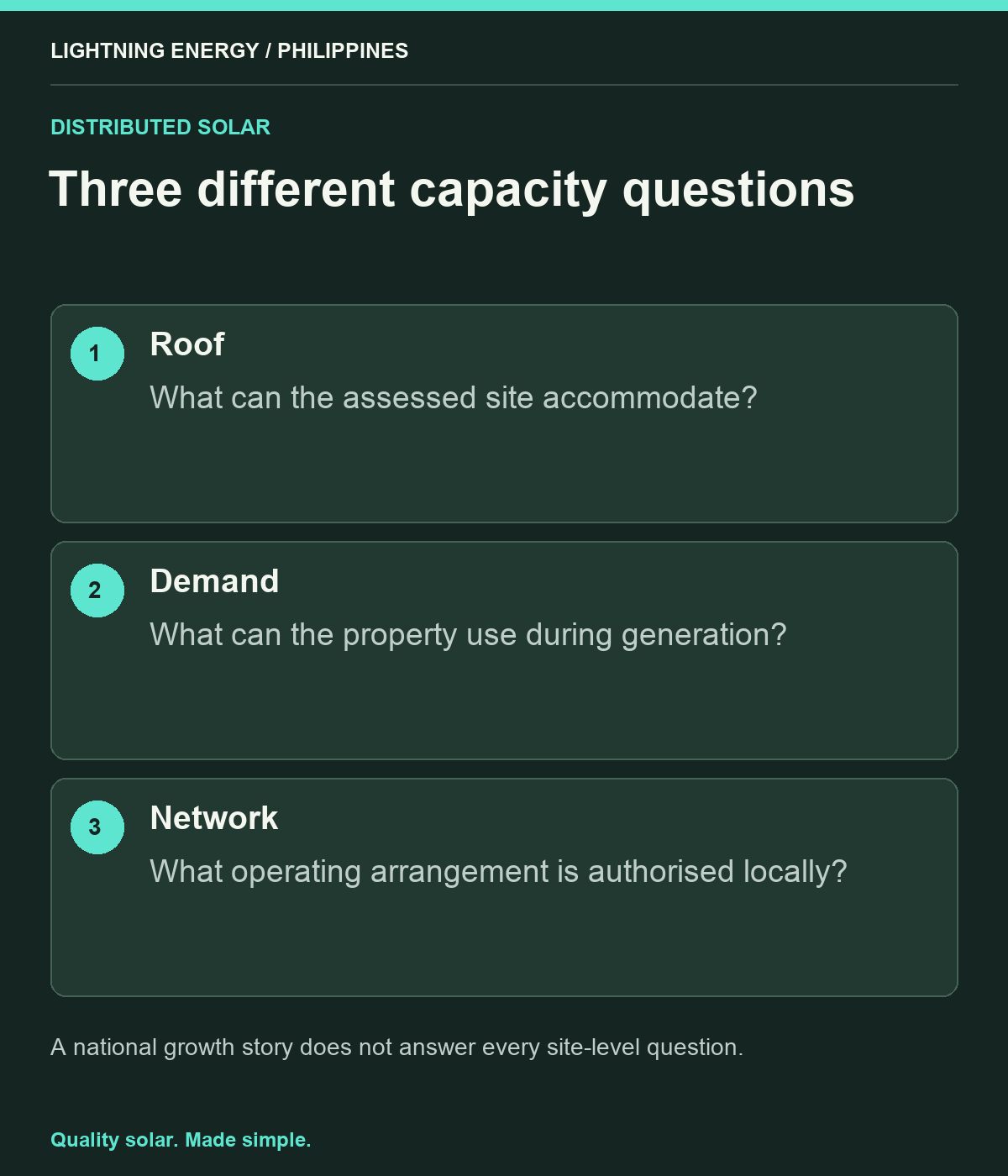
A panel rating describes equipment capability under specified conditions; it does not establish how much electricity a site can use or send to the grid under its approved arrangement. Ask a supplier to identify each of those questions explicitly. A hypothetical commercial building may have ample roof space but limited daytime demand. Another may use most generation locally. These examples do not predict an approval outcome. They show why roof area alone is an incomplete basis for an investment model.
Learn the coordination lesson
IEA's Southeast Asian integration analysis highlights forecasting, grid monitoring and operational improvements among measures that support renewable integration. [2] The household analogue is modest: provide accurate site and demand information, use the required equipment and keep the design aligned with the authorised operating mode. A customer does not need to manage the national grid. It does need a project team that treats connection requirements as part of the installation rather than as paperwork unrelated to the financial promise.
Ask for a transparent connection pathway
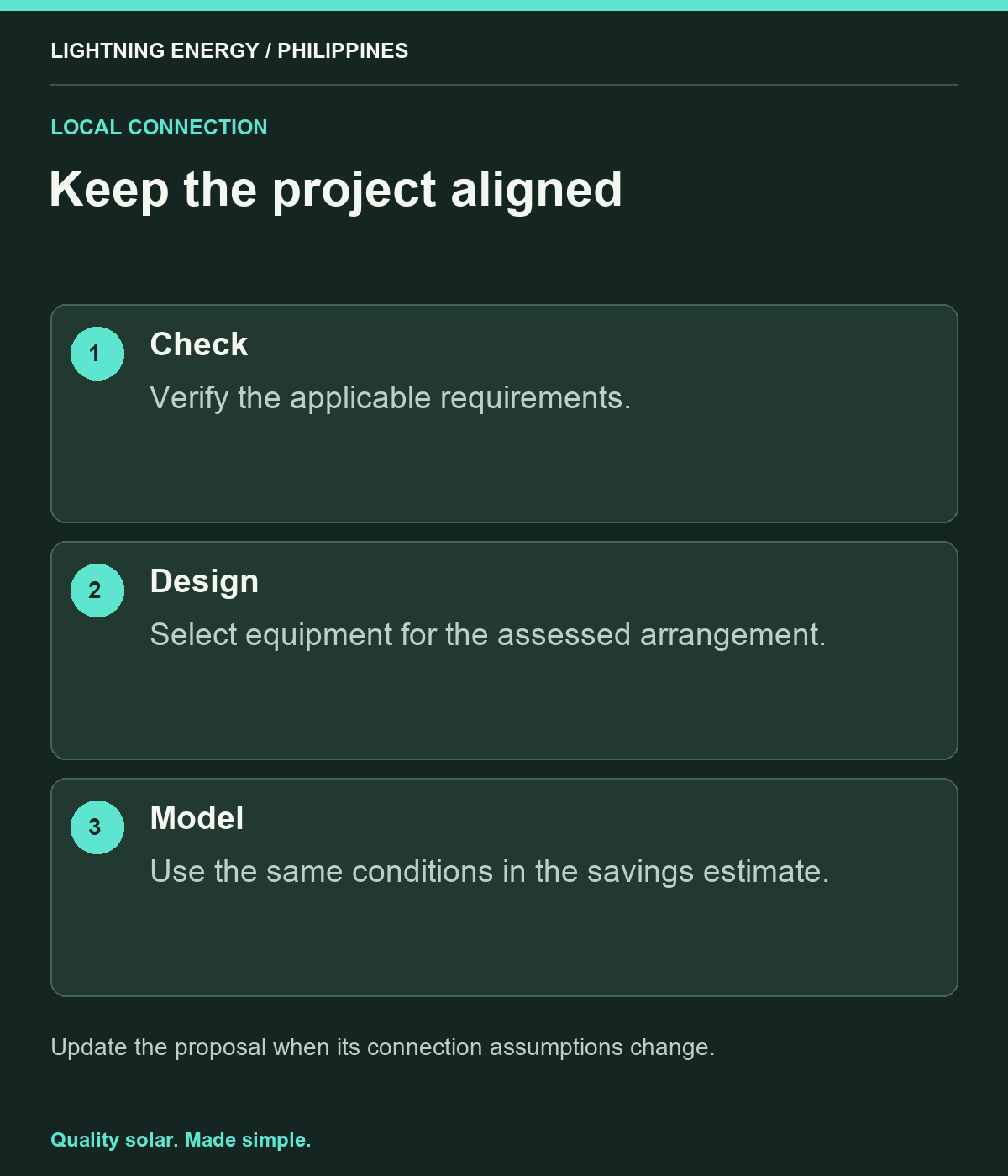
Identify who checks the relevant utility requirements, prepares documents and communicates any conditions to the owner. Keep the outstanding steps visible. Do not rely on another customer's approval as proof that the same arrangement applies to this property. The site, equipment and timing may differ. If an assessment changes the proposed capacity or operating mode, ask for the energy model and quotation to be updated together so that the customer is comparing the project that can actually proceed.
Evaluate storage on its own merits
A battery may change how the property uses energy, but do not assume it automatically resolves every network constraint or approval requirement. Ask the designer to state the intended duty and any limits that still apply. Compare the assessed arrangement with alternatives using consistent demand information. If future grid-service income is proposed, verify the applicable local programme separately. China's policy and market developments do not establish Philippine eligibility simply because a product is sold in both countries.
Keep future options proportionate
An owner may value equipment that supports monitoring, export control or later upgrades where these are appropriate. Ask for exact capabilities, compatibility and the cost of enabling them. Avoid a vague future-proof label that implies all later uses will be available without reassessment. The most useful flexibility is documented: which changes are supported, which require additional hardware and which depend on rules or network conditions beyond the customer's control. Keep speculative benefits outside the confirmed purchase case.
Bring the local facts to the solar assessment
Share bills, operating schedules, meter information and known property constraints with Lightning Energy. Ask for a proposal that distinguishes the roof design, expected energy use and connection arrangement. China's experience helps explain why these details matter as solar grows. A sound Philippine project does not need to reproduce an overseas market. It needs to fit its own premises and network relationship, with an understood process for checking assumptions before the owner commits.
Sources & further reading
Sources used for this guide. Policy and product details should be checked for your particular installation.
- IEA: Integrating Distributed Energy Resources in China2025; accessed 27 September 2026
- IEA: Integrating Solar and Wind in Southeast Asia2025; accessed 27 September 2026