Across Asia
India’s Solar Pump Programme: Buy the Water Service, Not Just Panels
Solar pumping starts with the farm’s water requirements, operating arrangements and service plan.
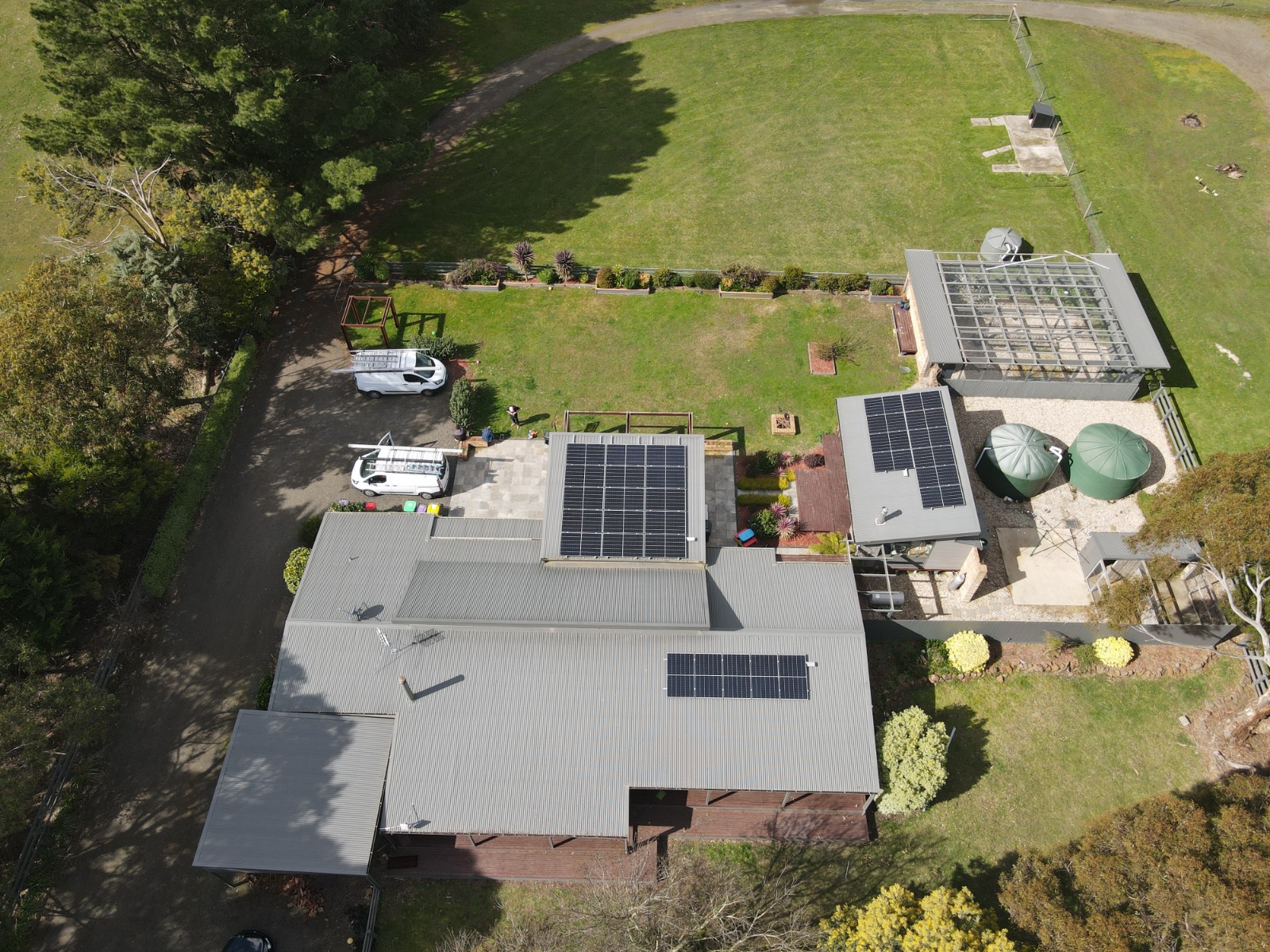
A solar pump proposal can look straightforward when it is described as panels plus a motor. For a farm owner, however, the outcome is a water service delivered at the right place and time, within the site’s permissions and resource limits.
India’s PM-KUSUM programme provides a useful regional case for asking better procurement questions. Philippine buyers can learn from the way pumping, energy and support are treated together, while keeping Indian policy arrangements separate from a local farm investment.
Read the programme as a dated case
India’s MNRE programme page describes standalone solar pumps and solarisation of existing pumping arrangements; its listed programme period ends in March 2026. [1] This article uses that published structure as a case study, not an announcement that applications remain open. It also does not imply any matching subsidy in the Philippines. A local proposal needs its own confirmation of land, water, electrical and other applicable requirements before a programme name is used as evidence that the project can proceed.
Write the water brief before the equipment brief
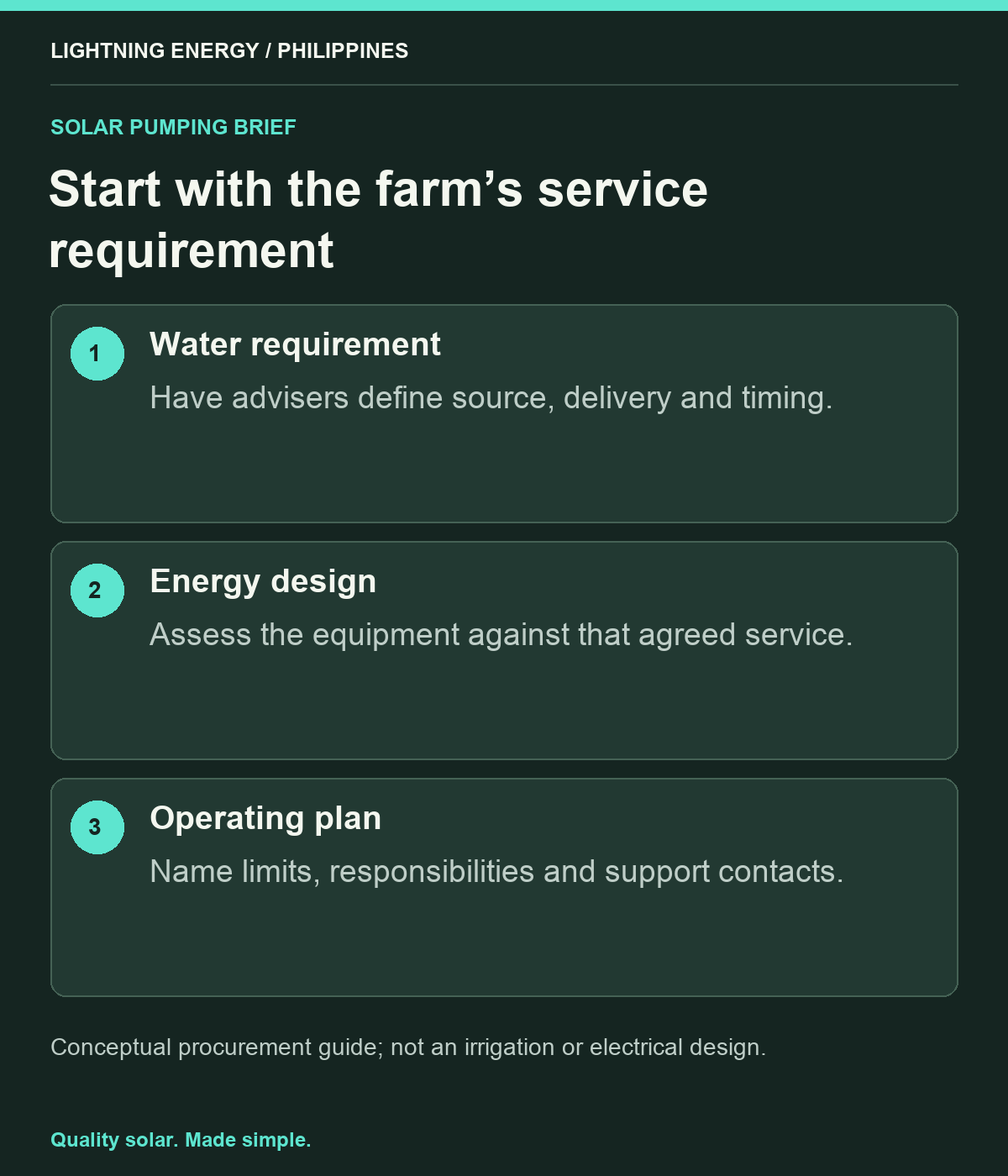
Ask the farm’s qualified advisers to define the required water service, including source, delivery points, timing and seasonal changes. Record what is measured and what is only estimated. The solar designer needs that brief rather than a preferred panel count. For an illustrative grower adding a second production area, assess the changed service requirement explicitly. A system selected for the earlier operation should not be assumed suitable simply because the new area belongs to the same business.
Keep farming decisions with the right people
The energy proposal should support the farm’s agreed water management plan. It should not determine irrigation practice merely because energy may be available at a particular hour. Discuss operating constraints with the people responsible for crops, water resources and the pumping equipment. Identify which decisions can be scheduled and which require agricultural or other specialist advice. This keeps a solar quotation from quietly becoming an unsupported recommendation about water extraction, crop treatment or the amount the land can sustainably supply.
Specify the complete service chain
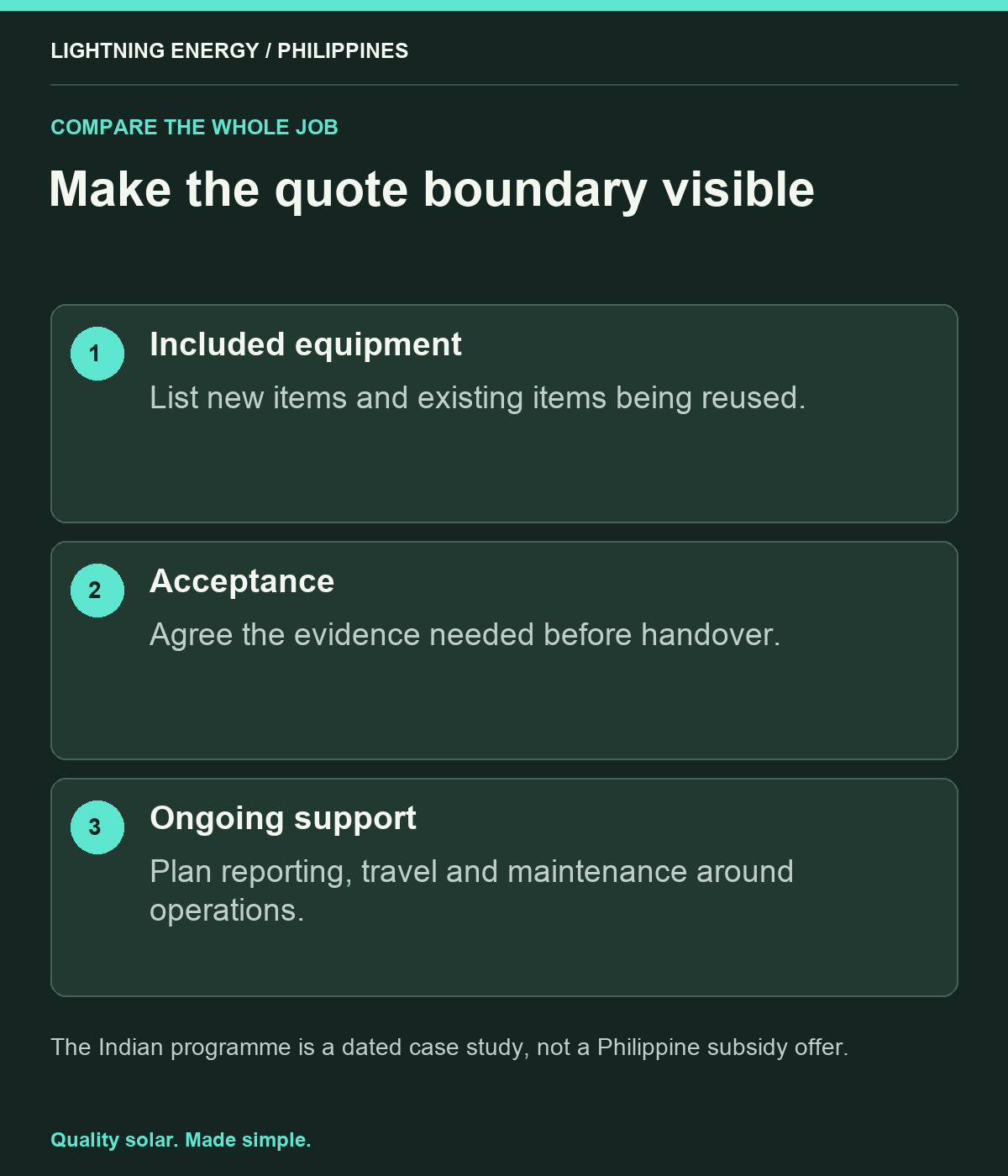
Map the proposed arrangement from energy supply through controls and pumping equipment to the agreed delivery point. Ask the designer to state what is included, what existing equipment is being reused and what remains the owner’s responsibility. Clarify any backup or alternative operating arrangement separately. An owner comparing quotes should know whether both offers promise the same service boundary. Otherwise, a lower price may simply leave more work, equipment or operating responsibility outside the supplier’s contract.
Ask who will support the installation
MNRE’s skills programme includes training associated with solar water pumping, illustrating that deployment also needs people capable of supporting equipment. [2] For a Philippine farm, request named service contacts, expected access arrangements and the records technicians will need. Discuss how the owner reports a problem and who decides whether a site visit is required. These practical details deserve attention before purchase, particularly where travel, seasonal workloads or limited access windows affect the ability to carry out a repair.
Test the proposal against the working calendar
Use the farm calendar to review installation timing, commissioning, operator training and planned maintenance. Ask how the proposed work fits around production rather than assuming a convenient construction window. Define the acceptance evidence with the specialist team before ordering. That evidence should relate to the agreed service requirements and applicable standards, not merely a photograph of panels or a demonstration that a motor starts. The owner should understand which conditions were tested and which operating limits remain.
Keep a usable operating record
At handover, retain the final design, equipment identities, acceptance records, operating instructions and support contacts together. Record later changes so the next technician can understand the installation. Lightning Energy Philippines can discuss the energy side of a farm project alongside the appropriate pumping and agricultural specialists. A worthwhile regional lesson is that solar equipment belongs inside a service plan. Defining that plan carefully makes it easier to judge a proposal without relying on a foreign programme’s scale, publicity or incentives.
Sources & further reading
Sources used for this guide. Policy and product details should be checked for your particular installation.
- India MNRE: PM-KUSUMAccessed 27 September 2026
- India MNRE: Skill Development ProgrammeAccessed 27 September 2026