Across Asia
India’s Suryamitra Programme: Solar Quality Depends on People
India’s technician-training approach offers a practical lesson for buyers evaluating installation skills and after-sales support.
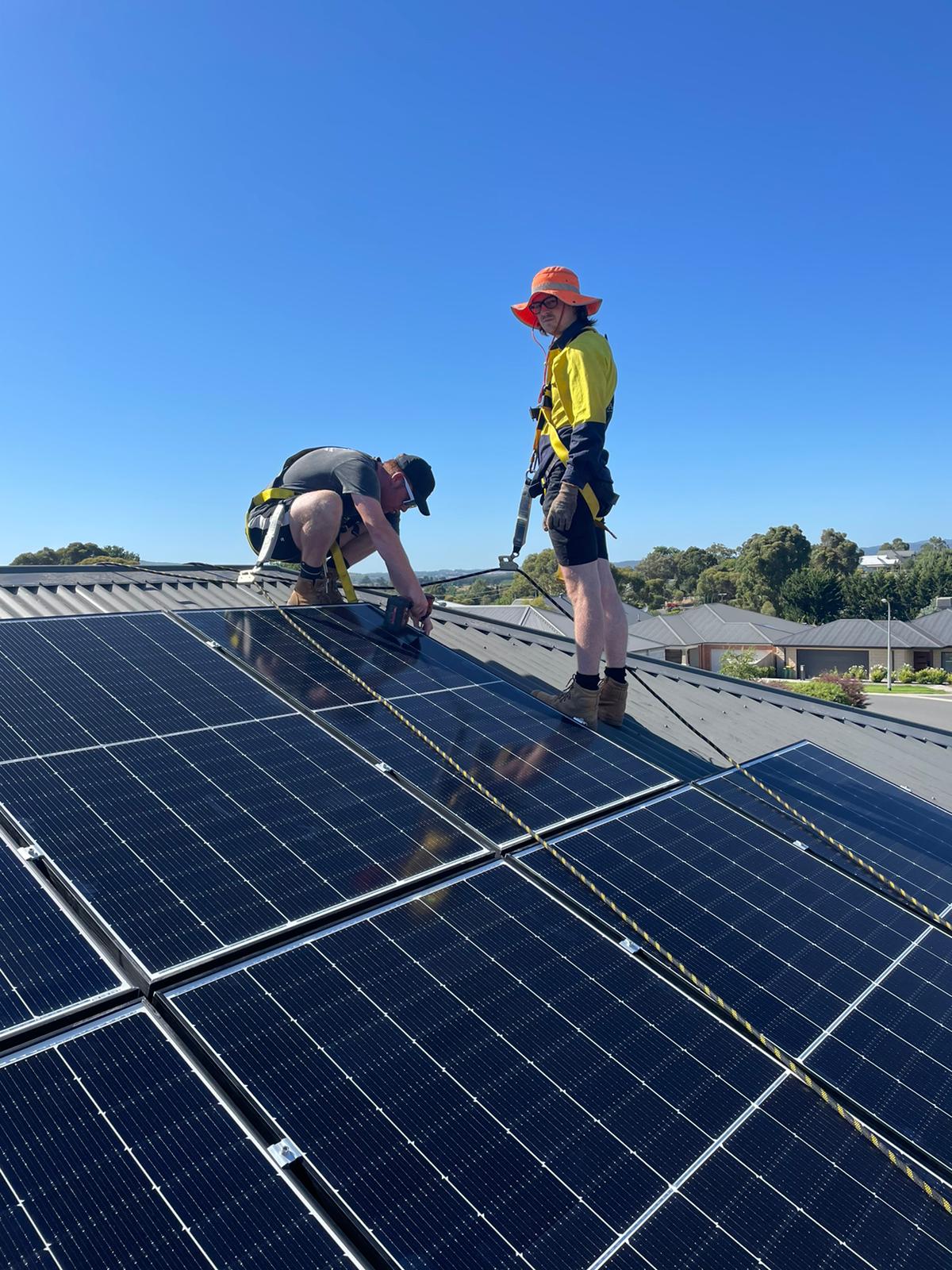
Solar equipment travels through an international supply chain, but the final installation and much of its care happen locally. The people who design, install, commission and service the system are therefore part of the purchase. Their work deserves attention alongside the product brand.
India's Suryamitra training programme provides a useful regional example of treating skills as infrastructure. For Philippine customers, the lesson is to ask how a supplier demonstrates competence for the actual work and how that knowledge remains available after the installation team leaves.
Understand the training example
India's Ministry of New and Renewable Energy describes Suryamitra as a solar-PV technician programme with classroom, practical and work-exposure elements. [1] This is an Indian programme with its own entry and assessment arrangements. A Philippine buyer should not assume that an overseas certificate establishes local professional authority or that every installer follows this course. The useful idea is that solar skills involve more than familiarity with a product catalogue: practical preparation and assessment are part of the delivery model.
Notice the lifecycle focus
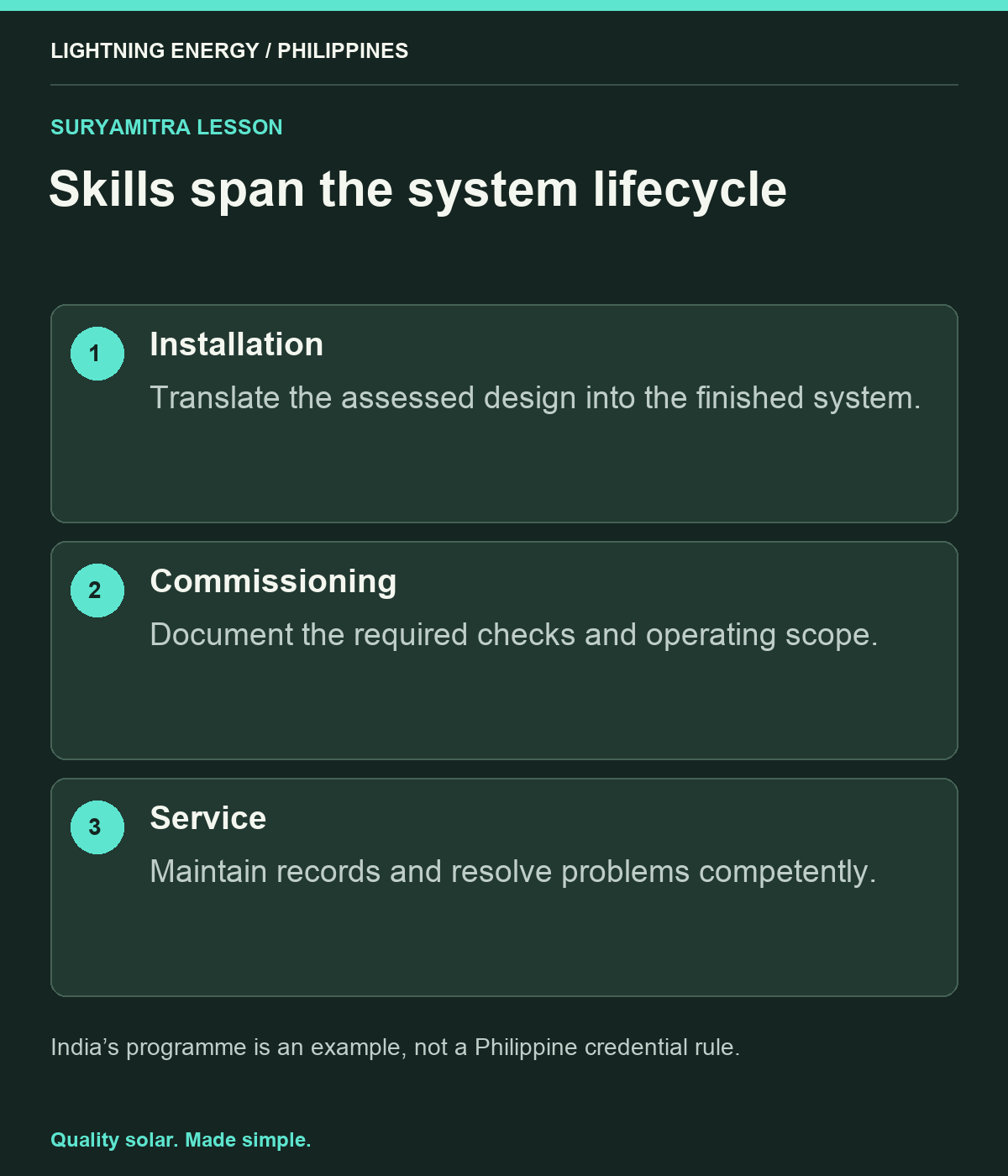
India's National Institute of Solar Energy describes the programme's relevance to installation, operation and maintenance. [2] That lifecycle view is useful when evaluating a supplier. Ask who performs each stage of your project, what qualifications or authorisations are appropriate locally and how specialist questions are escalated. A salesperson may explain an offer well without being the person responsible for engineering decisions. Clear roles help the customer understand which statements are commercial promises and which are supported by professional assessment.
Ask for evidence connected to the actual project
Request the names or roles of the responsible professionals, the installation process and the documents provided at completion. Relevant experience should relate to the roof, electrical arrangement and equipment proposed, rather than only to a large total number of projects. An illustrative business with a complex operational schedule may need evidence of coordinated shutdown planning as well as technical work. The goal is not to interrogate every worker; it is to establish accountable delivery before a contract is signed.
Look at the handover as a skills test
A competent project team should be able to explain the installed system's normal behaviour and limits in language the owner can use. Ask for a demonstration of monitoring and the appropriate process for reporting alarms. Keep electrical work and technical adjustments within qualified roles. If the owner leaves handover unsure what the battery supports or whom to contact, the job's communication has not matched its physical installation. That is a practical quality issue even if the equipment itself is well specified.
Evaluate continuity of support
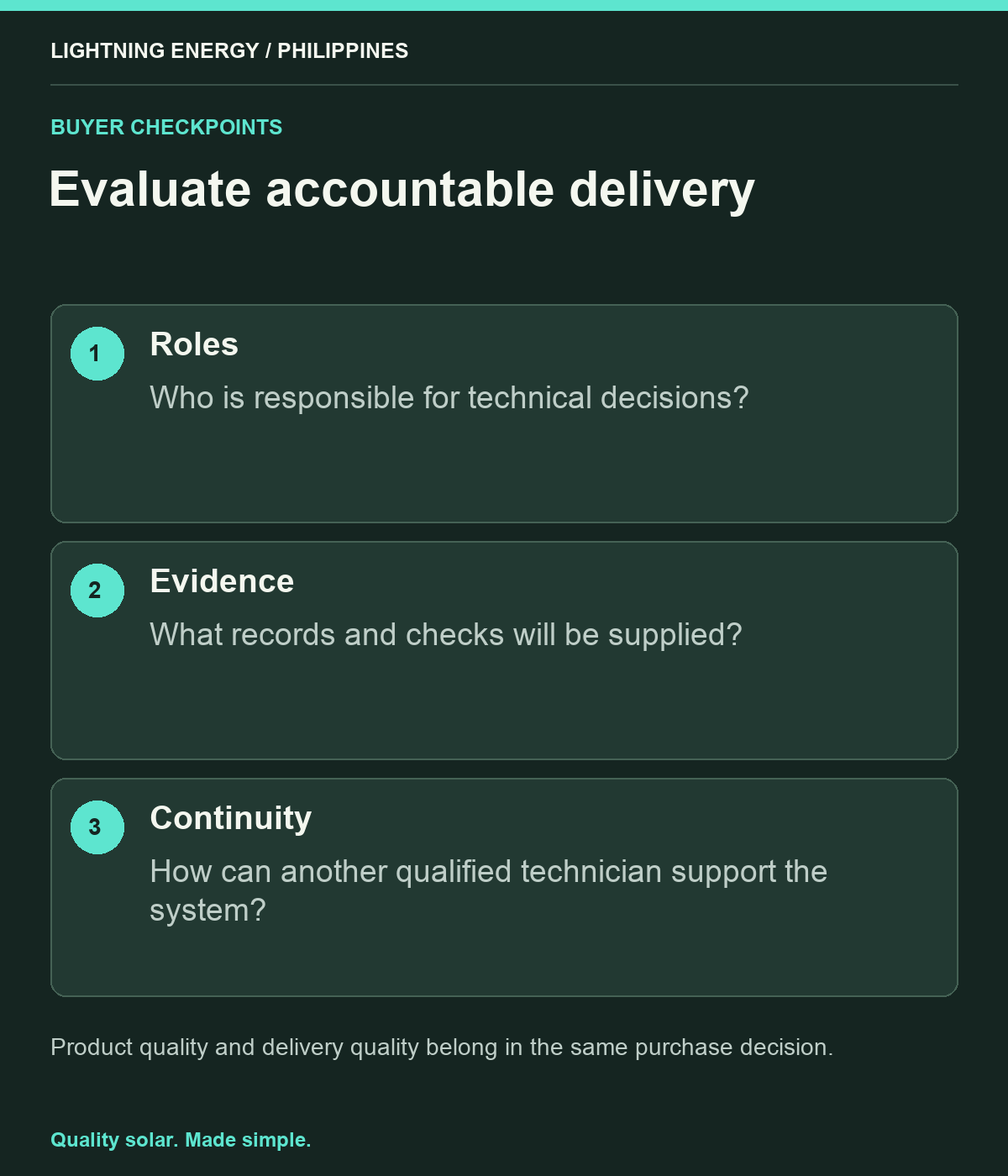
Find out whether support depends on one person or a documented company process. Ask how records are retained and how another qualified technician can understand the installation if the original team changes. Keep model information, drawings and commissioning evidence accessible to authorised parties. A service network should be judged by the route available to this customer in this location. National or international brand recognition does not by itself explain who attends a fault at the property.
Give local teams useful information
Customers also influence project quality by providing accurate operating hours, access constraints and planned building changes. Avoid asking an installer to design around incomplete bills or a roof repair that has not been disclosed. A clear brief allows qualified people to use their skills effectively. If the business adds equipment later, seek a proper reassessment rather than assuming the original installation can absorb any new demand. Skilled delivery works best when the owner keeps the project team informed.
Buy a capable relationship
Bring questions about design responsibility, installation practice and after-sales service to Lightning Energy alongside questions about panels and batteries. India's training example reminds buyers that reliable solar ownership has a human component. The useful purchase is a system supported by accountable people, understandable records and a way to obtain competent help. Those qualities may be less visible than a module specification, but they shape the experience of owning the installation through changes, maintenance and future decisions.
Sources & further reading
Sources used for this guide. Policy and product details should be checked for your particular installation.
- India MNRE: Skill Development ProgrammeAccessed 27 September 2026
- India NISE: Suryamitra Skill Development ProgrammeAccessed 27 September 2026