Across Asia
Maldives’ Island Energy Programme: Plan the Network with the Solar
Maldives’ renewable-energy programmes show why batteries, controls, grids and operating institutions need to develop together.
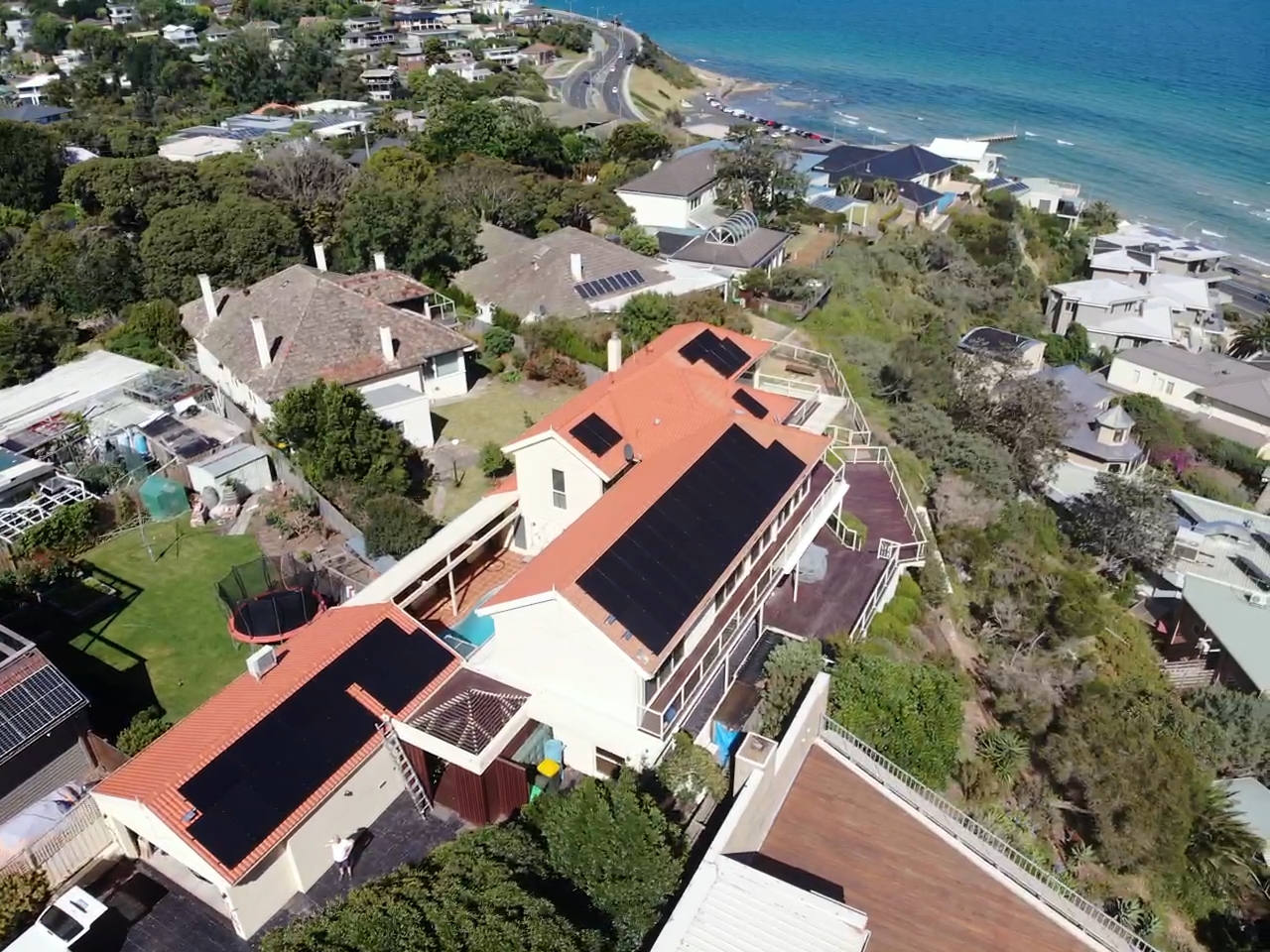
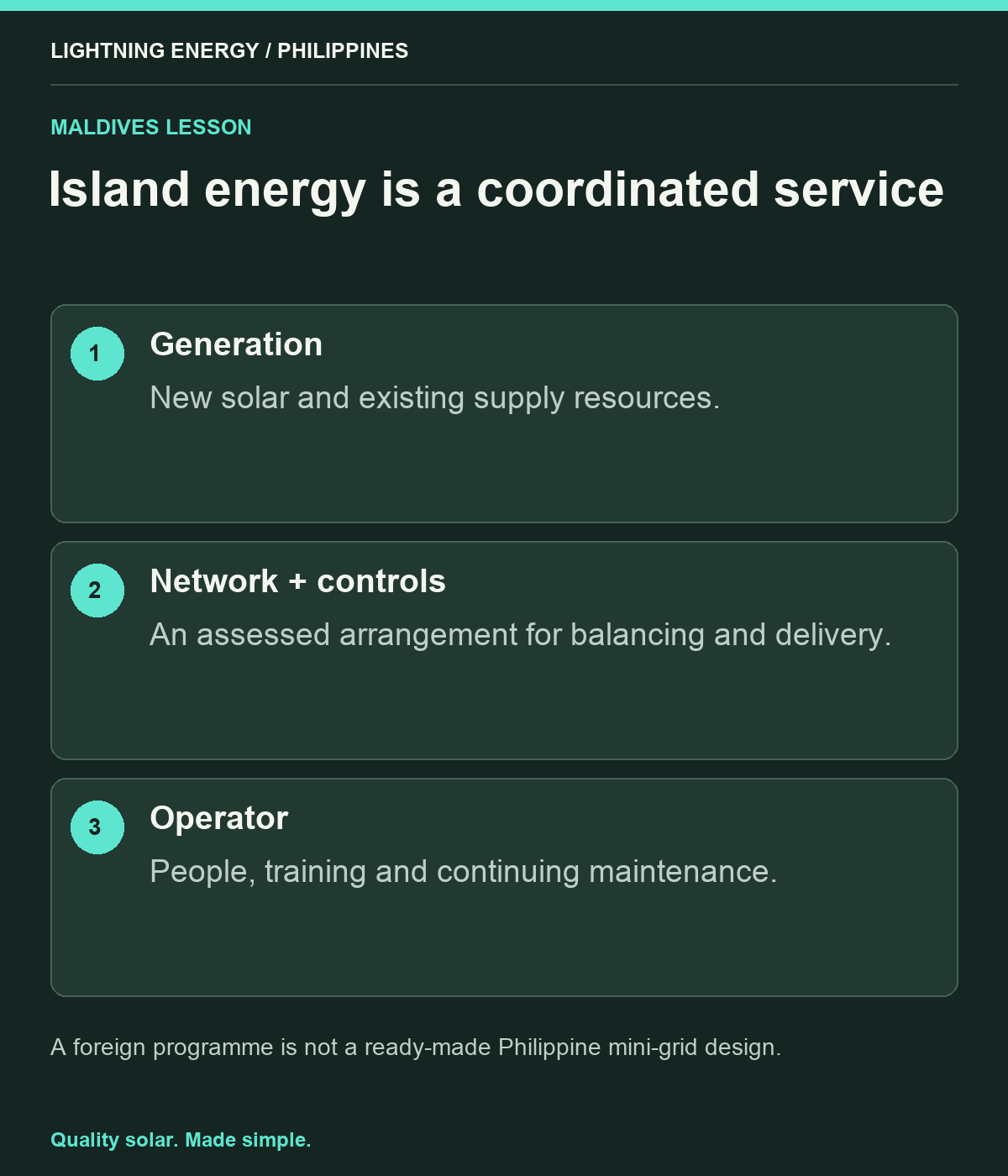
An island can install more solar without automatically obtaining a better coordinated electricity service. Generation, storage, the network and the people operating it must work together. Maldives offers a useful regional case because its programmes have addressed several of those pieces at the same time.
The Philippine archipelago has its own institutions, sites and supply arrangements. The lesson is therefore not to copy a foreign project specification. It is to assess the complete service and the responsibilities that connect new generation to the people using electricity.
Look at the programme beyond the panels
The World Bank's 2023 Maldives account describes solar investment alongside batteries, grid upgrades and arrangements to reduce investor risk. [1] These were programme components, not an off-the-shelf household package. The case makes a useful point about project boundaries: if the objective is a reliable island electricity service, the assessment cannot stop at generation capacity. Infrastructure and operating arrangements outside the solar array can determine whether that generation becomes useful supply.
Include the operator in the design conversation
ADB's 2024 POISED account describes work with utilities on hybrid generation, storage and management systems. [2] For a Philippine island project, our recommended starting point is to identify the organisation responsible for everyday operation. That party needs a clear role in specifying controls, maintenance and handover. A system that is designed without reference to the operator's practical capabilities can leave an impressive asset difficult to manage once the construction team departs.
Define the electricity service at the point of use
Record who is intended to receive supply, which services matter and how demand changes through the day and year. Separate existing customers from anticipated future growth. Use an illustrative community plan to test changes such as additional refrigeration or longer business hours, but do not call that growth guaranteed. The technical and commercial assessment should show what is supported now and what would trigger a later expansion study. Clear boundaries help keep community expectations aligned with the actual project.
Evaluate coordination with existing equipment
Ask qualified designers to explain how solar, batteries, generators and the local network would interact under normal and difficult conditions. Identify equipment that remains necessary and the reason for retaining it. Do not assume that adding storage removes every other source or makes a network independently operable. The commissioning plan should demonstrate the intended modes and document their limits. A programme can pursue lower fuel use while still maintaining a carefully designed role for existing assets.
Make payment and service arrangements understandable
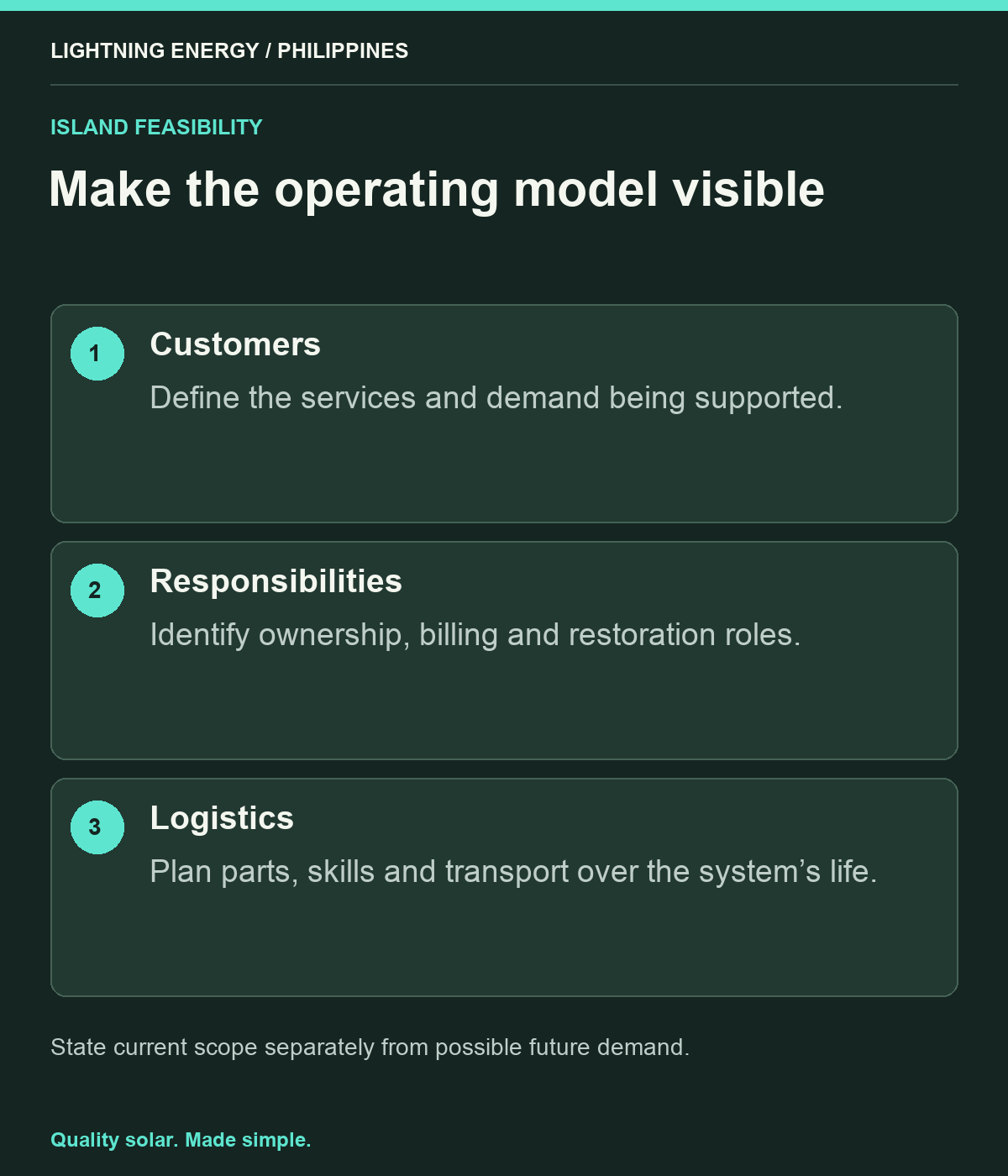
An island project may involve an operator, asset owner, financier and customers with different responsibilities. Document those roles and obtain the appropriate legal and regulatory review. The Maldives financing arrangements do not establish a Philippine tariff or contract. For local users, the important questions include who bills, who receives a complaint and who is responsible for restoring service. A renewable project should improve clarity about those everyday relationships rather than add a layer that customers cannot navigate.
Plan for maintenance across distance
Identify the parts, skills and transport needed to keep the installation operating. Include training and a realistic process for escalation. Keep records where the operator can use them and arrange appropriate remote support where available. A remote site should not depend entirely on a single specialist whose knowledge is undocumented. The handover needs to make routine observations, approved actions and professional service boundaries understandable to the people who will be present throughout the year.
Bring a complete island brief to feasibility
Collect demand evidence, existing-system information, operating responsibilities and access constraints before selecting equipment. Lightning Energy can discuss the relevant solar-and-storage scope with the project team and responsible institutions. Maldives' experience is valuable because it makes coordination visible. For a Philippine island, a credible proposal should explain how generation reaches useful services, how it is managed and how the arrangement remains supportable after the first installation milestone.
Sources & further reading
Sources used for this guide. Policy and product details should be checked for your particular installation.
- World Bank: Powered by the Sunshine in Maldives14 March 2023; accessed 27 September 2026
- ADB: Maldives’ Experience Deploying Hybrid Renewable EnergyAugust 2024; accessed 27 September 2026