Solar for business
One Branch First: A Solar Rollout Plan for Multi-Site Businesses
Use a carefully chosen pilot to improve a wider rooftop programme without assuming every branch behaves alike.
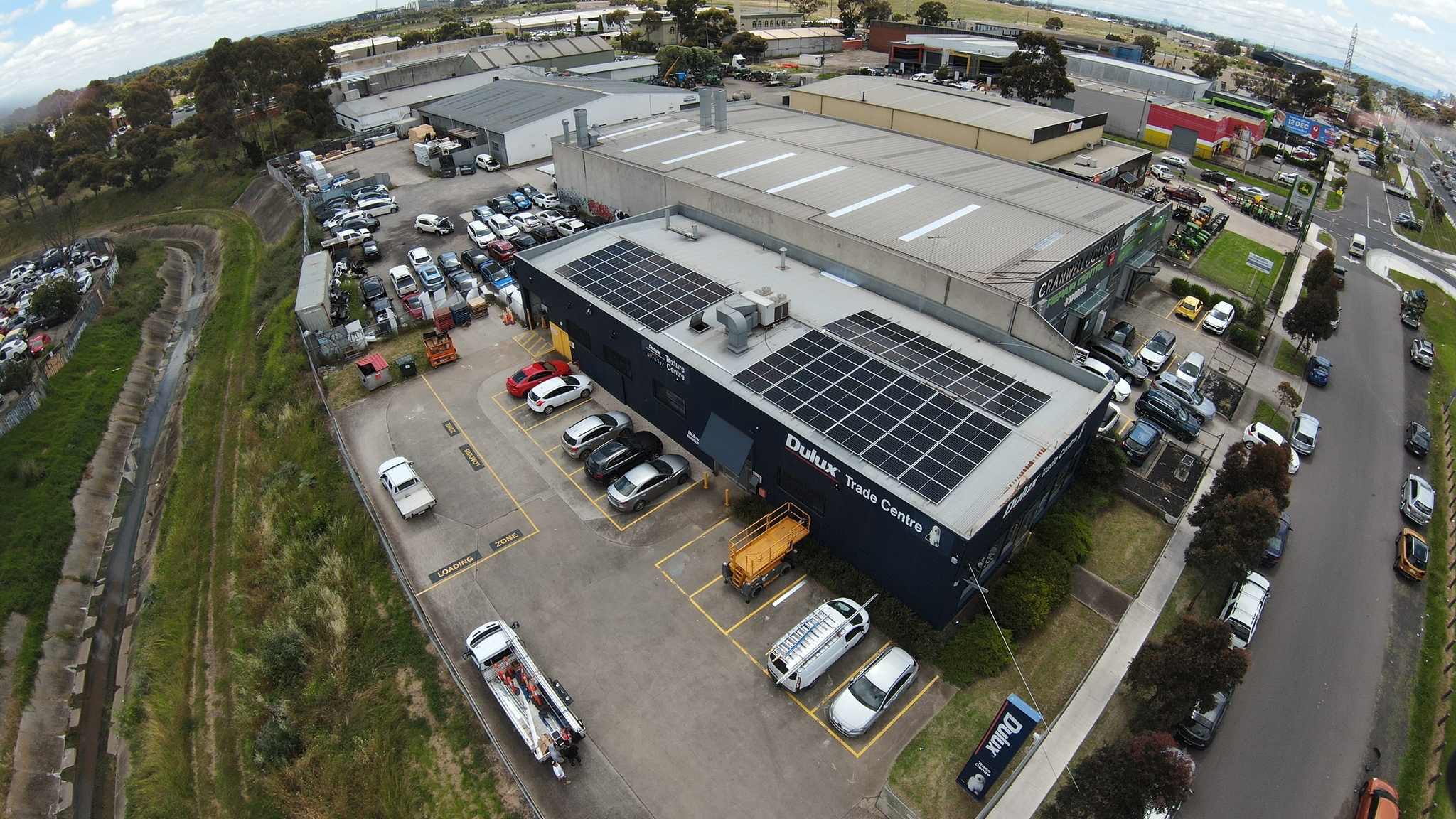
A business with several branches can buy solar badly in two opposite ways: treating every site as completely unrelated, or insisting that every site receive the same package. A useful rollout finds the middle ground. Standardise the evidence and service expectations while allowing the design to reflect each building.
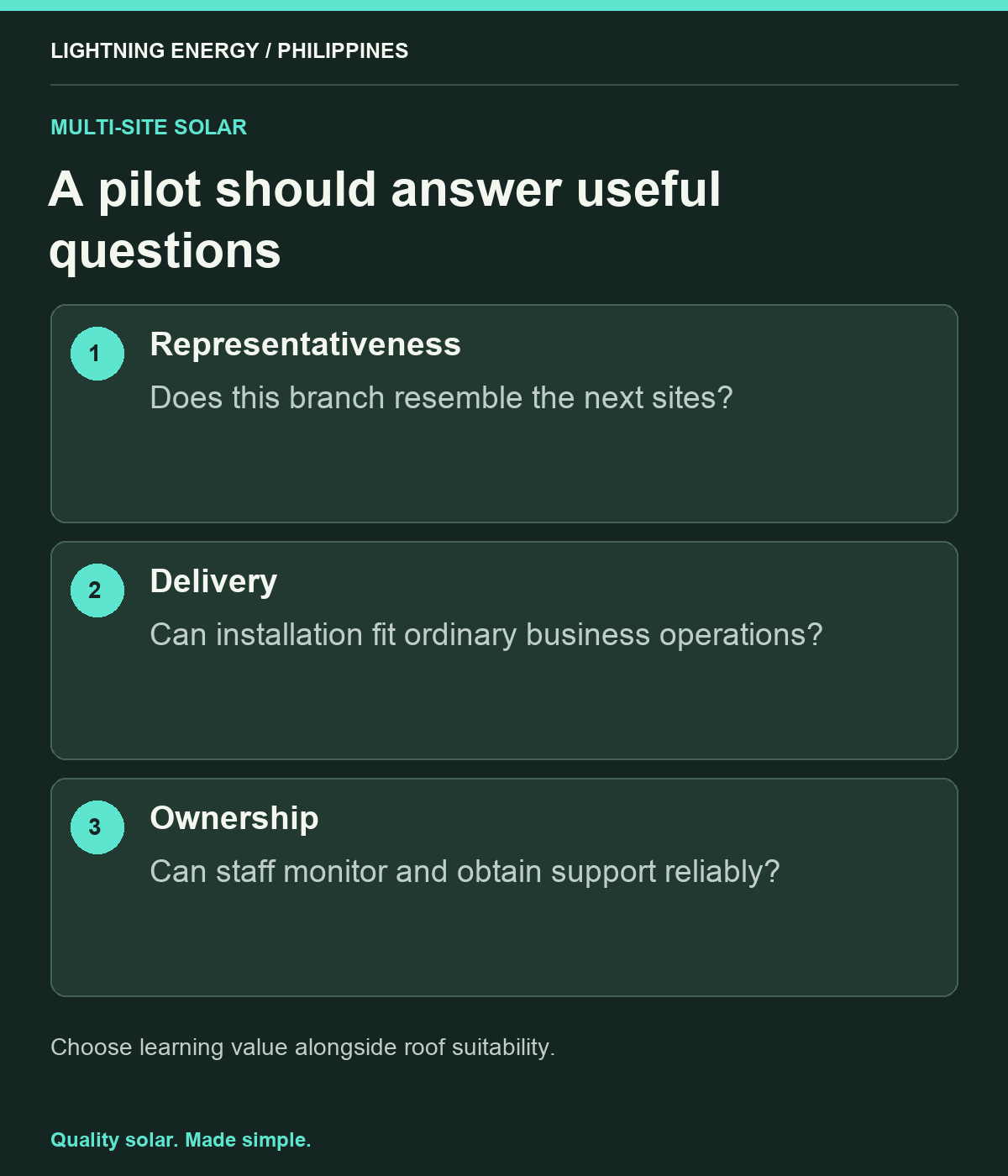
A first-site pilot is a chance to learn about procurement, installation and everyday ownership before repeating the process. It should be chosen for the questions it can answer, not simply because its roof is the largest or its manager is the quickest to volunteer.
Choose a representative pilot
Compare operating hours, demand patterns, roof types, meter arrangements and site access across the business. Select a branch that represents a useful part of the portfolio and has clear authority to proceed. ADB's rooftop handbook presents development as a sequence from preparation through operation. [1] Our recommendation is to use the pilot to test that whole sequence. A spectacular demonstration at an unusual flagship site may teach less about ordinary branches than a well-documented, typical property.
Create one evidence template
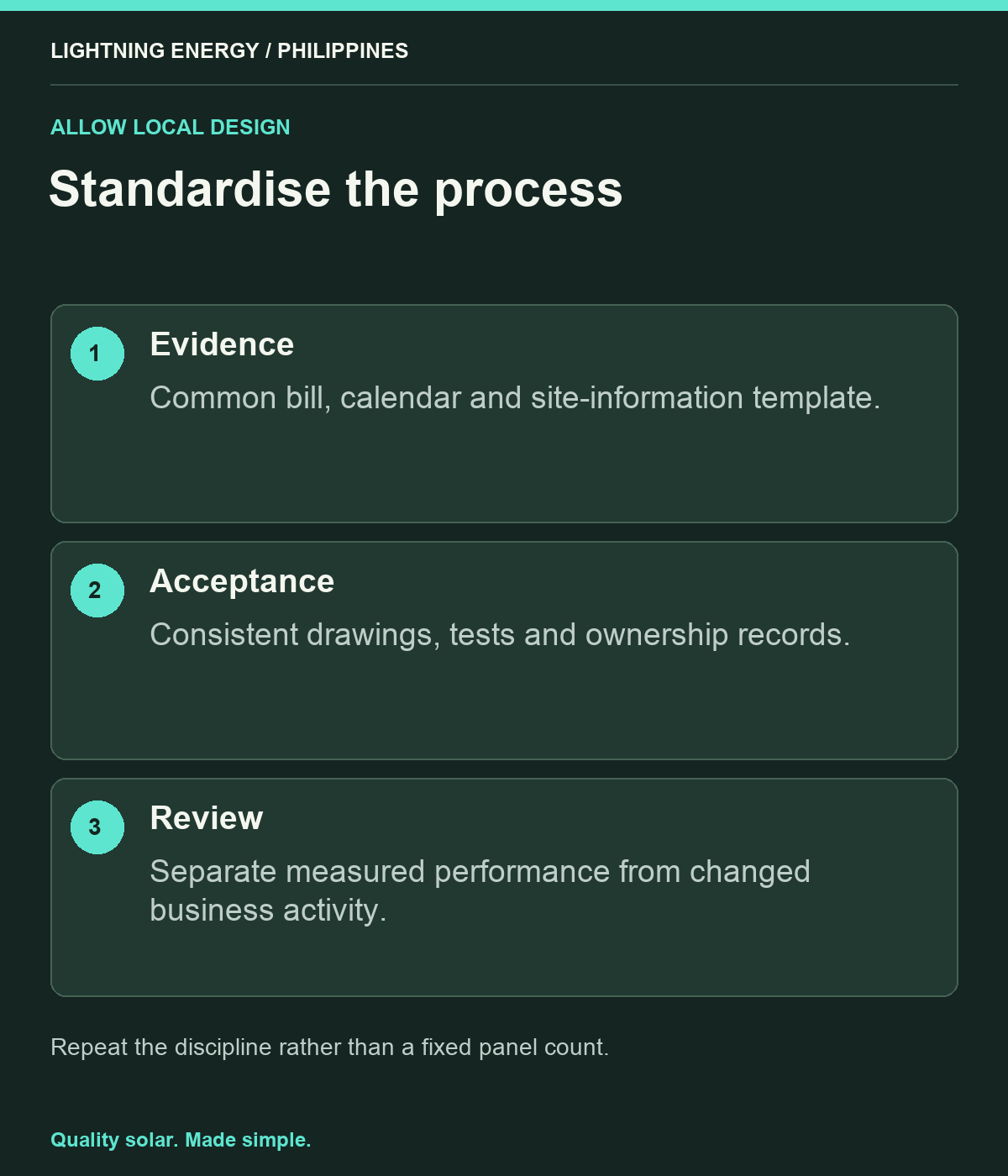
Give each branch the same short data request: electricity records, operating calendar, planned expansion, roof information and a contact for access. Mark missing information explicitly. Keep customer footfall and seasonal closures separate from equipment changes so that later performance comparisons remain understandable. A branch manager should not need to invent technical details to complete a form. Where measurements are required, arrange them through qualified people and preserve the original files alongside the summary used for procurement.
Standardise acceptance, not panel count
Define what every supplier must deliver: reviewed drawings, equipment identification, commissioning records, monitoring access and an agreed support process. NREL's operations-and-maintenance guidance links quality deployment with long-term performance. [2] That supports treating handover as part of procurement. It does not mean every branch needs identical equipment. A warehouse, office and retail shop can meet the same documentation standard while having different array sizes, electrical arrangements and backup priorities based on their individual assessments.
Set learning questions before installation
Write down what the pilot should establish. Examples include whether data reaches the central team reliably, whether service access is practical and whether branch staff understand alarms. Set a review date and assign responsibility for collecting evidence. Do not judge the trial solely by the first sunny week's generation. The learning exercise should include a normal operating period, an explanation of weather and demand changes, and the closure of any handover issues identified by the site team.
Keep comparisons fair
Track generation, purchased electricity and business activity as different measures. If a shop extends trading hours after installation, a higher electricity bill does not by itself mean solar has underperformed. Conversely, lower demand during a closure can make a bill look better without proving a successful design. Use the same reporting definitions across sites and ask the analyst to explain departures from the assumptions. The pilot report should distinguish measured results, modelled expectations and matters still awaiting verification.
Turn lessons into the next tender
Record what changed during the pilot and why. Perhaps a monitoring connection needed additional work, roof access took longer than expected or the proposed shutdown window conflicted with deliveries. Update the next site's scope using those lessons rather than allowing each branch to rediscover them. Preserve a reasonable route for site-specific exceptions. Central purchasing can improve consistency, but a local electrical or structural constraint should be resolved on its merits rather than hidden to maintain a uniform package.
Scale when the operating model is clear
Before approving the next group of sites, confirm that someone owns performance reporting, maintenance budgets and supplier escalation. Lightning Energy can discuss a phased programme with a consistent evidence pack and site-specific designs. The decision to expand should rest on what the first installation has demonstrated and what remains different elsewhere. A good pilot produces more than electricity: it leaves the business with a repeatable way to make decisions, hand over assets and address problems across the portfolio.
Sources & further reading
Sources used for this guide. Policy and product details should be checked for your particular installation.
- ADB: Handbook for Rooftop Solar Development in AsiaDecember 2014; accessed 27 September 2026
- NREL: Best Practices for Operation and Maintenance of Photovoltaic and Energy Storage Systems, third edition2018; accessed 27 September 2026