Care & performance
Remote-Island Solar Support: Write the Service Plan Before the Boat Trip
For remote properties, transport, records and decision authority belong in the solar maintenance agreement.
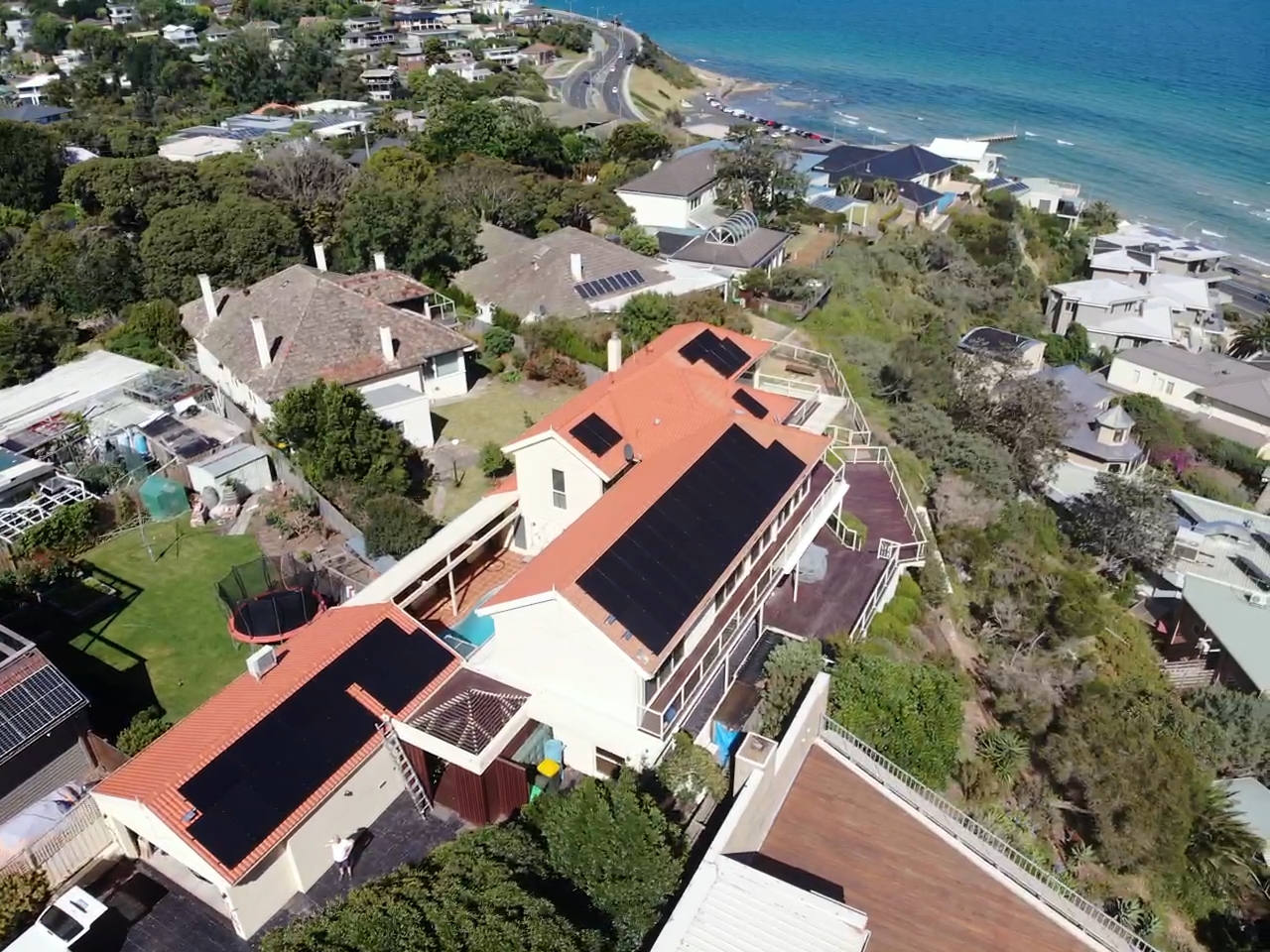
At a remote property, arranging a service visit can involve more than finding a free appointment. Travel, site access, parts, staff availability and accommodation may all need coordination before a technician can begin the work.
That makes the support plan an important part of a Philippine island solar project from the outset. Regional experience can help owners think beyond installation day and define how the system will be understood, reported and maintained after the original team has left.
Learn from programmes beyond the hardware
ADB’s account of the Maldives’ hybrid-energy programme treats implementation as an institutional and operational undertaking as well as an equipment project. [1] A private Philippine property has a different scale and ownership model, but the useful question is similar: who keeps the service working? Name the property representative, the technical service provider and the person authorised to approve expenditure. Those roles should remain clear during staff leave or management changes, when an informal arrangement can become difficult to use.
Record the journey as part of the job
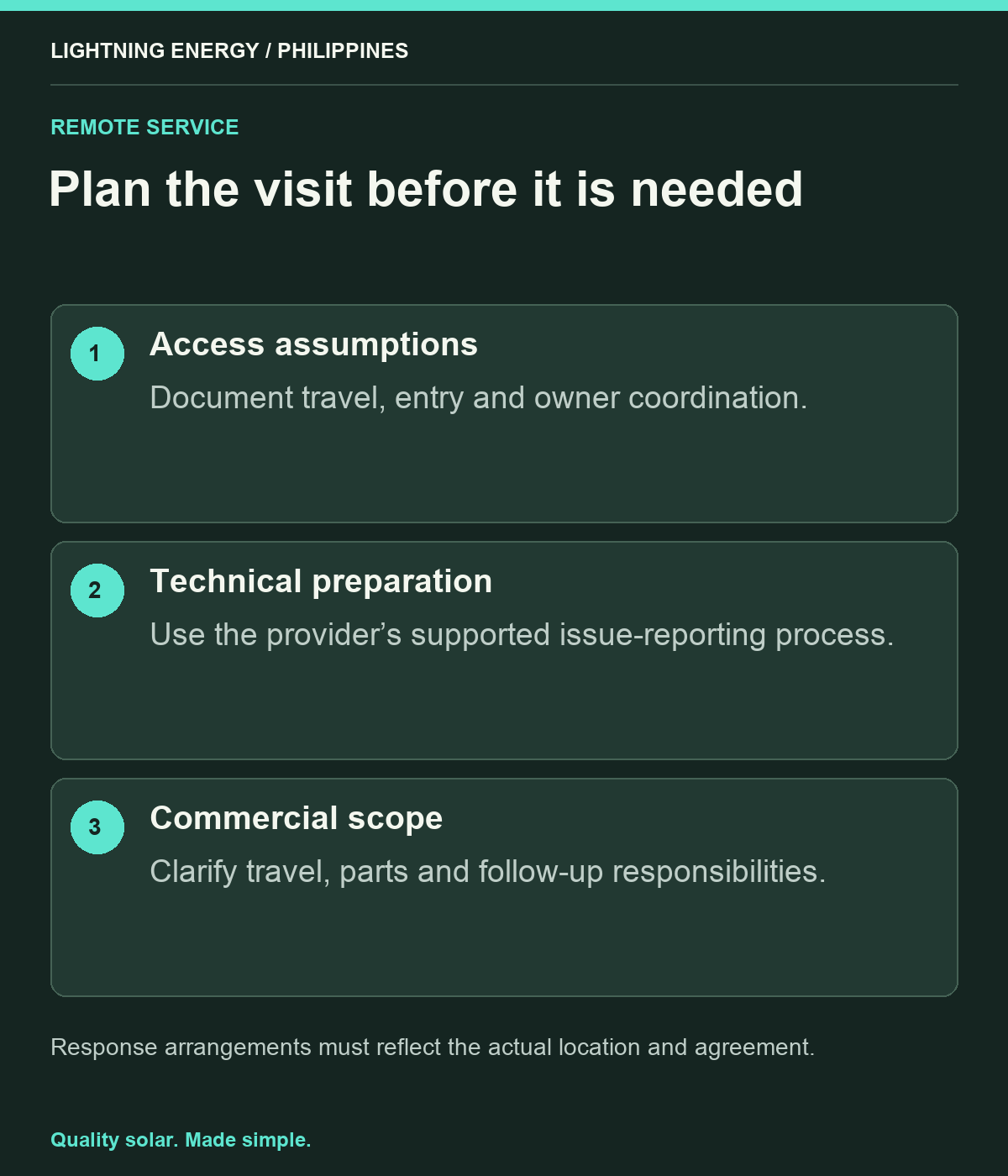
Ask the provider to document the access assumptions used in its service offer. Include the route, ordinary site entry arrangements and any coordination the owner must provide. Clarify how travel, accommodation and transport of approved equipment are charged under the agreement. Do not promise a response time without discussing those conditions. For an illustrative island guest property, a planned visit can be coordinated with operations; an unplanned visit still needs an agreed process when the preferred travel arrangement is unavailable.
Define a useful first report
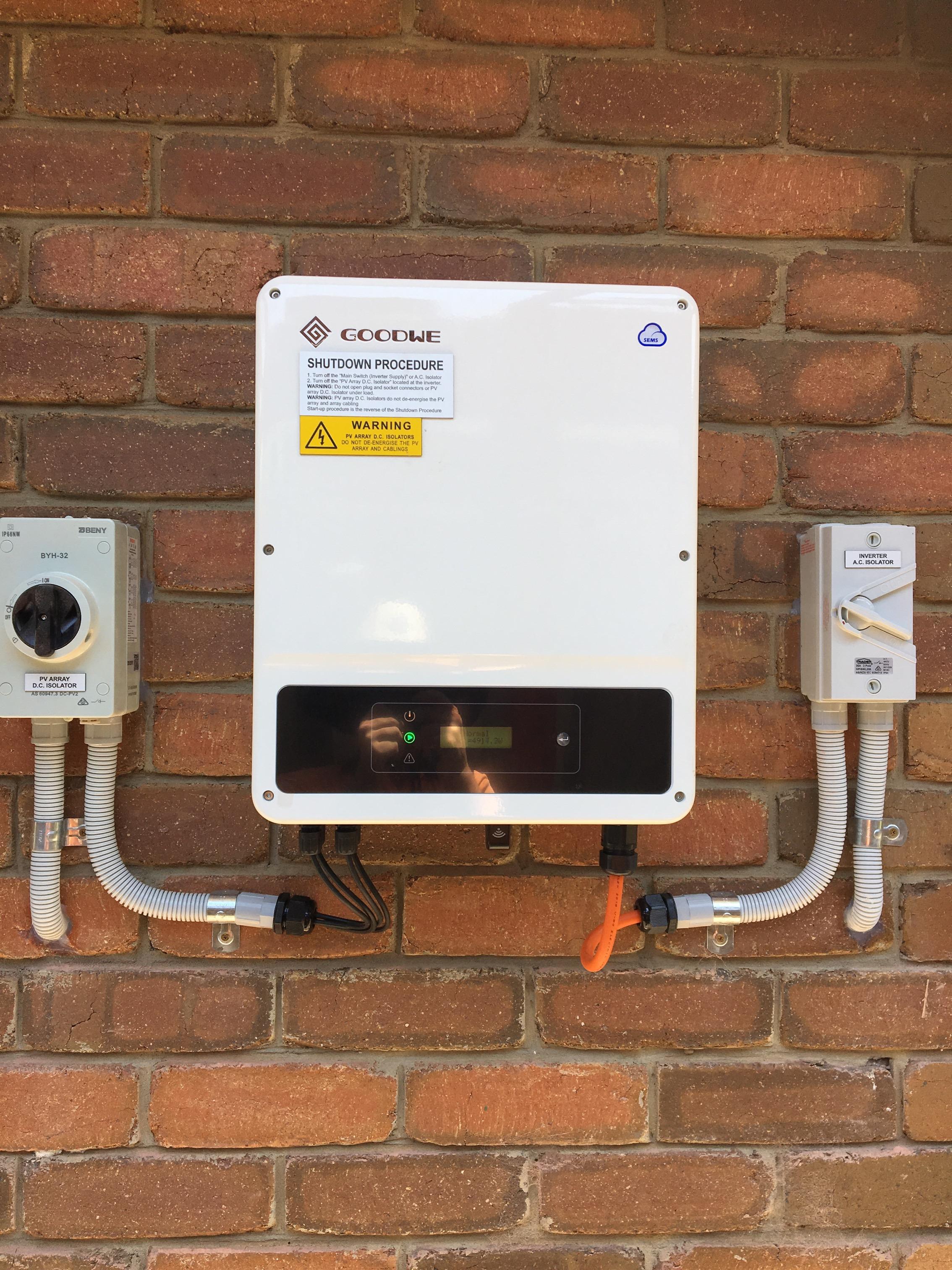
Agree what information the owner should provide when reporting a problem: equipment identity, the observed issue, relevant dashboard information and the time it occurred. Use the provider’s supported reporting process and follow the installation’s documented safety procedures. The owner should not be asked to improvise electrical tests or open equipment. A clear initial report helps the service team decide the next authorised step and identify what information or equipment may be needed before committing to a journey.
Make parts decisions explicit
Ask the specialist provider which parts arrangements are appropriate for the installation and how replacements will be sourced, stored or transported where applicable. The owner should understand the commercial commitment without assuming that keeping miscellaneous components on site solves every service problem. Clarify compatibility review and approval before substitutions. If a replacement changes the system documentation, ensure the final records are updated. This keeps a practical procurement decision from leaving the next technician with an inaccurate description of the installed equipment.
Give follow-up its own place in the agreement
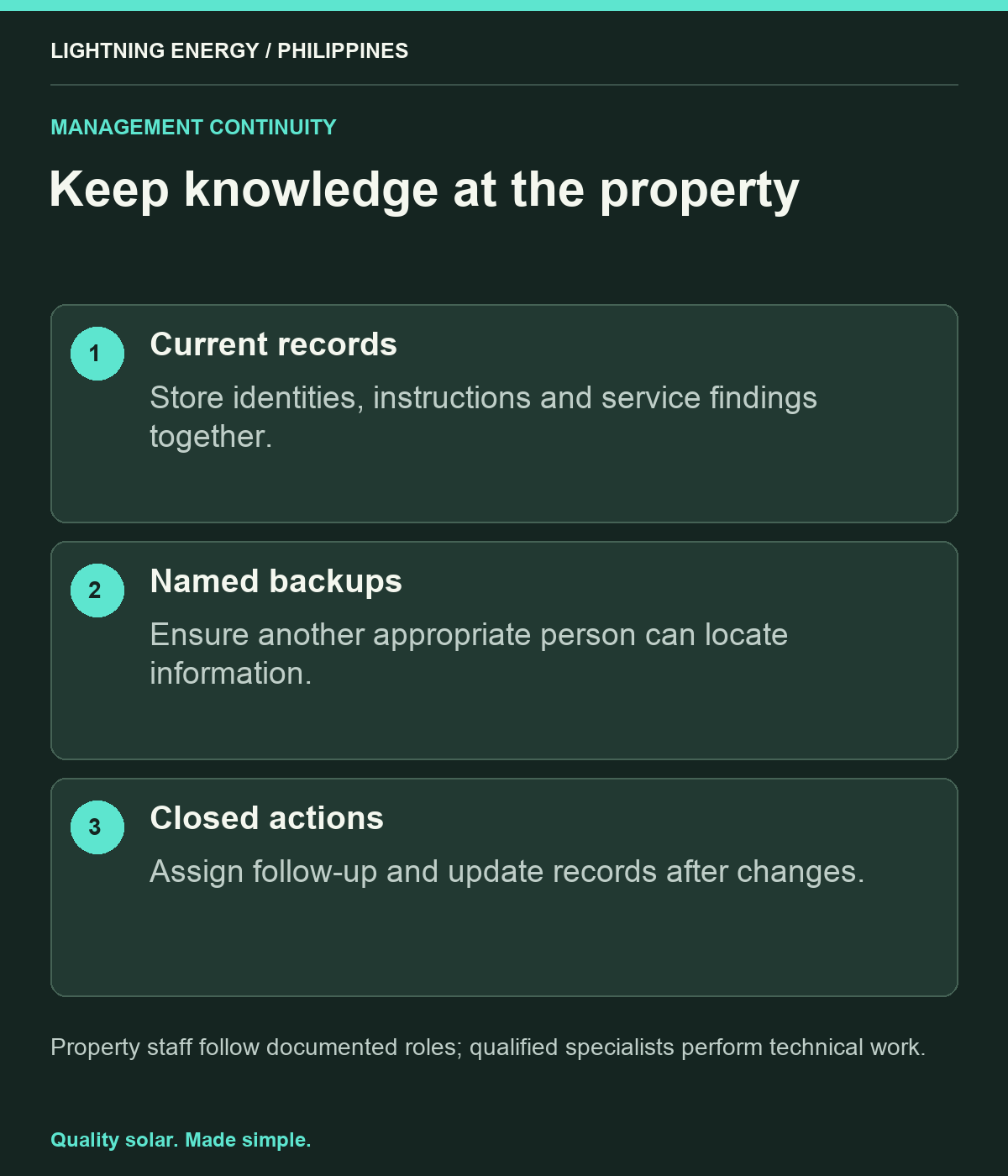
The World Bank’s Bangladesh solar-home-system history describes quality controls and after-sales arrangements within the programme. [2] The local lesson is to specify what happens after a visit as well as during it. Ask for a service record identifying findings, completed work and any remaining action. Name who checks that follow-up is closed. A property manager should not have to infer completion from an invoice alone, especially when another person will be responsible for the installation by the next scheduled visit.
Train for continuity of management
Have the provider explain the owner’s permitted routine responsibilities and the limits of those responsibilities to more than one appropriate staff member. Keep the agreed instructions available in a usable format at the property. When management changes, include the system in the handover alongside other essential property services. Update contact details and account access through supported processes. The aim is continuity of information, not turning hospitality or facilities staff into electrical technicians with responsibilities they were never trained or authorised to perform.
Budget for an owned service, not an abandoned asset
Before purchase, compare support offers using the same travel assumptions, reporting process, records and scope of work. Lightning Energy Philippines can discuss the service arrangements applicable to a proposed installation and identify limitations that need to be resolved. An island project should finish with more than installed equipment and a phone number. It should leave the owner with a workable agreement, current records and a clear route for qualified help that reflects the realities of reaching and operating the property.
Sources & further reading
Sources used for this guide. Policy and product details should be checked for your particular installation.
- ADB: Maldives’ Experience Deploying Hybrid Renewable EnergyAugust 2024; accessed 27 September 2026
- World Bank: Living in the Light—The Bangladesh Solar Home Systems Story2021; accessed 27 September 2026