Solar for business
Restaurant Solar: Follow the Prep Shift Before the Dinner Rush
For restaurants, the solar opportunity may sit in preparation, cooling and refrigeration rather than the busiest sales hours.
A restaurant's busiest hour is not necessarily its most useful hour for solar. Dinner sales may peak after sunset, while refrigeration, preparation and cleaning create electricity demand much earlier. Looking only at revenue or opening hours can miss the work happening behind the counter.
For a Philippine restaurant, begin with a map of the kitchen day. Keep food handling and service requirements fixed while assessing energy options. Solar should fit the operation, and any proposed change to refrigeration or preparation routines must remain appropriate for the business and its food-safety procedures.
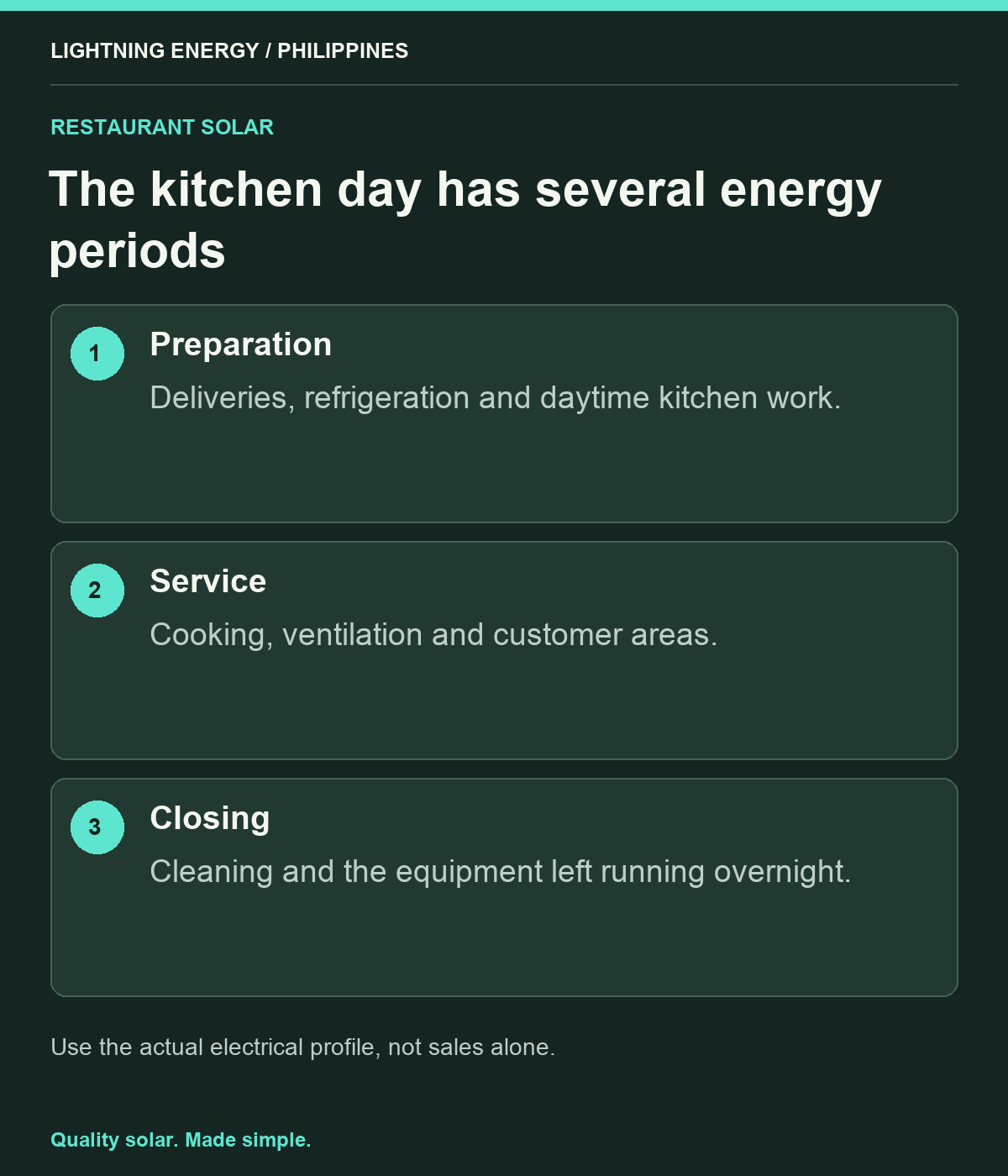
Trace the day from deliveries to closing
Record when deliveries arrive, preparation begins, customers enter and cleaning finishes. Identify electrical equipment used during each period, including ventilation and refrigeration. ADB's rooftop handbook emphasises preparation before procurement. [1] Our restaurant version is a simple shift map shared with the assessor. It prevents the visible dinner rush from becoming the only basis for design and gives staff a chance to identify loads that the owner may not see during service.
Separate electrical demand from other energy
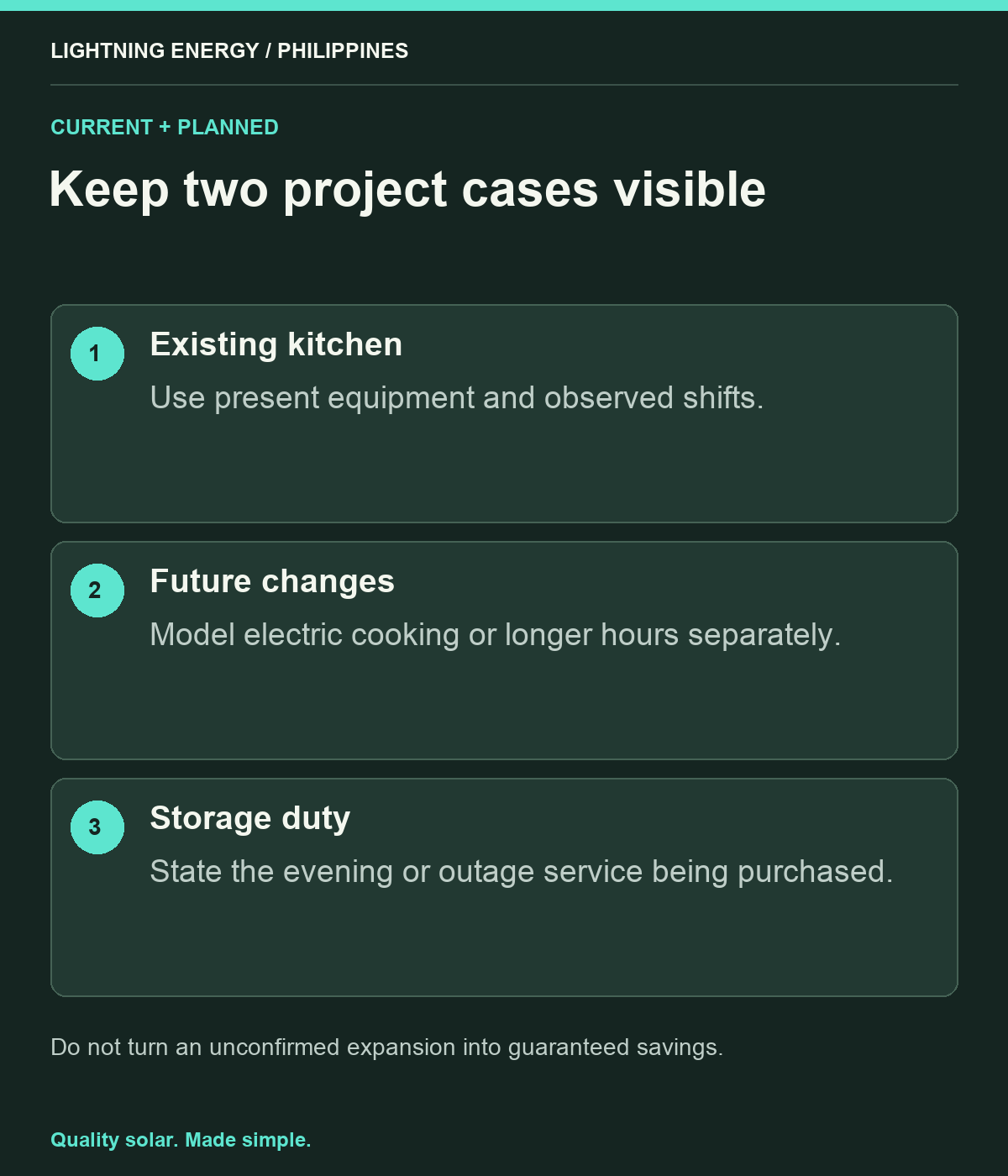
A kitchen can use electricity and other fuels for different tasks. Do not include a gas appliance's energy use in the solar savings estimate unless an actual electrification project is being assessed. If electric cooking is planned, obtain equipment specifications and evaluate the electrical supply with qualified professionals. Model the existing restaurant first, then the proposed kitchen separately. That keeps an attractive future idea from inflating the apparent benefit of an installation sized around a business that does not yet exist.
Protect refrigeration requirements
Ask a refrigeration professional about maintenance and operating practices before assuming that a larger solar array is the best response to consumption. Keep temperature requirements, product protection and service schedules intact. Obtain a representative energy profile rather than relying only on maximum nameplate ratings. A hypothetical restaurant with a quiet lunch and busy dinner still needs its cold storage all day, but the amount and timing must be measured. One restaurant's pattern is not evidence for another restaurant's equipment.
Price evening support as an additional service
Storage can move energy to a later time, but the US Department of Energy notes that the process has losses. [2] Ask for a model that states what charges the battery and what it is expected to support. Separate bill management from an outage-backup objective. Evening cooking, refrigeration and lighting should not be bundled into an undefined promise of being battery powered. Have the designer explain the system's power limits and the scope of any protected circuits.
Fit construction around the dining operation
Agree access, deliveries, roof work and electrical shutdowns with the manager before the project begins. Consider neighbours and shared building arrangements as part of the site assessment. Choose a realistic installation window and identify who can authorise changes if work conflicts with service. A low headline price is less useful if the scope ignores the restaurant's operational constraints. Ask bidders to show how those constraints are addressed so that comparable offers reflect the same job.
Keep the savings model tied to trading conditions
Compare current business activity with a quieter period and an extended-hours scenario. Identify which savings assumptions depend on daytime use and which depend on approved export or financing terms. Keep the restaurant's stock and payroll reserves outside the project's optimistic case. An owner can then decide how much capital to commit while retaining flexibility for ordinary business needs. The objective is a comfortable operational improvement, not a forecast that every sunny day produces an equal reduction in the bill.
Make the handover useful to shift managers
Provide a short contact and reporting sheet for the people who open and close the premises. They should know how to recognise an alarm and obtain support without adjusting settings beyond their role. Keep equipment and warranty records with the business, especially if managers change. Bring bills and the kitchen shift map to Lightning Energy for a tailored assessment. A restaurant solar project works best when it respects the rhythm of preparation, service and the quiet work after the last customer leaves.
Sources & further reading
Sources used for this guide. Policy and product details should be checked for your particular installation.
- ADB: Handbook for Rooftop Solar Development in AsiaDecember 2014; accessed 27 September 2026
- US Department of Energy: Solar Energy and Storage BasicsAccessed 27 September 2026