Solar FAQs
Do Solar Panels and Batteries Need Lightning and Surge Protection?
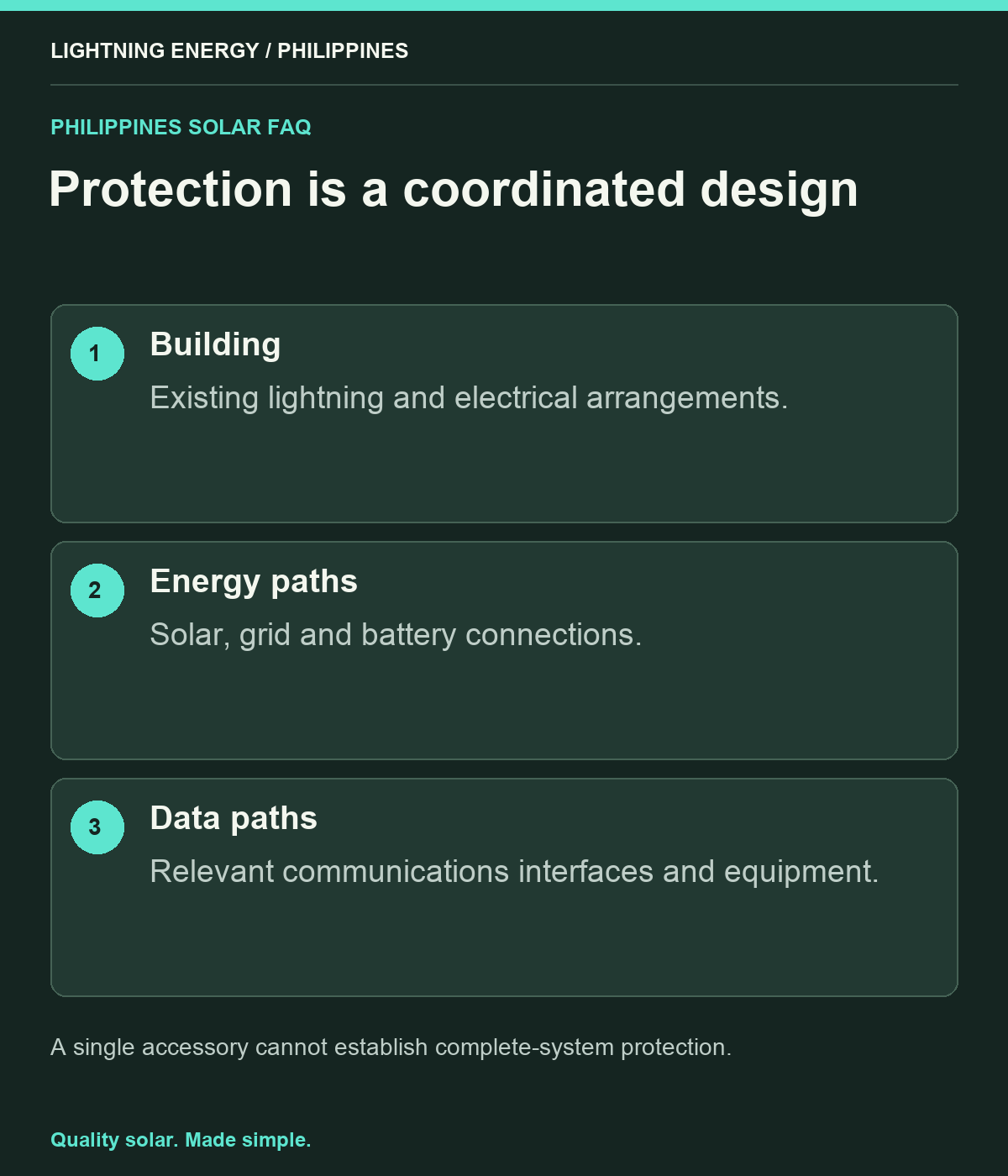
Protection requires a coordinated design for the building and system. A plug-in surge strip is not a complete rooftop-solar solution.
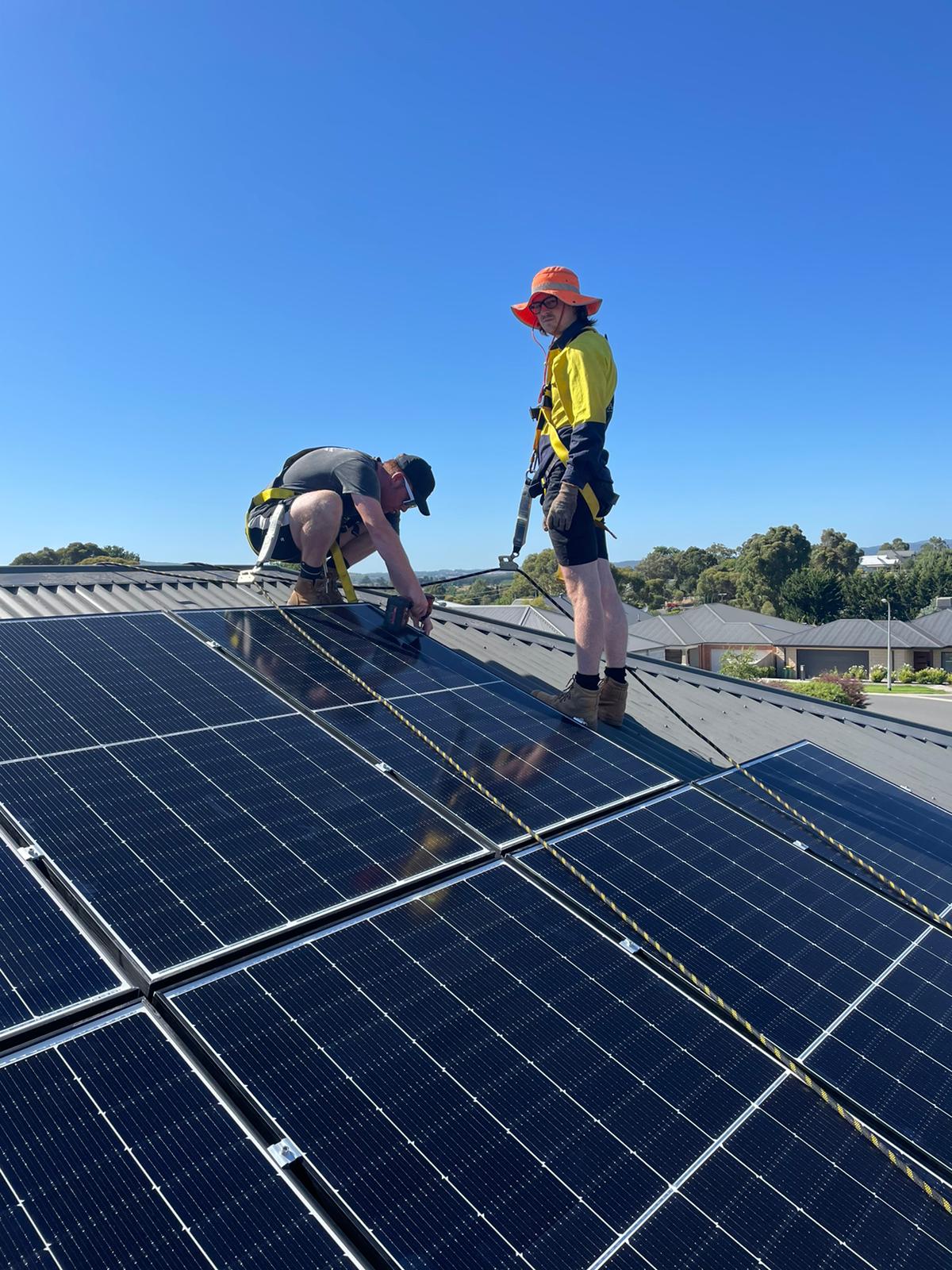
A solar-and-battery installation needs an appropriate protection assessment, including lightning and surge risks for the site. The required measures depend on the building, existing protection and equipment. Ask qualified professionals to design the complete arrangement rather than treating a single surge device or earthing rod as proof that everything is protected.
Separate direct lightning and electrical surges
DEHN’s rooftop guidance distinguishes direct and indirect lightning effects and the need for coordinated protection planning. [1] The practical lesson is that different risks may require different measures; one accessory does not answer every question.
Ask the designer which risks were assessed and how the proposed protection relates to the building’s existing electrical installation. Avoid claims that panels either attract all lightning or are automatically immune. The useful discussion is about the actual site, exposed wiring and equipment, with the relevant local requirements identified by qualified professionals.
Include the existing building protection
If the property already has a lightning-protection system, provide its drawings and inspection records where available. Solar mounting and cable routes should be considered alongside that system. Do not allow unrelated contractors to modify one part without understanding the other.
LONGi’s module manual includes lightning-protection considerations for relevant sites. [2] The installer should apply the instructions for the supplied modules within the wider design. A module manual cannot replace a building-specific assessment, and a building lightning conductor does not automatically document protection for every new electrical and data connection.
Ask about all relevant pathways
Request a plain explanation of protection on the solar, grid, battery and communications sides where applicable. Ask where devices are located, how they are coordinated and how their condition is checked. You do not need component-sizing instructions to ask for a complete design record.
A desktop surge strip may serve a particular plug-in load but should not be presented as the whole rooftop-solar protection scheme. Likewise, a visible device in an enclosure says little without its specification and installation context. Ask the provider to identify what each measure is intended to protect and what limitations remain.
Use a renovation example
Imagine a house with an existing lightning-protection arrangement that later adds solar and a battery on another wall. The new roof equipment and cable routes may create coordination questions. A sensible project reviews the existing records and updates the protection plan before installation.
This example does not specify a universal device type or spacing. Those details belong to a competent site-specific design. The homeowner’s task is to ensure that responsibility is assigned and the relevant contractors communicate, rather than approving an improvised connection because it looks similar to something installed at a neighbour’s house.
Keep inspection and replacement responsibilities clear
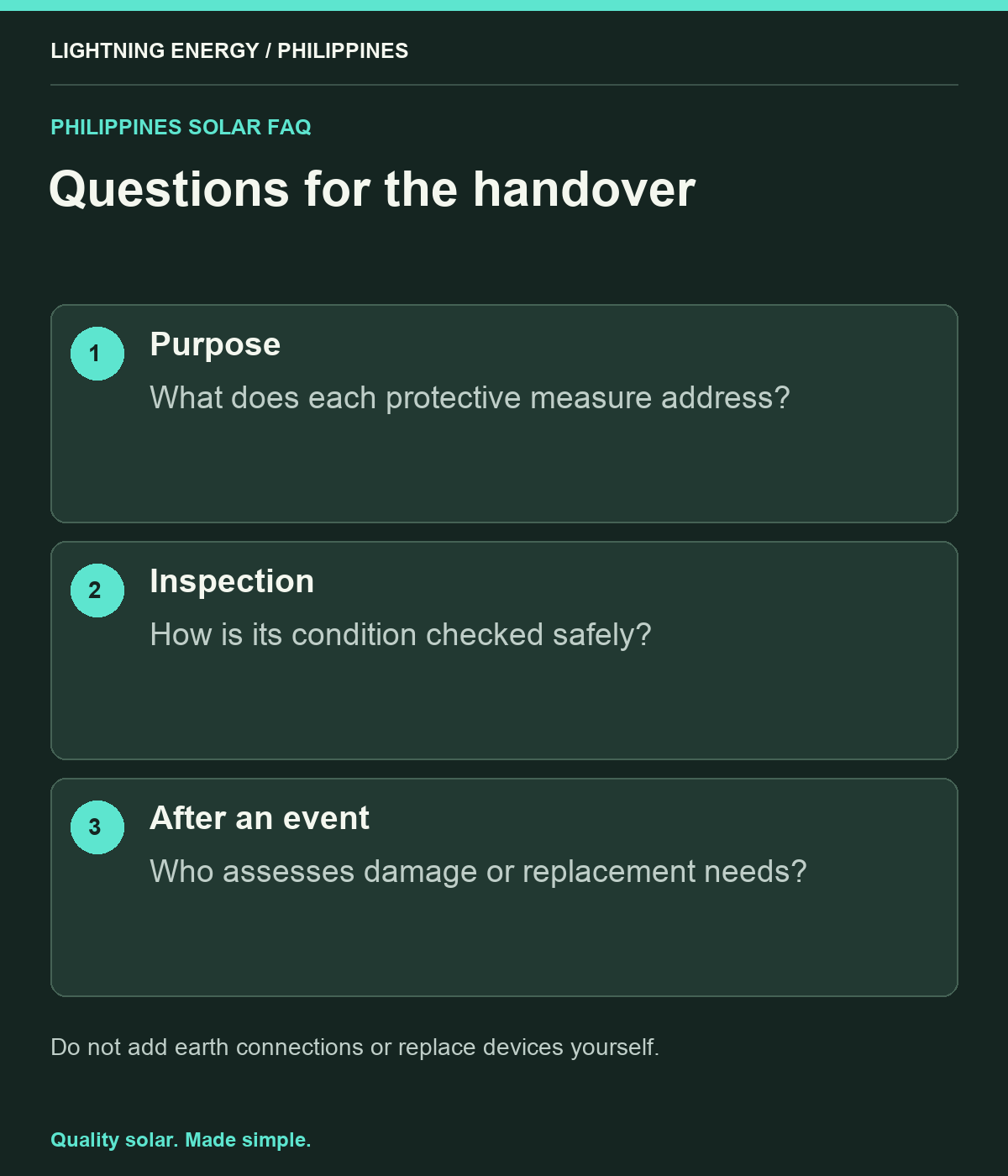
Ask how protective devices indicate a fault or end of service, who checks them and what happens after a significant event. Record the maintenance scope and any replacement costs not included in the service agreement. Follow owner instructions only for observations that are safe and accessible.
Do not open electrical enclosures, add earth connections or replace protection devices yourself. If the system shows damage, unusual smells or repeated faults after a storm, keep away and contact the installer. A protection device is part of a maintained installation, not a one-time purchase that removes the need for later assessment.
Request evidence in the handover pack
Keep the final electrical records, equipment schedule, protection assessment and inspection instructions together. Ask for changes to be documented whenever solar, battery or other major electrical equipment is added. Good records help future service providers preserve the intended arrangement.
Lightning Energy Philippines can explain how protection is addressed in the scope for your home and which specialist assessment is required. Ask for a coordinated solution with clear responsibilities and realistic limits. That gives a stronger basis for confidence than a broad promise that a solar package is lightning-proof because one protective component appears in the quotation.
Sources & further reading
Sources used for this guide. Policy and product details should be checked for your particular installation.
- DEHN — Lightning and Surge Protection for Rooftop PVAccessed 27 September 2026
- LONGi — PV Module User Manual, 2026Accessed 27 September 2026