Solar FAQs
What Should I Do if Floodwater Reaches My Solar Battery?
Keep people away, follow emergency guidance and obtain a qualified assessment. A dry-looking battery is not proof that it is safe to restart.
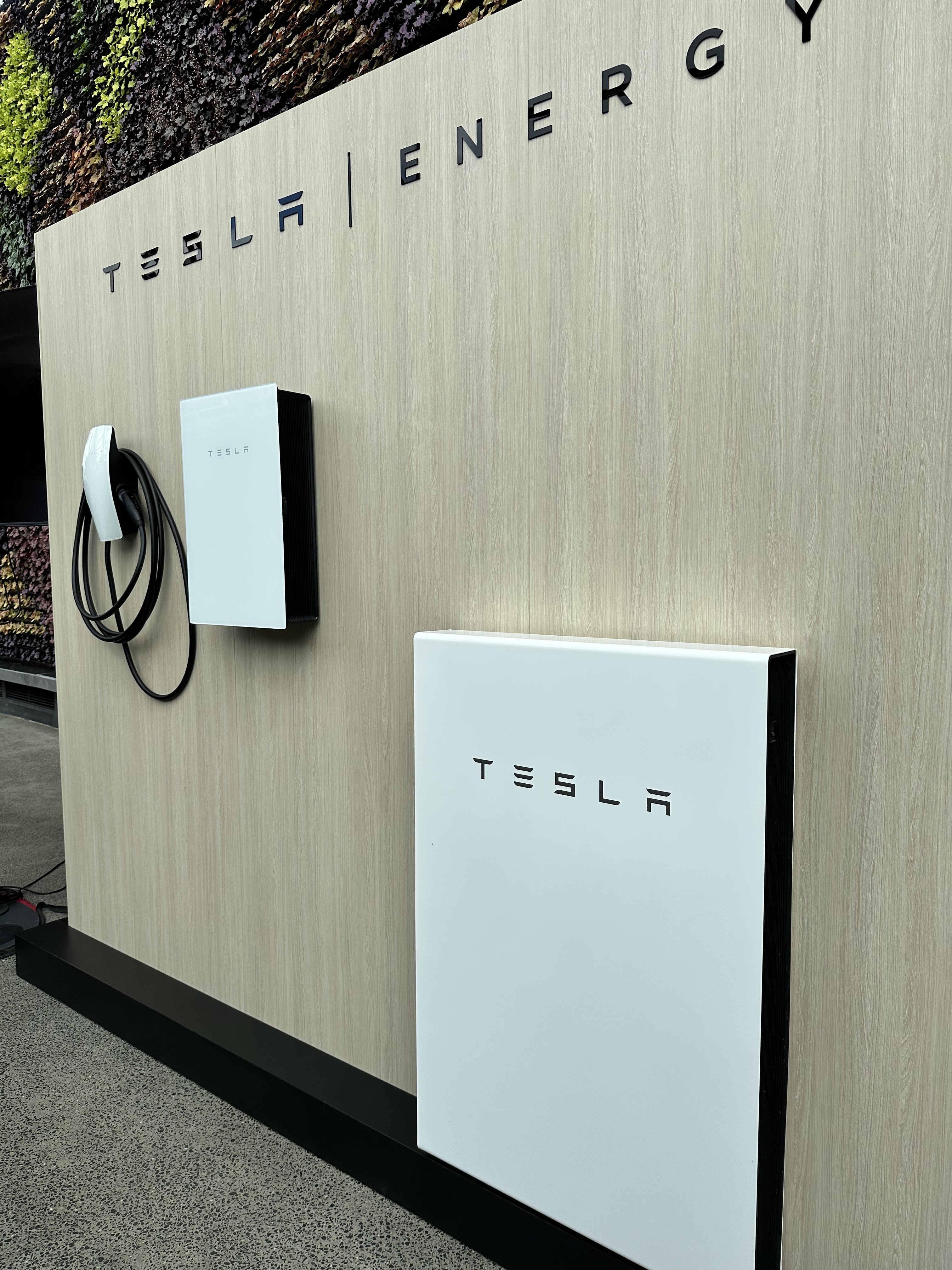
Keep away from the affected equipment and floodwater, and get emergency help if there is immediate danger. Do not touch, open, move or restart a battery that may have been flooded. Contact the installer or manufacturer once you are safe and follow their model-specific instructions. Apparent drying does not establish that the battery or associated wiring is safe.
Put people ahead of equipment
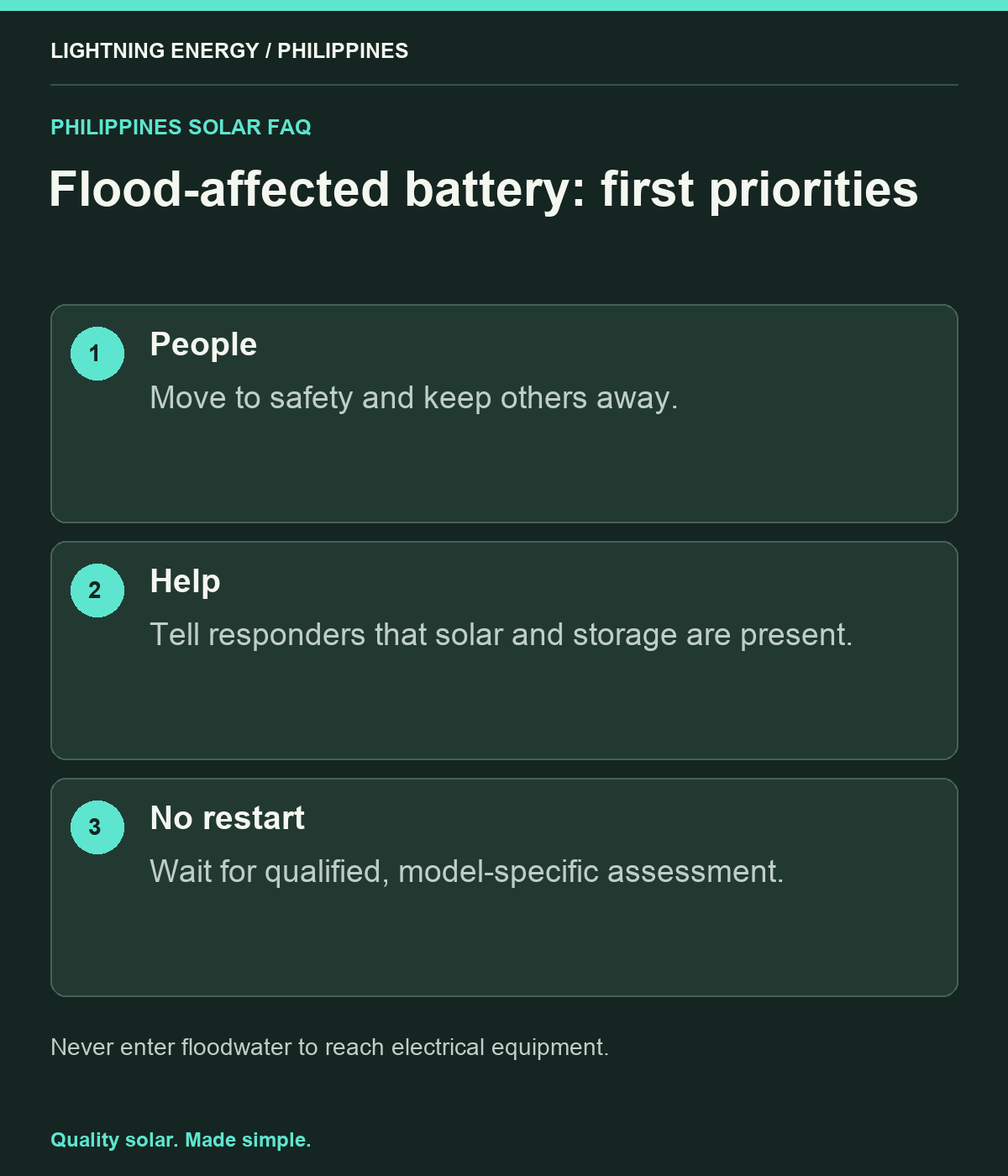
If water threatens the home, follow local emergency directions and move to safety. Do not enter water to reach a switch, collect a serial number or rescue the battery. Keep children and pets away from affected electrical areas.
Meralco’s electrical-safety material addresses typhoon and flood precautions. [1] Use official emergency advice alongside the installation’s instructions, and do not delay evacuation to manage solar equipment. Where there is smoke, fire, unusual noise or another immediate hazard, contact emergency services from a safe location and tell responders that a battery and solar system are present.
Do not assume the grid switch removes every source
A solar-and-battery installation can contain multiple energy sources and components. Ask responders and qualified service personnel to manage isolation using the system documentation. This is not a situation for improvised household electrical work.
Keep the equipment location and system diagram available in your emergency records if you can do so safely before an event. Do not open enclosures or disconnect cables after flooding. Even if the utility supply is unavailable, that does not make every part of the installation safe to handle, and the correct procedure depends on its design.
Treat restart as a manufacturer-led decision
Tesla’s emergency guidance requires support confirmation before returning affected equipment to use in relevant water-damage situations. [2] That is a product example; obtain the corresponding instructions for your battery.
Do not use a fan, hair dryer or heat gun as a substitute for assessment. Do not accept an informal reassurance that an outdoor-rated enclosure must be fine after immersion. Tell the service provider what happened, how high the water reached and whether the equipment was operating, using observations made from a safe position rather than entering a hazardous area to investigate.
Document safely for service and insurance
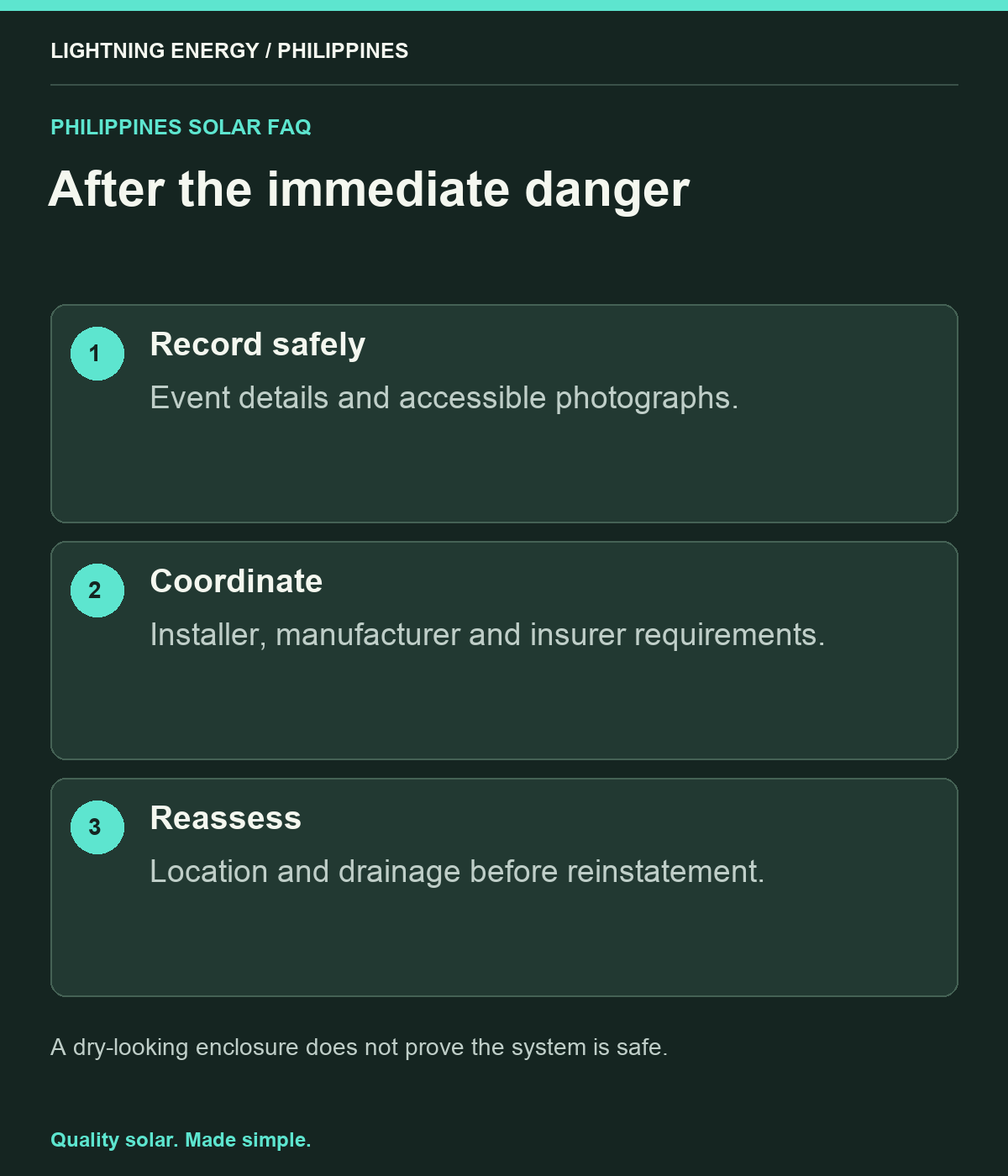
Once the area is declared safe, collect photographs only from accessible positions and keep the date, event details and service reference. Ask the provider what evidence is needed before any equipment is moved. Your insurer may have a separate claims process and should confirm its requirements.
Avoid dismantling the unit to show internal damage. Preserve purchase records, model details and warranty documents already in your files. A clear record helps the qualified assessor distinguish the battery, inverter, wiring and building damage, while allowing the relevant organisations to explain their separate responsibilities.
Plan for temporary loss of the system
Ask the provider whether the installation must remain out of service and what safe temporary arrangements are possible. Do not connect a portable generator or power station to household wiring through an improvised lead. Any fixed connection needs appropriate professional design and protection.
If the household has essential medical equipment, follow its emergency plan and seek help promptly rather than waiting for the solar battery to be assessed. Backup equipment damaged by a disaster cannot be treated as available reserve. Keep accommodation, communications and essential-load alternatives separate from the repair timetable.
Review the location before reinstatement
After the immediate issue is resolved, ask whether the site, mounting height or wider design should change. Share the actual flood level and drainage history with qualified professionals. A like-for-like replacement in the same vulnerable location should still be assessed against the applicable instructions and local requirements.
Lightning Energy Philippines can help coordinate technical assessment and future placement questions once the property is safe. The priority is a documented decision on safe serviceability or replacement, not the fastest possible restart. Keep the emergency record with the system handover so future work reflects what happened at the site.
Sources & further reading
Sources used for this guide. Policy and product details should be checked for your particular installation.
- Meralco — Electrical Safety 101Accessed 27 September 2026
- Tesla — Powerwall+ Owner’s Manual: Emergency ResponseAccessed 27 September 2026