
Solar FAQs
What Should I Check After a Typhoon if My Solar Panels Look Intact?
Use safe observations and qualified inspection after severe weather; intact-looking panels do not establish that the whole installation is safe.
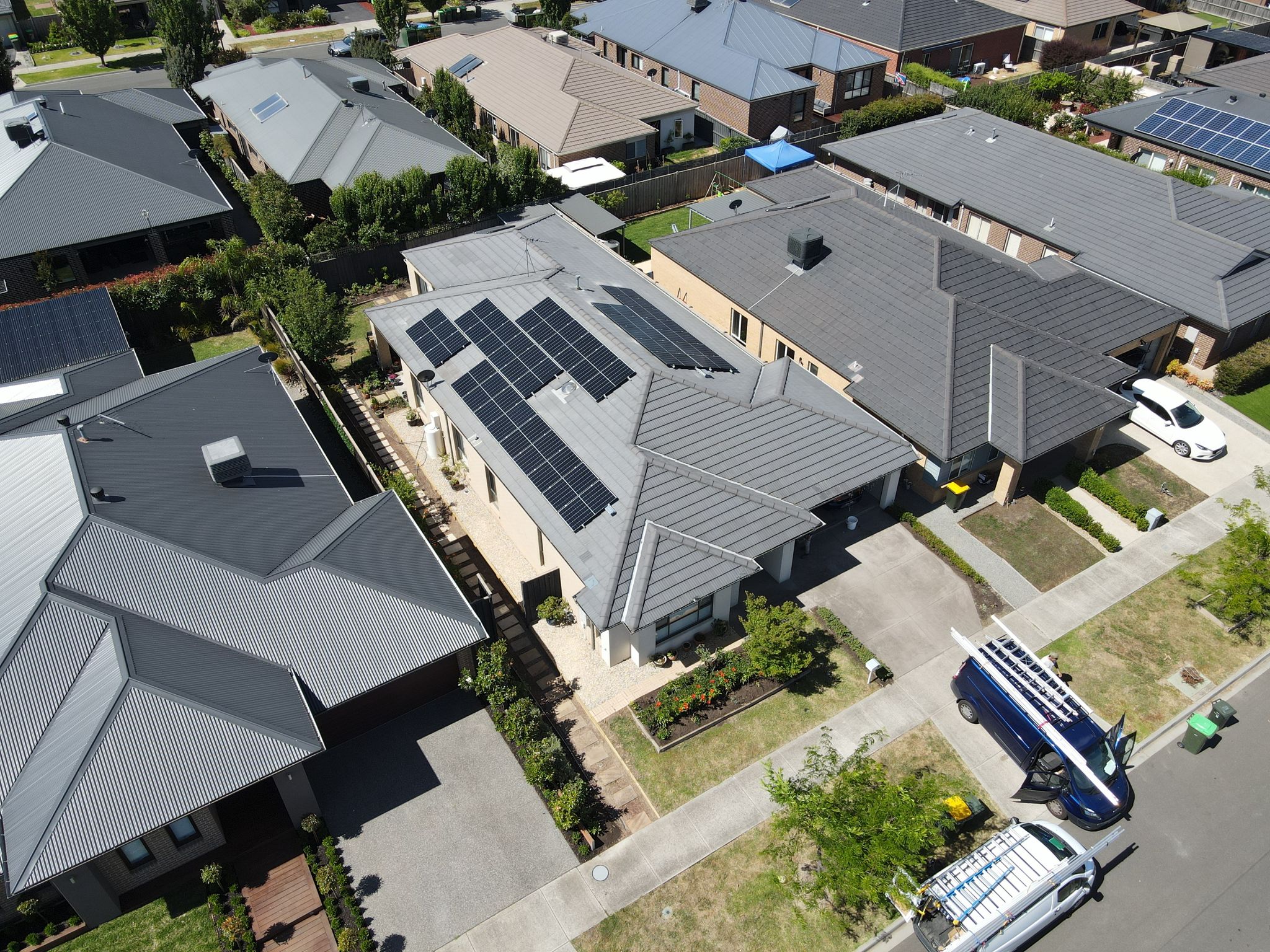
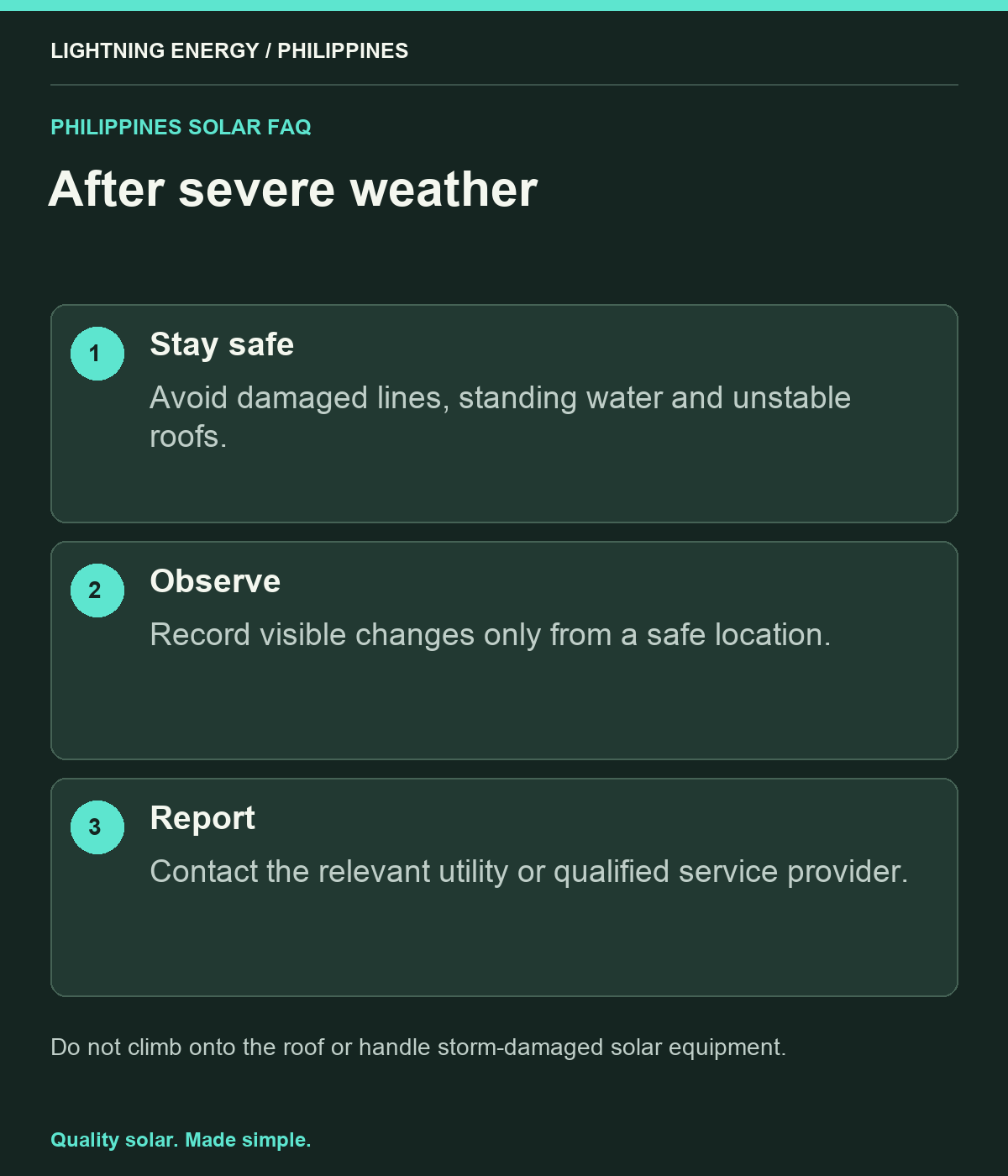
Stay at a safe location and assess the property before thinking about solar output. Panels that look intact from the ground do not prove that mounting, cables, roof structure or other equipment escaped damage. If there is suspected damage, flooding, fallen wiring or an electrical warning, keep away and contact the appropriate emergency, utility or qualified service personnel. Do not climb onto the roof to check the array yourself.
Put access and surroundings first
Meralco’s electrical-safety guidance addresses hazards associated with severe weather and flooding. [1] Follow current instructions from your actual utility and local authorities, particularly around damaged lines and unsafe areas.
Look only from a location that is already safe to occupy. Do not approach fallen wires, wet electrical equipment or damaged structures for a better photograph. A useful report can simply describe the concern and its location. If the property is unsafe, leave assessment to the relevant responders rather than delaying because the solar app still shows production.
Observe without touching the installation
From a safe position, note obvious changes such as displaced panels, loose-looking roof components, debris, new leaks or visible damage to accessible external equipment. Record when the storm occurred and any alarms you received. These are observations for a professional, not a complete inspection checklist for a homeowner.
Avoid moving debris near electrical equipment or reaching beneath modules. Solar equipment can present electrical hazards even when the household supply is interrupted. Do not assume that an outage, a dark app screen or an accessible switch makes every part of the system safe to touch.
Ask for an inspection appropriate to the event
JinkoSolar’s installation manual describes requirements for mounting, electrical connections and safe handling of its modules. [2] A post-storm assessment should consider the installed system and manufacturer instructions, not merely whether panel glass is visibly broken.
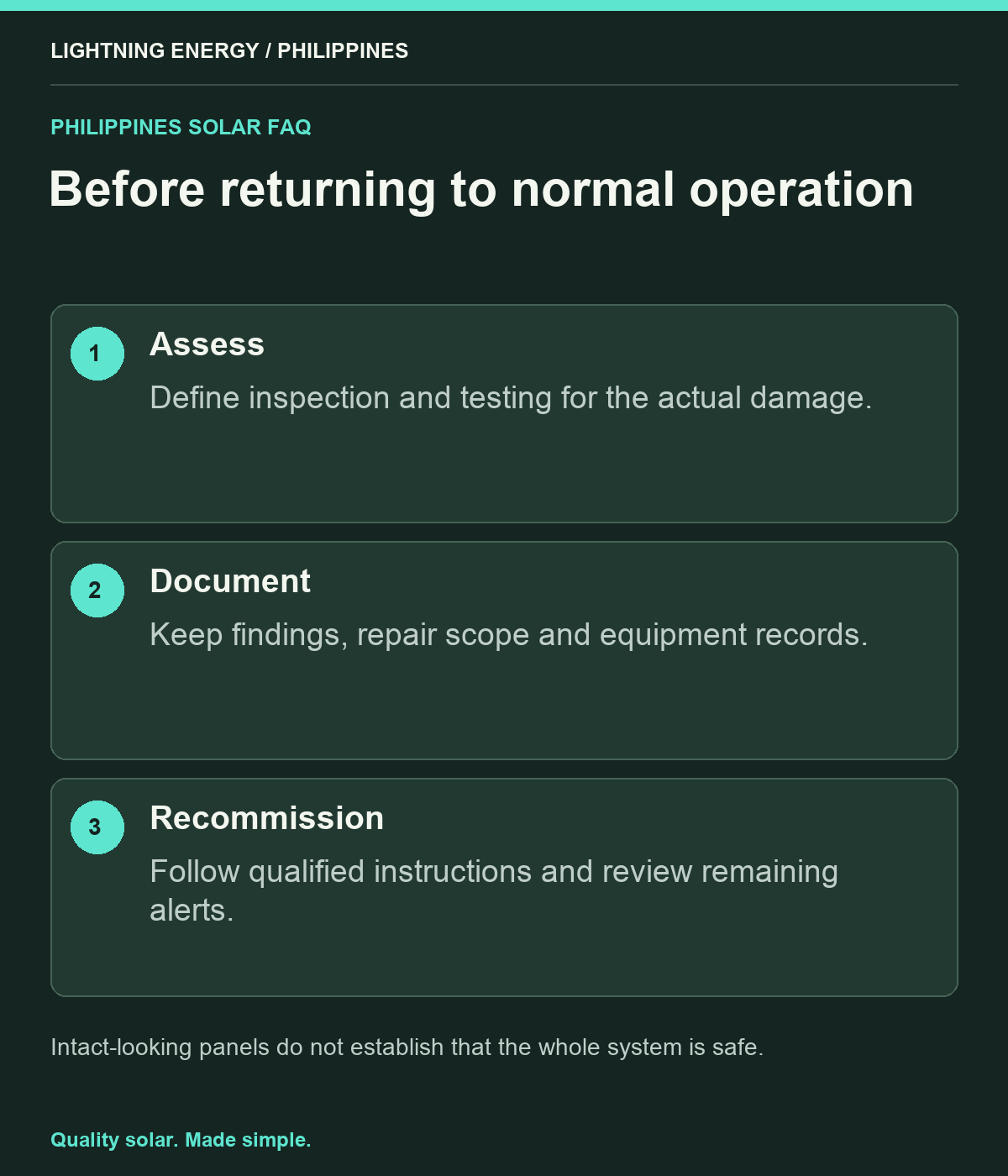
Tell the qualified installer what the property experienced: strong wind, debris impact, roof movement, water intrusion or nearby damage. They can define an appropriate inspection and testing scope. A structural or roofing professional may also be needed where the building is affected. Ask for the findings and any restrictions in writing.
Keep water-affected equipment out of casual use
If equipment may have been flooded or water has entered an enclosure, do not restart it simply because surfaces appear dry. Keep away and obtain guidance from qualified personnel and the equipment manufacturer. Never enter standing water to reach a battery, inverter or switchboard.
This is distinct from ordinary rain on equipment designed and installed for its outdoor location. The household should not make that technical distinction by guessing from a product’s appearance. Describe what happened and let the responsible professionals determine the assessment and return-to-service requirements.
Document the event for service and insurance
When it is safe, keep photographs taken from accessible locations, app alerts, dates and relevant correspondence. Preserve the installation records and equipment serial numbers already in your handover folder. Do not take risks to collect an image or remove a component as evidence.
Ask your insurer what information it needs and consult the applicable warranty terms without assuming storm damage is covered by a product warranty. Request separate descriptions of observed damage, recommended work and the basis for replacement. Clear records help the household understand the proposed scope before authorising non-emergency repairs.
Return to normal operation deliberately
Follow the qualified service provider’s instructions for any required repair, testing and recommissioning. Keep the updated report and note any equipment or settings changed. Once normal operation is confirmed, review monitoring for unresolved alerts through the agreed support route.
Lightning Energy Philippines can help assess the solar installation within an agreed qualified service scope after the site is safe to access. The objective is a supported return to service, not a quick visual reassurance. A working app and unbroken-looking panels are useful observations, but they should not replace an appropriate assessment when the property has experienced significant storm damage.
Sources & further reading
Sources used for this guide. Policy and product details should be checked for your particular installation.
- Meralco — Electrical Safety 101Accessed 27 September 2026
- JinkoSolar — Global Installation Manual, 2024Accessed 27 September 2026