Solar FAQs
How Do I Stop My EV Charger Draining the Home Battery?
Coordinate the charger, inverter and household reserve so EV charging follows your intended solar and backup priorities.
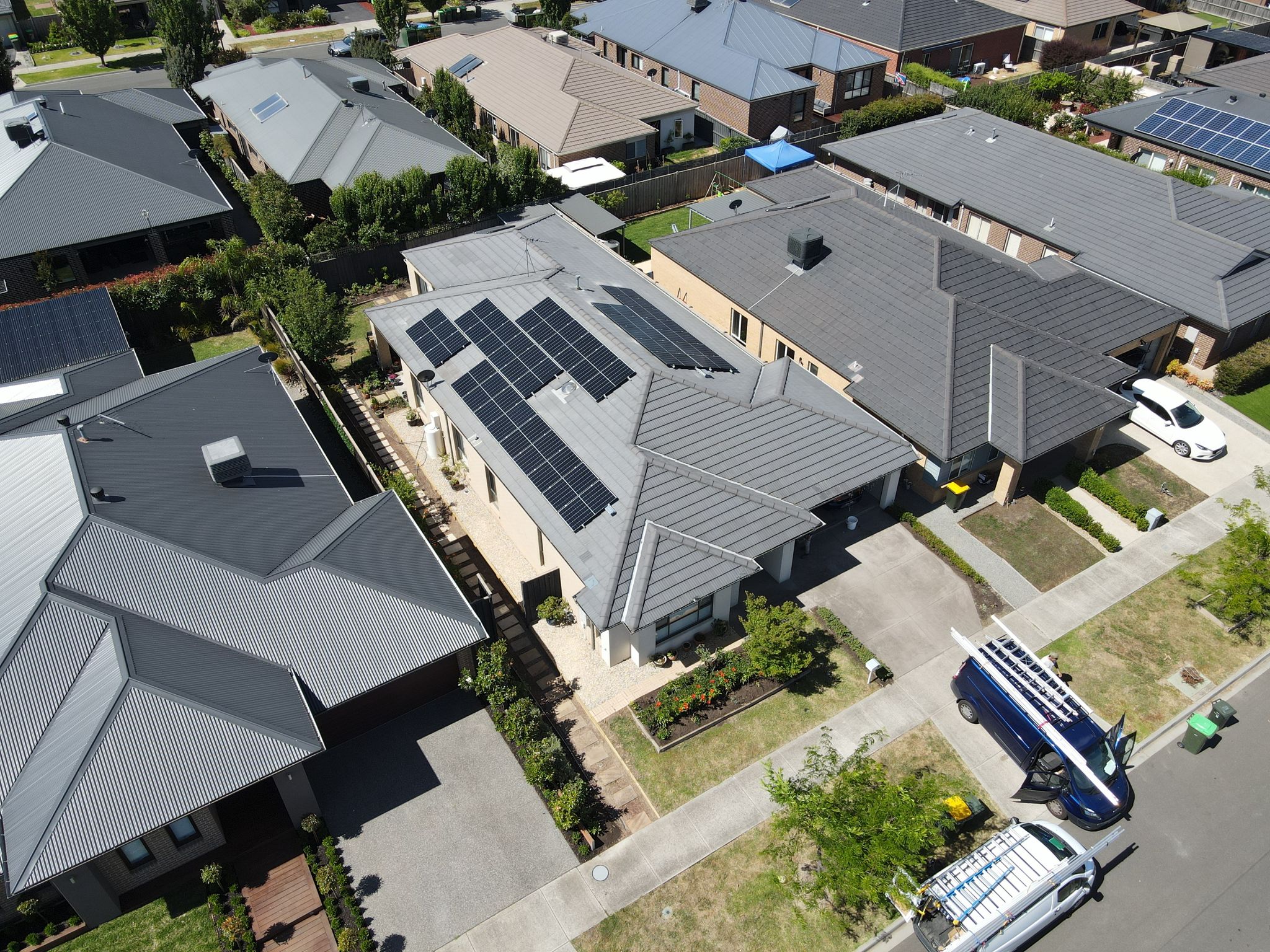
Ask your installer to review how the EV charger is connected and controlled alongside the battery. A charging schedule or “solar” label does not automatically prevent battery discharge. The available solution depends on the charger, inverter, metering and supported control features. State the result you want clearly: preserve a household reserve, use surplus solar when available and still have enough vehicle charge for essential journeys.
Define the household priority first
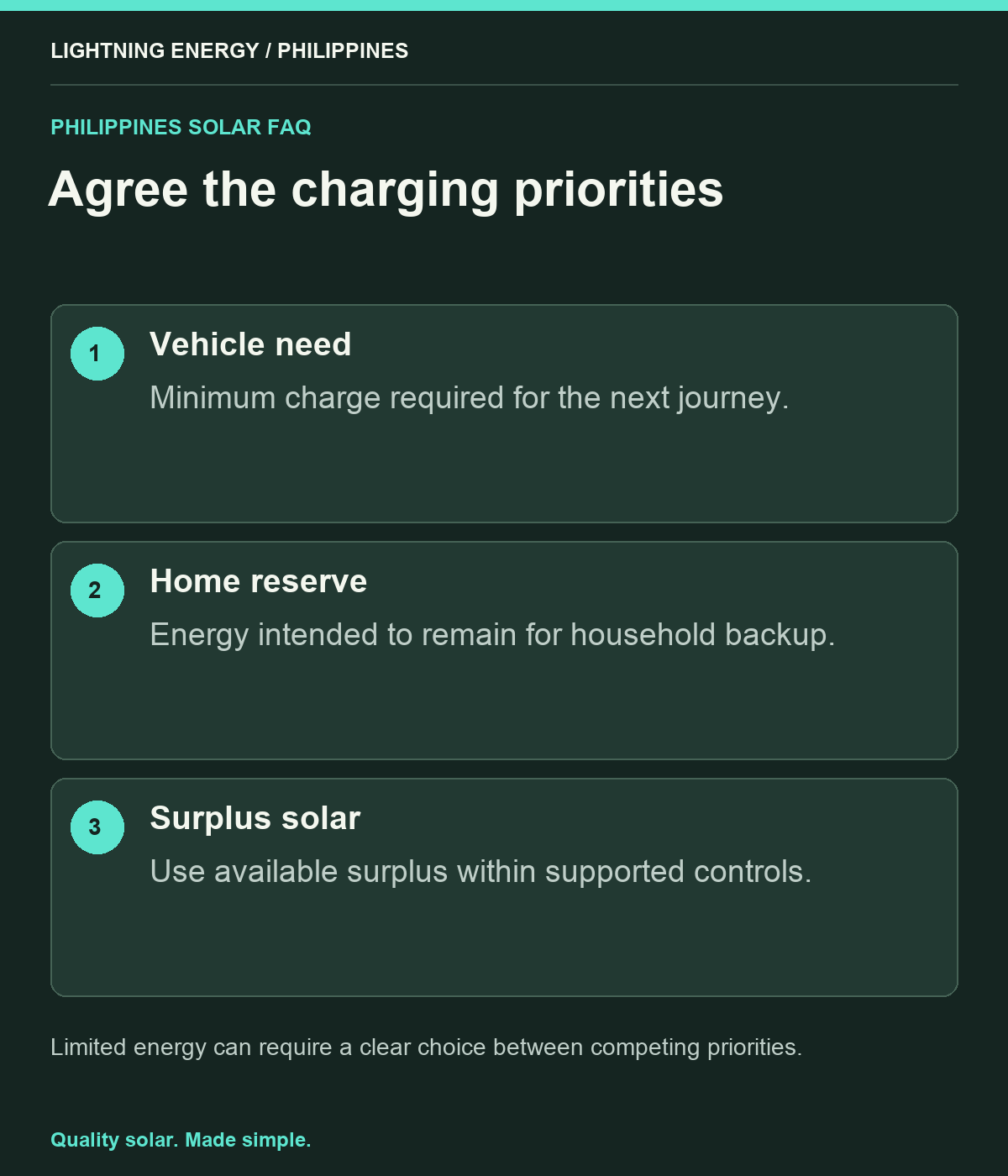
Decide whether the immediate priority is the next journey, a home-backup reserve or daytime solar use. These priorities can conflict when energy is limited. Write down what should happen on a cloudy day and during a brownout, not only during a sunny demonstration.
For an illustrative household, the car may need a minimum charge for tomorrow’s commute while the home battery is intended to support refrigeration overnight. That is a control-design problem, not a reason to promise that every need can always be met from the day’s solar production.
Check which device controls the energy source
Victron’s EV charging documentation explains that, in the described configuration, the inverter/charger determines whether supplementary energy comes from the battery or grid. [1] A charger setting alone therefore may not describe the full system behaviour.
Ask the installer to explain the actual power path and measurement arrangement. Confirm whether the charger is on a backed-up circuit and whether that matches your outage priorities. Any wiring or protected-setting changes belong with qualified personnel. Do not move circuits or alter safety controls to work around an unexpected app reading.
Treat integrated features as model-specific
Tesla’s Charge on Solar guidance specifies hardware and software requirements and notes regional limitations for certain modes. [2] It is an example of a coordinated feature, not evidence that every vehicle, battery or Philippine installation supports the same behaviour.
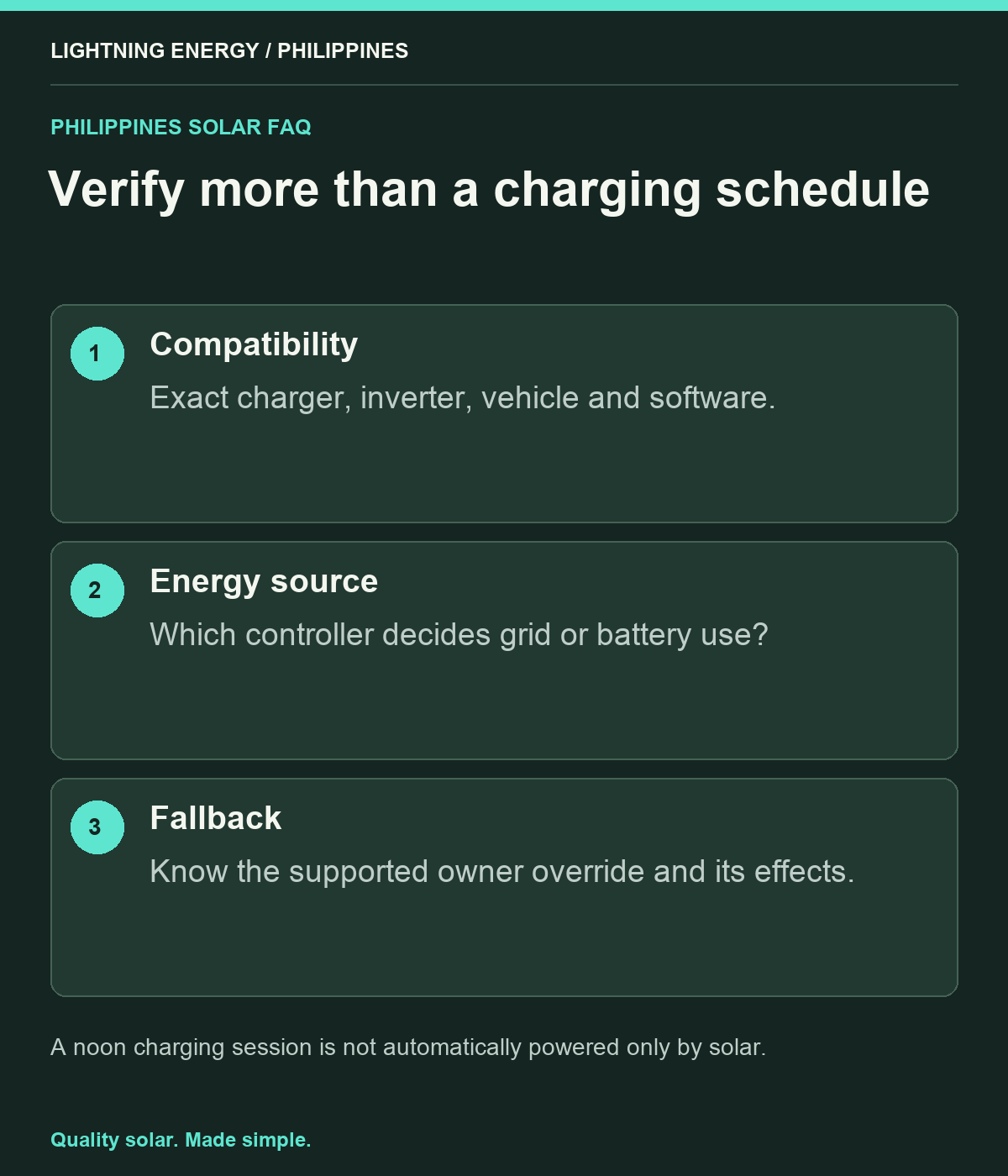
For the equipment in your quote, request written confirmation of compatibility and availability. Ask how export limits, internet loss and software changes affect the proposed function. Avoid choosing an entire system around a feature that the supplier has only demonstrated on a different country’s configuration.
Use schedules for a defined purpose
A schedule can align charging with the hours you expect to be home and solar to be available, but weather and household demand still vary. Ask whether the system can respond to measured surplus or simply begins charging at the chosen time. Those are different behaviours.
Do not assume a night schedule saves money unless your actual electricity tariff supports that conclusion. Likewise, charging at noon is not proof that every kilowatt-hour came directly from solar. Review the system’s recorded flows and the agreed battery settings before describing the result as solar-only charging.
Test ordinary and constrained conditions
Request a commissioning demonstration of the intended priorities within the manufacturer’s supported procedure. Observe a normal charging session and ask what will happen when solar falls, the home battery reaches its reserve or another large appliance starts. Record any limitations.
Keep an understandable fallback plan for a journey that cannot wait for surplus solar. Know which owner controls are supported and what they change. A well-explained manual override can be useful, provided it does not obscure the effect on household reserve or encourage adjustments to protected electrical settings.
Review the design as routines change
A new commute, another EV or more overnight aircon use can change the household’s priorities. Review the control arrangement rather than assuming the original setup remains ideal forever. Keep the system diagram and commissioned settings updated after any installer-led change.
Lightning Energy Philippines can help assess the complete solar, battery and EV charging arrangement from your equipment details and driving routine. The useful outcome is predictable behaviour with clear limits. Preserving home backup while charging a vehicle requires coordinated decisions about energy and timing, not simply adding another battery to the property.
Sources & further reading
Sources used for this guide. Policy and product details should be checked for your particular installation.
- Victron Energy — EV Charging Station NS Configuration and OperationAccessed 27 September 2026
- Tesla — Charge on Solar, Thailand Support DocumentationAccessed 27 September 2026