Solar FAQs
How Can a Shared Household Divide an Electricity Bill After Adding Solar?
Separate measured electricity use from an agreed family contribution when one Philippine home shares a solar-powered electricity account.
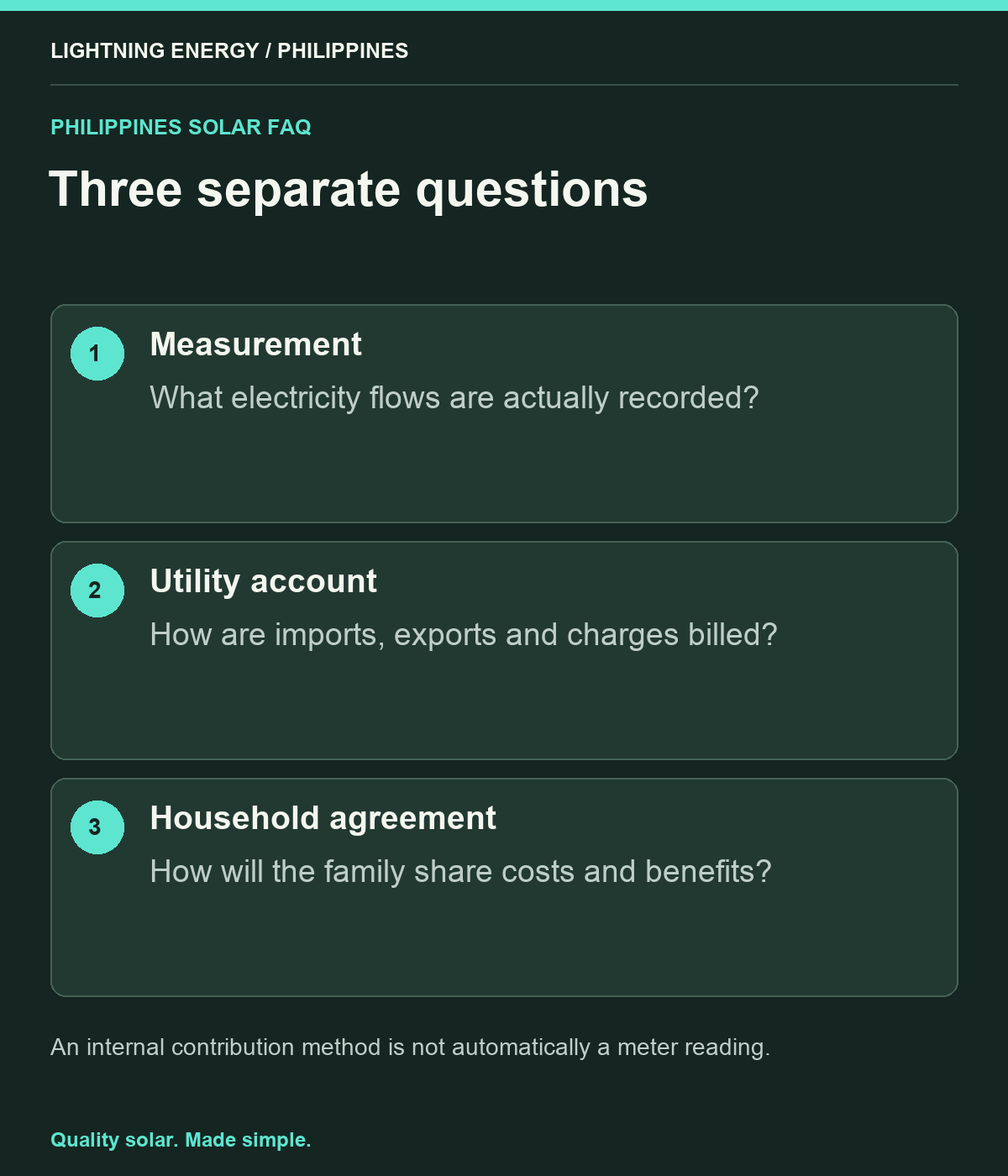
Start with an agreed household method and clear measurements. The utility bill belongs to the electricity account; a solar app does not automatically calculate what each family member, upstairs unit or home office should pay. Decide which costs are shared and what data are available before assigning savings. A transparent arrangement can be simple, but it should not pretend to measure individual use when it does not.
Identify what the monitoring actually measures
FIMER distinguishes production monitoring from consumption measurement. [1] Neither automatically identifies the electricity used by every room or occupant. Ask the installer to explain the measurement boundaries of your system.
For an illustrative extended-family home, one whole-house meter may show total imports while the app shows total solar output. Those figures alone cannot establish which household used the solar electricity at a particular time. If a proposed allocation needs more detailed evidence, discuss suitable measurement with a qualified professional rather than estimating individual consumption from panel output.
Separate the utility bill from the family agreement
Meralco explains net-metering credits through the account’s measured exports and billing arrangement. [2] The household’s internal contribution method is a separate question, and another distribution utility may have different account details.
List the bill items everyone intends to share, the solar-related costs included in the agreement and any costs kept separate. Avoid treating an export credit as cash earned individually by whoever happened to be home that afternoon. Agree how account credits and adjustments are handled before a bill arrives with an unexpected amount.
Choose a method everyone understands
A household might choose a fixed contribution, a usage-based arrangement supported by appropriate measurements or another mutually agreed method. Write down the method in plain language and identify when it will be reviewed. This article does not determine what a landlord may legally charge or provide tax treatment for a home office.
If the property includes tenants, separate businesses or multiple legal units, obtain suitable local advice on the arrangement. Do not install informal wiring or metering to solve a billing disagreement. Measurement and allocation should not compromise the safety or legality of the electrical installation.
Avoid allocating the same benefit twice
Consider how daytime self-consumption, exports and battery use appear in the records. A household contribution method should not count the same solar energy as both direct savings and a separate export credit. Ask for help interpreting the data if the flows are unclear.
For an illustrative family discussion, the person funding the system may want a contribution toward its cost, while others want their bill linked to use. Those are negotiating preferences, not measurements supplied by the inverter. Keeping the two ideas separate makes the agreement easier to explain and review.
Keep a modest, consistent record
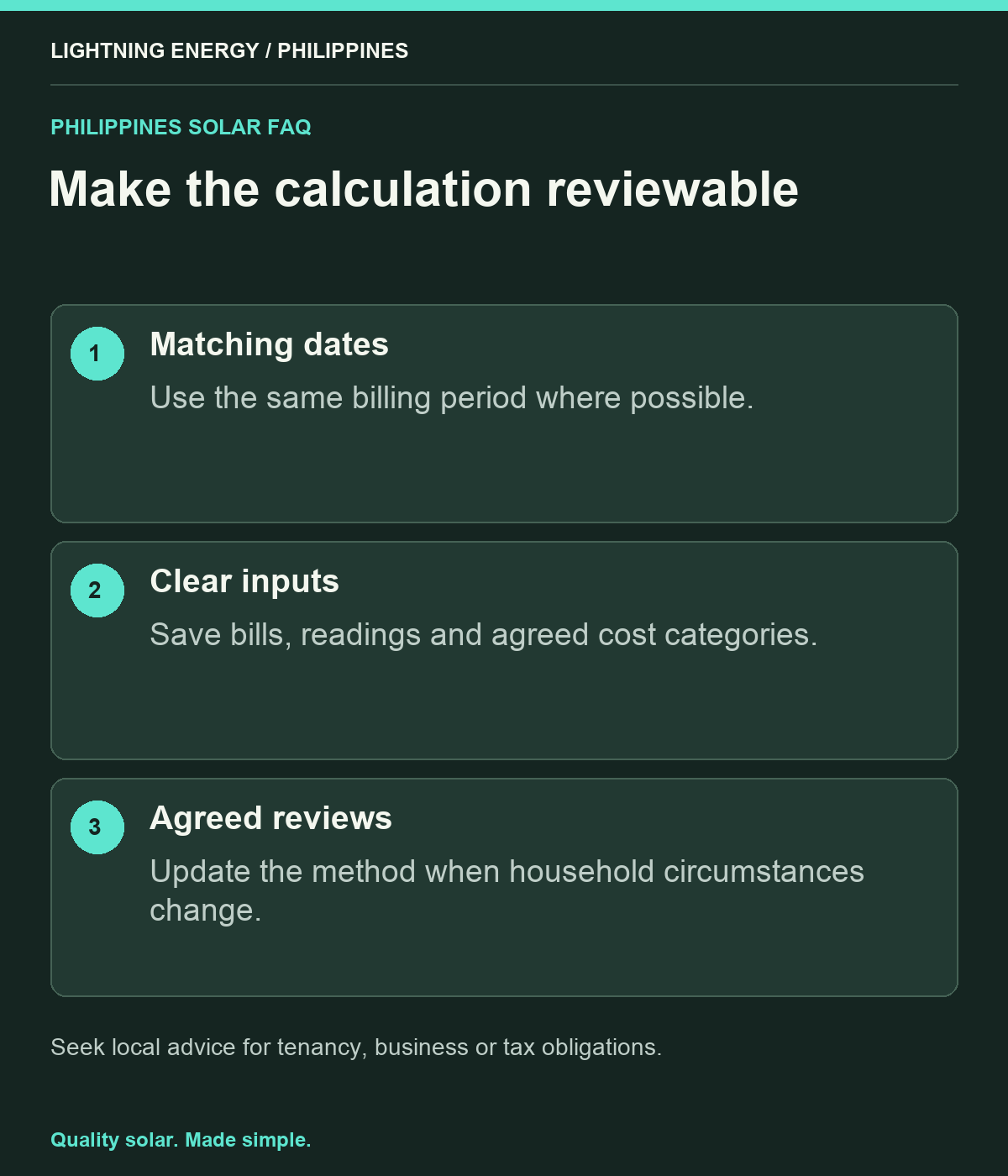
Save the bill, relevant meter readings and the calculation used for each billing period. Use matching dates where measurements are compared. Record unusual events such as a new aircon, a long absence or a change in occupancy, because the household may want to review its agreement afterward.
Avoid excessive monitoring of personal routines. Agree who can see detailed consumption data and why it is needed. A useful shared record should resolve questions with enough evidence, not create a new source of conflict over every appliance switched on during the day.
Review the arrangement after real experience
After several normal billing periods, check whether everyone understands the method and whether its data requirements are practical. Correct mistakes openly and document changes from an agreed date. Do not present a new allocation as a technical certainty when it is actually a changed family preference.
Lightning Energy Philippines can explain the solar and monitoring side of the system, including what the available measurements can and cannot establish. The household can then agree its contributions with a clearer view of the evidence. That is more useful than assigning precise-looking shares from information that never measured individual electricity use.
Sources & further reading
Sources used for this guide. Policy and product details should be checked for your particular installation.
- FIMER — What Is Consumption Monitoring?Accessed 27 September 2026
- Meralco — Net-Metering Billing FAQsAccessed 27 September 2026