Solar for business
Solar for Philippine Clinics: Put the Service Plan First
A clinic energy project should begin with clinical priorities, equipment requirements and a tested continuity plan.
A clinic does not experience a power interruption in the same way as an ordinary office. A registration desk, a medicine refrigerator and a treatment room serve different purposes and can have very different continuity requirements. A solar discussion should start with the people responsible for those services.
This article provides a project-planning framework for clinic owners and administrators. It does not specify a medical power system or replace clinical, electrical or facility requirements. The task is to help the right professionals receive a clear brief before equipment is selected.
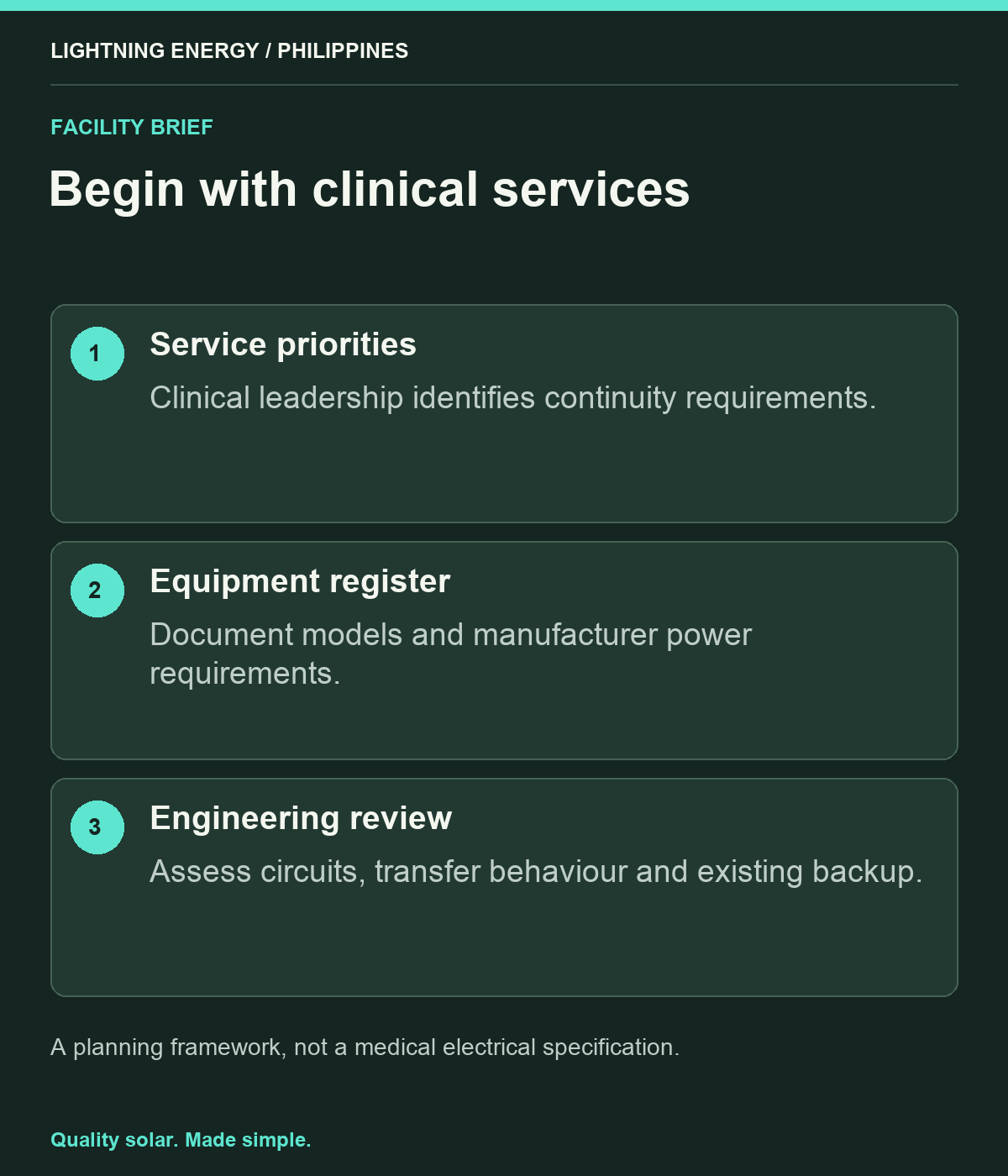
Describe services before naming appliances
WHO identifies reliable electricity as an enabler of lighting, communications, water and medical services. [1] Translate that broad point into a list of activities at this clinic: consultations, diagnostics, storage, records and any emergency role. Ask the clinical lead which services may pause and which require protected continuity. Do not let a generic package decide those priorities. The facility's service obligations should determine the engineering discussion, including redundancy and appropriate backup arrangements.
Build an equipment register with the clinical team
Record equipment model numbers, operating instructions, start-up demands where specified and any requirements for power quality or uninterruptible supply. Include supporting loads that are easy to overlook, such as networking, water systems and ventilation. Keep the register tied to actual rooms and circuits. If a device's requirements are uncertain, obtain the manufacturer's documentation through the responsible team. A solar installer should not be asked to infer clinical suitability from a photograph or an estimated wattage.
Distinguish normal savings from continuity
WHO's Energizing Health report describes methods for characterising facility energy needs and evaluating electrification options. [2] Our recommended next step is to request two explicit assessments: normal daytime electricity use and the protected service level during an interruption. A system can perform well in the first assessment without satisfying the second. Ask the designer to explain transfer behaviour, reserve settings, monitoring and the interaction with any existing UPS or generator. These details belong in a reviewed design.
Test an ordinary clinic day and a difficult one
Use a clearly labelled planning scenario: an outpatient clinic loses supply while consultations and refrigeration are operating. Which activities continue, who responds to alarms and when is the contingency plan activated? Repeat the discussion for an extended interruption and for a day with limited solar generation. This exercise does not predict an outage or prove runtime. It exposes assumptions that an annual energy calculation may hide and gives the facility team specific questions to resolve.
Include the staff who will live with the system
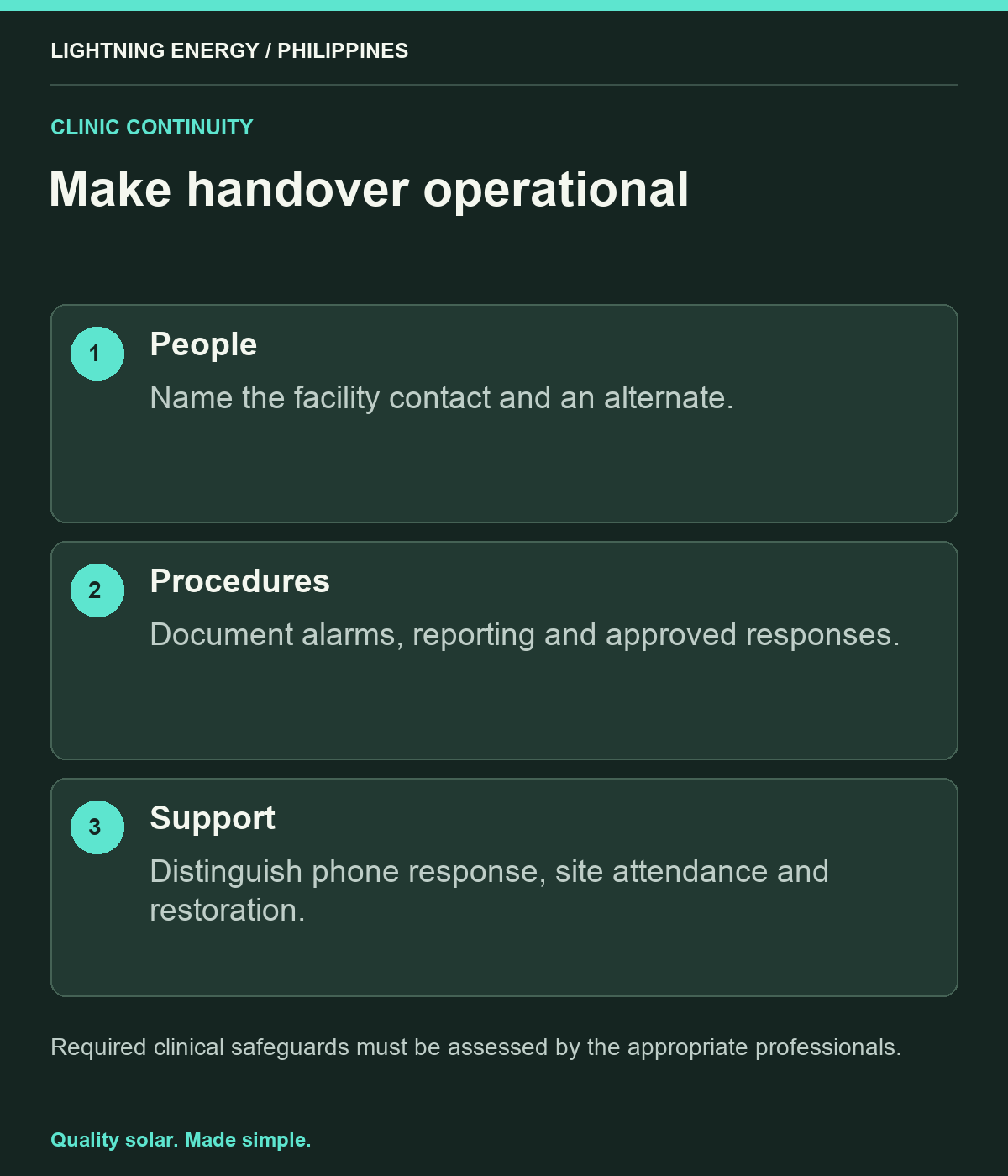
Identify a facility contact and an alternate. Arrange training that matches their responsibilities, including what to observe, what to report and which actions are reserved for qualified personnel. Locate operating information where authorised staff can find it during a disruption. Avoid relying on one person's personal phone or memory. The handover should make it clear when staff contact the installer, the equipment supplier or the clinic's existing engineering support, especially outside normal business hours.
Procure service as deliberately as hardware
Ask bidders to describe maintenance, remote support, escalation and replacement arrangements in the clinic's location. Clarify whether response commitments mean an initial phone call, a technician visit or restoration of service. Those are different promises. Allocate an operating budget and record who approves repairs. When comparing prices, retain the costs of protecting required clinical services in every option; removing them can make a proposal cheaper while changing the task it is supposed to perform.
Start with a joint assessment
A useful first package includes bills, operating hours, the equipment register and the existing continuity plan. Bring the clinical lead, facility representative and qualified designer into the same conversation. Lightning Energy can discuss solar and storage within that agreed scope, while specialist requirements remain with the appropriate professionals. The objective is not a reassuring battery label. It is an understood, documented and tested arrangement that supports the clinic's work under the conditions for which it was designed.
Sources & further reading
Sources used for this guide. Policy and product details should be checked for your particular installation.
- WHO: Electricity in health-care facilities31 August 2023; accessed 27 September 2026
- WHO, World Bank, IRENA and SEforALL: Energizing Health14 January 2023; accessed 27 September 2026