Solar for business
Solar for the Sari-Sari Store: Build Around the Working Day
A practical solar brief for small shops, with refrigeration, opening hours and working capital at the centre.
A sari-sari store can share a roof and an electricity account with the family home, yet its energy priorities are different. Cold drinks need reliable refrigeration, customers arrive at uneven times, and money spent on equipment cannot also buy stock. A useful solar proposal should recognise that everyday reality.
Start with the trading day rather than a package size. The aim is to identify which purchases of electricity solar could replace, which interruptions storage could help manage, and what the owner can comfortably maintain. The example below is a planning exercise, not a claim about an actual shop.
Draw two operating pictures
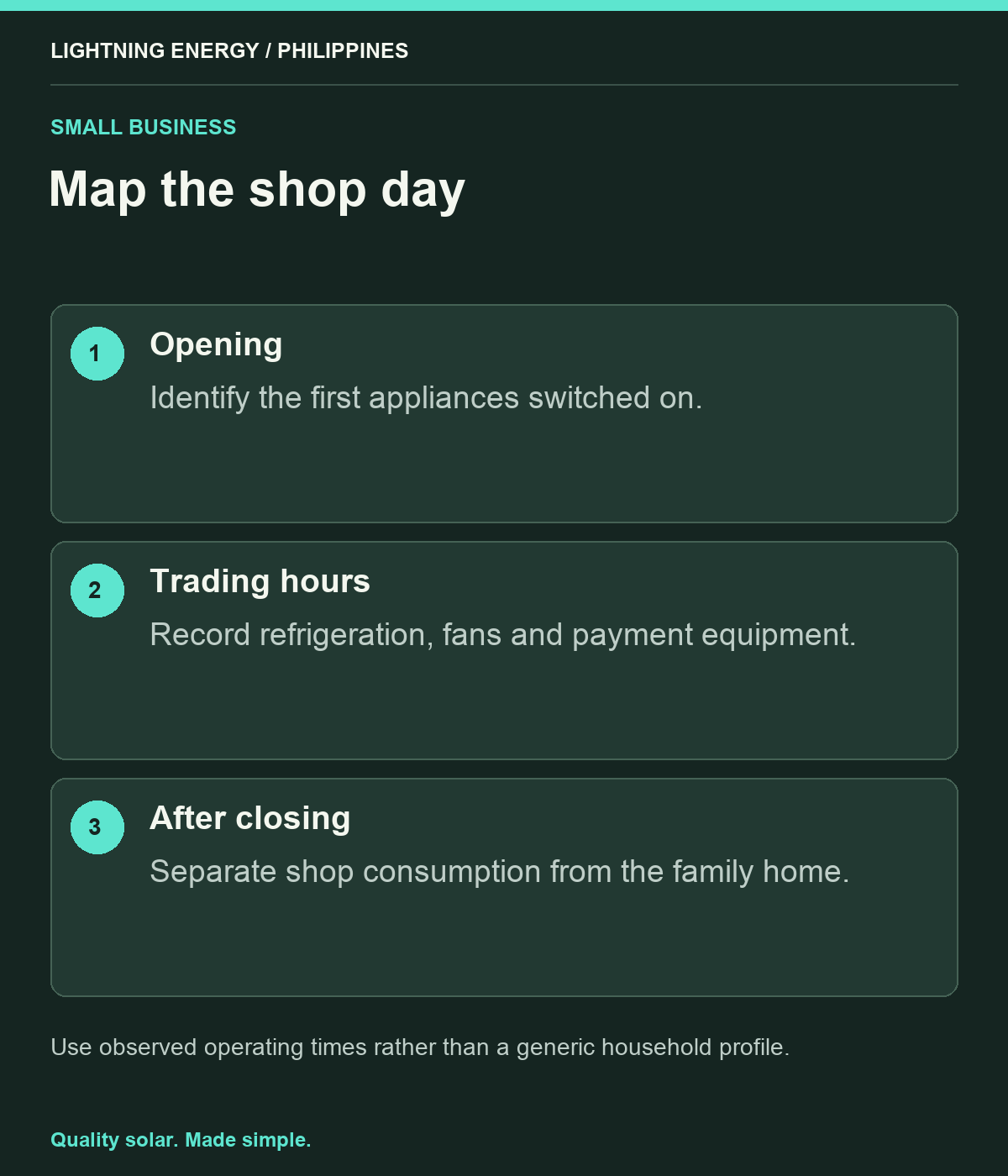
List what runs for the shop and what runs for the household. Mark refrigeration, display lighting, a payment terminal, fans and any small appliances. Then record opening, closing and delivery times. The Asian Development Bank's rooftop handbook treats preparation as a distinct project stage. [1] Our suggested shop diary makes that stage concrete: it prevents a household's evening air-conditioning from being mistaken for daytime business demand.
Follow the refrigerator, not its label alone
Ask the assessor to measure consumption across normal trading days. A refrigerator's maximum electrical rating does not tell you its daily pattern, and a busy afternoon may differ from a quiet day. Note door opening, deliveries and any damaged seals for the refrigeration technician. Keep food-storage requirements unchanged while evaluating efficiency. Solar should support the business operation; it should not require guessing how warm products can safely become.
Give storage a specific job
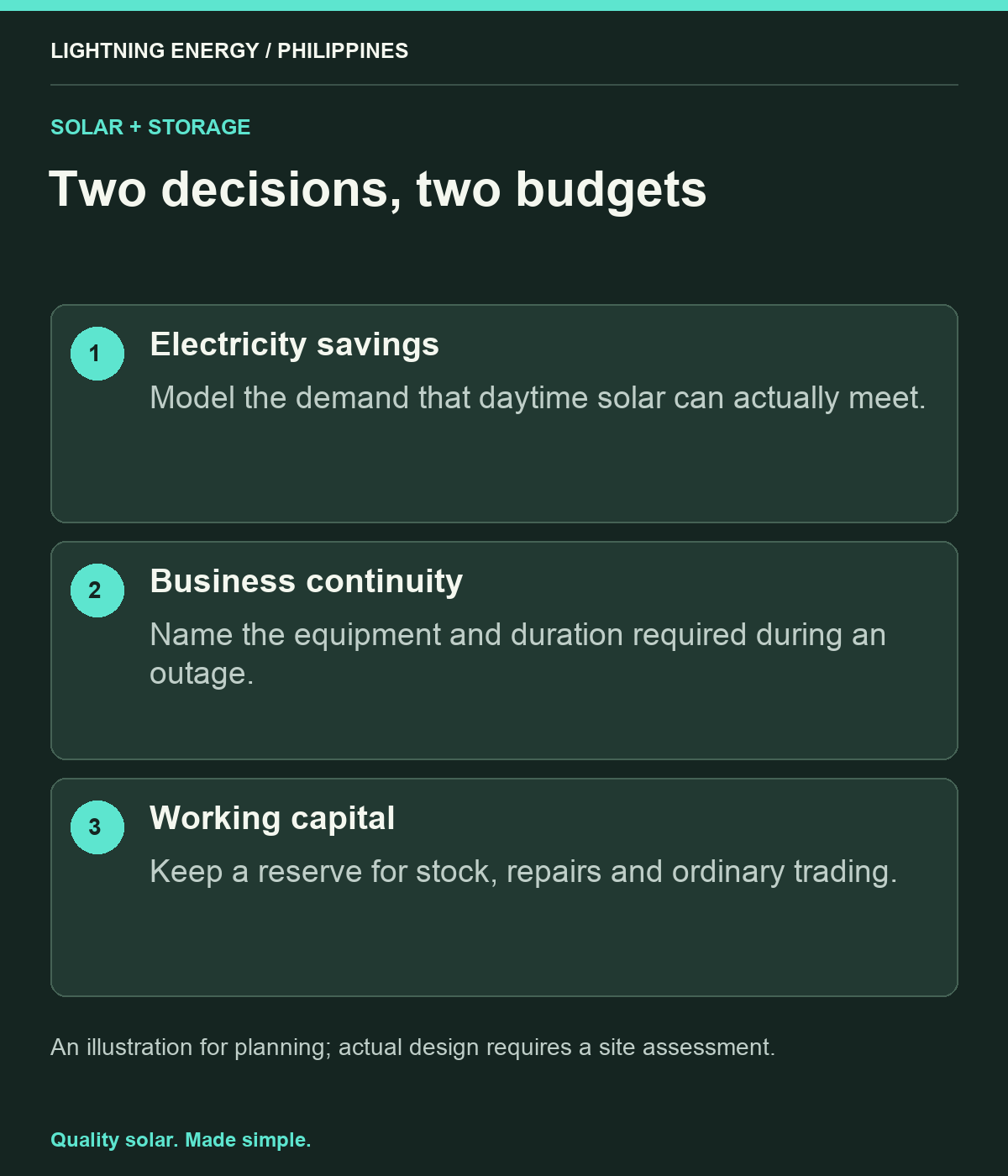
The US Department of Energy distinguishes battery energy capacity from power capacity. [2] For this shop, write a backup brief naming the equipment to be supported and the desired operating period. Ask the designer to check starting demands and the complete backup arrangement. A proposal that keeps a light and payment device operating is different from one designed to support refrigeration. Compare those scopes separately, including what happens when the battery is depleted.
Protect the stock budget
Prepare two cash columns: money required before commissioning and money reserved for running the store. Include the installation, approvals, any electrical repairs, financing payments and maintenance provision in the first assessment. Do not turn every peso of projected electricity savings into available cash for stock. An illustrative owner might prefer a smaller first stage that leaves room for replenishment and emergencies. That is an operating decision, not evidence that a smaller system always has better economics.
Separate a sales promise from a useful model
Give bidders the same shop diary, bills and intended backup list. Ask them to distinguish electricity used directly from solar, exported energy if an approved arrangement applies, and battery-supported consumption. Request a lower-activity scenario for weeks when sales are quiet. The valuable comparison is how the proposals respond to the same shop, not which brochure contains the largest savings percentage. Any tariff or export assumption should be identified in the written offer.
Make ownership simple enough for a busy day
Choose a named person to check the monitoring summary and report alarms. Keep the shutdown and emergency information available without requiring a search through messages. Agree who to contact when the shop is closed, when access is needed and how a service visit will affect trading. A small shop does not need an elaborate reporting department; it needs a short routine that survives a busy week and clear support when something changes.
Bring a useful brief to the assessment
For a first conversation, collect recent bills, photographs taken safely from ground level, opening hours and a list of appliances. Add whether the roof and meter belong to the shop owner, the family or a landlord. Lightning Energy can then discuss a system around the premises and priorities. The strongest starting point is modest but specific: this is how the store works, this is what must keep working, and this is the budget that remains comfortable after buying stock.
Sources & further reading
Sources used for this guide. Policy and product details should be checked for your particular installation.
- ADB: Handbook for Rooftop Solar Development in AsiaDecember 2014; accessed 27 September 2026
- US Department of Energy: Solar Energy and Storage BasicsAccessed 27 September 2026