Solar for business
Solar on a Leased Warehouse: Align the Roof and the Lease
A warehouse solar project needs a plan for tenancy changes, roof repairs and equipment ownership as well as energy use.
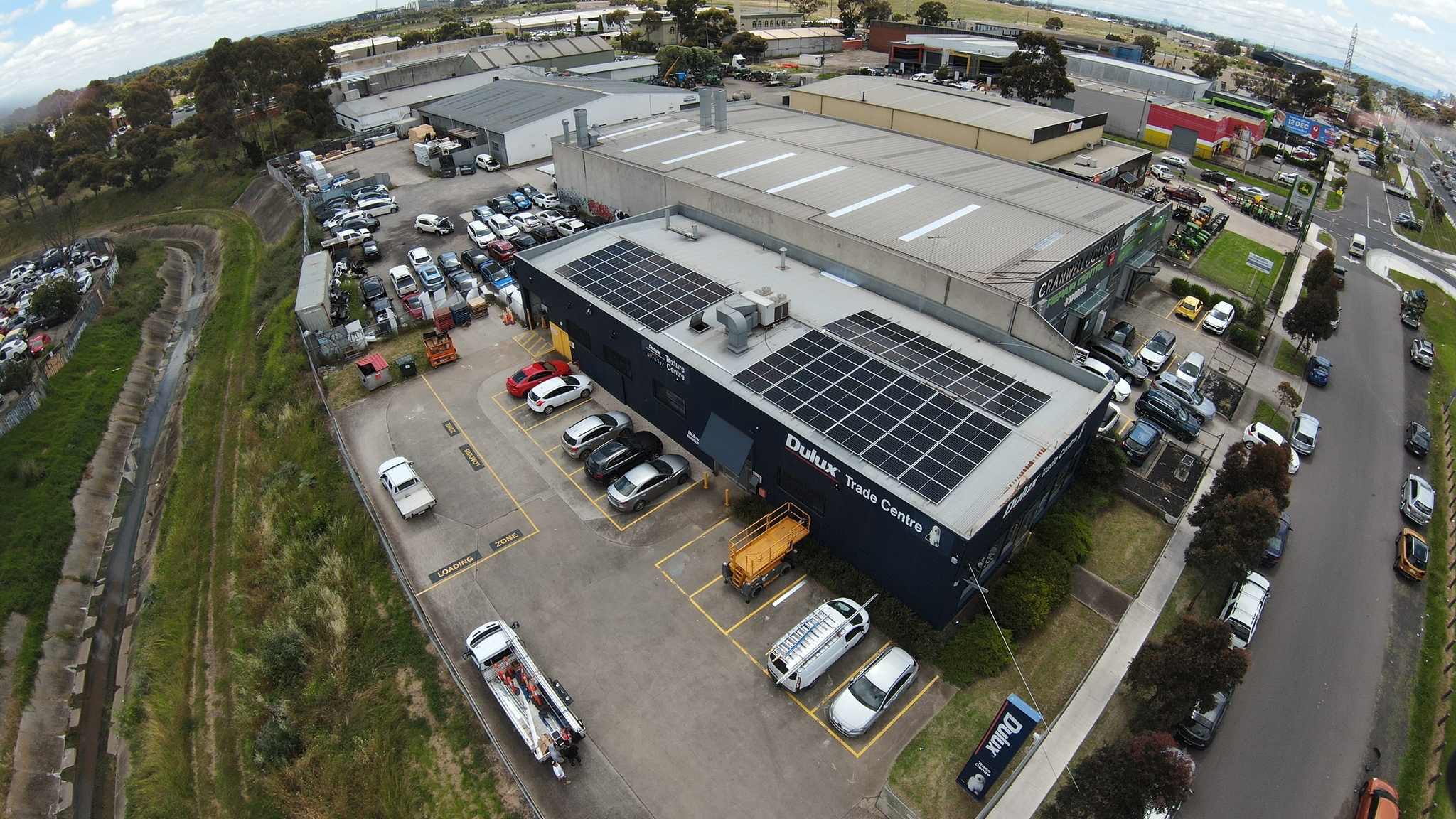
A warehouse can have a generous roof and useful daytime demand while still being a difficult solar project for one simple reason: the business using the electricity may not own the building. A ten-year equipment plan and a short tenancy can pull in different directions.
Philippine tenants and landlords can make the conversation more productive by agreeing on the commercial boundaries first. This is a practical project checklist, not a lease interpretation. The parties' advisers should review the actual contracts before commitments are made.
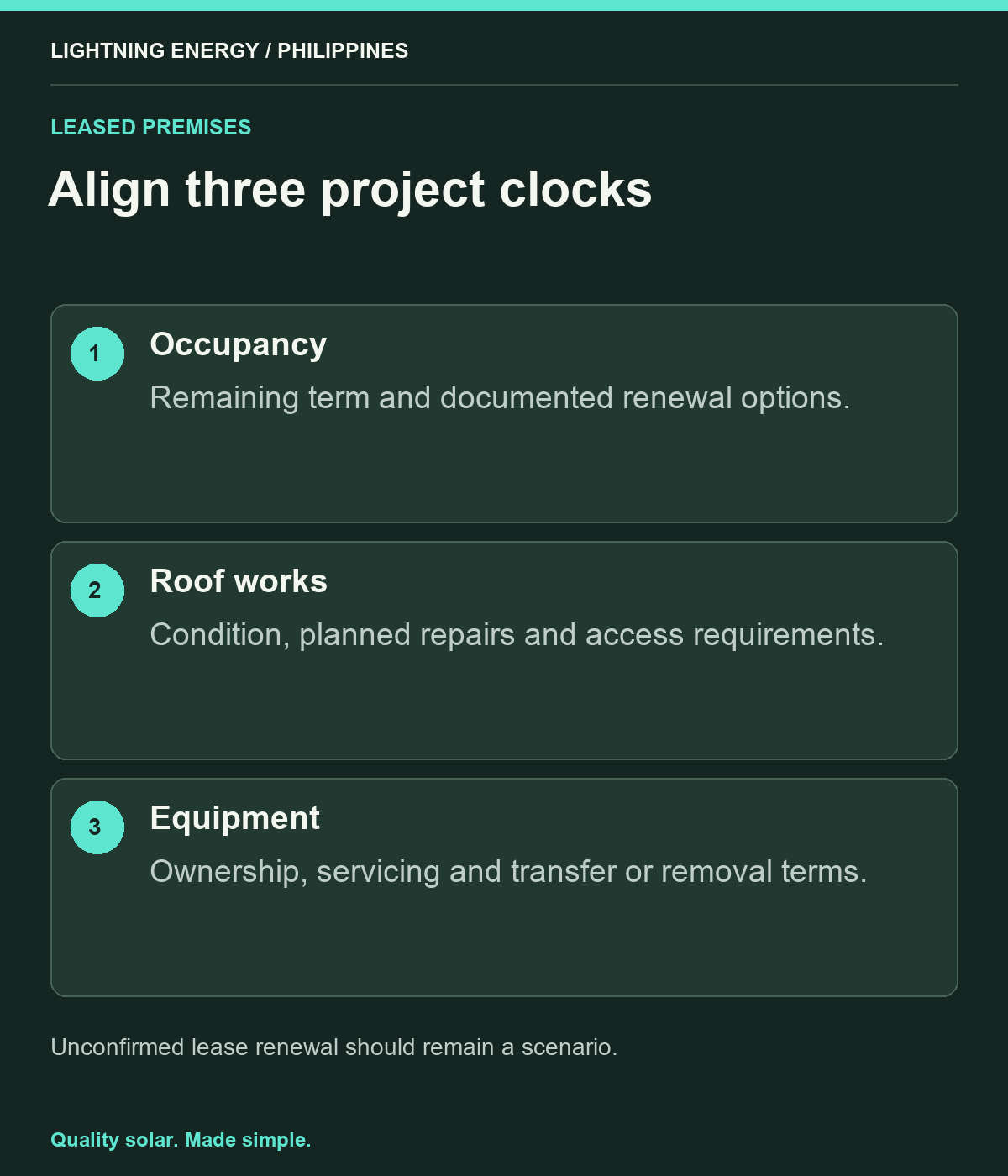
Put the dates on one page
List the remaining lease term, any renewal options, planned roof work and the proposed equipment ownership period. Ask each party which dates are firm and which depend on future agreement. ADB's rooftop handbook includes financing and procurement alongside design. [1] That wider approach matters here: electricity modelling alone cannot settle whether the tenant will still occupy the premises when later costs and benefits arise. Treat renewal as a scenario until it is contractually established.
Agree who owns each asset
Identify who would purchase the solar equipment, who owns the roof and who holds the electricity account. If a third party is involved, add its role to the diagram. ADB has financed a Philippine portfolio of commercial and industrial rooftop systems. [2] That demonstrates an institutional project model, not a financing offer to every warehouse. Your agreement still needs specific responsibilities for insurance, servicing, damage, access and eventual removal or transfer, reviewed for the local circumstances.
Assess the operation that actually occupies the space
A warehouse used mainly for storage may have a different profile from one with refrigeration, packaging equipment or a busy dispatch office. Collect interval data if available and explain planned operational changes. Ask the designer to compare current use with a plausible reduced-occupancy case. A hypothetical tenant may expect to add a processing line later; keep that expansion separate from the demand already evidenced by bills and measurements. Future growth should not silently become today's guaranteed savings.
Plan for the roof to need attention
Ask the building professional about roof condition and likely work before choosing the installation timetable. Then agree who coordinates solar removal and reinstatement if repairs become necessary. Include access equipment, downtime and reinstatement checks in the commercial discussion. Avoid an assumption that a roof warranty and a solar warranty automatically cover each other's work. The useful outcome is a named responsibility and a documented process, not a promise that the roof will never need maintenance.
Test the early-exit scenario
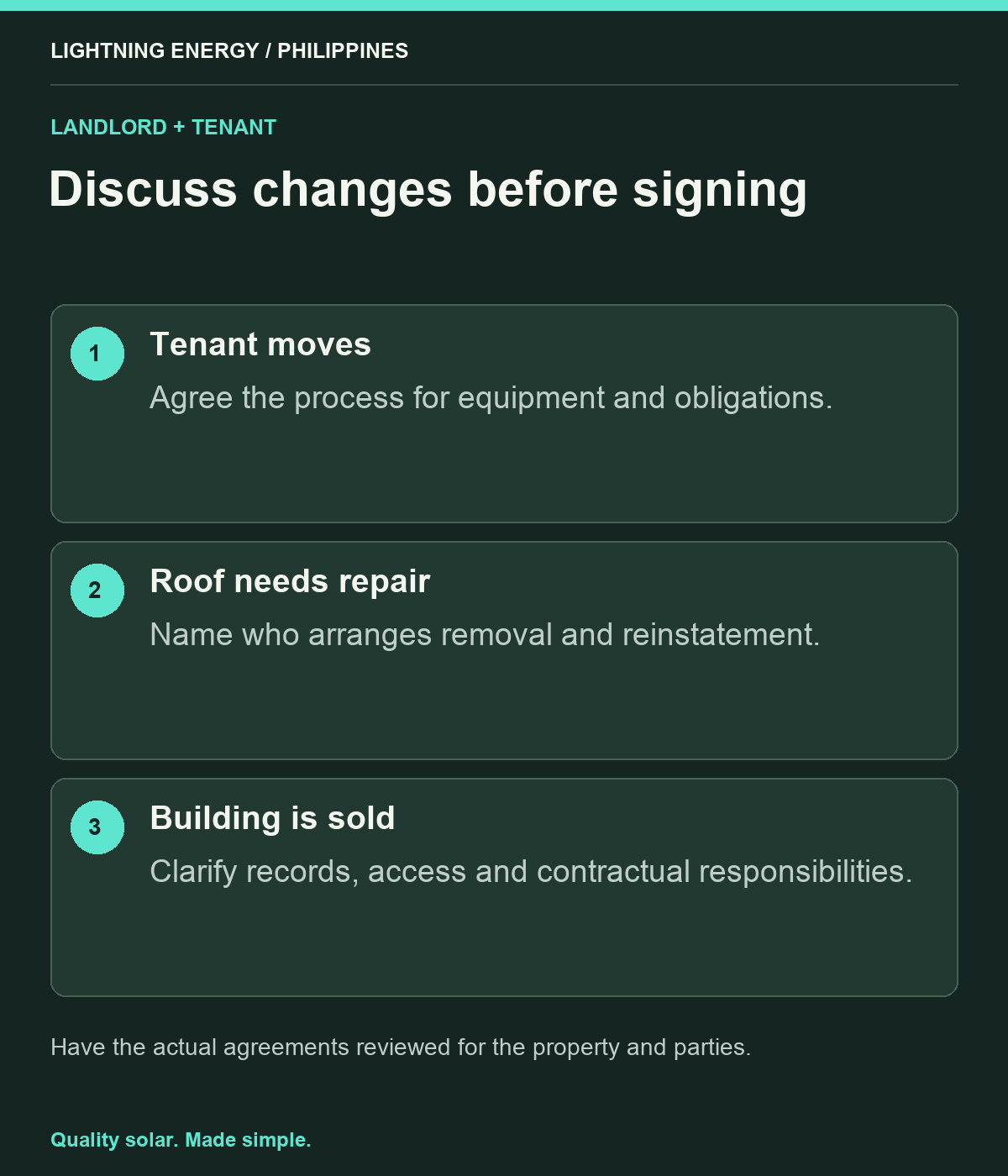
Walk through what would happen if the tenant moved, the landlord sold or the business reduced its footprint. Would equipment transfer, remain in place or be removed? Who would pay outstanding contractual obligations and who would own the monitoring history? These are questions for the parties and their advisers, rather than universal rules. A proposal that looks attractive only when everyone remains unchanged for decades needs a more explicit explanation of that dependency before it is approved.
Make installation fit the logistics plan
The warehouse may need uninterrupted loading access, secure stock areas and carefully scheduled electrical work. Include those requirements in the contractor's scope. Agree the boundaries for deliveries, lifting operations and shutdowns before a start date is announced. Assign a tenant representative and landlord representative for decisions that affect both sides. The site team should be able to tell who authorises a change without waiting for an informal chain of messages during an installation or repair.
Ask for a paired technical and commercial brief
Take the lease dates, electricity records and roof assessment to the next project meeting. Ask for a design based on evidenced demand and a separately reviewed agreement covering ownership and changes in occupancy. Lightning Energy can help define the installation scope while the relevant advisers address the contract. The aim is a roof that produces useful electricity under an arrangement both parties understand, including the less exciting but essential day when someone renews, repairs, sells or moves.
Sources & further reading
Sources used for this guide. Policy and product details should be checked for your particular installation.
- ADB: Handbook for Rooftop Solar Development in AsiaDecember 2014; accessed 27 September 2026
- ADB: Buskowitz Rooftop Solar ProjectAccessed 27 September 2026