Solar for business
Solar Parking Canopies: A Building Project as Well as an Energy Project
A car park can add useful solar space, but structure, circulation, drainage and maintenance must be considered together.
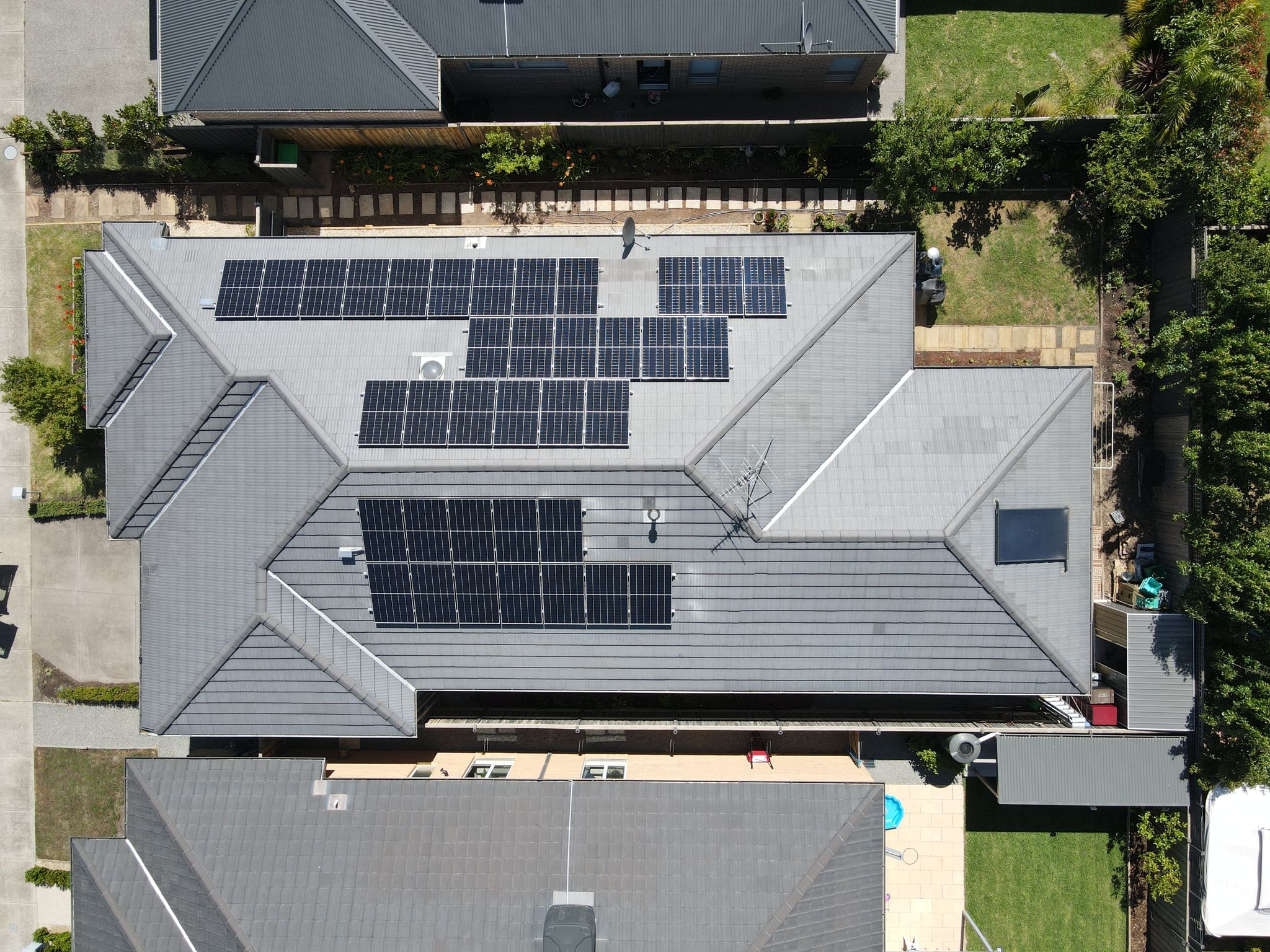
A parking area can offer another place to consider solar when the main roof is crowded or due for work. The opportunity also changes the project. A canopy is a structure that people and vehicles use every day, so energy output is only one part of the design brief.
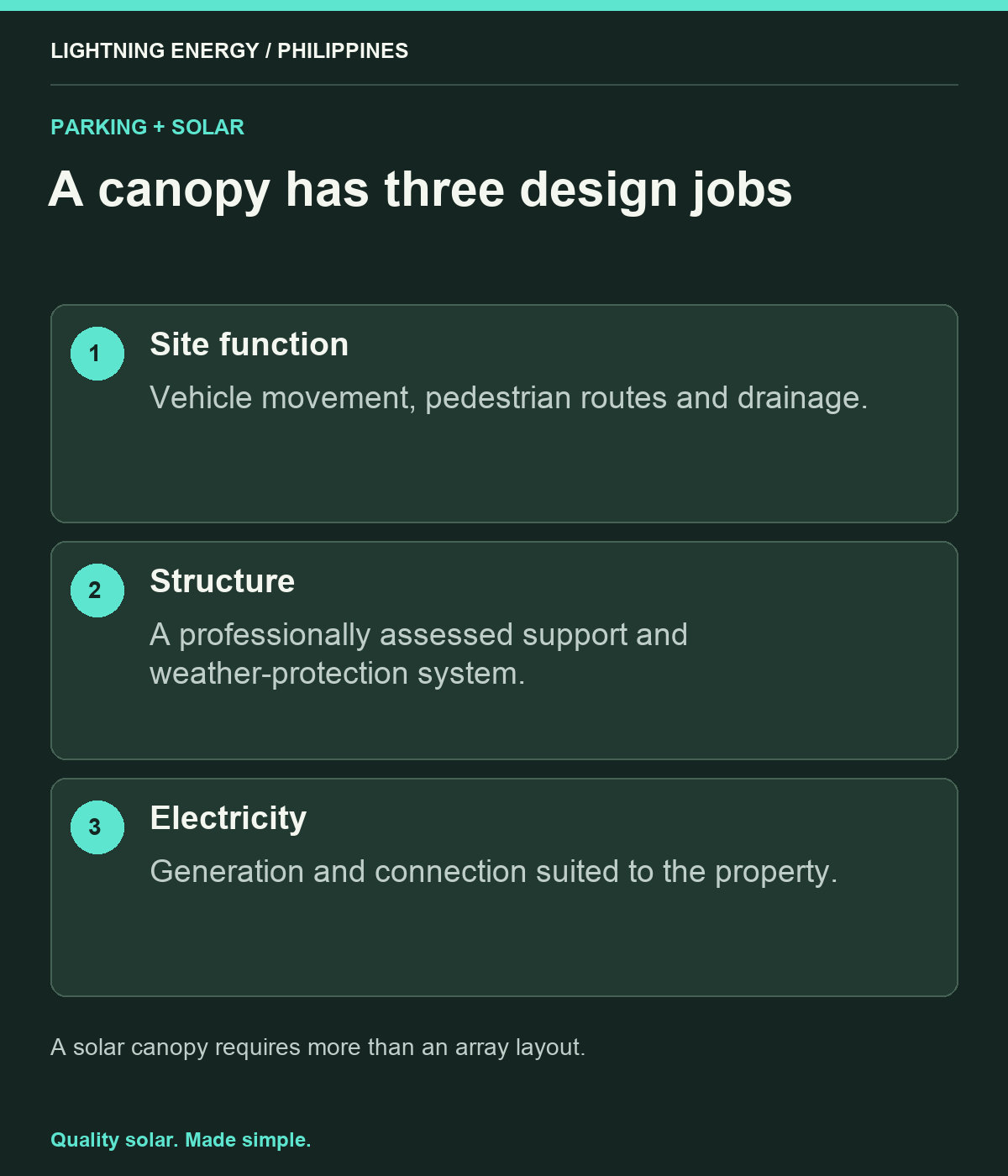
For Philippine homeowners, businesses and institutions, begin by deciding what the parking area must do. Vehicle access, safe circulation and the building context should guide the structure before panel count becomes the dominant discussion. A solar canopy needs coordinated professional design.
Define the everyday use of the space
Record the vehicles using the area, their movement patterns and any delivery or service access. Include pedestrian routes, accessibility needs and existing drainage. Ask the appropriate designers to assess these requirements alongside local site conditions. ADB's rooftop development handbook is useful for its staged project approach. [1] A canopy, however, adds structural and site questions beyond a conventional roof-mounted array. Treat those as central scope items rather than small extras left for the installation crew.
Compare roof and canopy options on equal terms
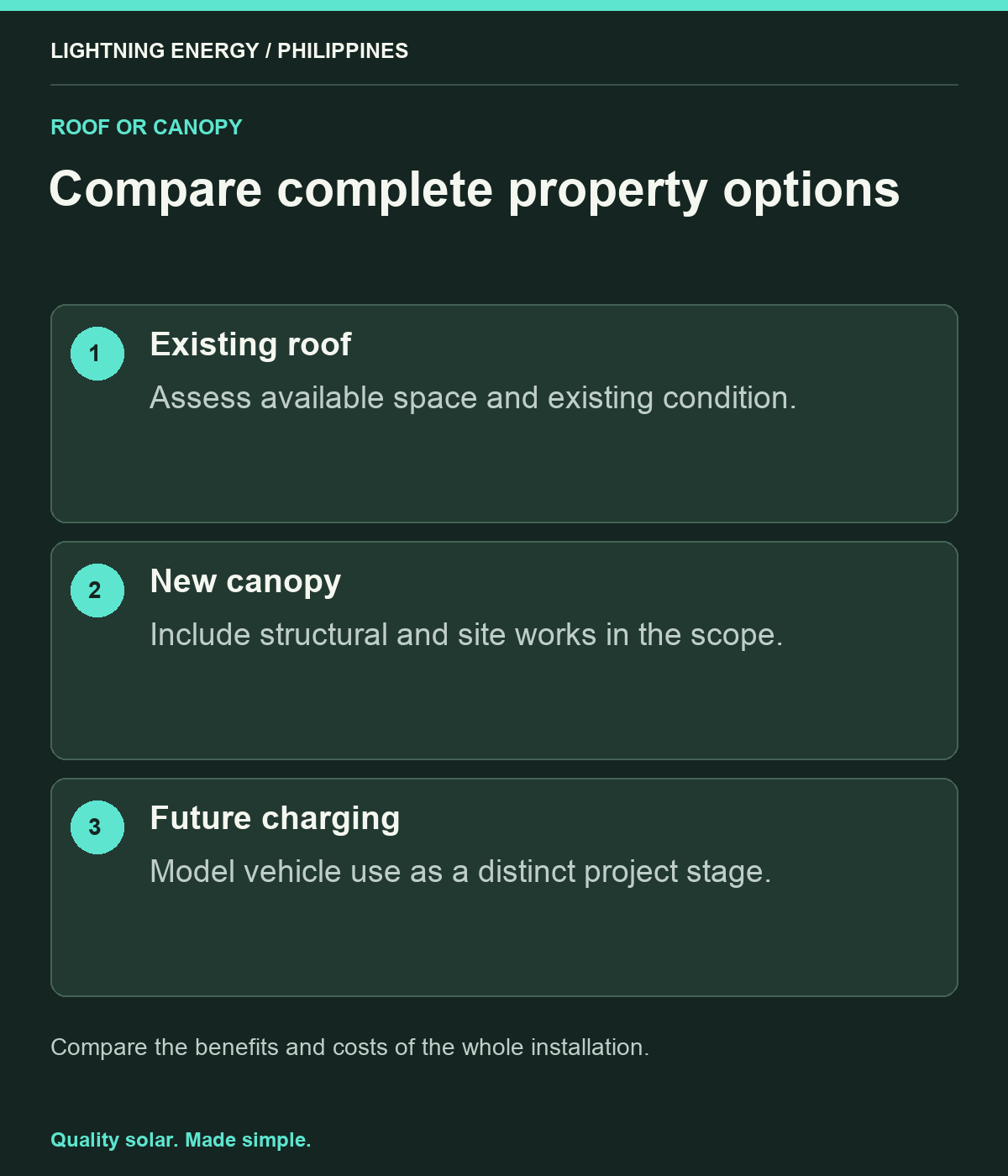
If an existing roof is also available, request separate scopes showing what each option includes. A canopy may create a new covered area, while roof-mounted solar uses an existing structure. Those are different benefits and costs. Do not compare the panel price alone. Include design, foundations where required, electrical work and any changes to the parking area in the canopy assessment. The useful comparison shows what the property receives as both a facility and an electricity asset.
Distinguish ordinary modules from integrated building products
IEA PVPS examines building-integrated photovoltaics as products serving building functions as well as generating electricity. [2] That distinction matters when a proposal implies that panels also form a weatherproof roof. Ask exactly which components provide weather protection and which provide generation. The designer should explain drainage, detailing, replacement and applicable requirements. A row of modules above a parking space should not automatically be described as a complete roof system without evidence for the proposed assembly.
Keep future charging plans explicit
A canopy can be considered alongside electric-vehicle charging, but the charger duty must be assessed from actual parking time and the property's electrical supply. Ask whether vehicles are present during useful solar hours. Model chargers as a separate stage if they are only a future possibility. Avoid claiming that every parked vehicle will charge entirely from the canopy. The proposal should show the relationship among generation, building consumption, charging and any storage under the intended operating pattern.
Plan construction around access
Agree how vehicles and pedestrians will move while the work takes place. Identify any parking spaces that must remain available and any business activities affected by construction. Include deliveries, lifting operations and electrical shutdowns in the programme. The property manager should have a clear contact for approving changes. A well-priced canopy project accounts for the site's practical constraints; it should not depend on discovering after work begins that the car park cannot be closed as assumed.
Make inspection and repairs possible
Ask how professionals will reach the structure, electrical components and drainage features for service. Clarify who coordinates repairs if a vehicle damages part of the installation or if other site work is needed later. Keep drawings and component records available to the property owner. A canopy's long-term usefulness depends on preserving its ordinary building functions as well as its energy performance. Maintenance planning should therefore include the relevant building and electrical responsibilities rather than only panel cleaning.
Request one coordinated proposal
Bring a site plan, parking requirements, bills and any future vehicle plans to the assessment. Lightning Energy can discuss generation and electrical integration alongside the structural and site professionals. Ask for a clear division of responsibility and a full project scope. The result should make it easy to understand why this location is useful, what the structure is designed to do and how it will be operated and maintained as part of the property.
Sources & further reading
Sources used for this guide. Policy and product details should be checked for your particular installation.
- ADB: Handbook for Rooftop Solar Development in AsiaDecember 2014; accessed 27 September 2026
- IEA PVPS: Development of BIPV Business CasesAccessed 27 September 2026