Solar FAQs
Can I Add More Battery Modules a Few Years Later?
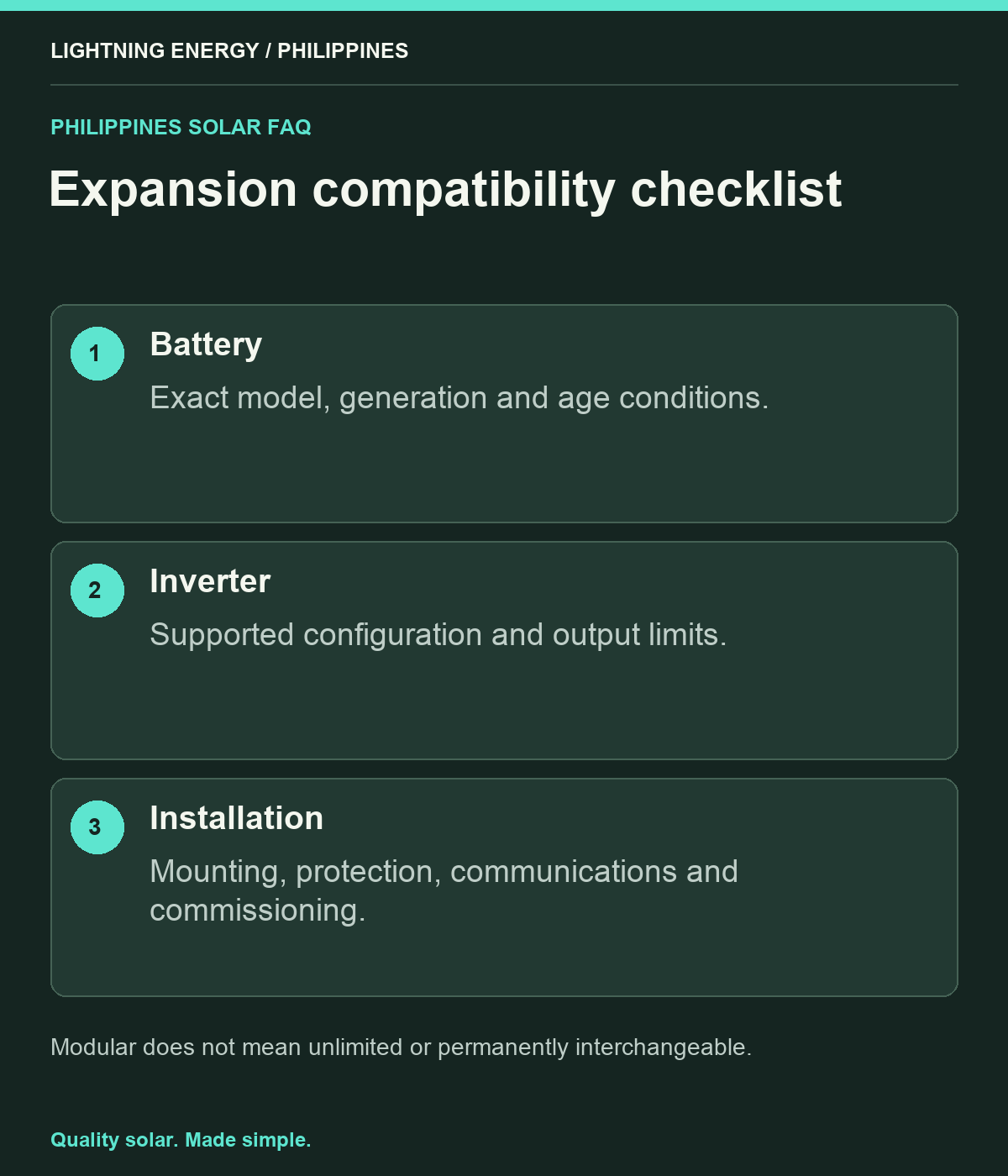
Modular does not mean unlimited or permanently interchangeable. Check age, model, firmware, inverter limits and warranty conditions before expanding.
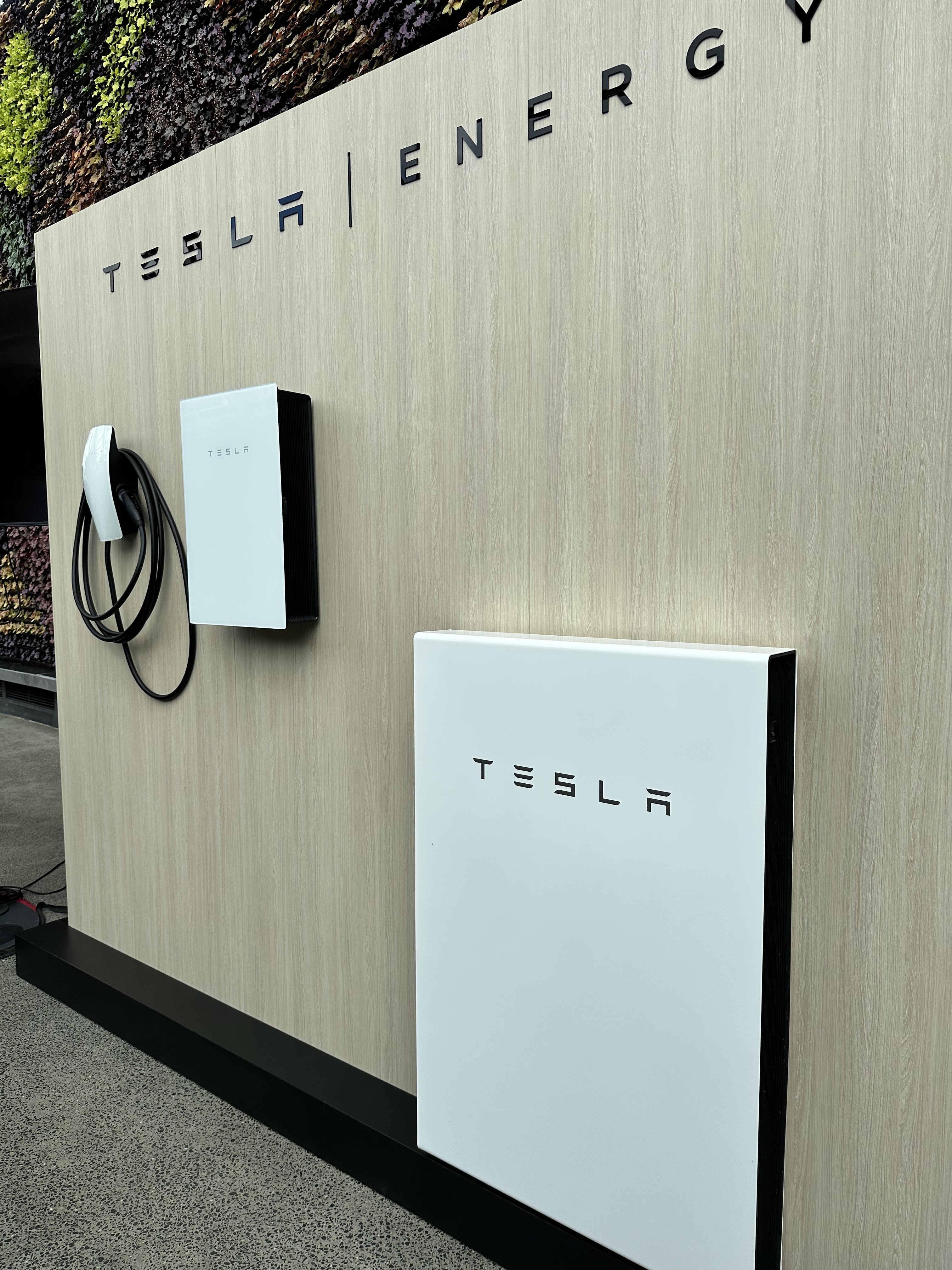
Possibly, but expansion must follow the manufacturer’s rules for the exact product and installed configuration. The permitted module count, product generation, age difference, firmware and inverter compatibility can matter. Ask for the future expansion path in writing when buying the first battery, then reassess it before purchasing additional modules years later.
Define the future need separately
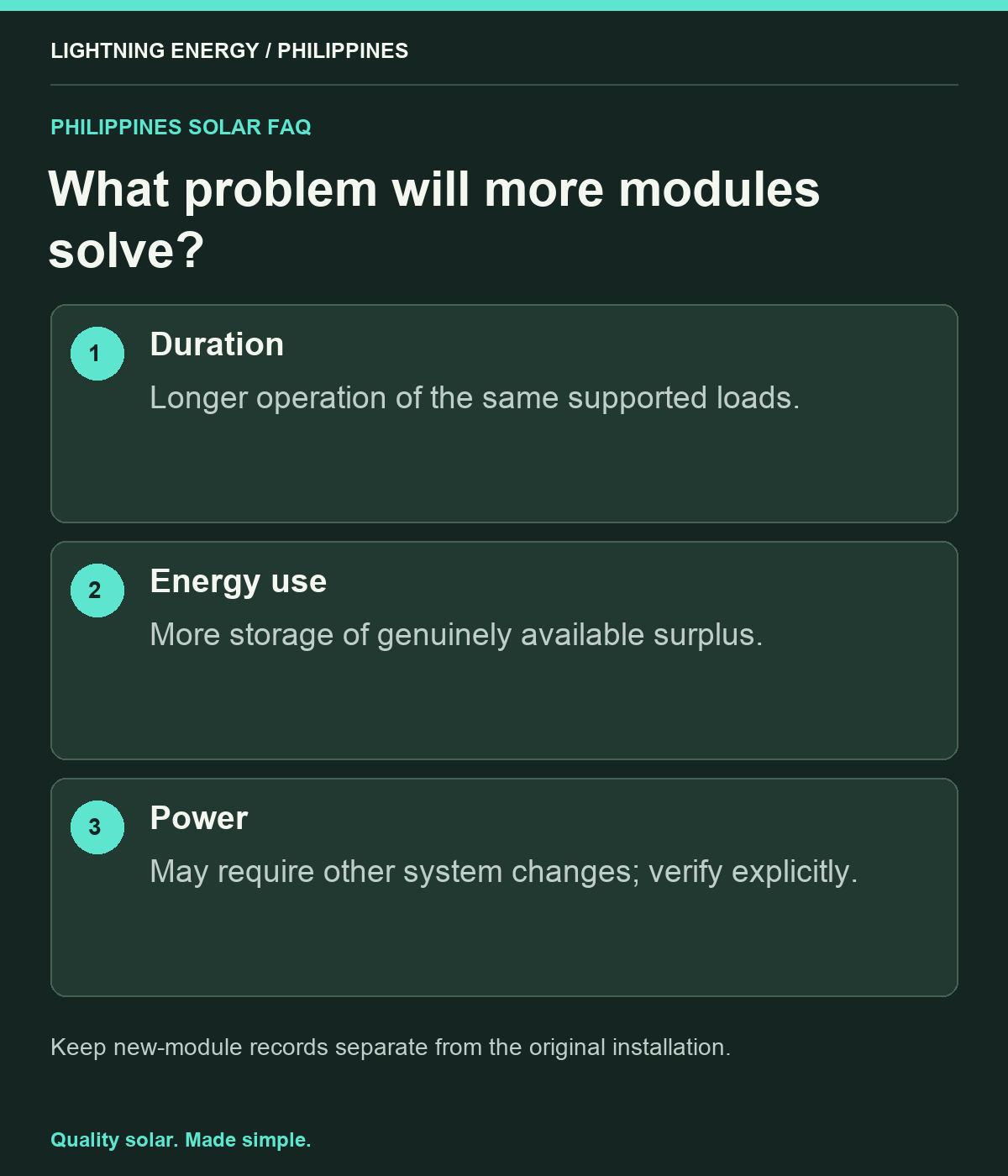
Explain whether future expansion is intended to extend backup duration, support more appliances or store more daytime surplus. Those are not automatically the same requirement. Extra energy capacity may not increase the system’s output power.
Ask for a present-day design that meets current needs and a clearly labelled future scenario. Do not pay for speculative capacity solely because an advertisement says expansion is easy. A documented pathway is useful, but future product availability and prices remain uncertain unless a supplier provides a specific enforceable commitment.
Read the actual mixing rules
Victron’s Lithium Smart guidance distinguishes allowable battery combinations by arrangement and includes age and capacity conditions. [1] Those rules are product-specific and should not be copied to another brand.
Ask the supplier which manual section governs adding modules to your system. Record the exact current model and generation, not only the marketing family name. If a later replacement uses a new designation, obtain compatibility confirmation. A module that fits physically or has the same voltage label is not automatically approved for the existing battery bank.
Check the inverter and configuration limits
BYD’s HVM datasheet directs users to the compatible-inverter list for required module configurations. [2] This illustrates why expansion depends on the inverter pairing as well as the battery stack.
Request a review of electrical limits, communications, protection, mounting and any required control equipment. Ask whether adding modules affects continuous output or only energy duration. If the inverter remains the limiting factor, compare the complete cost of the desired upgrade rather than buying storage that cannot deliver the new capability you actually wanted.
Use a measured expansion decision
Suppose an illustrative household finds that its battery frequently reaches the reserve early in the evening while useful solar surplus was available earlier. That pattern may justify assessing more capacity. Another household whose battery rarely fills may need a different explanation or a changed operating plan.
Collect representative records across different conditions. Include planned new loads and any change in backup priorities. Do not size an expansion from one exceptional outage or one sunny day. Ask the installer to show the expected incremental benefit using the current system as the baseline.
Plan the installation and warranty record
Have qualified personnel perform any expansion and required commissioning. Ask how the added modules are prepared and integrated under the manufacturer procedure, without attempting battery connections yourself. Obtain separate serial numbers, installation dates and invoices for the new equipment.
Clarify which warranty applies to the original modules and which applies to the addition. Ask whether any existing coverage is affected and how a later fault will be diagnosed. A clean record helps avoid a situation where every supplier attributes a problem to another component or an undocumented modification.
Reconfirm before placing the order
Request a written expansion scope including compatibility evidence, equipment, labour, configuration changes and any utility update. Check availability and lead time for the actual approved parts. If the original path is no longer practical, compare alternatives honestly.
Lightning Energy Philippines can review operating records and the installed equipment before recommending additional storage. Ask for separate answers on energy, power and support. The useful outcome is an expansion that addresses a measured need within the product’s rules, rather than assuming that every modular battery sold today can accept any newer module indefinitely.
Sources & further reading
Sources used for this guide. Policy and product details should be checked for your particular installation.
- Victron Energy — Lithium Smart Battery InstallationAccessed 27 September 2026
- BYD — Battery-Box Premium HVM Datasheet V1.4Accessed 27 September 2026