Solar FAQs
Can I Add a Battery Without Replacing My Existing Solar Inverter?
A retrofit may be possible, but AC coupling, backup behaviour and compatibility must be assessed as a complete system.
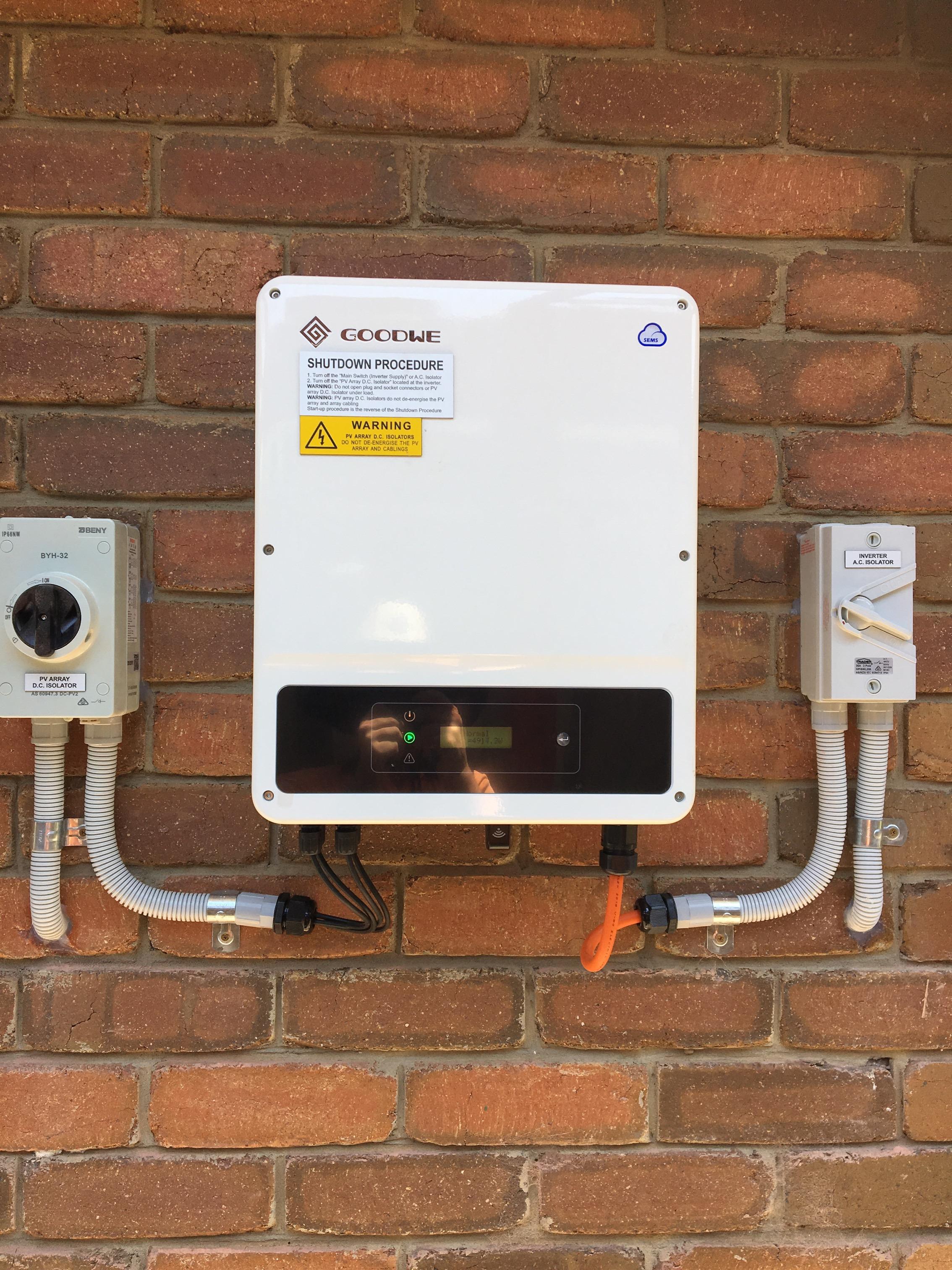
Sometimes. A battery retrofit may use a separate battery inverter or another supported arrangement, while some projects require replacing the existing solar inverter. The best route depends on the current equipment, desired backup behaviour and compatibility. Begin with an assessment of the installed system rather than assuming that either replacement or retention is always necessary.
Collect the existing system records
Find the inverter model, solar-array details, utility agreement, electrical drawings and any warranty documents. Include installation age and known faults. Ask a qualified provider to inspect where records are incomplete.
US DOE’s system-design guidance explains the inverter’s role in converting solar DC to household AC. [1] Adding storage introduces another energy path and control problem; it is not simply placing a battery beside the existing inverter. The assessment should identify how the current equipment would participate in normal operation and during a grid interruption.
Distinguish a storage retrofit from backup
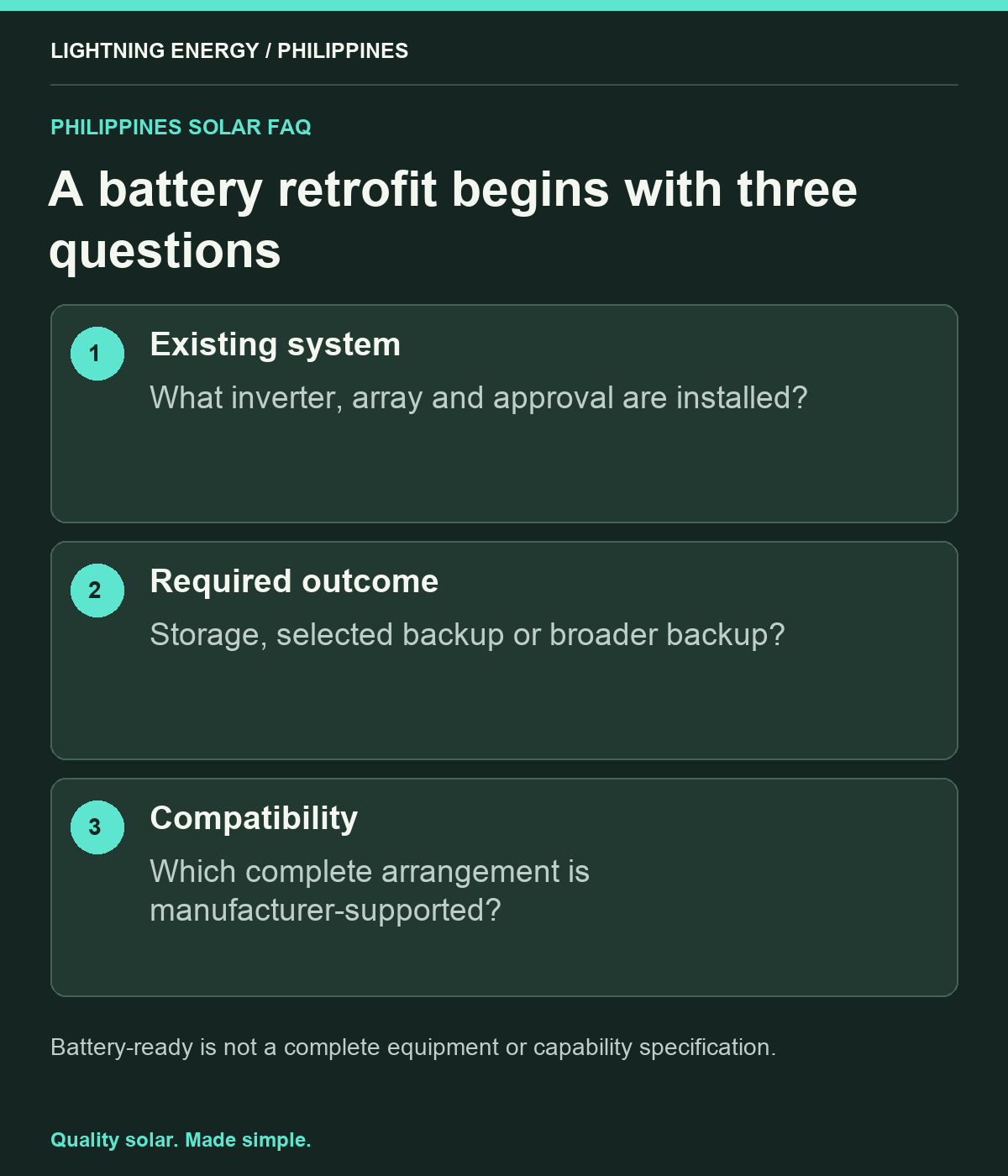
A design can store energy for later use without necessarily supporting every circuit during an outage. State whether you want bill management, selected-load backup or a broader backup arrangement. Ask for the supported circuits and transfer equipment to be identified.
Do not accept “battery-ready” as a complete answer. Request the exact components and operating modes needed to deliver your objective. If the existing solar inverter cannot participate in backup operation, ask what that means for solar recharge while the grid is down. That limitation may materially change the value of the proposed retrofit.
Ask about supported coupling arrangements
Victron’s ESS documentation describes configurations involving solar, storage and grid interaction. [2] Such manufacturer examples demonstrate possible architectures, not automatic compatibility with every installed inverter.
Ask the supplier for written support for the exact combination, including relevant firmware and control requirements. Have them explain where power is measured and how exports are controlled under your utility arrangement. Avoid an improvised combination whose components each work individually but have no documented way to coordinate safely as one system.
Compare retention and replacement fairly
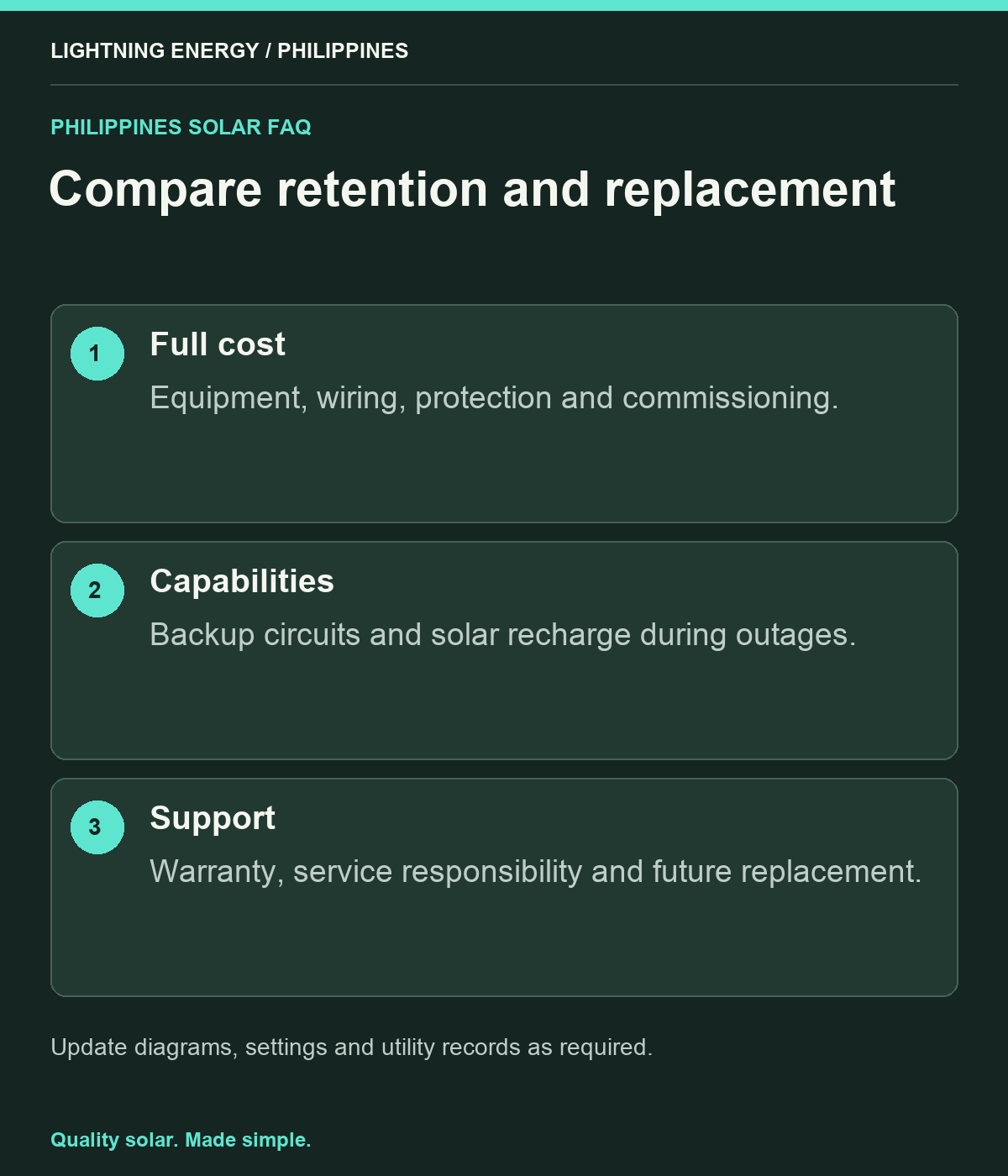
Request one suitable option retaining the current inverter where feasible and another using replacement equipment if appropriate. Compare complete installed cost, useful capability, warranty, service complexity and expected remaining life. Do not compare a bare battery price with a fully installed replacement system.
For an illustrative older installation, retaining the inverter might reduce immediate cost but leave a likely future service decision. For a newer supported system, replacement might add expense without a corresponding benefit. These are scenarios to evaluate, not conclusions about your equipment before its condition and compatibility are known.
Review metering, circuits and utility records
Ask whether the retrofit changes the connection application, export arrangement or approved operating mode. Obtain current guidance from the actual distribution utility where needed. Existing approval should not be treated as blanket permission for any later modification.
Have qualified personnel assess the switchboard, backed-up circuits, protection and monitoring layout. A new battery can change how energy flows are measured, so request a post-installation verification of the app data. Keep the updated diagram and equipment schedule with the original records rather than leaving future technicians to reconstruct the system from its appearance.
Verify the promised operating modes
At commissioning, request an appropriate demonstration of normal use, backup transfer where included and the documented recovery behaviour. Record limitations and owner instructions. Ask who supports the integrated system if the solar and battery components come from different manufacturers.
Lightning Energy Philippines can assess retrofit options from your existing records and backup priorities. The useful answer is a supported design with a clear scope, not a generic claim that every inverter must be replaced or that any battery can be added. Choose the route that delivers the intended behaviour with understandable responsibilities and realistic long-term support.
Sources & further reading
Sources used for this guide. Policy and product details should be checked for your particular installation.
- US Department of Energy — Solar Photovoltaic System Design BasicsAccessed 27 September 2026
- Victron Energy — ESS Introduction and FeaturesAccessed 27 September 2026