Solar FAQs
Can One Home Battery Run My Bedroom Aircon All Night?
Overnight cooling needs a measured energy budget, starting-power check and a realistic starting charge—not a promise based on battery count.
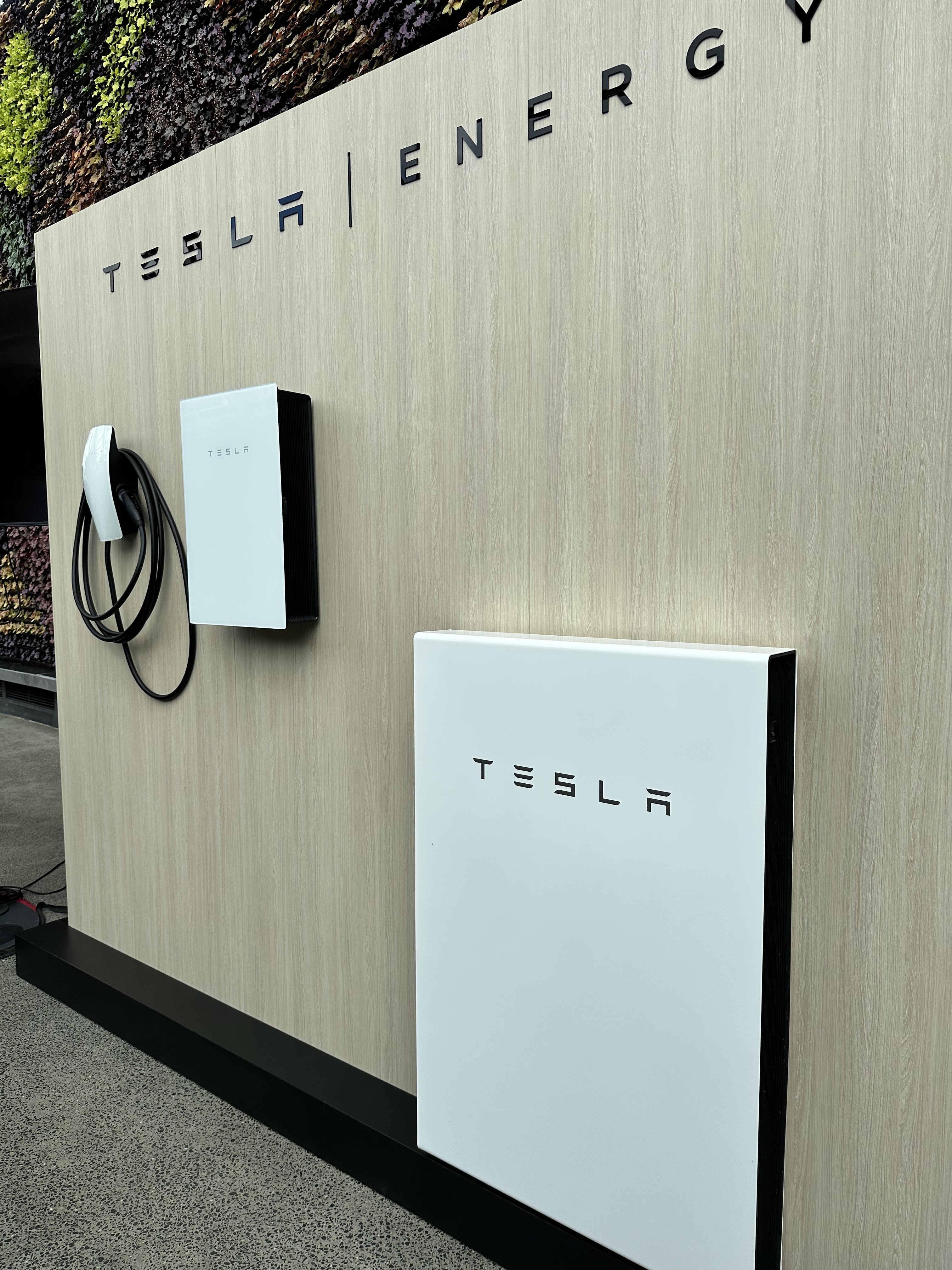
Possibly, but “one battery” does not define a capacity or capability. Overnight cooling depends on the aircon’s actual demand, room conditions, hours of use, other loads and available battery energy. Ask for a calculation using your appliance and the complete system. A package label alone cannot guarantee a comfortable full night through a brownout.
Identify the exact cooling requirement
Record the aircon model, room served, usual temperature setting and hours of operation. Include whether you expect one room or several to remain cooled. Ask a qualified assessor for suitable measurements if the nameplate does not describe typical operating demand clearly.
Tesla’s backup guidance makes appliance support dependent on system design and household energy use. [1] It is an example of the right assessment approach, not a promise that every listed aircon will work with any battery. Your proposal should name the supported circuit and explain any conditions on simultaneous loads.
Measure energy across a representative night
A single instantaneous reading can miss how demand changes as the room cools. Use safe, appropriate monitoring arranged by qualified personnel or manufacturer-supported data. Include warm conditions that matter to your household rather than choosing only a mild night.
For an illustrative calculation, an average electrical demand of 0.7 kW over eight hours is 5.6 kWh at the appliance. These are invented teaching values, not expected aircon consumption. Add the other essential loads and applicable system effects before comparing the result with the battery’s available energy.
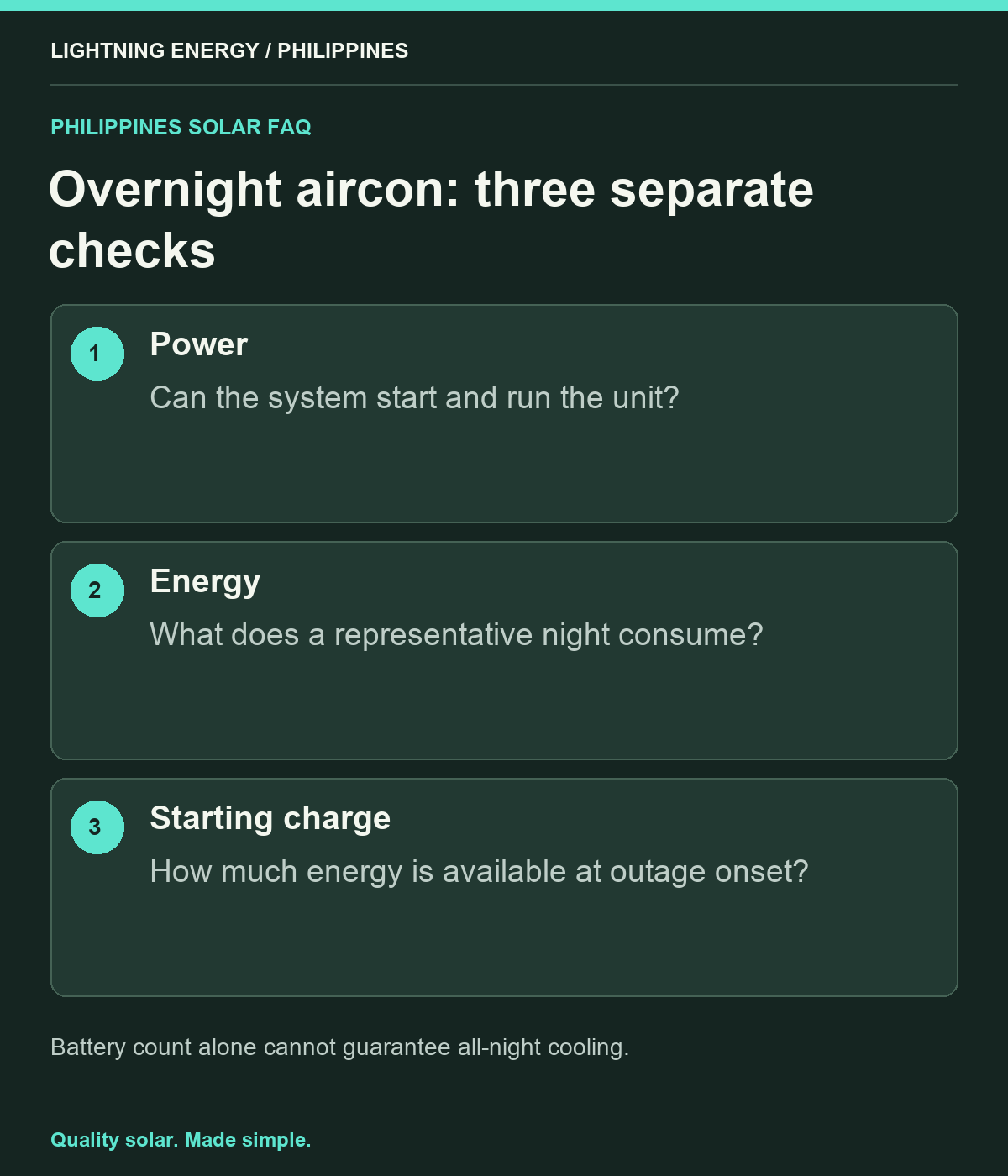
Keep starting power separate
Ask whether the inverter and battery combination can support the aircon’s start and continuous operation. The installer should use the actual equipment information and assess other loads that might operate simultaneously. More stored kWh does not automatically resolve a power limitation.
If the design requires load management, request a clear household rule and suitable controls. Do not rely on everyone remembering a complicated sequence in the middle of the night. Any changes to aircon circuits or starting equipment should be approved by the relevant manufacturers and installed by qualified people.
Use the charge available when the outage begins
Tesla explains that a backup reserve allocates part of stored energy for outages. [2] Your own system’s reserve and minimum-charge logic may differ. Ask for estimates at a realistic starting state as well as at full charge.
An evening outage after a cloudy day is a different case from a short afternoon interruption after strong solar production. Request both scenarios if overnight cooling is important. Do not count tomorrow’s sunshine as energy already available tonight, and do not treat the displayed reserve percentage as a guarantee that the battery has reached that level.
Choose a comfort plan with priorities
Discuss whether one bedroom can be prioritised, whether a different setting is acceptable and which nonessential loads can wait. Keep vulnerable household members’ needs central and seek appropriate medical advice where heat or equipment dependence creates a health concern.
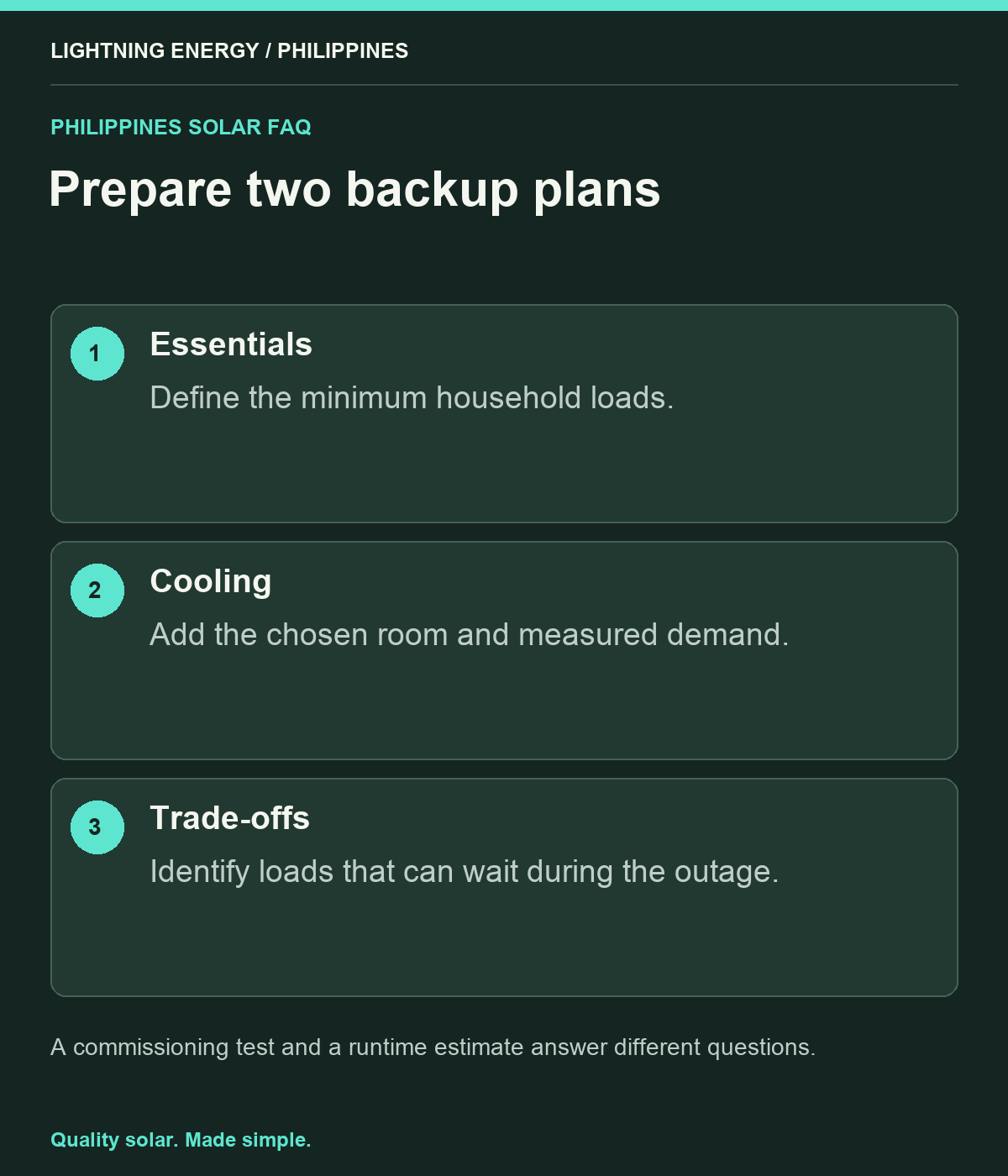
Compare an essential-only plan with a cooling plan using the same battery and starting assumptions. This makes the trade-off visible: a cooking appliance or water heater used during the outage may reduce energy available for cooling later. The right choice is the household’s, but it should be made before the interruption rather than inferred from a sales promise.
Ask for evidence at commissioning
Have the installer verify the intended aircon and supported load combination through an appropriate safe test. Record what was demonstrated and what remains an estimate. Keep the approved overload and low-energy instructions accessible.
Lightning Energy Philippines can assess overnight cooling from the aircon model, measured demand and your backup priorities. Ask for the power check and energy calculation separately. A useful answer may be yes under stated conditions, a larger system, or a narrower backup plan; it should never be an unconditional all-night promise based solely on the number of battery boxes on the wall.
Sources & further reading
Sources used for this guide. Policy and product details should be checked for your particular installation.
- Tesla — What Can Powerwall Back UpAccessed 27 September 2026
- Tesla — Powerwall Backup ReserveAccessed 27 September 2026