Solar FAQs
Can a Condo Owner Put Solar Panels on the Building Roof?
A roof above your unit is not automatically yours to use. Start with building documents, shared loads and an agreed approval process.
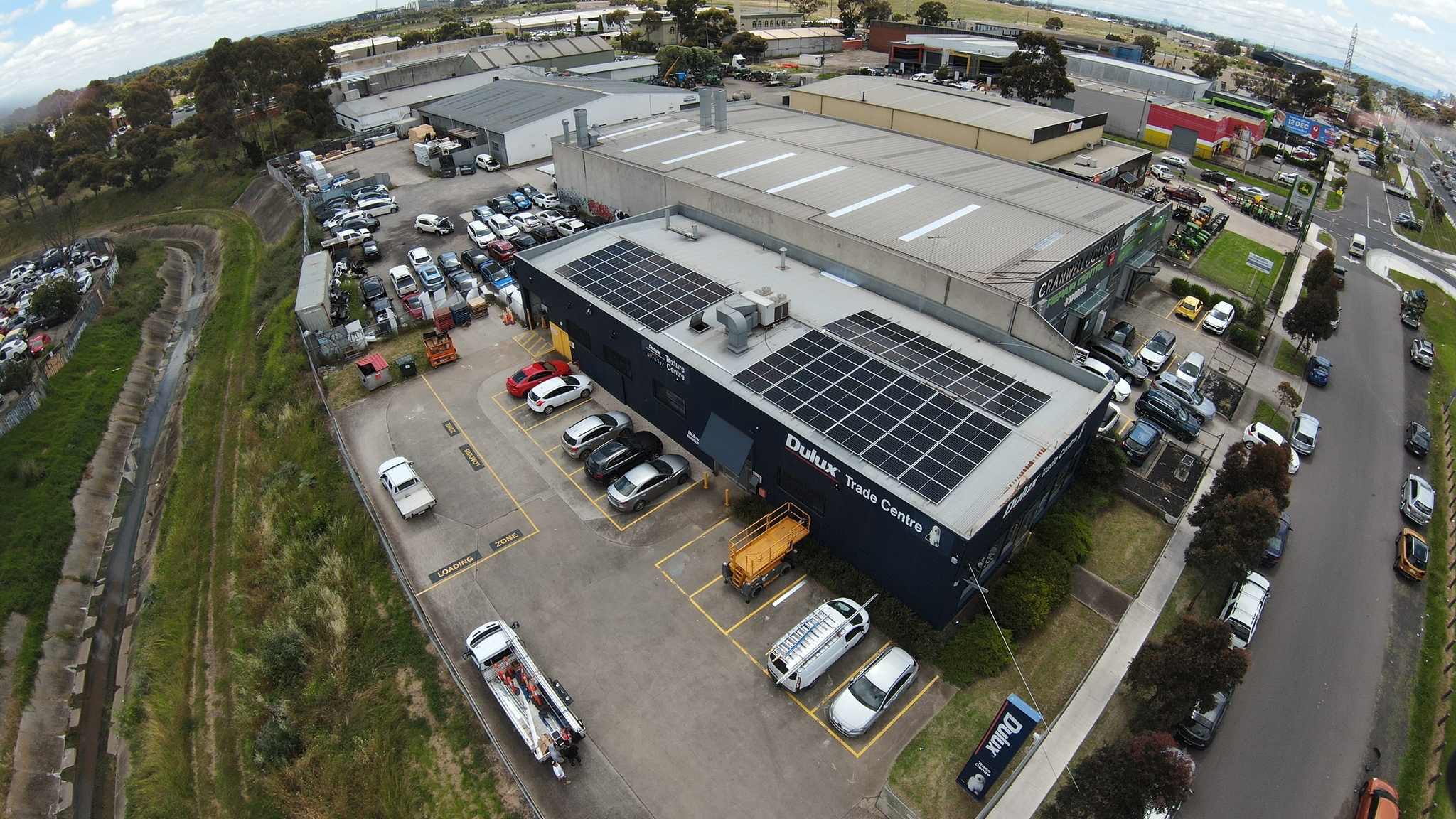
Sometimes a condominium can use rooftop solar, but an individual unit owner should not assume exclusive roof rights. The Philippine Condominium Act distinguishes private units from common areas and generally excludes roofs from the unit unless governing documents provide otherwise. Start with the master deed, restrictions and building management before requesting an installation. [1]
Establish who controls the roof
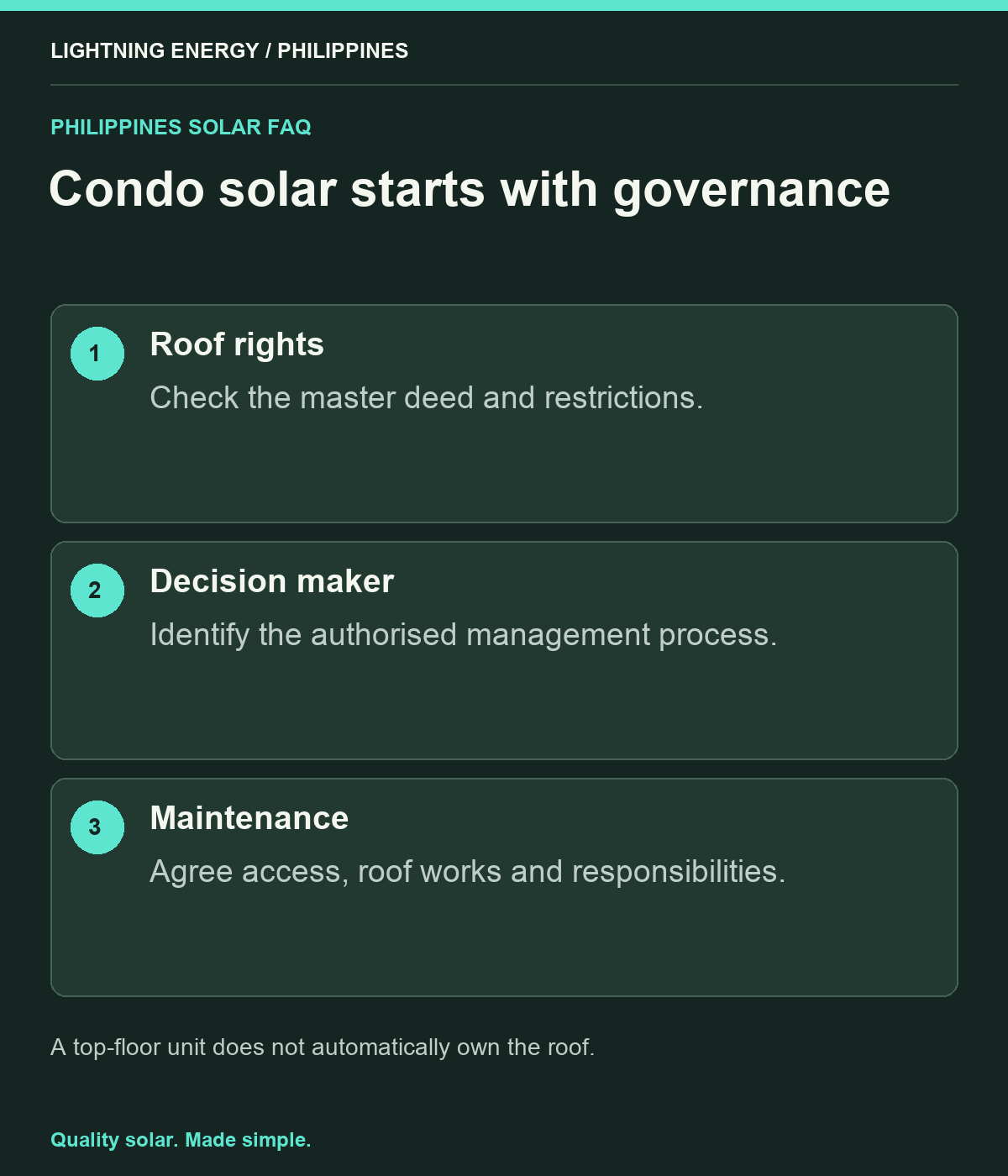
Ask management for the documents defining roof ownership, permitted uses and the approval process for alterations. A top-floor location or direct roof access is not sufficient evidence by itself. Obtain a written explanation of who can consider a solar proposal and what professional reports they require.
Avoid treating this article as a ruling on your building. Property arrangements differ, and amendments or specific restrictions may matter. If documents are unclear, have the appropriate property adviser review them. A clear starting position prevents an installer spending time on a design that the building cannot authorise.
Choose the load the project would serve
Consider whether solar would supply common-area electricity, an individually metered unit or another approved arrangement. These options involve different wiring, accounting and approval questions. Ask management to identify the relevant meter and actual daytime demand before discussing panel capacity.
For a common-area concept, gather bills for the services it would serve rather than adding together residents’ personal bills. Lighting, pumps and other building systems need their own measured profile. A project should explain where electricity goes and how any benefit is recorded, without promising that a shared roof automatically reduces every unit’s bill equally.
Check the meter and applicant relationship
Meralco’s net-metering eligibility guidance links the applicant to the registered electricity account. [2] The building must therefore establish which service and legal applicant would be involved, with its own utility confirming the correct procedure.
Ask whether the proposal affects a building-wide service, a common-area account or a unit account. Do not assume spare roof space means spare distribution capacity or a straightforward cable route. Have qualified designers identify the interconnection point and explain any service modification, metering or access implications before residents are asked to vote on a headline price.
Make roof access and maintenance visible
Request an assessment of structural suitability, waterproofing, drainage and safe maintenance access. Include other roof uses such as tanks, plant equipment and emergency routes. The proposal should show how technicians can inspect the solar without blocking existing building services.
Agree who pays if panels need temporary removal for roof repairs and who coordinates the contractors. Ask for equipment and workmanship responsibilities to be distinguished. A condominium project can last through several management committees; maintenance obligations should survive a change of officers instead of relying on one enthusiastic resident remembering a verbal arrangement.
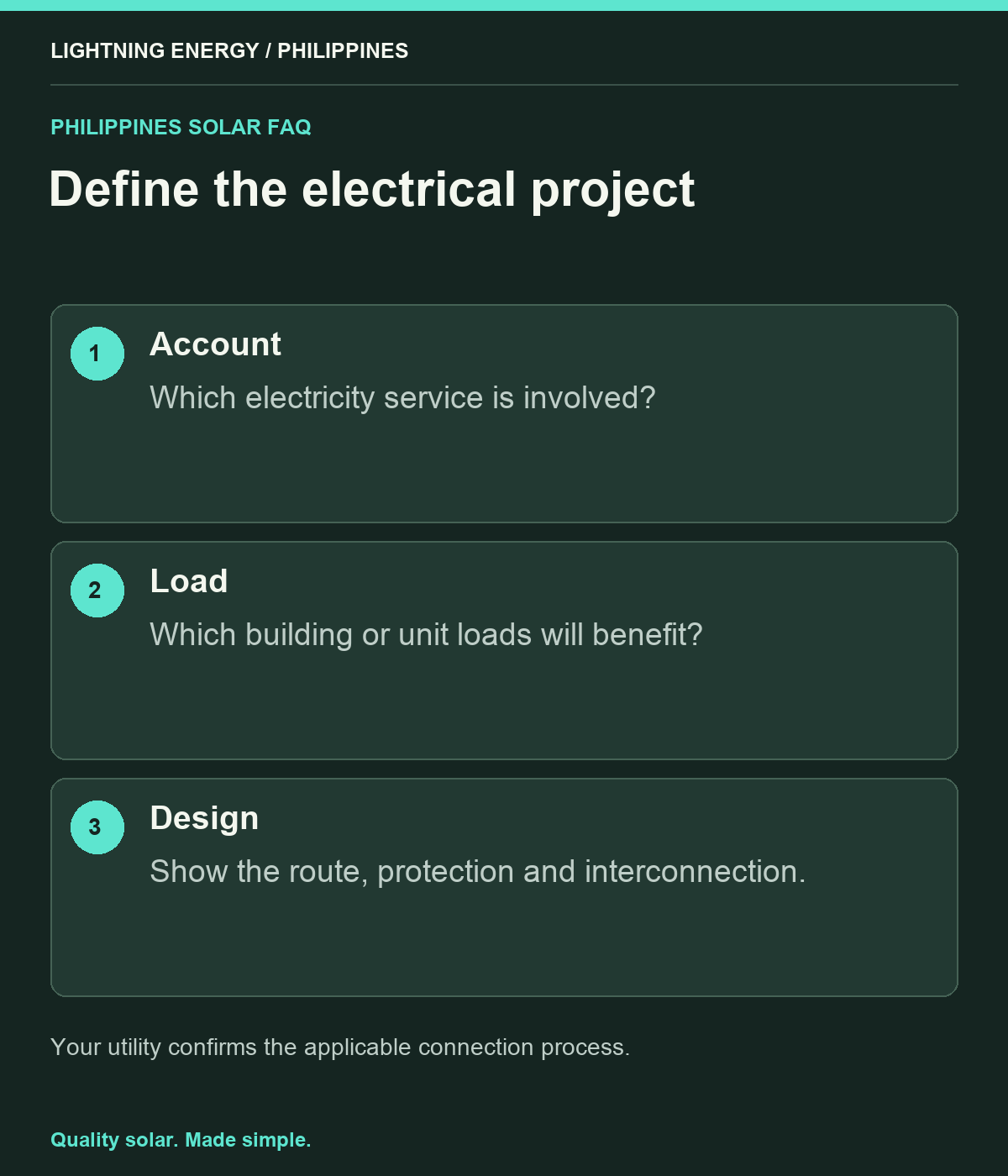
Prepare a decision pack residents can understand
Use a fictional example of a building considering panels for a daytime pump and common-area load. The decision pack should contain the measured load, proposed layout, estimated generation range, budget, approval pathway and maintenance responsibility. It should also state what the project will not power during an outage unless backup has been specifically designed.
Compare a base design with a smaller alternative. Show how shared expenses and benefits would be allocated under the building’s agreed rules, rather than inventing an allocation yourself. Residents can then assess a concrete proposal with visible assumptions instead of voting for a vague promise of free electricity.
Start with a feasibility conversation
Bring Lightning Energy Philippines the building’s authorised contact, relevant bills and safe existing roof information. Ask for a feasibility scope that identifies the unresolved permissions and technical questions before a detailed purchase proposal.
A worthwhile first outcome may be a list of information the corporation needs, rather than a final system size. Once ownership, meter, load and approval responsibilities are clear, solar can be assessed on its merits. That patient first step can save residents considerable confusion and make the eventual decision easier to explain to everyone who shares the building.
Sources & further reading
Sources used for this guide. Policy and product details should be checked for your particular installation.
- Supreme Court E-Library — Republic Act 4726, Condominium ActAccessed 27 September 2026
- Meralco — Net-Metering Eligibility and Metering FAQsAccessed 27 September 2026