
Solar FAQs
What Should I Check During the First Month After Solar Installation?
Use the first month to confirm handover, monitoring and the agreed operating modes without judging performance from one sunny day.
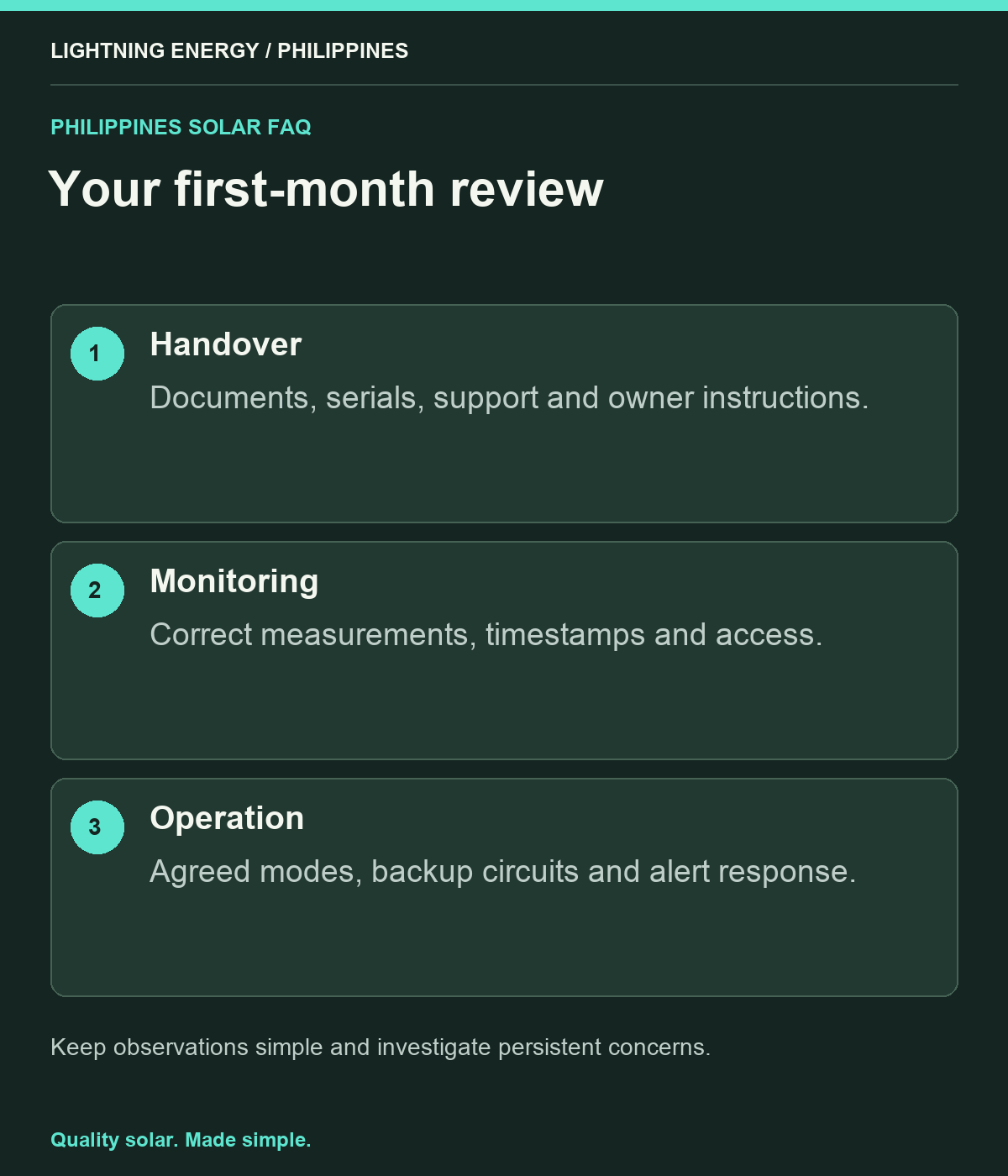
Use the first month to establish that the installed system behaves as agreed and that you can understand its records. Check handover documents, app access, normal operating patterns and any promised backup functions with your installer. Do not judge the project solely by the first electricity bill or the largest number shown on the app; both need context.
Finish handover before relying on the app
Obtain the final equipment list, serial numbers, system diagram, warranties and owner operating instructions. Confirm the support contact and how urgent faults should be reported. Ask the installer to identify which controls are for ordinary owner use and which require qualified personnel.
If backup is included, request a safe commissioning demonstration appropriate to the design and a written list of supported circuits. Do not simulate an outage yourself by manipulating unfamiliar electrical equipment. Record any incomplete items and agree how they will be closed rather than letting them become forgotten verbal promises.
Know what each energy number represents
FIMER’s monitoring guidance distinguishes solar production from household consumption measurement. [1] Ask the installer which measurements your system actually includes, where they are measured and whether any displayed value is calculated.
Look at a few ordinary days with different household routines. Note whether the timestamps, date and reporting intervals make sense. If a graph appears impossible, save a screenshot with the time and relevant appliance activity. A monitoring problem deserves investigation, but it does not automatically establish that the solar equipment itself is failing.
Separate installation from utility commissioning
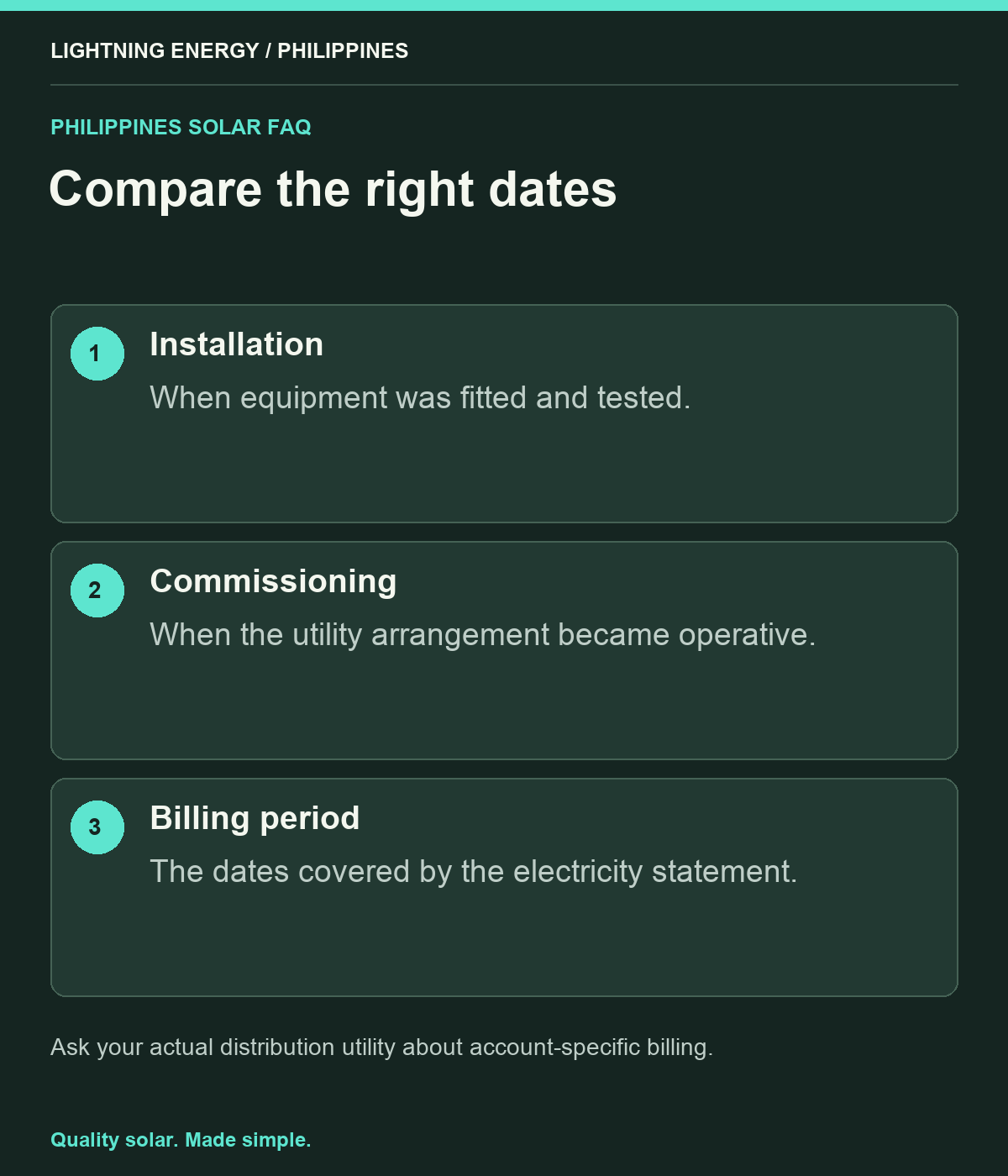
Meralco’s net-metering process includes utility application and commissioning stages. [2] Other distribution utilities have their own current procedures. Ask for the actual status of your application and the date from which the approved arrangement operates.
Do not assume panels producing electricity means export credits have already started. Keep any utility correspondence and meter-change record with your installation folder. If the first bill is confusing, compare its reading dates with commissioning and ask the utility about the account-specific treatment rather than inferring it from the solar app alone.
Use a simple observation log
For an illustrative first-month log, record a handful of dates, general weather, unusual appliance use, any alarms and a short note about system behaviour. Include an outage only if one occurs naturally or through an installer-led commissioning procedure. The goal is useful context, not a complicated daily administrative task.
Compare like with like before raising a performance concern. A rainy work-from-home day and a clear day when the house is empty are different conditions. Ask the installer to interpret patterns against the design assumptions rather than promising an identical output every day.
Review battery priorities where included
Have the installer confirm the agreed reserve, permitted charging behaviour and household priorities. Check that everyone understands which appliances should be limited during a brownout and how to recognise an alert. Save a record of the commissioned settings before making any authorised owner adjustment.
Report unexpected interruptions, persistent alarms or unexplained readings promptly through the agreed support route. Avoid repeatedly restarting equipment or altering protected settings in an attempt to improve a graph. A precise description of the symptom is more useful to support than a sequence of undocumented changes.
Close the month with a short review
Arrange a review of outstanding handover items, monitoring questions and any operating surprises. Ask for corrections to the final records when equipment or settings have changed. Keep the reviewed information available to another adult in the household.
Lightning Energy Philippines can help explain the operating data and the status of the agreed installation scope. A successful first month means the household knows what it owns, how it normally behaves and whom to contact when it does not. That foundation is more useful than treating one unusually good or poor day as the verdict on the whole system.
Sources & further reading
Sources used for this guide. Policy and product details should be checked for your particular installation.
- FIMER — What Is Consumption Monitoring?Accessed 27 September 2026
- Meralco — Net-Metering Application ProcessAccessed 27 September 2026