Solar FAQs
Can Solar Panels Go on a Flat Concrete Roof?
Flat roofs can offer layout flexibility, but drainage, wind, structure and waterproofing must be resolved together.
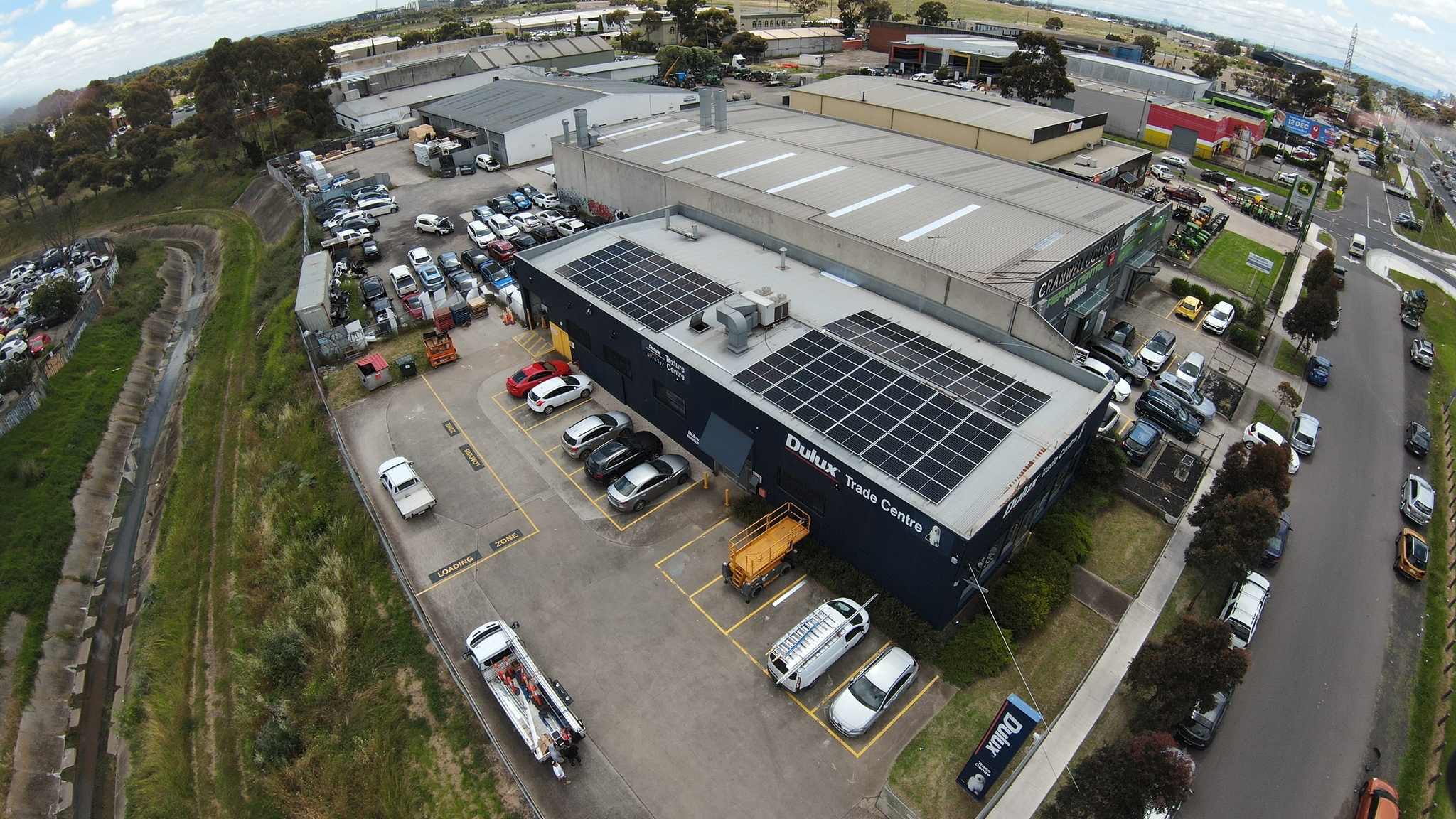
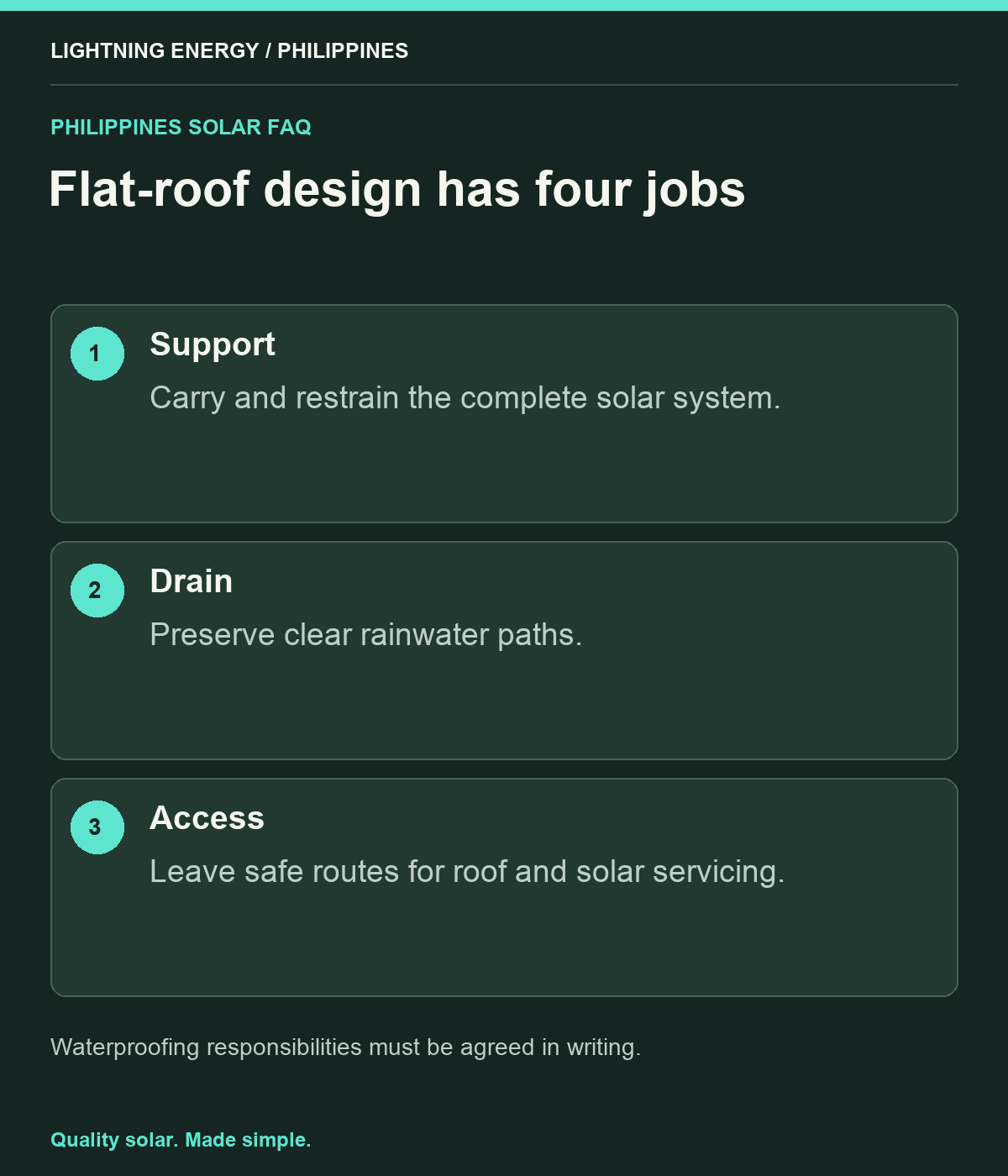
A flat concrete roof can be suitable, but it needs a designed mounting and drainage solution. Do not assume that a heavy slab can accept any ballast or that a panel frame is harmless to waterproofing. Ask qualified professionals to assess the actual roof and explain how the solar will coexist with rainwater paths, maintenance access and other roof uses.
Assess the roof before choosing supports
Request a structural and condition assessment covering the proposed loads and mounting method. Share any history of leaks, ponding or repairs. Existing cracks or water problems should be investigated before a solar layout makes them harder to reach.
US DOE’s design guidance describes the need for stable mounting that withstands environmental exposure. [1] The general principle matters in the Philippines, but it does not supply the engineering for your building. Ask who is responsible for the mounting calculations and which local design requirements they are using for the site.
Keep rainwater moving
Mark drains, low points and regular access routes on the layout. Ask how water will flow around supports and cables, including during heavy rainfall. Panels should not turn an already awkward roof into a collection of inaccessible puddles and debris traps.
JinkoSolar’s manual says modules should not be installed where they would be immersed in water. [2] Apply the relevant product instructions and roof design together. Do not accept an outdoor rating as permission for standing water around equipment or connections. Any waterproofing work should be coordinated with the people responsible for the roof system.
Compare penetration and ballast options properly
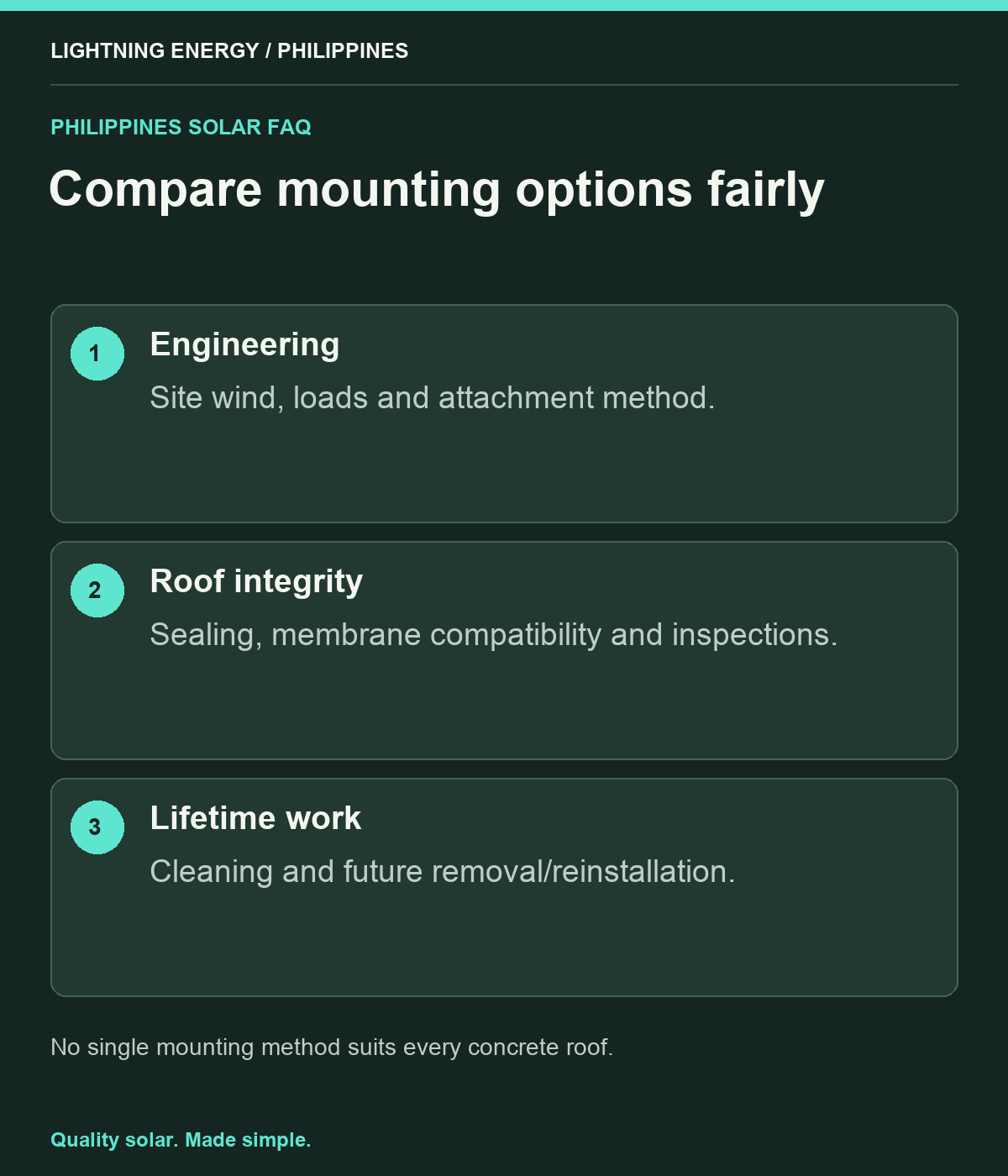
A penetrative system and a ballasted system involve different structural and waterproofing questions. Neither is automatically correct for every slab. Ask for the proposed attachment method, load distribution and responsibility for sealing, inspection and future repairs.
Avoid a quotation that treats a few loose concrete blocks as a complete engineering explanation. Ask how the design responds to site wind conditions and how the supports are restrained. The homeowner’s role is to request documented evidence, not to calculate anchor spacing or approve improvised substitutions during installation.
Allow for shade between rows and roof services
Ask the designer to show row spacing, tilt and expected self-shading, along with tanks, parapets and nearby structures. A layout that fits the most modules geometrically may not produce the most useful energy or leave adequate access.
For an illustrative roof, compare a compact low-tilt arrangement with a more widely spaced tilted layout using consistent modelling inputs. Include differences in mounting cost and cleaning access. Do not import a fixed optimum tilt from a foreign example; local conditions, the building and the chosen equipment all influence the practical design.
Plan maintenance before the first panel arrives
Agree how drains, waterproofing and solar components will be inspected safely. Keep a route to equipment that may need service. If the roof is used for laundry or gatherings, define boundaries and access arrangements so normal household activity does not conflict with electrical equipment.
Ask who removes and reinstalls panels if the membrane later needs work. Record whether that labour is included in any service agreement. Do not promise that the roof becomes maintenance-free because it is partly covered. Solar adds equipment to a building surface that still needs its own care.
Request a coordinated final drawing
The handover should include the final layout, mounting details, relevant assessments, waterproofing responsibilities and safe operating information. Photograph completed accessible areas as part of the professional record, and save any roof warranty correspondence alongside the solar documents.
Lightning Energy Philippines can help coordinate the questions that determine whether your concrete roof is a practical solar site. Bring known roof issues to the first assessment. A sound proposal should explain how structure, wind, drainage and access work together, rather than treating the roof as an empty platform whose only purpose is to hold more panels.
Sources & further reading
Sources used for this guide. Policy and product details should be checked for your particular installation.
- US Department of Energy — Solar Photovoltaic System Design BasicsAccessed 27 September 2026
- JinkoSolar — Global Installation Manual, 2024Accessed 27 September 2026