Solar FAQs
Can a Generator Work with a Hybrid Solar Battery System?
Generator integration is possible in some designs, but switching, compatibility, charging limits and safe placement need professional coordination.
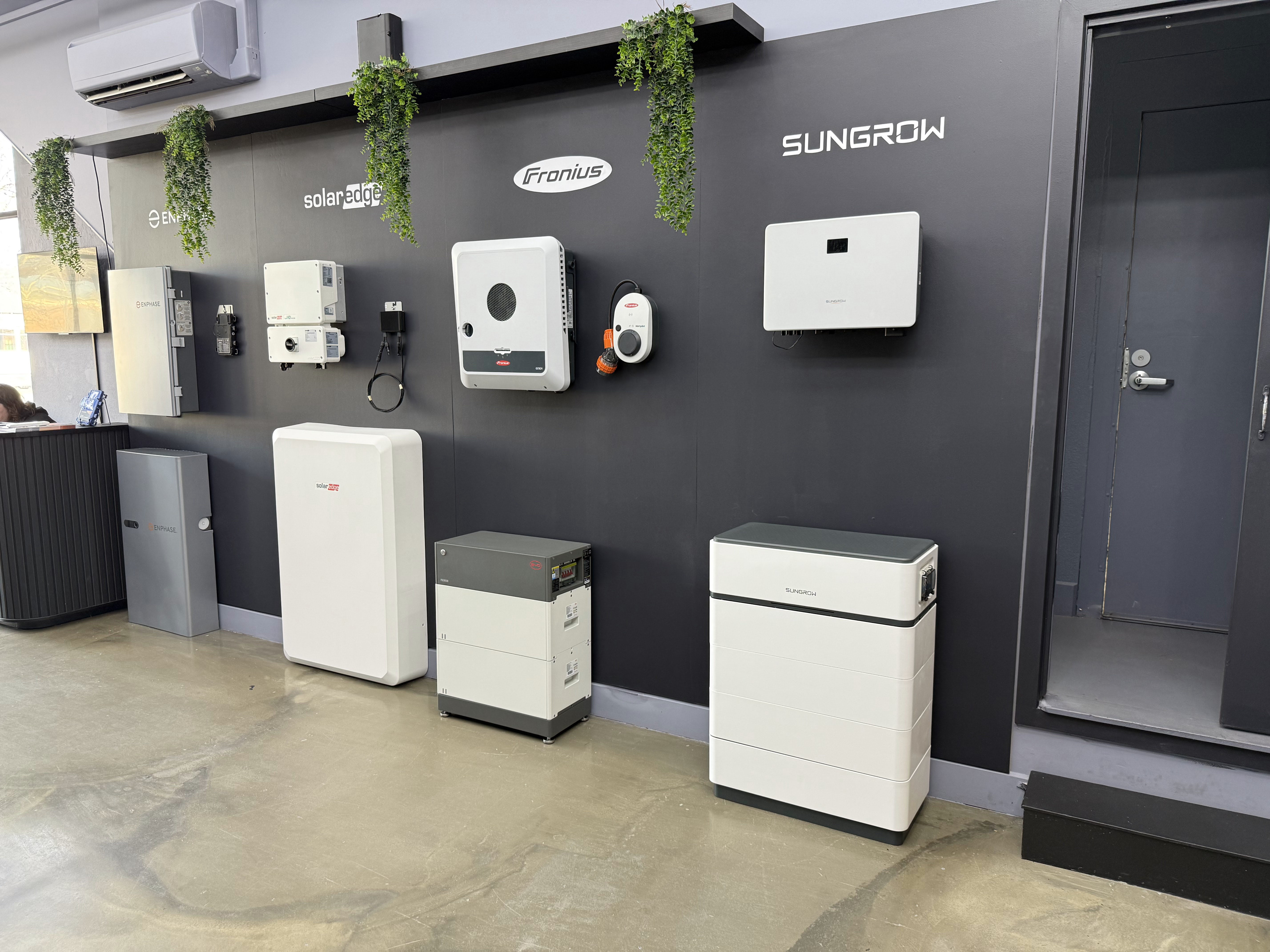
Some hybrid systems support generator integration, but it must be designed for the exact equipment. A generator socket or a hybrid label does not establish compatibility. Ask qualified professionals to specify the connection, transfer arrangement, charging behaviour and protection. Never connect a generator to household wiring through a wall socket or improvised lead.
Define why the generator is needed
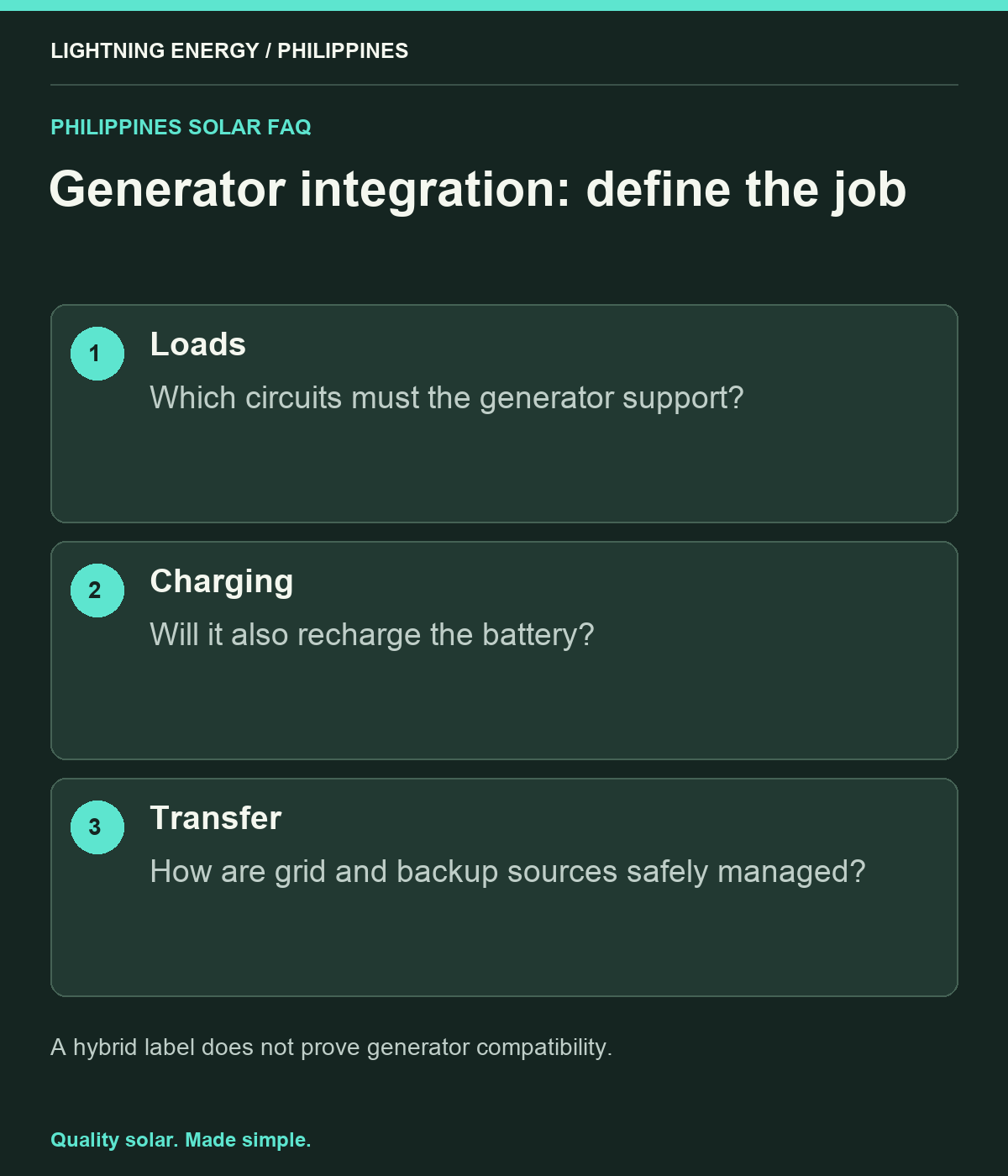
Decide whether the generator is intended to run loads directly, recharge the battery or provide both functions during extended outages. These are different design requirements. List the essential loads and expected outage duration before choosing generator size or assuming the existing unit is suitable.
Victron documents generator use in certain ESS arrangements and highlights configuration considerations. [1] That is an example of supported integration, not a universal instruction for other inverters. Ask the proposed system supplier for its own compatibility guidance and a diagram showing the intended operating modes.
Assess the existing generator honestly
Record the exact model, output characteristics, condition and available manufacturer documents. Tell the installer about past starting, voltage or maintenance problems. A generator that once powered a few appliances through approved outlets may need further assessment before joining a fixed household system.
Ask whether the inverter accepts that generator and what limitations apply while charging and serving loads. Do not infer compatibility from matching a headline kilowatt number. The assessment should address the complete combination and the household service, with any required modifications included in the written scope.
Make switching and isolation explicit
Request an explanation of how the system prevents inappropriate connection between generator, grid and backed-up circuits. Any transfer equipment, interlocks and protection should be specified and installed by qualified personnel under the applicable requirements.
The owner instructions should describe only approved actions, with clear labels. Avoid a design that depends on guessing which breakers to operate in an emergency. If automatic control is offered, ask what happens when starting fails, fuel is unavailable or a fault occurs. A useful plan includes failure cases as well as the successful demonstration.
Plan safe generator placement
The US FDA’s emergency guidance warns against running fuel-powered generators in enclosed spaces or where exhaust can enter openings. [2] This safety principle is relevant to household planning; follow the generator manufacturer and local emergency guidance for the actual installation.
Do not place a portable generator in a garage simply because rain is falling. Have a suitable operating location and weather arrangement established before an outage. Include noise, fuel handling and access in the plan, using qualified advice where needed. Battery integration does not remove the generator’s own combustion and electrical hazards.
Budget loads and charging together
Imagine an illustrative situation where household loads and battery charging operate simultaneously. The generator must support the permitted combination within the designed limits, not merely the battery charger’s rating or the household’s average demand alone.
Ask the installer how charging power is managed and what changes when a large load starts. Do not invent a universal setting or assume maximum-rate charging is always appropriate. Record the expected operating sequence and maintenance implications. If the objective is occasional extended-outage support, compare that use case separately from routine daily operation.
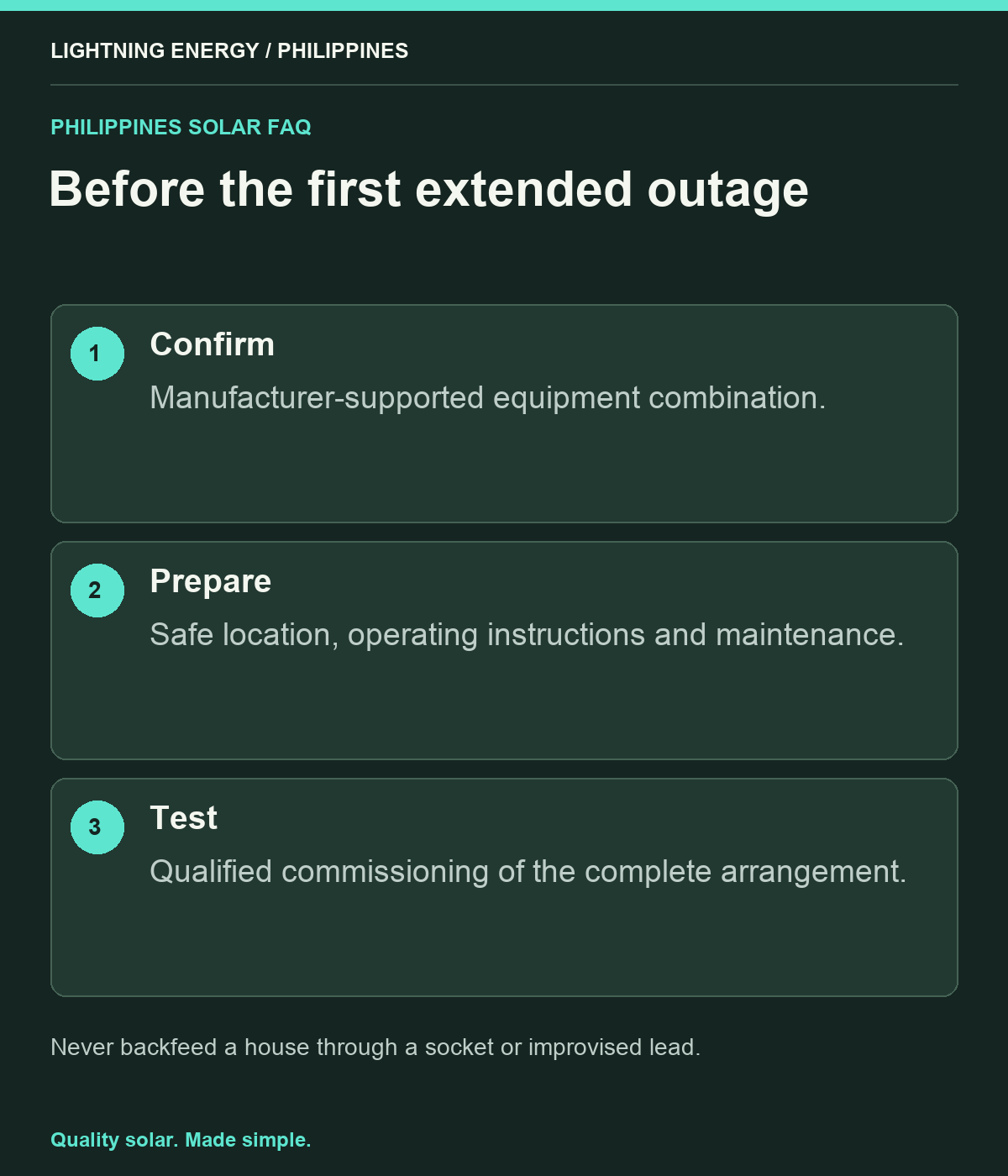
Commission the complete arrangement
Request an appropriate professional test covering loss of grid, generator operation, charging, fault response and return to normal supply. Keep the results, diagram and owner instructions together. Reassess the arrangement if the generator, inverter or battery is replaced.
Lightning Energy Philippines can help scope a generator-compatible backup design when you provide the existing equipment details and priorities. Ask for written manufacturer support and clear responsibility for the whole integration. A safe, understandable system is more valuable than a package that advertises generator-ready without explaining what additional equipment, work and operating limits are involved.
Sources & further reading
Sources used for this guide. Policy and product details should be checked for your particular installation.
- Victron Energy — ESS Introduction and FeaturesAccessed 27 September 2026
- US FDA — Medical Devices and Natural DisastersAccessed 27 September 2026