Solar FAQs
Can I Charge a Home Battery from the Grid Before a Brownout?
Many systems support grid charging, but permissions, configuration and cost must be checked for your installation.
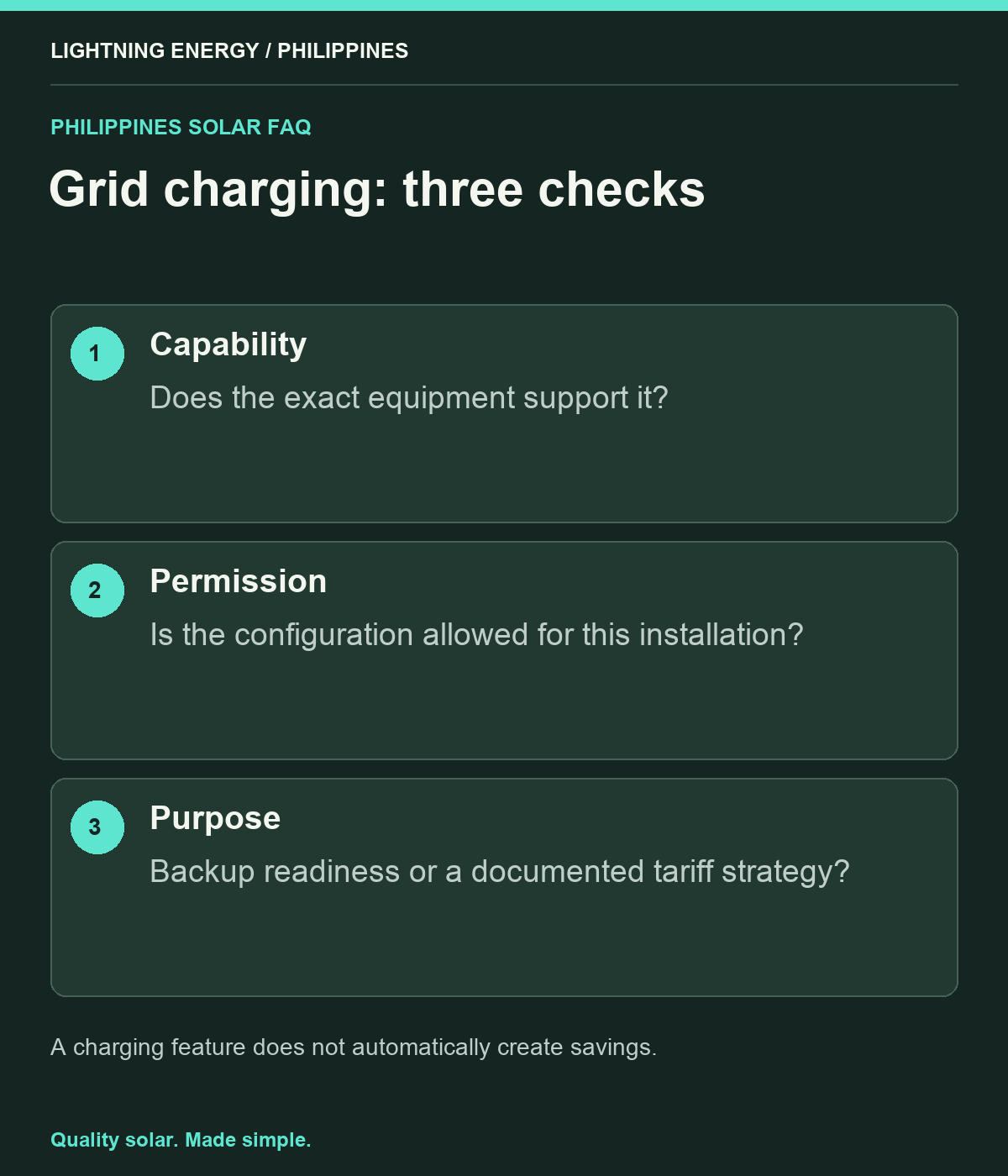
Some systems can charge from the grid, subject to equipment capabilities, configuration and the conditions applying to the installation. It can be useful for backup preparation, but it is not automatically a bill-saving strategy. Ask whether grid charging is supported and permitted for your specific system, then distinguish readiness from any financial benefit.
Check the equipment and enabled mode
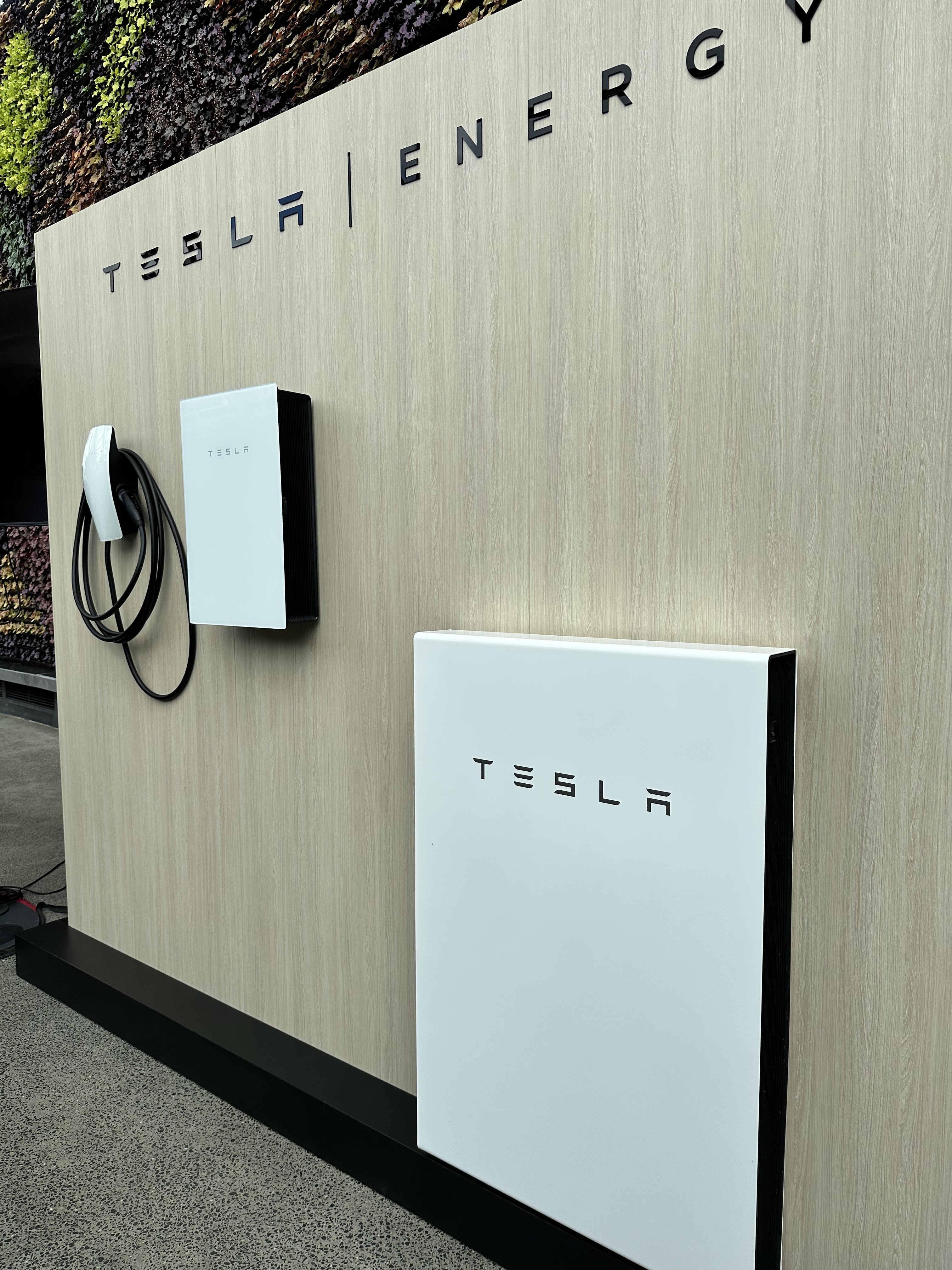
Tesla’s documentation describes grid-charging controls whose availability can depend on installer configuration and supplier conditions. [1] This is an example from its documented market, not a Philippine tariff rule or a promise that your app will contain the same option.
Ask your supplier for the exact model’s guidance and the permitted configuration at your address. Confirm whether the feature charges to a reserve target, a schedule or another limit. Do not change installer-only settings or use an unofficial workaround because a button shown in an overseas video is missing from your system.
Separate backup preparation from arbitrage
Charging ahead of a scheduled interruption is a resilience decision. Charging at one price and discharging at another is a financial strategy that needs the actual tariff and system costs. A household on a flat tariff should not assume a benefit simply because the battery can charge at night.
Request the purchase-rate assumptions, energy losses and any operating restrictions. Include the effect of battery use on warranty conditions. If the proposal claims savings from grid charging, ask for the calculation and a conservative alternative. The ability to move energy through storage is not itself evidence that doing so saves money.
Understand backup-first operation
Victron documents an ESS mode intended to keep batteries charged for backup and recharge them when grid supply returns. [2] Other systems may offer similar goals with different controls. Use the mode approved for the installed equipment.
Ask how solar and grid charging interact, whether the battery reaches the intended level before the interruption and how you confirm completion. A setting is not proof of actual charge. Check the displayed state and any alerts, and allow for the system’s charging-power limits and other household demand.
Use an illustrative preparation timeline
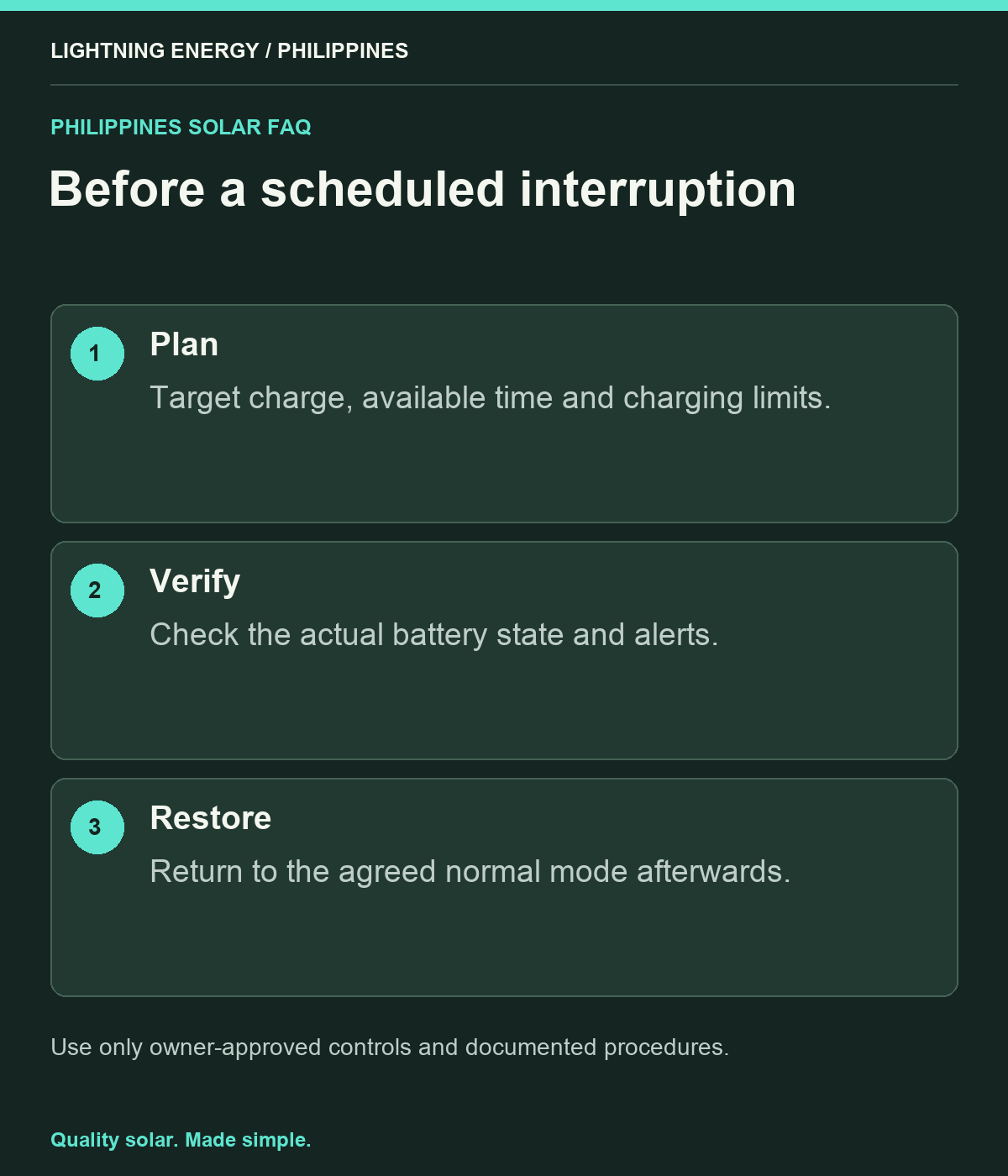
Imagine a notified outage beginning at noon tomorrow. The household wants essential loads covered and asks the installer how the approved system can prepare. The plan should identify the target, available charging window, supported charging power and how normal settings will be restored afterwards.
Do not derive a charging time from capacity alone without the actual starting charge and system limit. Nor should you assume a last-minute change will fill the battery immediately. This scenario is a checklist for preparation, not a universal instruction to enable grid charging on every hybrid inverter.
Keep imports and exports under the approved rules
Ask whether stored grid energy can be exported, whether export is restricted to solar and how the controls enforce the accepted arrangement. These are separate questions from charging the battery for household use. Obtain the answer from the installer and electricity supplier where required.
Avoid importing overseas time-of-use or virtual-power-plant assumptions into a Philippine proposal. The relevant utility contract and local implementation determine the available route. Keep the approved settings in the handover record so later service, firmware changes or equipment additions do not inadvertently alter the operating mode.
Create a simple household preparation routine
Record who receives outage notices, who checks battery readiness and which settings the owner is permitted to adjust. Include a return-to-normal step after the event. If there are repeated charging failures or unexplained imports, save the times and alerts and request a qualified assessment.
Lightning Energy Philippines can help explain the charging options available in a proposed system. Bring your utility tariff and backup priorities. The aim is to use a supported mode for a clear purpose, with the cost and operating constraints understood, rather than assuming every overnight charge creates savings or every battery will be ready whenever the grid fails.
Sources & further reading
Sources used for this guide. Policy and product details should be checked for your particular installation.
- Tesla — Powerwall Advanced Settings, UK DocumentationAccessed 27 September 2026
- Victron Energy — ESS Introduction and FeaturesAccessed 27 September 2026