Solar FAQs
What Backup Reserve Should I Set on My Home Battery?
The right reserve balances everyday use and outage readiness. Choose it from your essential loads and local experience, not a universal percentage.
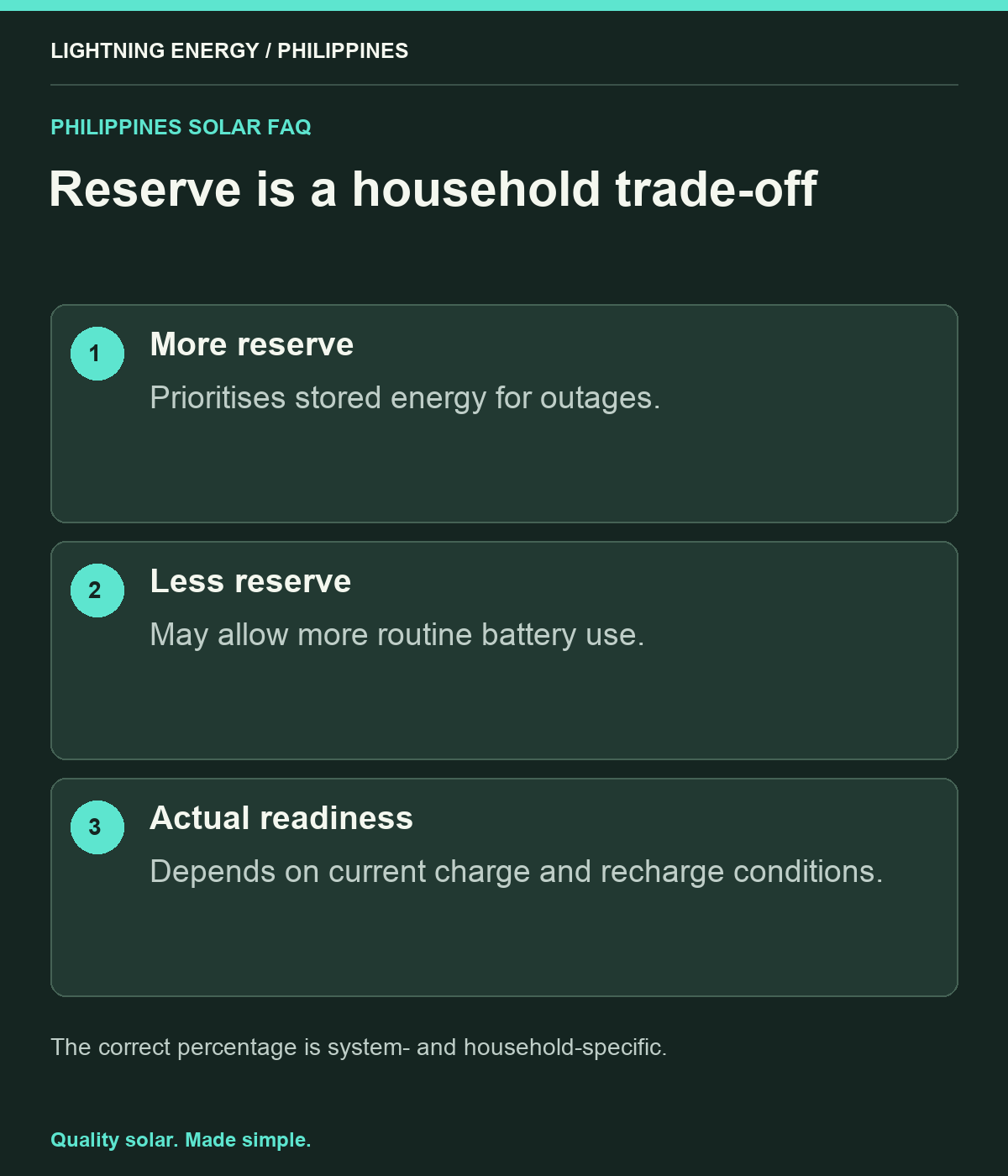
There is no single reserve percentage that suits every household. A higher reserve generally prioritises outage readiness, while a lower reserve may allow more everyday battery use. The correct choice depends on your equipment’s control logic, essential loads, outage experience and expected recharge. Ask the installer to translate the percentage into an understandable energy plan.
Understand what your setting controls
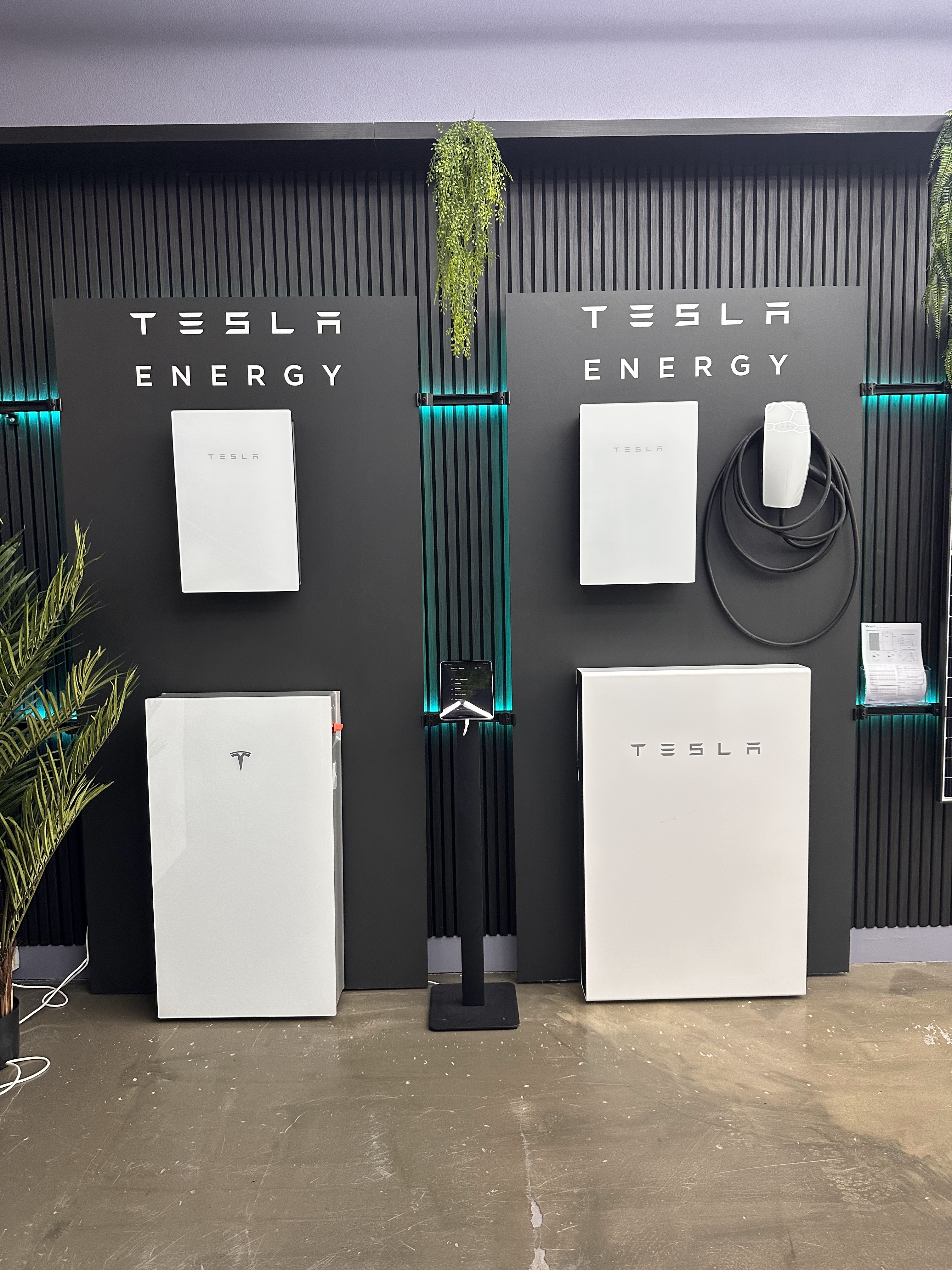
Tesla’s Backup Reserve documentation distinguishes energy reserved for outages from energy available for normal operating modes. [1] That is a product-specific example; another inverter may define minimum state of charge, backup reserve and protection thresholds differently.
Request a plain-language explanation of every relevant setting in your system. Ask which ones you may adjust as an owner and which must remain under installer control. Do not treat an internal battery-protection limit as a convenience setting to override. The aim is a safe operating plan, not unlocking every last displayed percentage point.
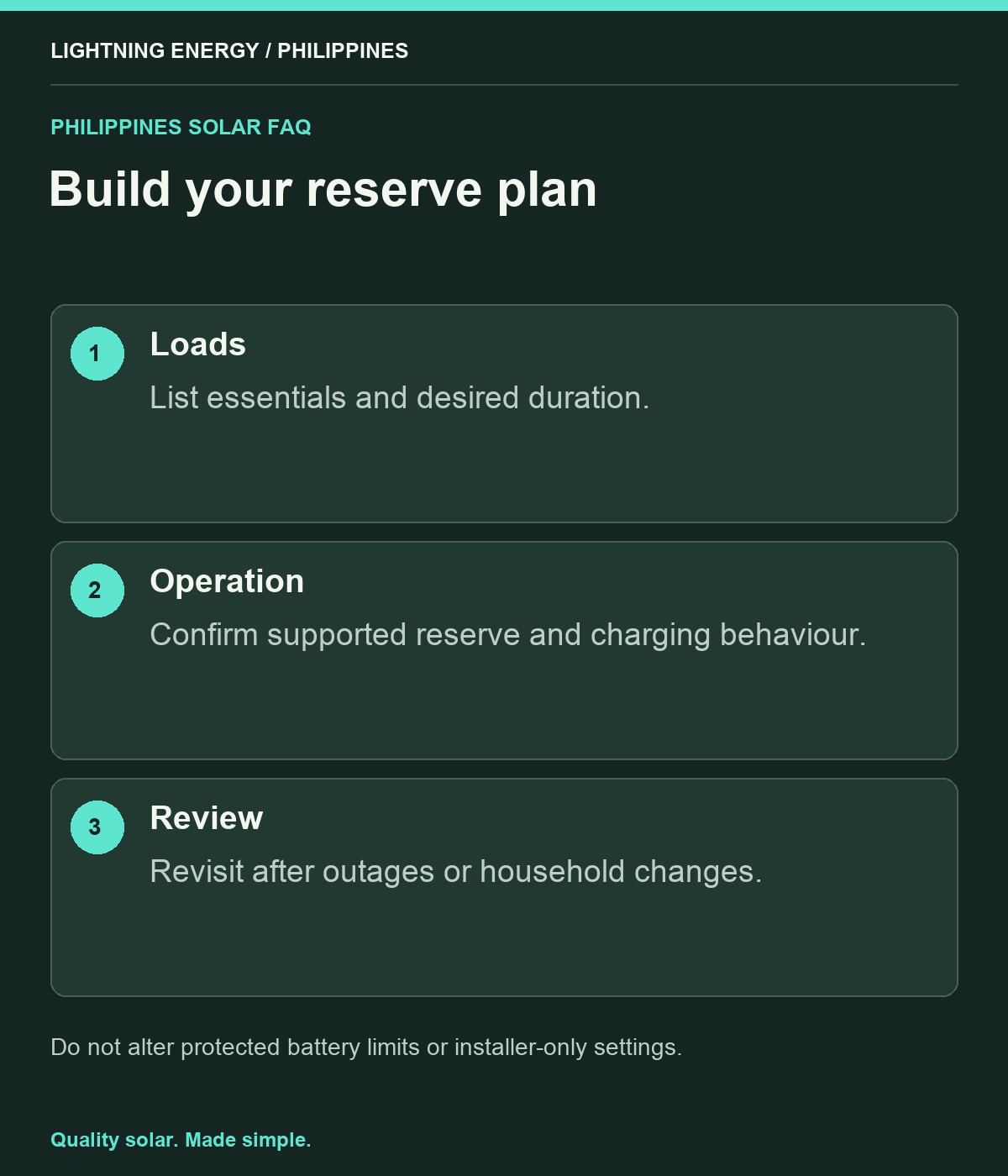
Start with an essential-load list
List the loads you want to preserve and how long you want them to run. Separate a fridge, lights and communications from optional cooking or cooling loads. Use measurements or appropriate appliance data, then ask the installer to account for system losses and starting requirements.
For an illustrative energy budget, essential loads averaging 0.4 kW over five hours need 2 kWh at the load before further planning allowances. This is arithmetic using invented values, not a recommendation for your house. The reserve needed to support it depends on usable capacity, operating limits and the actual battery condition.
Remember that reserve is not a recharge promise
A selected percentage does not guarantee the battery is already at that level when an outage begins. Ask how the system restores reserve, whether grid charging is permitted and what happens after several cloudy days. Check the actual displayed charge when preparing for a known interruption.
Victron describes configurations that keep batteries charged for backup and recharge after grid restoration. [2] Use the equivalent supported configuration for your equipment rather than copying settings from another brand’s manual. The operating mode should match both your goal and the conditions approved for the installation.
Compare ordinary days and higher-risk periods
Discuss a normal household setting and a preparation plan for forecast severe weather or a scheduled outage. Ask whether your product supports such changes, how quickly they take effect and what trade-off they create. Do not assume automated storm features are available or reliable for every Philippine location.
Record who in the family may change the setting and how the normal configuration is restored. If several people use the app, agree a simple rule so one person does not lower the reserve while another is preparing for an interruption. Consistent household behaviour matters alongside the hardware.
Review the trade-off with real records
After a representative period, compare outages, battery use, imports and whether the chosen reserve met your priorities. Avoid judging the setting from one unusually sunny week. If the battery often remains unused, that may be consistent with a backup-first objective rather than evidence that it is malfunctioning.
Ask the installer to model alternatives using the same tariff and load assumptions. Keep resilience value separate from bill savings: some households willingly retain more reserve because continuity matters to them. A proposal should make that preference explicit rather than presenting a maximum-savings mode as the only sensible choice.
Write a household reserve plan
Keep the chosen normal setting, preparation steps, essential-load list and support contact together. Include the approved response to low energy and overload. Any change involving protected settings, wiring or battery limits belongs with qualified personnel.
Lightning Energy Philippines can help turn a percentage slider into a practical plan for your household. Bring your outage experience and priority loads, then ask for a clear explanation of what the reserve can and cannot support. The useful result is a setting you understand, reviewed when needs change, without a false promise that one universal percentage guarantees a particular number of backup hours.
Sources & further reading
Sources used for this guide. Policy and product details should be checked for your particular installation.
- Tesla — Powerwall Backup ReserveAccessed 27 September 2026
- Victron Energy — ESS Introduction and FeaturesAccessed 27 September 2026