Solar FAQs
Can My Home Battery Be Installed Outdoors in the Philippines?
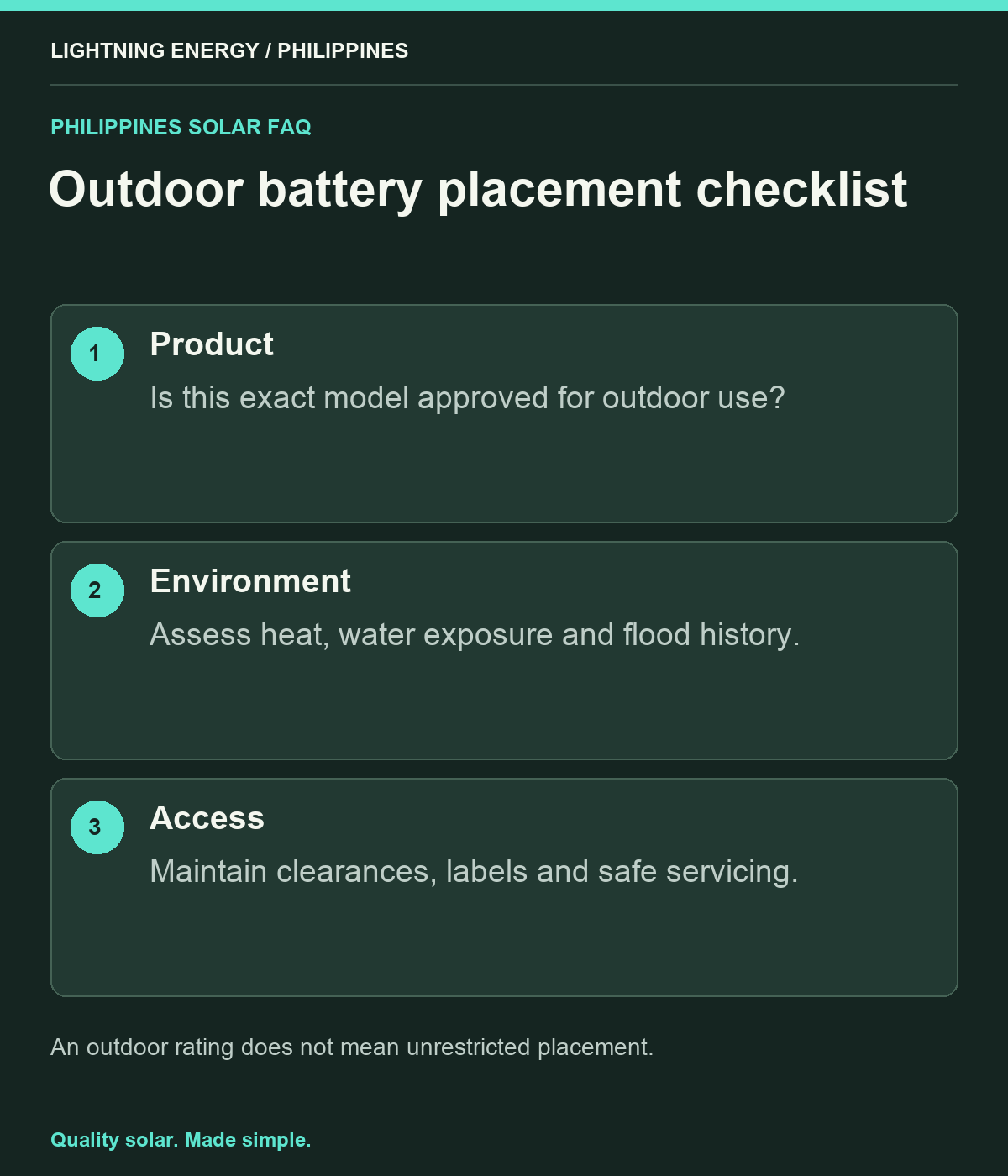
Outdoor suitability is model-specific. Check environmental ratings, heat, flood exposure, clearances and safe access together.
Some home batteries are designed for outdoor installation and others are not. The exact model’s manual controls the answer, together with site conditions and local requirements. An outdoor label does not mean the unit can be placed anywhere: flood exposure, direct heat, drainage, physical protection and service access still need assessment.
Identify the exact product and enclosure
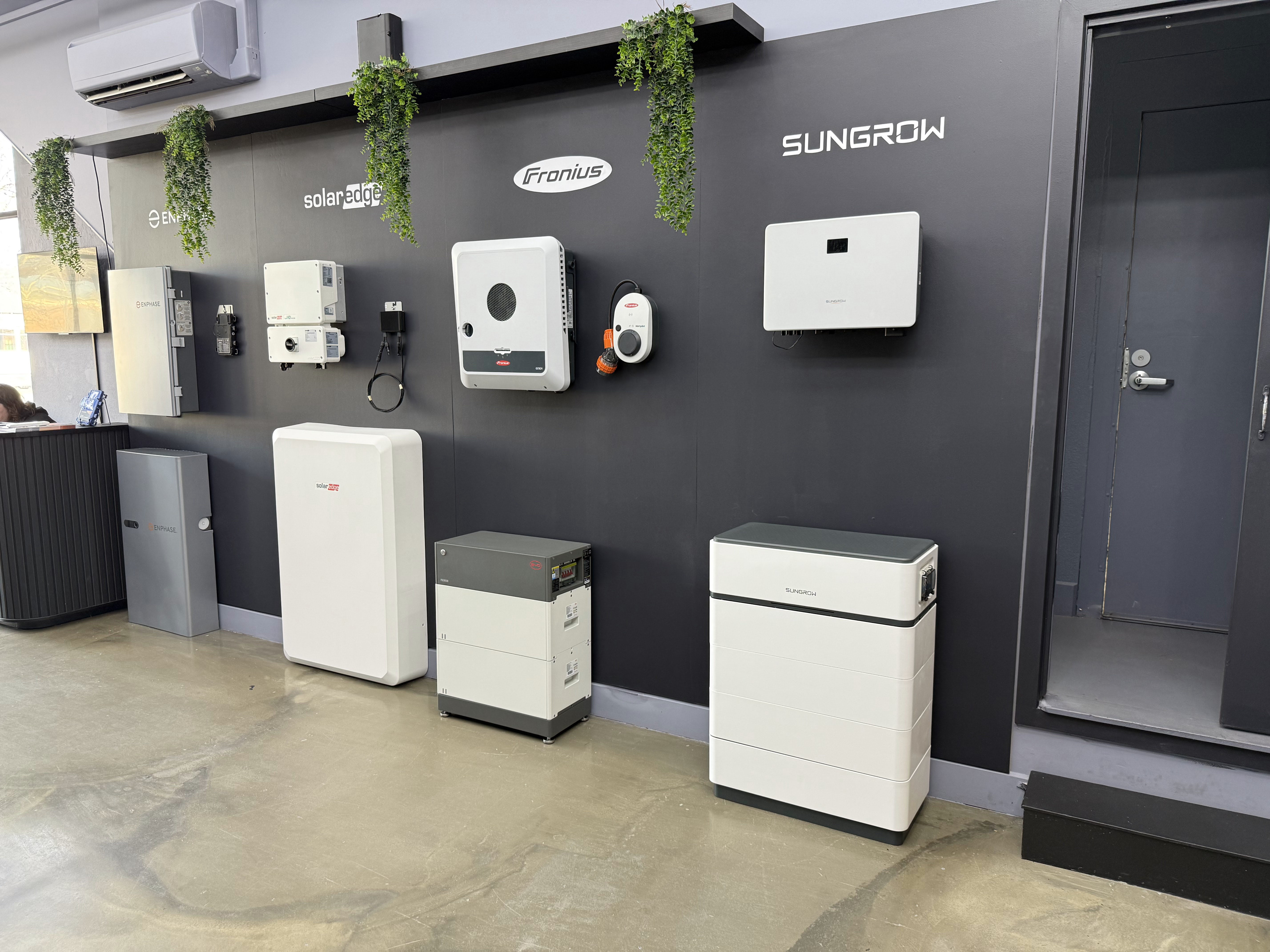
BYD’s HVM datasheet lists indoor/outdoor use and an enclosure protection rating for the covered product. [1] By contrast, Victron’s Lithium Smart installation guidance specifies a dry indoor location. [2] These examples show why battery chemistry or brand familiarity cannot substitute for the model instructions.
Ask the installer to attach the applicable manual and identify any additional enclosure or accessory required. Do not accept a generic photograph as evidence of suitability. The unit delivered should match the model assessed, and substitutions should trigger a review of the proposed location before installation proceeds.
Assess heat and sunlight at the actual wall
Observe whether the chosen area receives strong afternoon sun or sits beside another heat source. Ask how the manufacturer’s temperature and clearance requirements will be met. A site that feels comfortable during a morning visit may behave differently later in the day.
Do not build an improvised box around the battery to hide it or shade it without approval. An enclosure can affect ventilation, access and temperature. Have the installer specify any suitable shelter as part of the design, with its dimensions and clearances documented rather than left to a handyman after commissioning.
Use flood history, not only today’s ground level
Tell the installer about previous floodwater, storm runoff and nearby drains. Ask how the location addresses those risks and what the owner should do if water threatens the equipment. An ingress rating should never be interpreted casually as a guarantee against immersion.
Consider the route water might take from gutters, leaking pipes or an overflowing tank. Keep equipment away from obvious sources of repeated wetting where the manual requires it. If no practical compliant location exists, discuss another design or product rather than forcing the chosen battery into an unsuitable corner.
Protect access and everyday movement
Review doorways, escape routes, vehicle movement, storage areas and the activities of children or pets. Ask which clearances and physical protections are required for the actual installation. Avoid a location that becomes inaccessible whenever the family parks a car or stores boxes.
A service technician should be able to inspect the equipment safely without dismantling household storage. Keep labels and isolation information visible as required. The installation is part of a lived-in home, so its location should remain workable after the tidy commissioning photographs have been taken and normal household routines resume.
Compare locations with a simple checklist
For an illustrative house, one proposed wall is exposed to afternoon sun and driveway traffic, while another sheltered service area has better access but less ventilation. Neither should be selected from appearance alone. Ask the installer to compare each against the actual manual and site requirements.
Record the reason for the chosen location and any necessary building work. Include cable routing, mounting support and maintenance access in the cost comparison. A slightly longer cable route may be worth considering if it enables a better location, but the electrical design must assess that choice properly.
Keep the approved location suitable
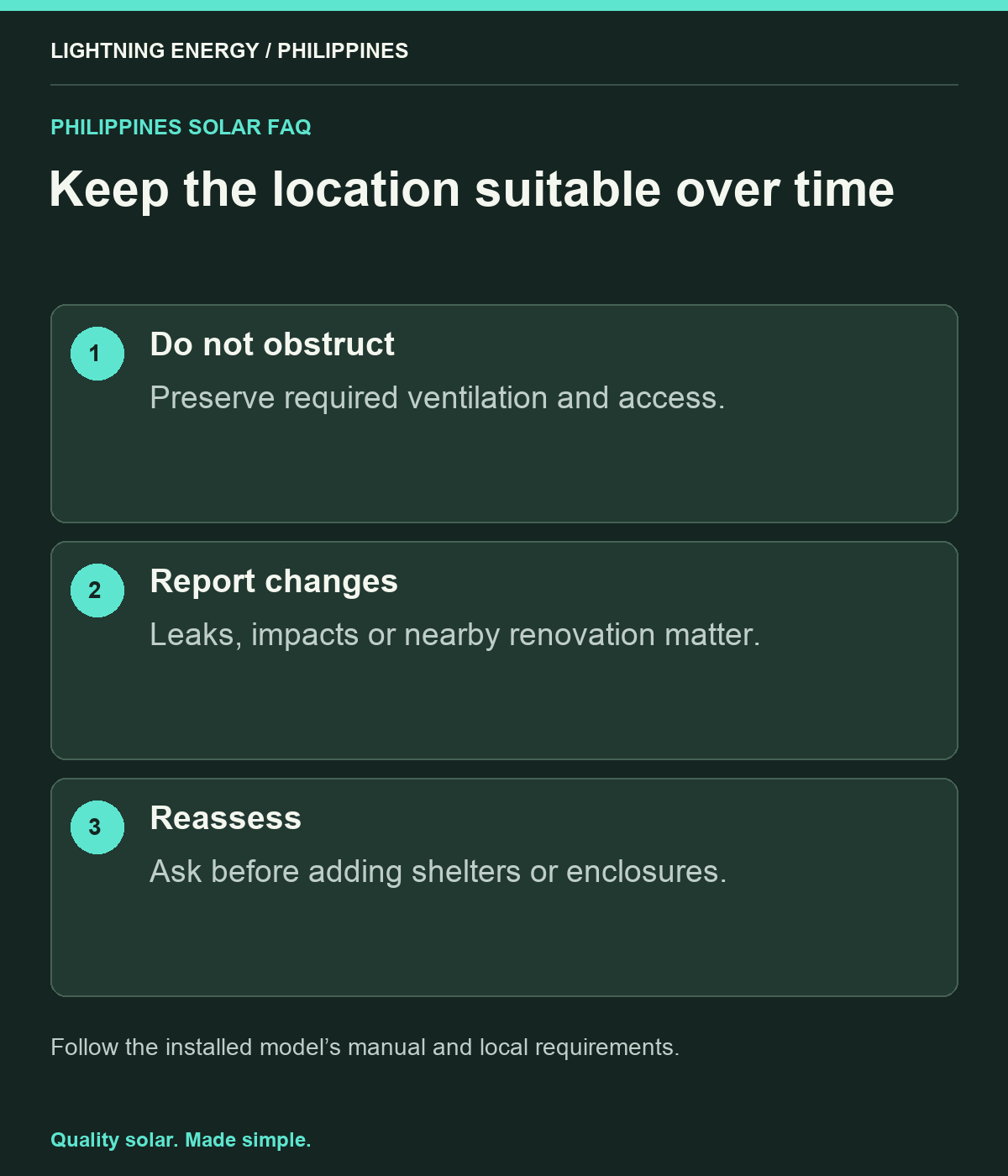
After installation, do not add cupboards, plants, hanging laundry or stored materials that violate required spaces. Report new leaks, damage or environmental changes. Have a qualified provider reassess the installation if the surrounding area is renovated.
Lightning Energy Philippines can help evaluate battery locations during the site assessment. Share flood and heat history early and ask for the manual requirements to be explained on the plan. The useful answer is a suitable location for a named product, with documented conditions, rather than an unconditional promise that all modern batteries are weatherproof.
Sources & further reading
Sources used for this guide. Policy and product details should be checked for your particular installation.
- BYD — Battery-Box Premium HVM Datasheet V1.4Accessed 27 September 2026
- Victron Energy — Lithium Smart Battery InstallationAccessed 27 September 2026