Solar FAQs
Why Can Solar Output Fall on a Very Hot, Sunny Day?
Sunshine helps panels generate electricity, while operating temperature can reduce output. Learn what to compare before assuming a fault.
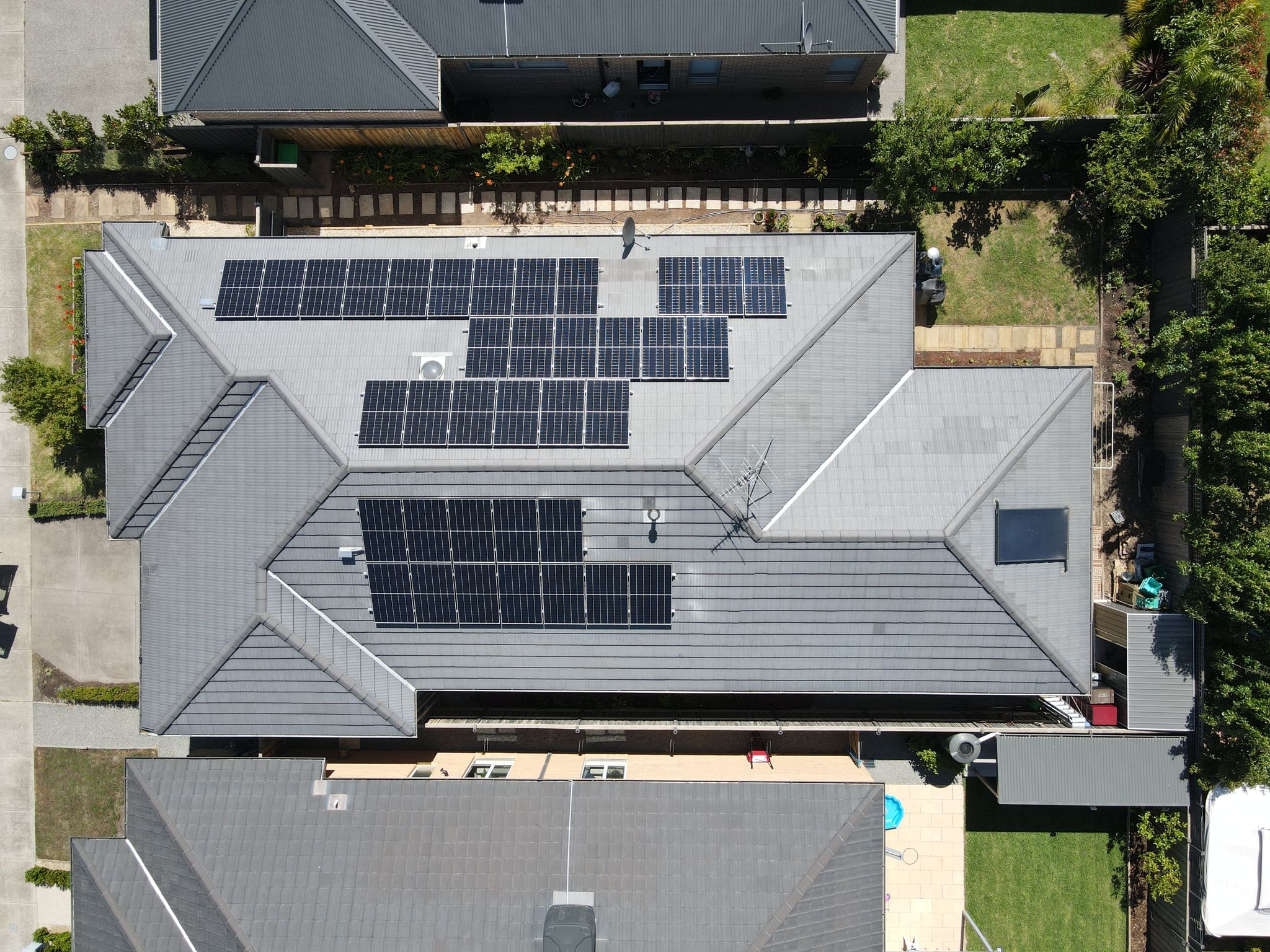
A very hot day can produce strong sunlight and higher equipment temperatures at the same time. Those effects are different. Lower midday power than on a cooler clear day does not automatically indicate a fault, but persistent changes, alarms or unusually poor performance deserve investigation using the actual equipment specifications and site conditions.
Separate sunlight from temperature
A panel responds to incoming light, while its electrical behaviour also changes with cell temperature. LONGi’s manual notes that module voltage and power increase under lower-temperature conditions. [1] The relevant comparison is the panel’s operating condition, not just the weather app’s air-temperature reading.
Ask for the temperature coefficient on the exact module datasheet and have the installer explain it. Do not apply one brand’s coefficient to another product or convert a hot-day observation into a precise annual loss without modelling. The point is to understand a mechanism, not diagnose the roof from a single phone screenshot.
Compare like with like
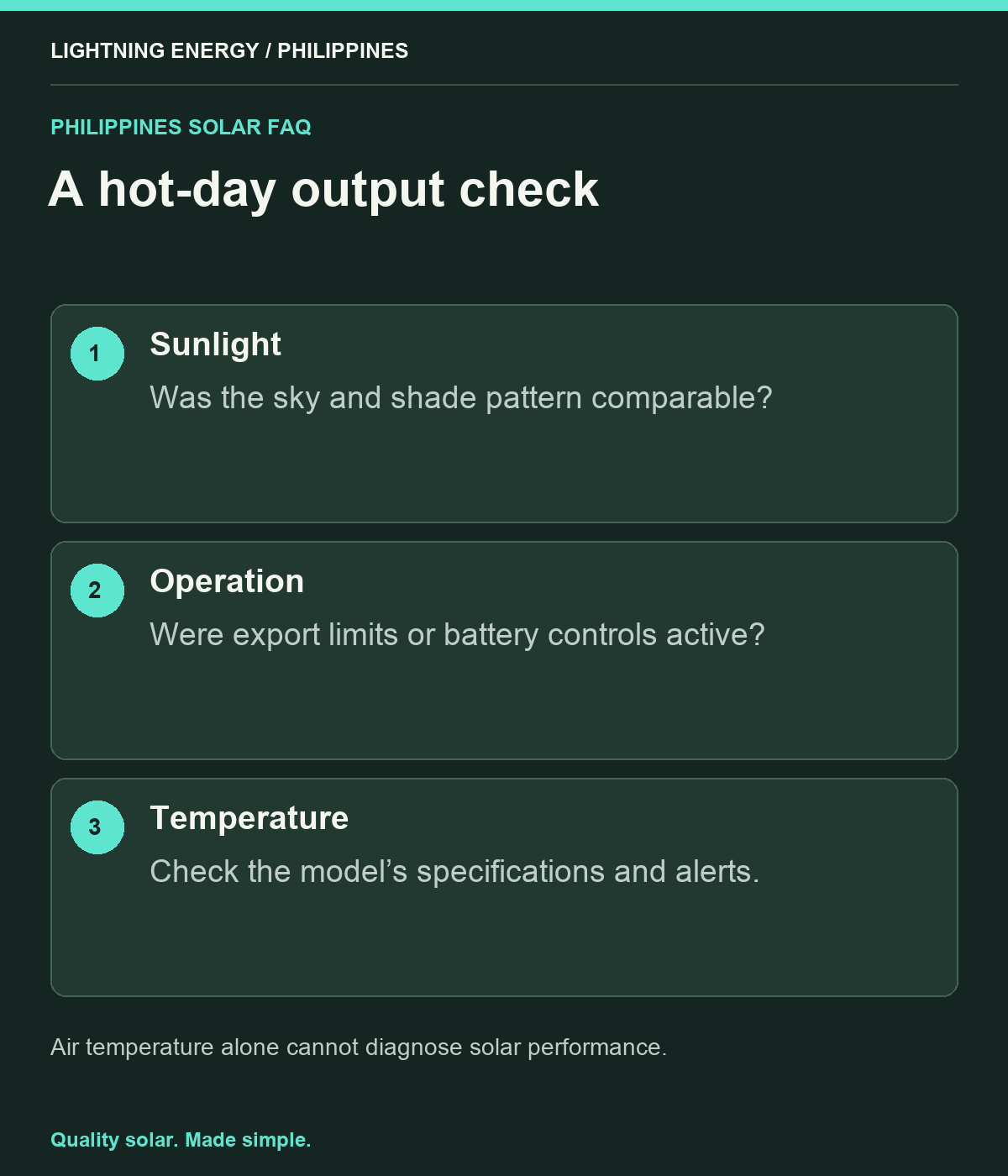
Record the time, weather, app power, daily energy and any alarms on the days you want to compare. Check whether the household or battery was changing the operating conditions. A zero-export system, for example, may limit output when demand is low, so temperature may not be the main explanation.
Use several days rather than selecting one unusually high peak. Clouds can complicate short snapshots, and different seasons change the sun’s path. If you suspect a recurring issue, send a small set of clearly dated examples to the installer. A concise record is easier to analyse than a folder of unlabelled screenshots.
Ask whether heat was included in the forecast
PVWatts’ model documentation makes clear that performance predictions depend on specified inputs and assumptions. [2] Request the loss and equipment assumptions used in your proposal, including how the mounting arrangement was represented.
Do not expect a generic map estimate to capture every detail of a tightly enclosed roof space or an inverter placed in direct afternoon sun. The designer should connect the estimate to the physical installation. If two quotations use materially different annual yields for similar equipment, ask both suppliers to explain the differences in their assumptions.
Check equipment placement without DIY changes
Ask the installer to confirm that module clearances, inverter location and ventilation follow the applicable manuals. Keep stored items away from required air paths and access spaces. Do not add an improvised enclosure, spray equipment to cool it or alter roof mounting to chase a higher app number.
If an inverter reports a temperature-related warning, save the exact message and time. Let qualified personnel determine whether it reflects expected operation, poor placement or a fault. The appropriate response depends on the model, and repeatedly resetting a device without understanding the cause can obscure useful diagnostic information.
Use a restrained worked comparison
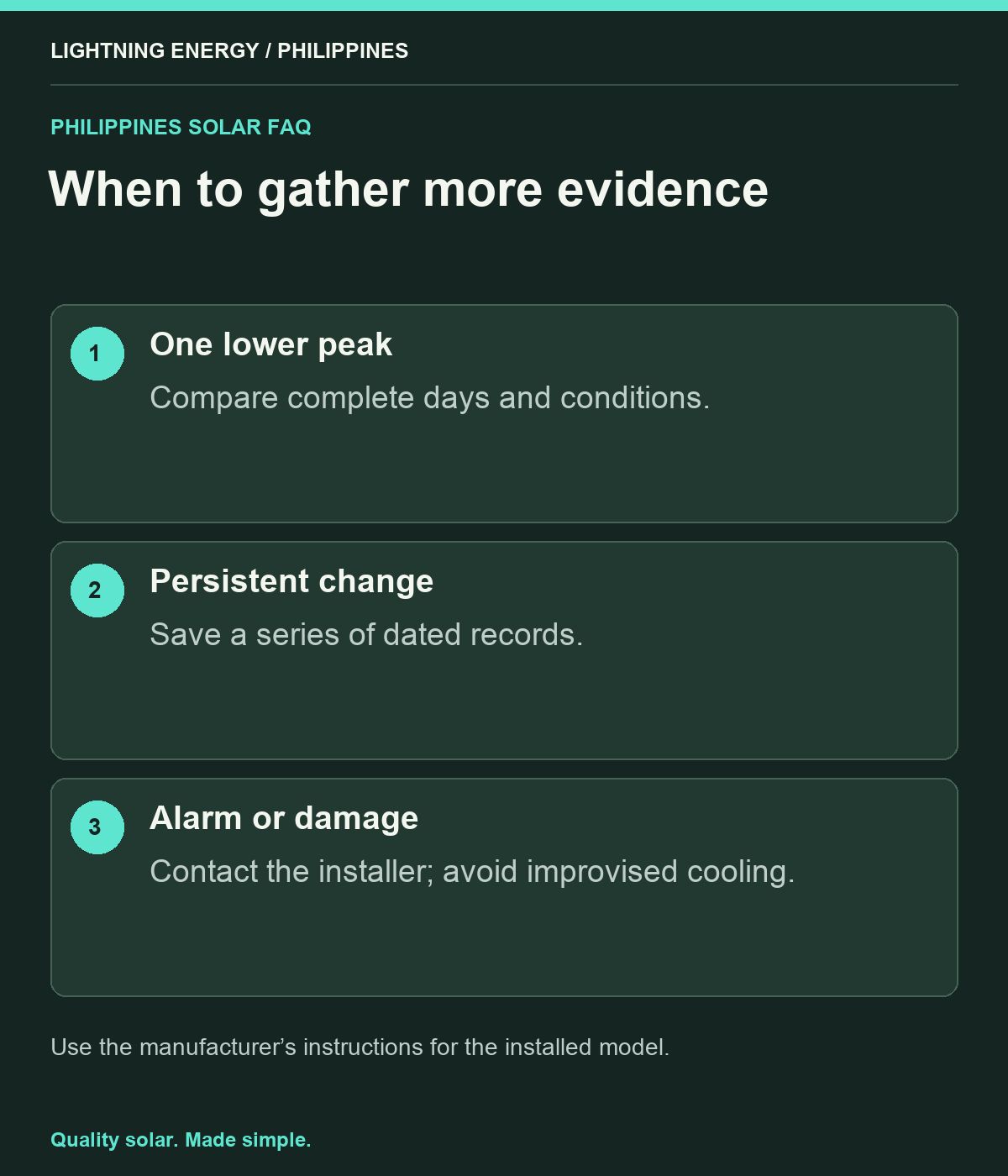
Imagine two illustrative clear days with the same household routine. On the hotter day the noon peak is lower, but the total daily energy is close. That pattern prompts a check of weather and equipment conditions; it does not, by itself, establish a failed panel.
Now imagine a sudden large drop that continues on cooler days and appears with an alarm. That deserves a different response: contact the installer with the evidence. These examples are decision scenarios, not performance thresholds. Ask your provider what benchmark and escalation criteria are appropriate for the installed system.
Keep the focus on reliable annual performance
A well-explained proposal should acknowledge seasonal and daily variation. Ask for a practical monitoring routine and an aftercare contact, then judge the system over meaningful periods. Avoid choosing equipment solely because one advertisement shows an impressive peak on a perfect day.
Lightning Energy Philippines can explain how roof layout, equipment placement and temperature assumptions affect the proposal for your home. Bring dated observations if you already have solar. The goal is to recognise ordinary variation while responding promptly to evidence of a real issue, without turning every hot afternoon into an unnecessary service alarm.
Sources & further reading
Sources used for this guide. Policy and product details should be checked for your particular installation.
- LONGi — PV Module User Manual, 2026Accessed 27 September 2026
- National Laboratory of the Rockies — PVWatts Calculator and Model NotesAccessed 27 September 2026