Solar FAQs
Can I Use an Induction Cooker While the House Is on Battery Backup?
Cooking can be possible on a suitable system, but simultaneous power and meal-time energy use need to be included in the backup plan.
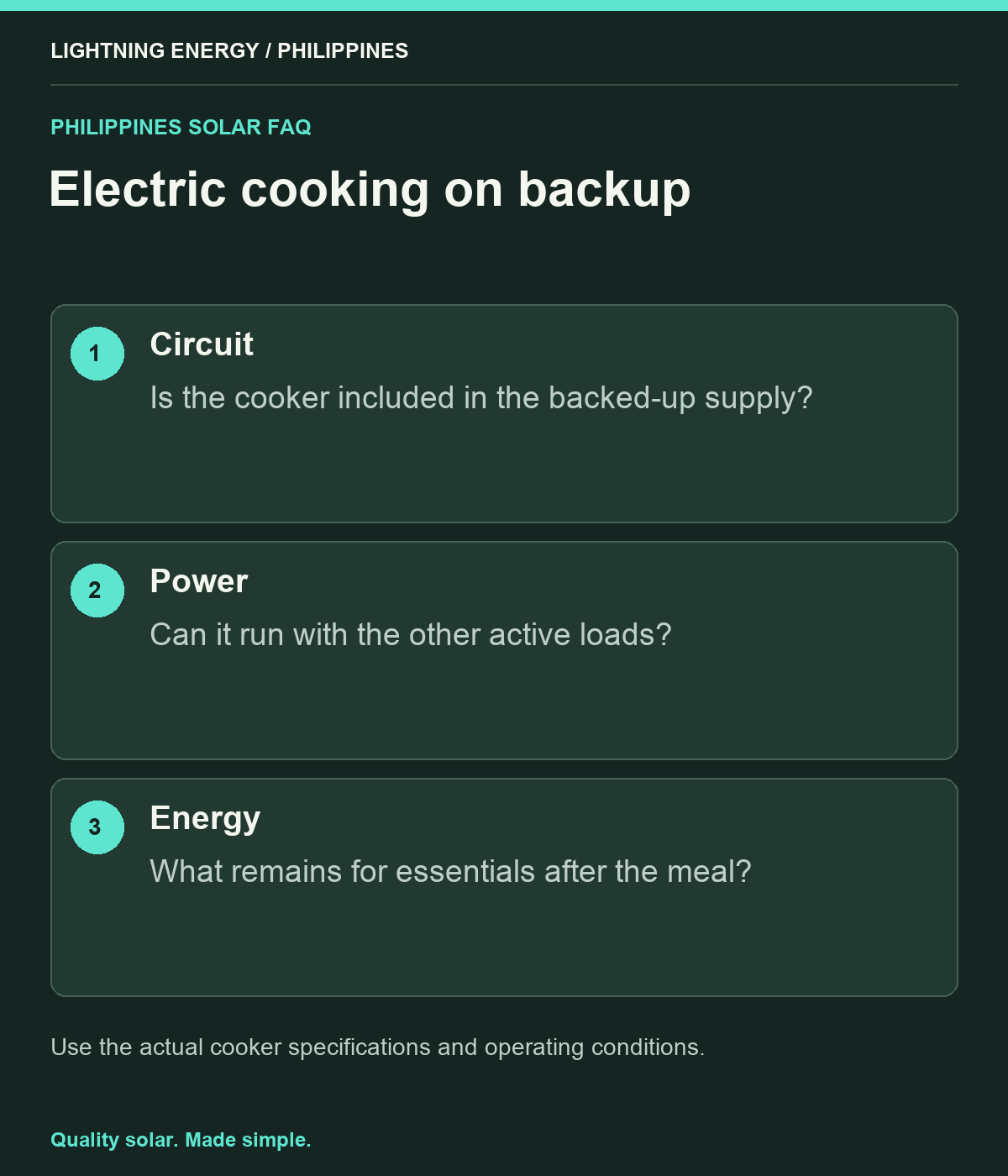
It may be possible if the cooker’s circuit is included and the battery-inverter system supports its demand. Check the actual appliance, selected cooking level and other running loads. A short cooking session and an overnight fridge load stress the backup plan differently, so assess both power and energy before relying on electric cooking during an outage.
Check the cooker’s real requirements
Record the cooker model and its rated input, and ask how its controls affect demand. Do not assume a low number on the display represents a fixed electrical wattage. Use manufacturer information and appropriate measurements when planning the load.
Tesla lists electric cooking among loads requiring a suitable backup configuration. [1] This is a product example, not a universal approval for every cooker and battery combination. Your installer should confirm the circuit, continuous capability and any restriction on using multiple cooking zones or other appliances at the same time.
Add the simultaneous kitchen loads
A cooker may operate alongside a kettle, microwave, refrigerator and water pump. List the likely combination rather than evaluating each appliance in isolation. Ask the installer to identify the limiting system capability under the intended backup conditions.
For an illustrative example, a 1.5 kW cooking load plus 0.8 kW of other running demand totals 2.3 kW before any relevant starting events. Those numbers are invented for arithmetic. They do not establish your cooker’s demand or the system size required, and short-term peak ratings should not be substituted for sustained capability.
Budget the energy for the meal
If an illustrative load averaged 1.5 kW for twenty minutes, it would use 0.5 kWh at the appliance. Repeated meals and other loads add to that total. Actual cooking varies, so use the example to understand the calculation rather than as a fixed allowance for dinner.
Ask what that energy use means for the remaining essential loads. A system sized mainly for lights, communications and refrigeration may have little spare energy for repeated cooking during a long outage. Make the trade-off explicit so the household does not discover it when the battery reaches its low-energy limit later in the evening.
Plan load management safely
Tesla’s outage guidance recommends reducing energy-intensive loads to extend backup duration. [2] Apply that principle through a plan appropriate to your system, such as postponing optional appliances while cooking. Do not improvise changes to circuits or protective devices.
If automatic load management is included, ask what it controls and how it behaves when a limit is reached. If management is manual, keep the rules simple enough for everyone who cooks. A design depending on complicated unspoken coordination is likely to disappoint during a stressful interruption.
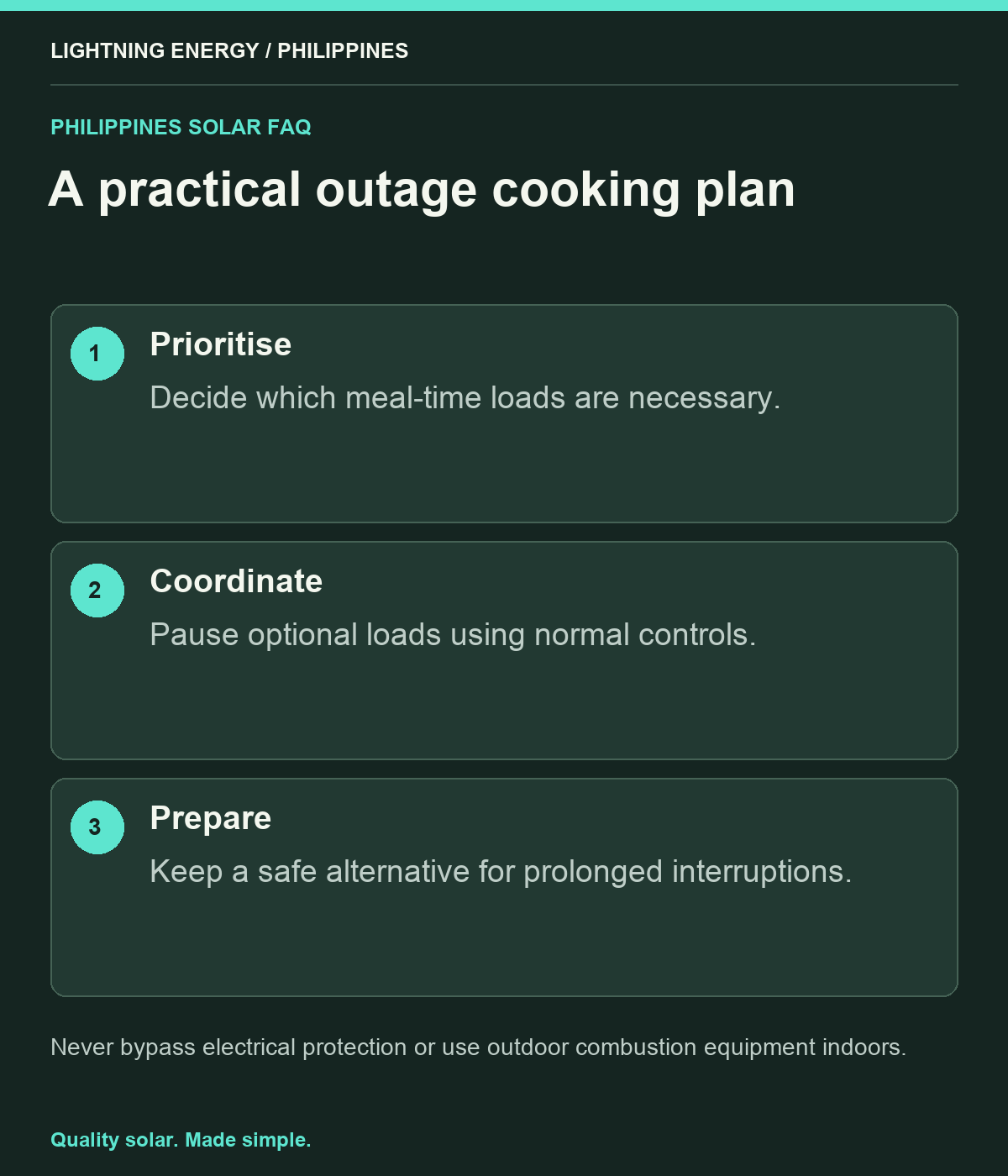
Keep an alternative meal plan
Discuss how the household will prepare food if the outage lasts longer than expected or the battery begins partly charged. Choose alternatives that are suitable for your home and follow appliance safety instructions. Never use outdoor combustion equipment inside to compensate for an electrical shortfall.
This is not a recommendation to replace one cooking method with another without assessment. The point is to avoid treating battery backup as unlimited energy. A modest contingency plan can reduce pressure on the system while preserving the loads that matter most through an extended brownout.
Verify the intended use before an outage
Ask for a qualified commissioning check of the cooker and intended simultaneous loads. Record the allowed use, expected alerts and approved response to overload. Reassess if the cooker is replaced or additional kitchen appliances are added.
Lightning Energy Philippines can include cooking in a backup assessment when you provide the appliance details and household priorities. Ask for a clear answer on circuit inclusion, power and energy. That gives a practical basis for deciding whether cooking on battery fits your plan, without promising that every kitchen can operate normally throughout an interruption.
Sources & further reading
Sources used for this guide. Policy and product details should be checked for your particular installation.
- Tesla — What Can Powerwall Back UpAccessed 27 September 2026
- Tesla — Best Practices During Power OutagesAccessed 27 September 2026