
Solar FAQs
Can a Home Solar Battery Back Up Medical Equipment?
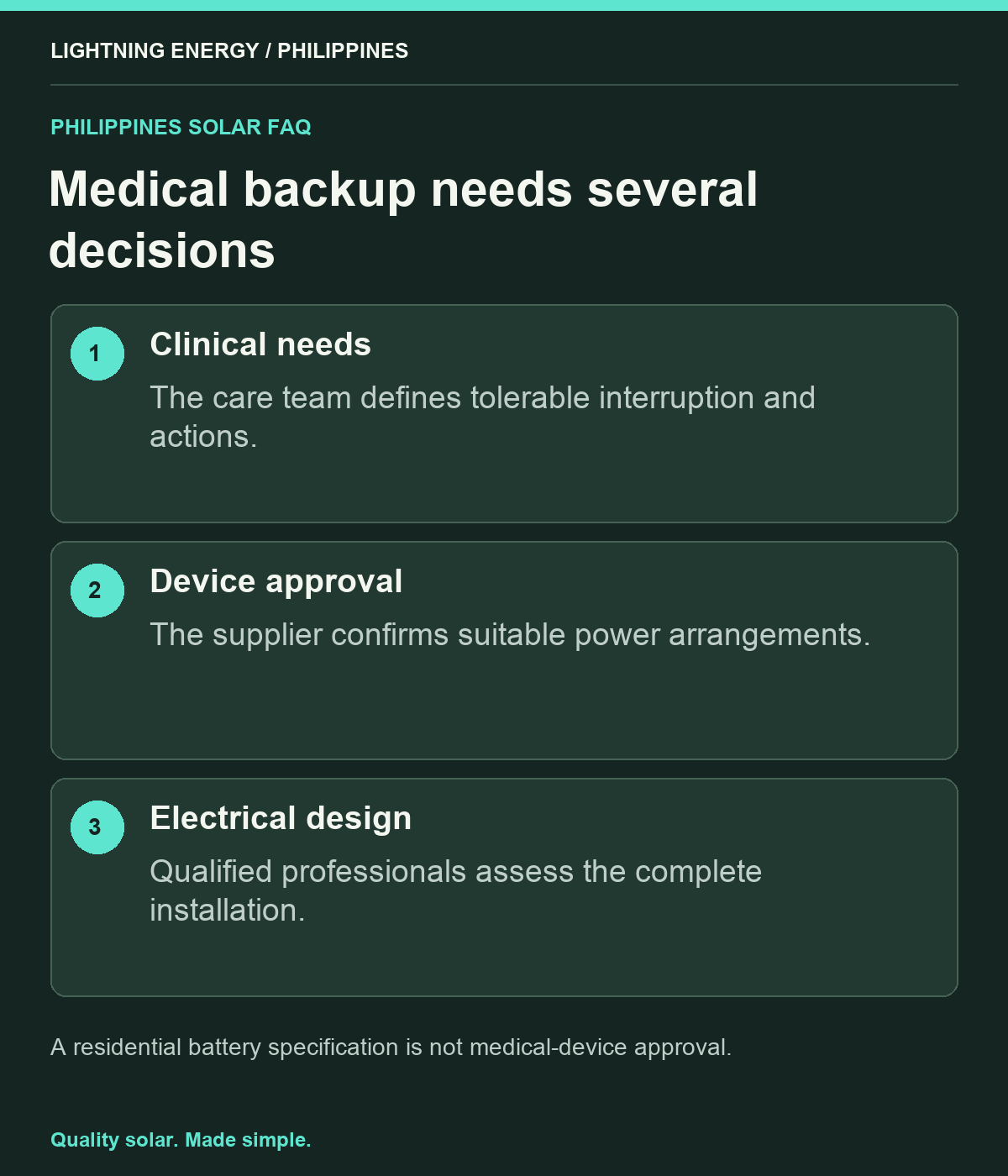
Plan medical-device power with the treating clinician, device supplier and qualified electrical designer before relying on home storage.
A home battery may form part of a power plan, but suitability must be confirmed for the exact medical device and the person using it. Start with the treating clinician and device supplier, then involve a qualified electrical designer. Do not rely on a generic backup claim, an ordinary UPS recommendation or an estimated runtime when interruption could harm someone. The plan must include what to do if the backup itself is unavailable.
Ask the clinical and device questions first
The US FDA advises medical-device users to prepare for power interruptions and check appropriate alternative power sources with the relevant professionals. [1] This is general preparedness guidance, not a Philippine approval for any battery or medical device.
Give the clinician and supplier the exact model and how it is used. Ask what interruptions are tolerable, what approved backup options exist and what action is needed if treatment stops. Do not change prescribed treatment or substitute equipment based on a solar installer’s estimate of what an inverter can power.
Create a device-specific emergency plan
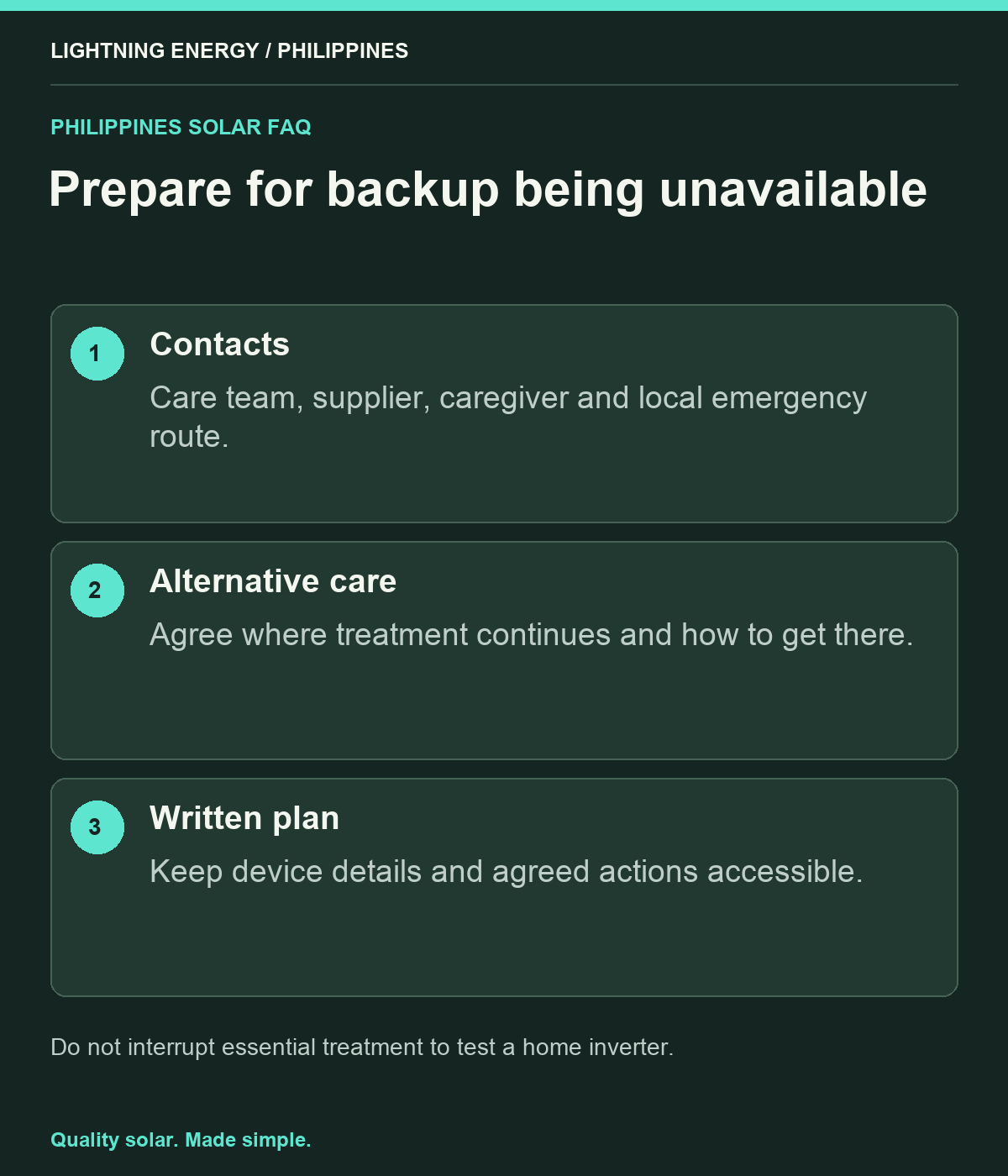
FDA’s home-device outage booklet organises device information, contacts and actions to agree with healthcare professionals. [2] Use that planning principle with your Philippine care team and local emergency arrangements rather than copying overseas telephone numbers or procedures.
Write down who makes the clinical decisions, who supplies replacement equipment and where care can continue if the home becomes unsuitable. Include transport and a reachable caregiver. Keep an accessible copy with the device. Review the plan when treatment, equipment or the household’s support network changes.
Have the electrical design assessed separately
Provide the qualified electrical designer with the manufacturer’s power requirements and any approved external-power conditions. Ask them to assess the complete arrangement, including the intended circuit, transfer behaviour, alarms and realistic operating limits. Do not assume a large battery removes every compatibility issue.
For an illustrative planning discussion, enough stored energy for several hours does not by itself establish whether a device tolerates the interruption when backup takes over. Energy duration and continuity of supply are different questions. Both need appropriate confirmation before the household relies on the arrangement.
Do not treat a runtime calculation as a care plan
A rough calculation can help frame an engineering discussion, but it does not account for every device behaviour, battery condition or unexpected event. Ask the relevant professionals how operation should be verified safely and what reserve or alternative equipment is required for the individual situation.
Do not deliberately interrupt essential treatment to test a household inverter. Any demonstration involving the medical device must follow the device supplier’s and clinician’s instructions. Keep ordinary solar commissioning separate from clinical decisions, and document who has confirmed each part of the final arrangement.
Plan for problems beyond a brownout
Consider an inaccessible home, a depleted backup, a device alarm, communications failure or severe weather that prevents immediate service. Agree what triggers a move to the alternative care arrangement and who will help. The response should not depend on one person being available or a single phone retaining charge.
Keep emergency contacts and required supplies available according to the care team’s instructions. If someone is in immediate danger or essential treatment cannot continue, seek urgent medical assistance through the established local emergency route. Do not wait for a solar technician to resolve a medical emergency.
Assign clear responsibilities
The clinician guides care, the device supplier confirms device-specific requirements, and qualified electrical professionals assess the power installation. Ask each party to document the information relevant to their role. Review the arrangement after equipment changes and at intervals recommended by the care team.
Lightning Energy Philippines can discuss the electrical scope alongside the requirements supplied by your healthcare professionals and device manufacturer. We should not replace clinical advice or promise uninterrupted treatment from a standard residential battery. A useful solution is a coordinated, documented plan with an appropriate alternative when any single part is unavailable.
Sources & further reading
Sources used for this guide. Policy and product details should be checked for your particular installation.
- US FDA — Medical Devices and Natural DisastersAccessed 27 September 2026
- US FDA — Home Medical Devices: Preparing for Power OutagesAccessed 27 September 2026