Solar FAQs
Can I Mix Old and New Solar Panels in the Same System?
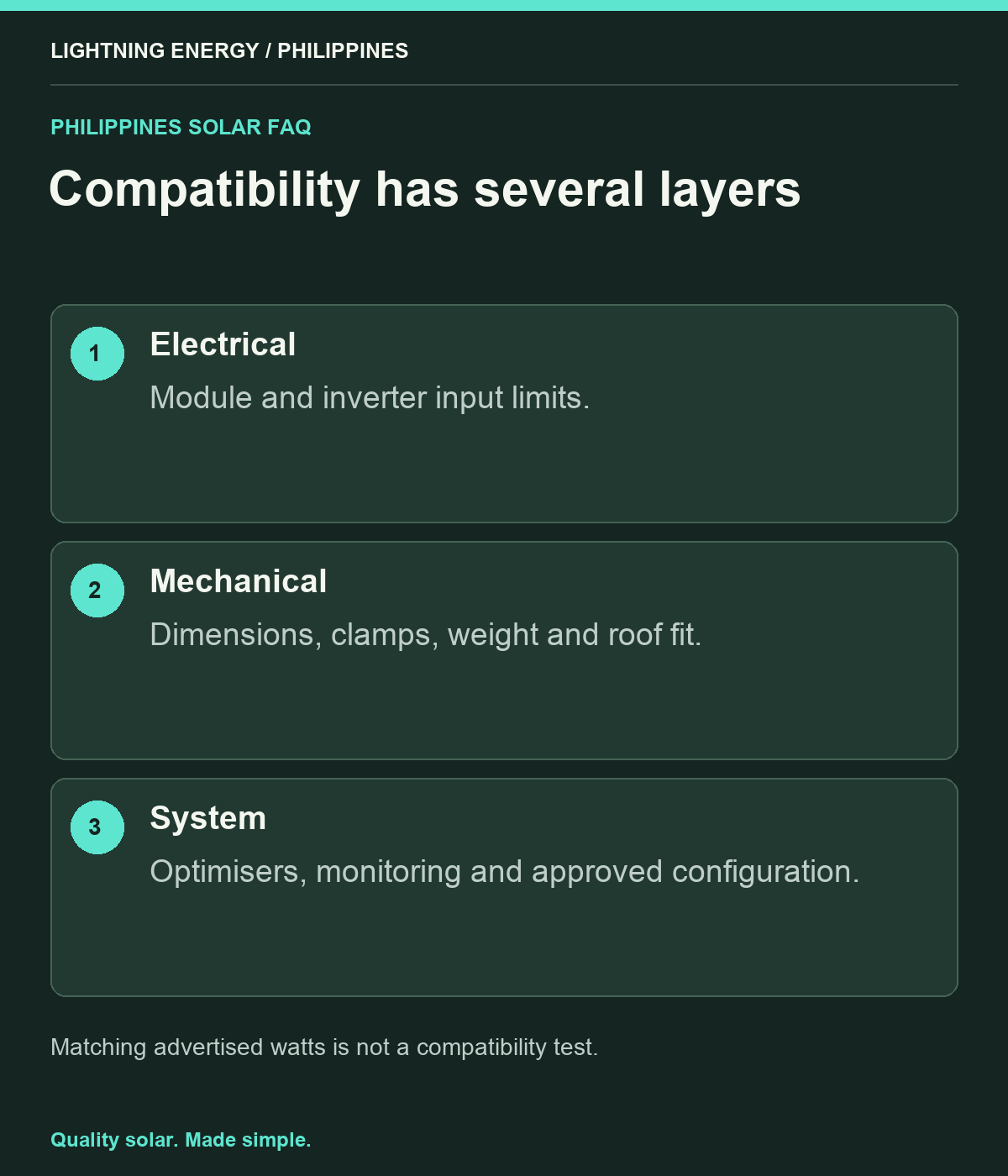
A matching wattage label is not enough. Expansion requires an electrical, mounting and documentation review for the exact equipment.

Sometimes a system can be expanded with different panels, but compatibility must be designed rather than guessed. Existing and proposed module specifications, inverter inputs, mounting requirements and connection approval all matter. Do not buy spare panels first and ask someone to make them fit afterwards. Start with the records for the system already installed.
Collect more than the wattage number
Find the exact model and datasheet for both old and proposed modules, along with the inverter model and original array layout. Ask the installer to identify the existing electrical arrangement from records and inspection. Similar appearance or the same advertised watts does not establish interchangeability.
LONGi’s current manual gives explicit restrictions on mixing modules with different electrical performance in one string. [1] That is manufacturer guidance for its covered products, not a universal wiring recipe. The assessment must use the manuals and limits applying to every component in your particular installation.
Distinguish replacement from expansion
Replacing one damaged module and adding a new roof section are different projects. A replacement may need a compatible substitute for discontinued equipment; expansion may allow a separately designed section. Ask the installer to explain which approach is proposed and why.
Record the original fault if replacement is involved. Do not let a service visit quietly become a capacity increase without an updated scope. Conversely, do not assume a larger new panel can simply occupy the old panel’s position. Physical dimensions, clamp positions, weight and the roof layout need checking alongside electrical characteristics.
Check module-level equipment separately
If the system uses power optimisers, identify their exact models too. SolarEdge publishes a residential inter-compatibility note with model-specific combination rules. [2] The existence of optimisers does not make every combination of panel, optimiser and inverter acceptable.
Ask for the applicable compatibility document to be included in the proposal. If a supplier suggests a different brand or product generation, request written confirmation of support. A statement that the equipment “should work” is weaker than a documented design, especially when future warranty service may depend on the approved combination.
Use a small expansion example
Imagine an illustrative home with eight older modules and space for four new ones. The family wants more daytime energy after adding a home office. Ask for a design that shows the existing array, proposed addition, inverter capacity and any new monitoring or protection equipment.
Compare the added useful generation with the complete installed cost. If the project requires a replacement inverter, show that cost openly rather than attributing the whole result to four cheap panels. Include a no-expansion scenario with improved scheduling so the decision reflects the actual need, not merely the availability of roof space.
Update the paperwork and performance baseline
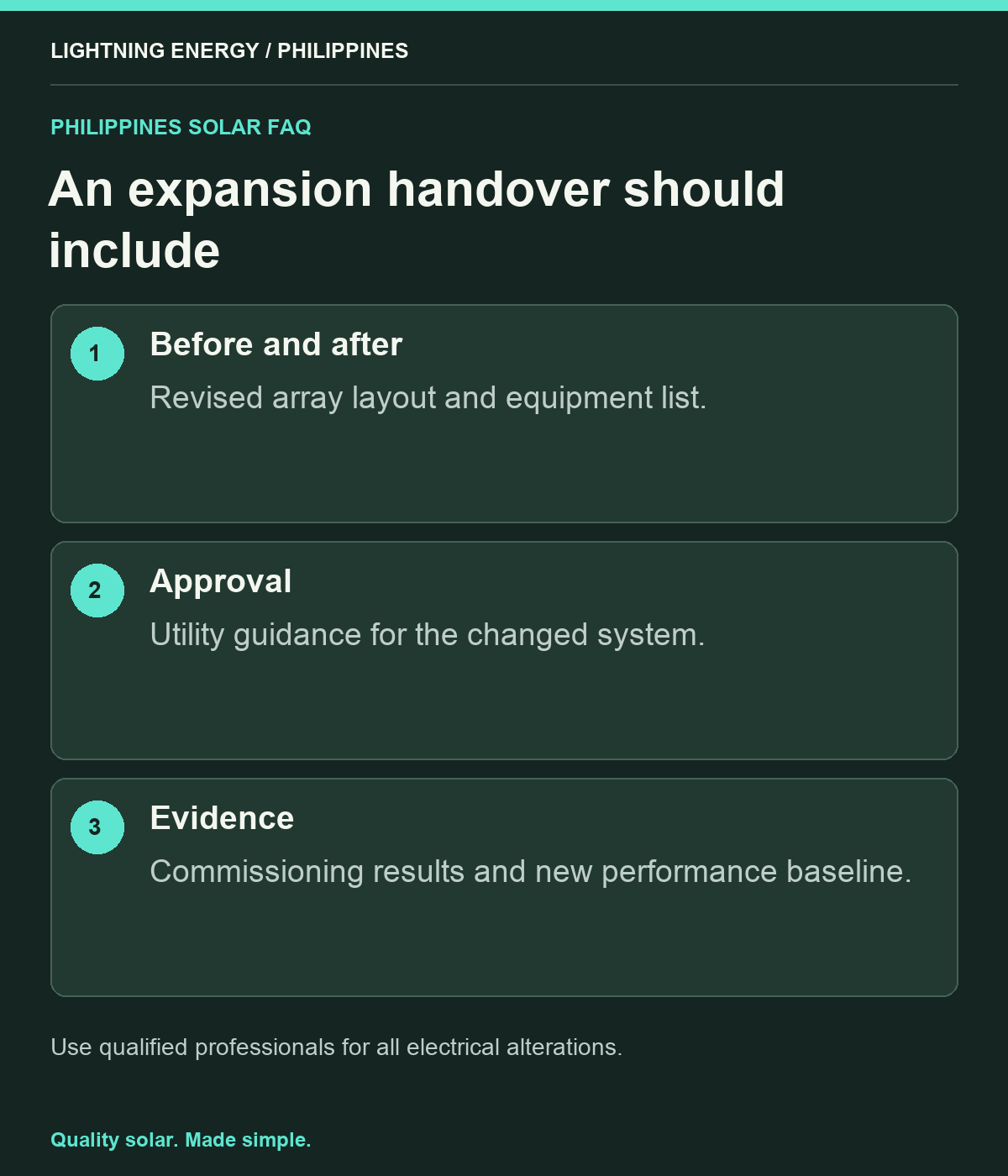
Ask the distribution utility what notification or amended approval is required for the proposed change. Keep the permitted operating mode and export settings consistent with the accepted design. Do not assume a previously approved system can be enlarged without any further review.
After qualified commissioning, save the revised equipment list, layout, serial numbers and monitoring baseline. Mark the installation date of new components separately from the original system date. This helps future service providers distinguish normal differences between arrays from faults and avoids confusion about which warranty applies to which module.
Make compatibility the purchase condition
Request a written scope that includes compatibility checks, mounting assessment, commissioning and any utility process. Agree what happens if the proposed replacement or expansion cannot be supported. Avoid non-refundable equipment purchases based solely on an online seller’s claim that all solar panels are interchangeable.
Lightning Energy Philippines can review the existing system before recommending an addition. Bring the original quotation, datasheets and available operating records. The useful result is a documented expansion path with clear limits, or an honest explanation of why keeping the current installation unchanged is preferable to forcing mismatched equipment into it.
Sources & further reading
Sources used for this guide. Policy and product details should be checked for your particular installation.
- LONGi — PV Module User Manual, 2026Accessed 27 September 2026
- SolarEdge — Residential Power Optimizer Inter-Compatibility NoteAccessed 27 September 2026