Solar FAQs
What Is the Difference Between Nominal and Usable Battery Capacity?
Compare capacity on the same basis, then account for reserve and conversion losses before estimating backup time.
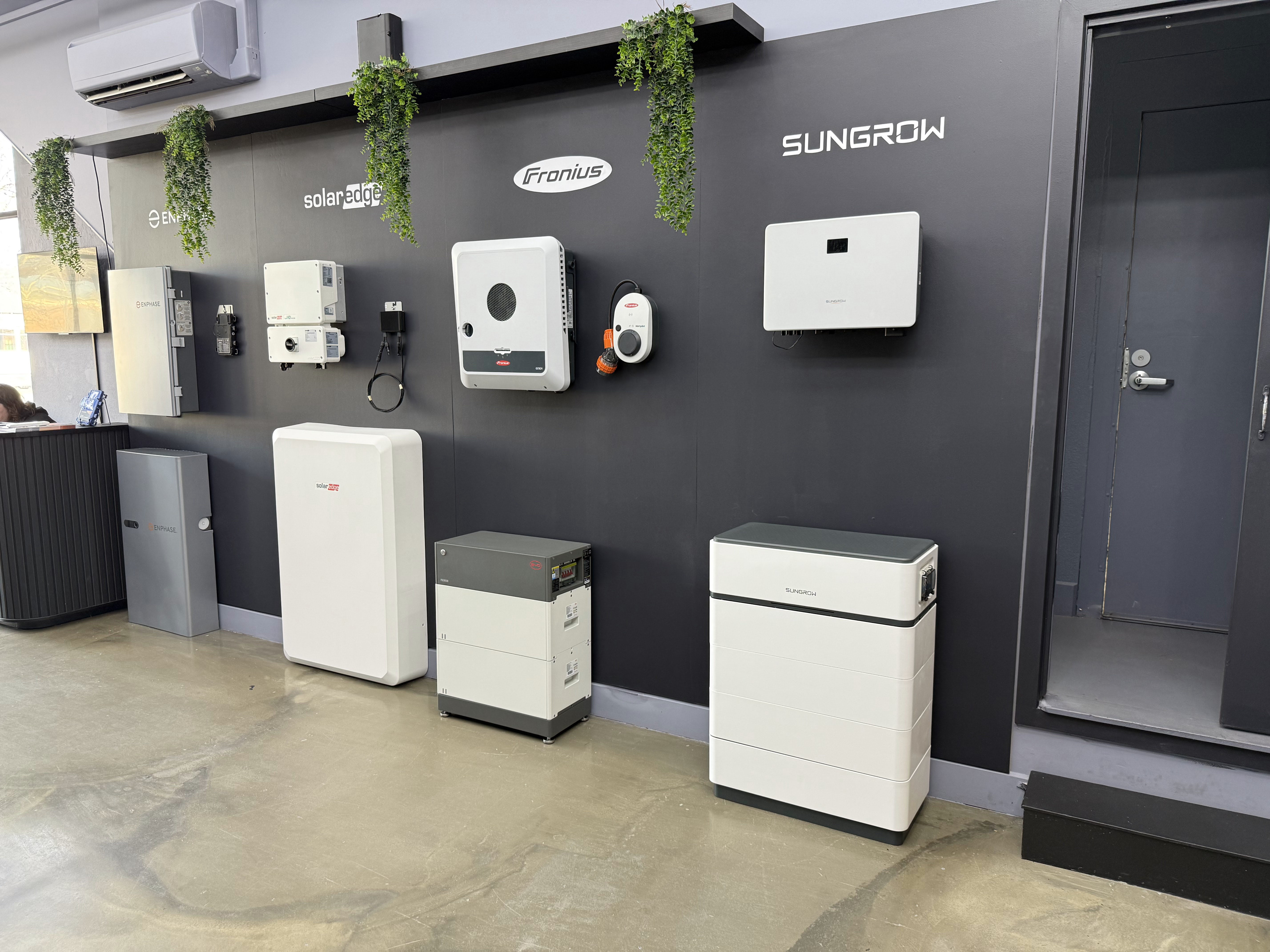
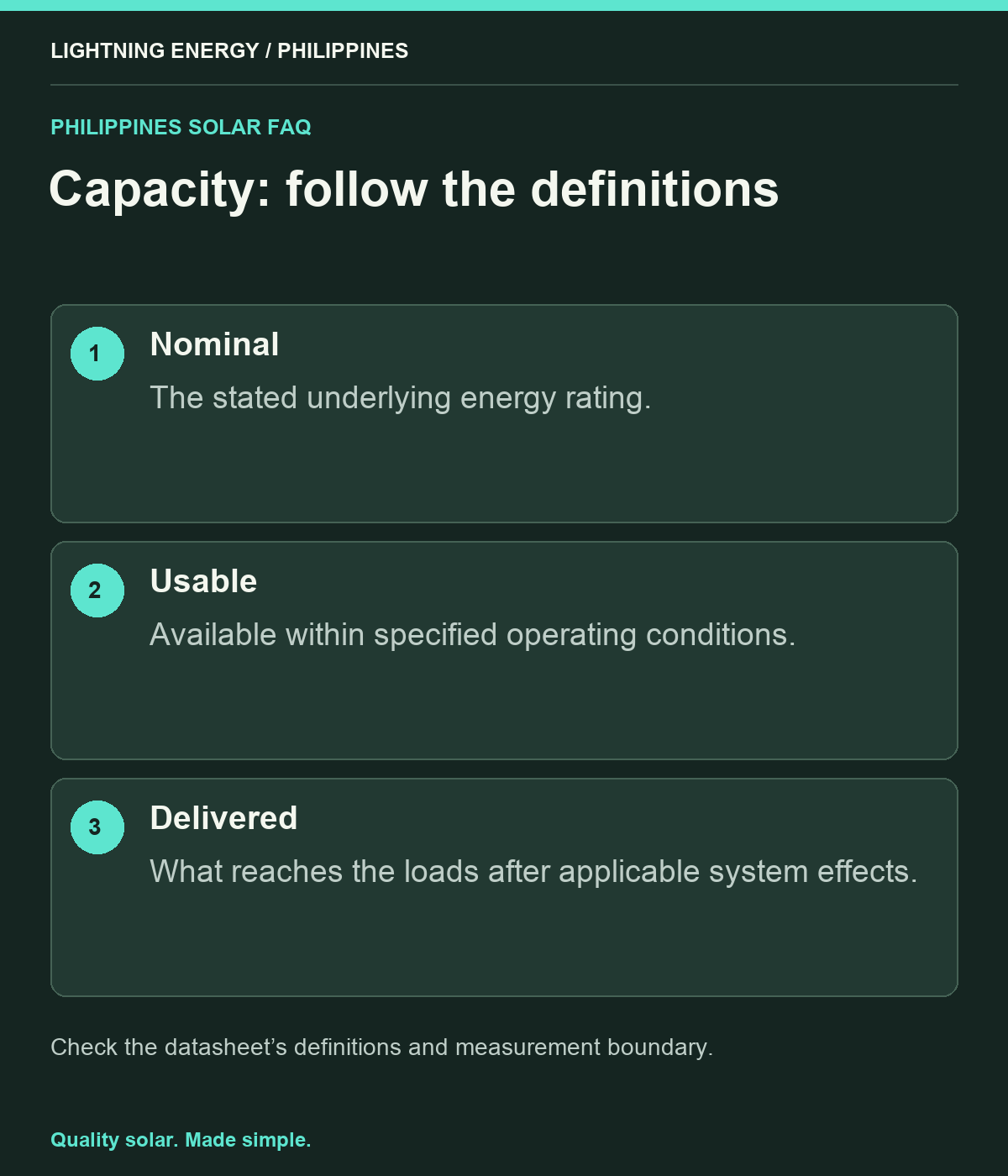
Nominal capacity describes a stated battery energy rating; usable capacity describes the energy made available within the manufacturer’s specified operating window and conditions. Neither should be confused automatically with energy delivered to your appliances during an outage. Ask exactly what the quoted number includes, where it is measured and which reserve settings still apply.
Ask what the advertised number means
A package described as a “10 kWh battery” leaves a basic question unanswered: nominal or usable? Request the datasheet and the definition for the exact model. If capacity is presented in amp-hours, ask for a correctly specified energy value rather than comparing amp-hours across different voltages.
BYD’s HVM datasheet explicitly labels usable energy and states associated test conditions. [1] That is a useful example of transparent labelling, not a reason to assume every competing product uses the same basis. Put both nominal and usable values in your comparison where available, marking any missing information.
Keep reserve separate from the capacity definition
An owner-selected backup reserve and the battery’s internal operating window are different concepts. Tesla describes Backup Reserve as energy allocated for outages instead of ordinary self-powered operation. [2] Other systems use different names and logic, so request the explanation for yours.
Ask whether a runtime calculation starts from a full battery, the current charge or the reserve amount. A proposal should not deduct the same allowance twice, nor quietly assume all nominal energy reaches the appliances. Have the installer show the calculation step by step using the installed configuration and realistic starting conditions.
Follow a clearly illustrative calculation
Suppose a fictional battery has 10 kWh of nominal energy and 9 kWh of stated usable energy. If a planning exercise allocates 3 kWh of that usable amount to a particular task, the task starts with 3 kWh before any further applicable delivery losses. These invented numbers explain categories, not a real product’s performance.
At an illustrative average load of 0.5 kW, 3 kWh divided by 0.5 kW equals six hours before those other adjustments. Change the load and the result changes. The example cannot establish the correct reserve, efficiency or runtime for your house without the relevant equipment data.
Compare capacities at a consistent point
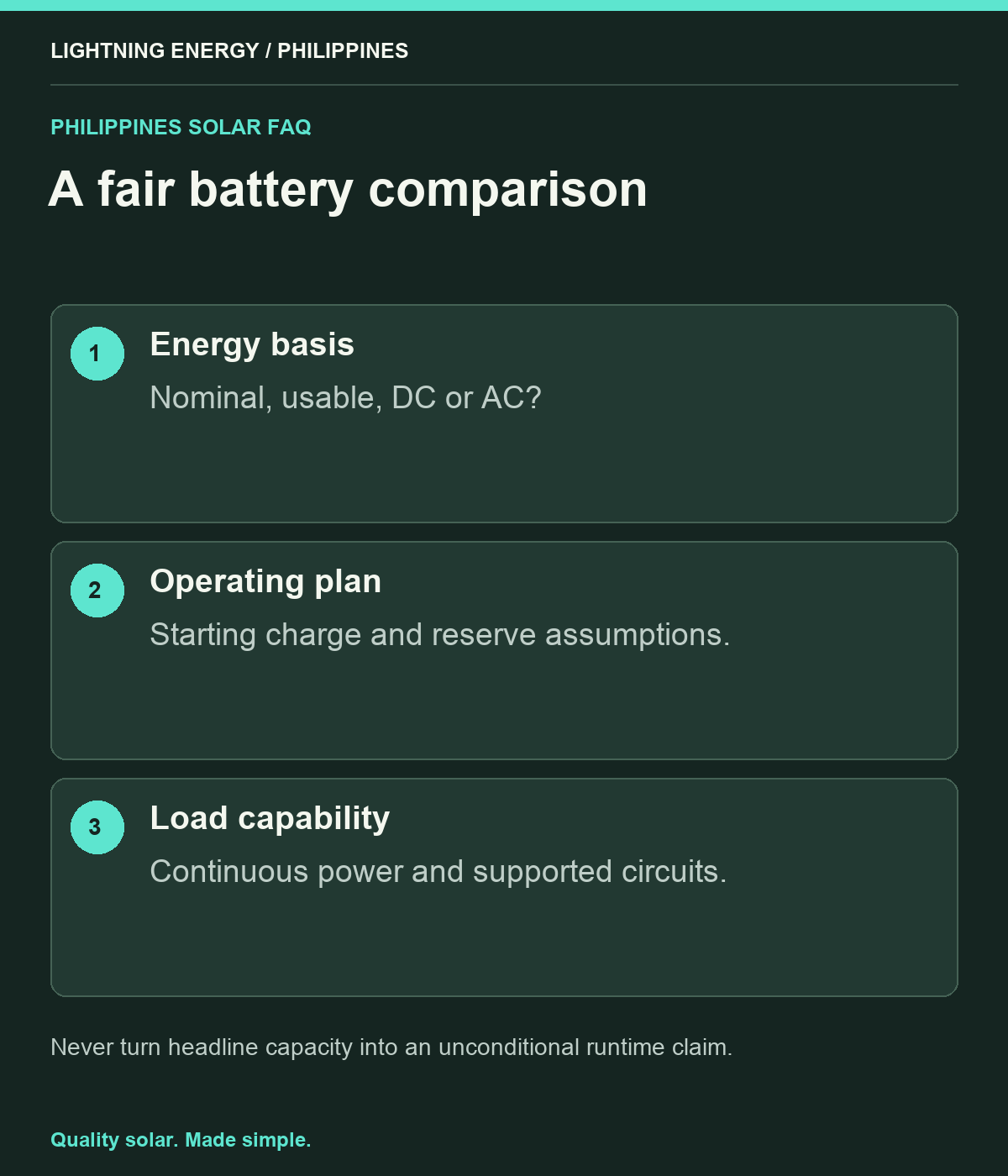
Ask whether a specification refers to the battery’s DC side or energy delivered through the inverter as AC. Different measurement boundaries can make otherwise similar numbers misleading. Request a like-for-like comparison rather than choosing whichever brochure prints the larger figure.
Also ask which conditions affect the published value and how ageing is handled in a long-term proposal. Do not treat a new-battery capacity figure as a promise that the same energy will always be available years later. Read the applicable retention warranty separately from the initial datasheet and keep its test method visible.
Check power as well as energy
Usable capacity still does not tell you whether a motor can start or several appliances can run together. Ask for the system’s continuous and peak output limits and the circuits included in backup. A capacity comparison without a power comparison is incomplete.
For a household worksheet, use separate columns for usable energy, continuous output, intended reserve, backed-up circuits and warranty basis. If one supplier cannot fill a column, request clarification rather than supplying an optimistic assumption yourself. This makes a smaller but well-documented system easier to compare with a larger, vaguely described package.
Keep the agreed basis in the proposal
Ask the installer to state the capacity definition and runtime assumptions in writing. At handover, confirm the displayed state of charge and reserve settings, and ask how to recognise low-energy versus overload events. Keep the owner instructions accessible to the household.
Lightning Energy Philippines can help compare battery proposals using consistent definitions. Bring the actual datasheets instead of screenshots of headline capacity. The aim is to understand how much energy the selected system can make available for your purpose, under which conditions, and with which limits, so expectations remain useful after the first impressive sales presentation.
Sources & further reading
Sources used for this guide. Policy and product details should be checked for your particular installation.
- BYD — Battery-Box Premium HVM Datasheet V1.4Accessed 27 September 2026
- Tesla — Powerwall Backup ReserveAccessed 27 September 2026