Solar FAQs
Is Rain Enough to Clean Solar Panels During Tag-Ulan?
Rain can help, but it is not a complete maintenance plan. Use safe observations, performance records and the module instructions.
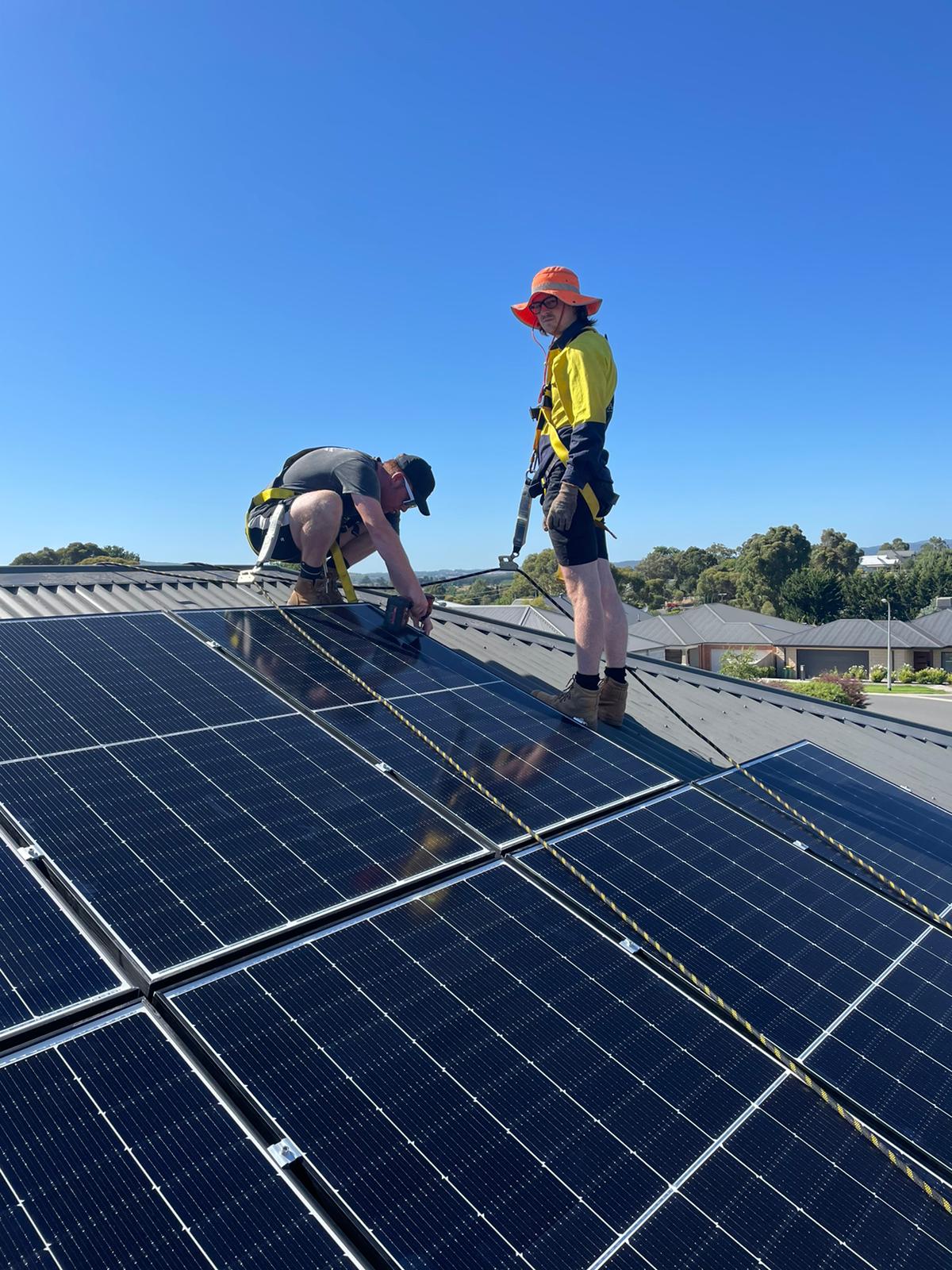
Rain may remove some loose dirt, but it does not guarantee that every panel is clean or that the installation needs no inspection. The sensible approach is condition-based maintenance using the exact module instructions. Keep homeowner checks at ground level and have qualified people handle roof access, electrical inspection and any cleaning that requires working at height.
Identify what the rain may leave behind
From a safe location, note persistent bird droppings, leaves, heavy deposits or debris trapped near roof equipment. Do not climb up to inspect a suspicious patch yourself. Ask the service provider whether the observation warrants a visit and what information would help them assess it.
LONGi’s maintenance guidance explains that cleaning frequency depends on dirt accumulation and that rain can reduce the need for cleaning. [1] This supports a site-specific schedule, not a blanket monthly wash or a promise that the rainy season eliminates maintenance. Nearby construction, vegetation and roof arrangement can change the practical requirement.
Use the correct manual for the installed module
Ask for the applicable cleaning instructions, including approved methods and restrictions. Different products or environments can require different care. Do not assume a method seen in an online video is acceptable for your module’s glass, coating, seals and electrical connections.
JinkoSolar’s manual includes cleaning and maintenance requirements for its covered products. [2] Have the service provider identify the instructions they will follow. This is particularly useful when a general roof-cleaning contractor is involved: competence with roofing does not automatically mean they are trained to work safely around an energised photovoltaic installation.
Do not diagnose soiling from one cloudy day
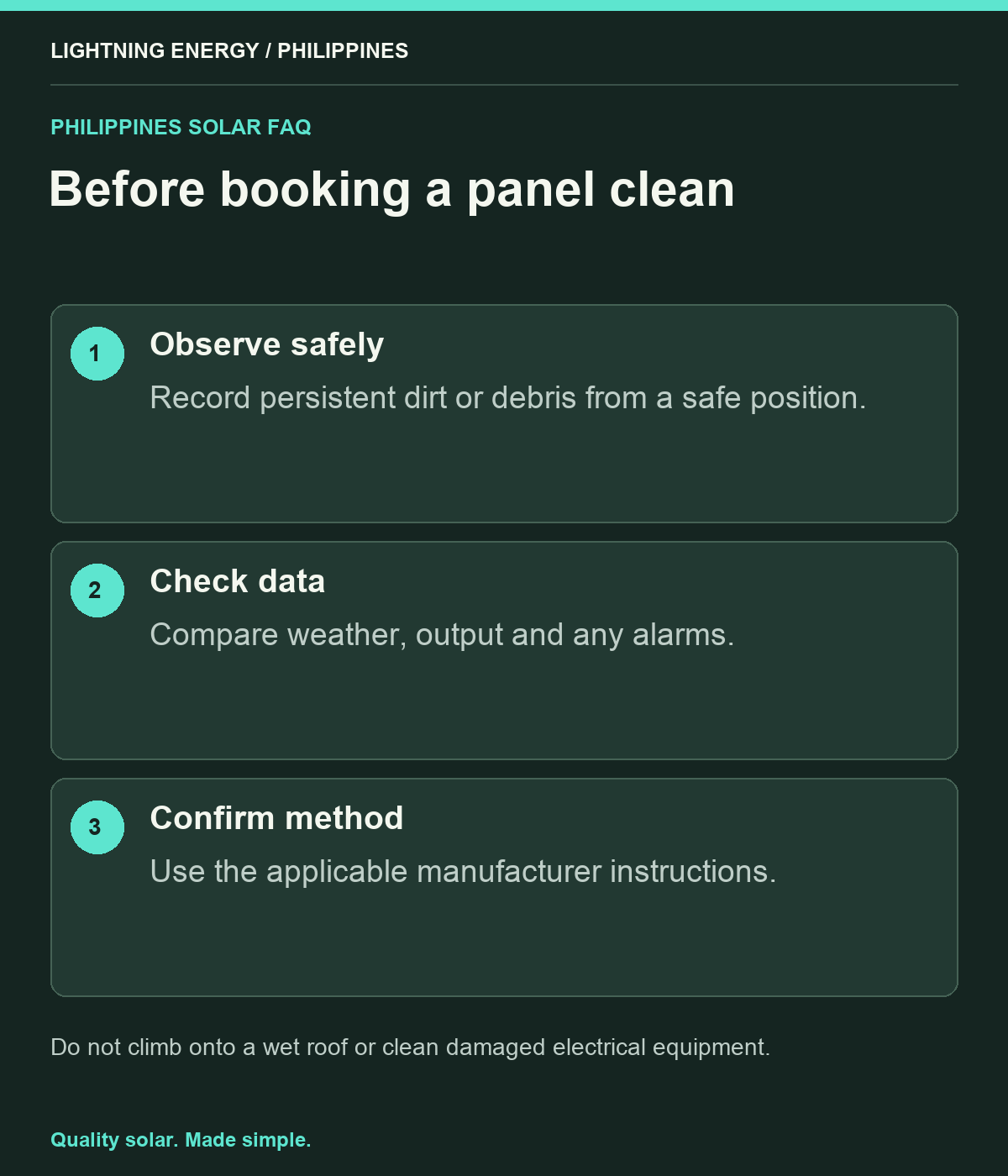
A lower daily energy total during tag-ulan may reflect weather rather than dirt. Compare a useful period, check for alarms and note changes in shading. If monitoring data is missing, resolve that before calculating a supposed cleaning benefit.
Ask the installer how they would distinguish soiling from equipment or operating issues. A before-and-after comparison should account for changing conditions and avoid promising a fixed percentage improvement. The aim is to identify worthwhile maintenance, not to sell cleaning based on a production drop that has another explanation.
Make safety part of the service scope
Ask who provides safe access, protects the roof and follows the electrical precautions. Do not pressure-wash panels, walk on them or attempt to clean damaged glass or exposed wiring. Report damage and let qualified personnel determine the appropriate isolation and repair process.
Keep children and pets away from the work area. If the roof is wet, windy or otherwise unsafe, the service provider should reassess conditions rather than proceed to meet an arbitrary appointment. A clean-looking panel is not worth a fall, damaged waterproofing or an electrical incident caused by an unsuitable method.
Use an evidence-based maintenance example
Imagine a home near a construction site where visible deposits persist after several showers. The owner records safe photographs and asks the installer to assess cleaning. Another home with clear panels and stable, weather-consistent output may need a different response. These are illustrative scenarios, not universal service intervals.
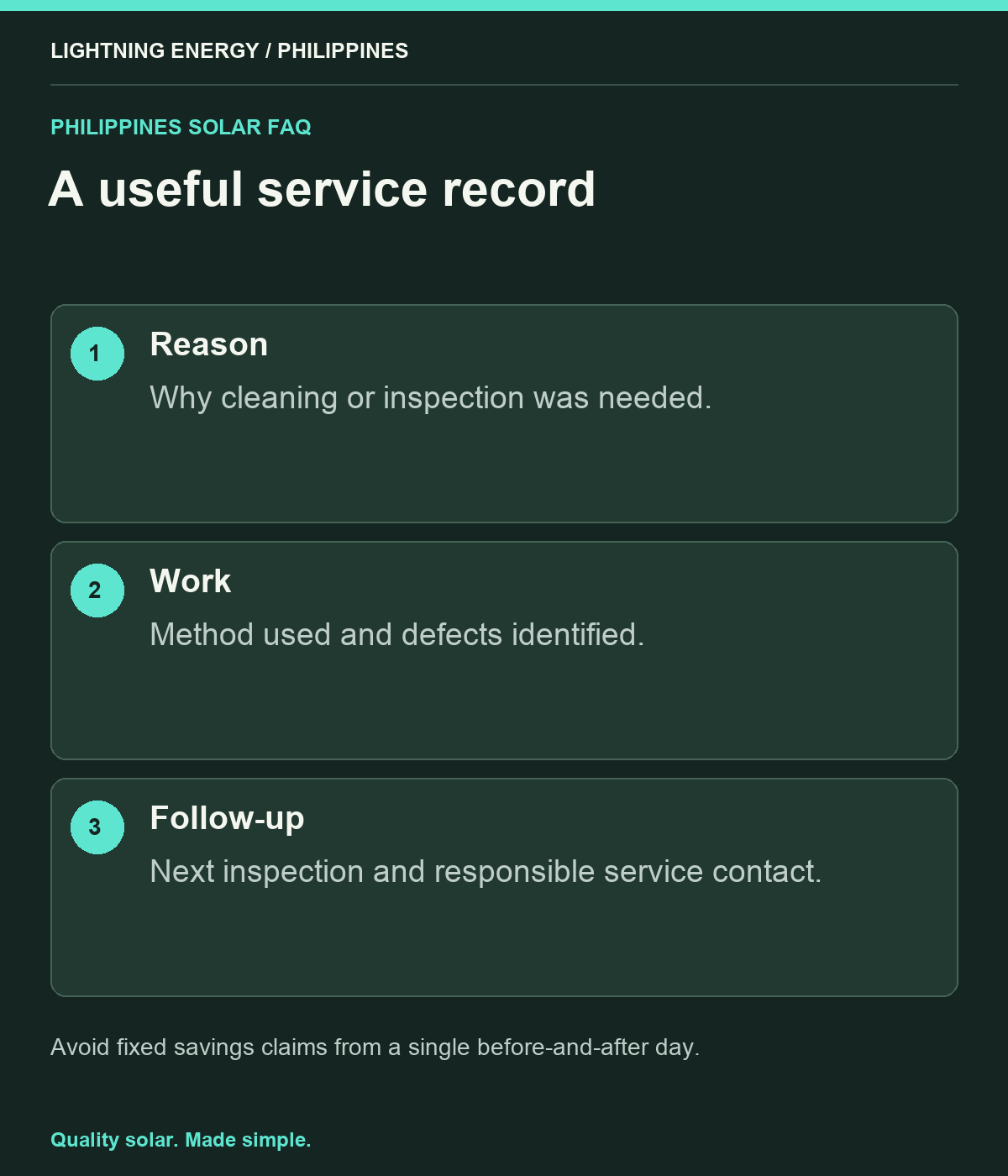
Ask the provider to document the reason for cleaning, the method and any defects found. If output improves, record the conditions rather than presenting one day’s increase as a permanent annual gain. This creates a useful maintenance history and helps decide what attention the site needs in future.
Keep drains and the wider installation in view
Solar maintenance is broader than washing glass. Ask for the planned inspection to consider visible cable support, mounting condition and roof drainage within the provider’s scope. Keep separate responsibility for building repairs clear so a blocked drain is not ignored because the panels look clean.
Lightning Energy Philippines can help establish a practical care plan for your installation and location. Bring the module details and any safe observations. The useful outcome is a documented schedule based on condition and manufacturer guidance, with cleaning performed safely when justified and no assumption that rain either solves everything or does nothing.
Sources & further reading
Sources used for this guide. Policy and product details should be checked for your particular installation.
- LONGi — Module Installation Manual V12: Maintenance and CleaningAccessed 27 September 2026
- JinkoSolar — Global Installation Manual, 2024Accessed 27 September 2026