Solar FAQs
Why Can a Refrigerator Trip a Battery That Has Plenty of Charge?
Stored energy and motor-starting capability are different limits. Check the compressor, other loads and complete backup system.
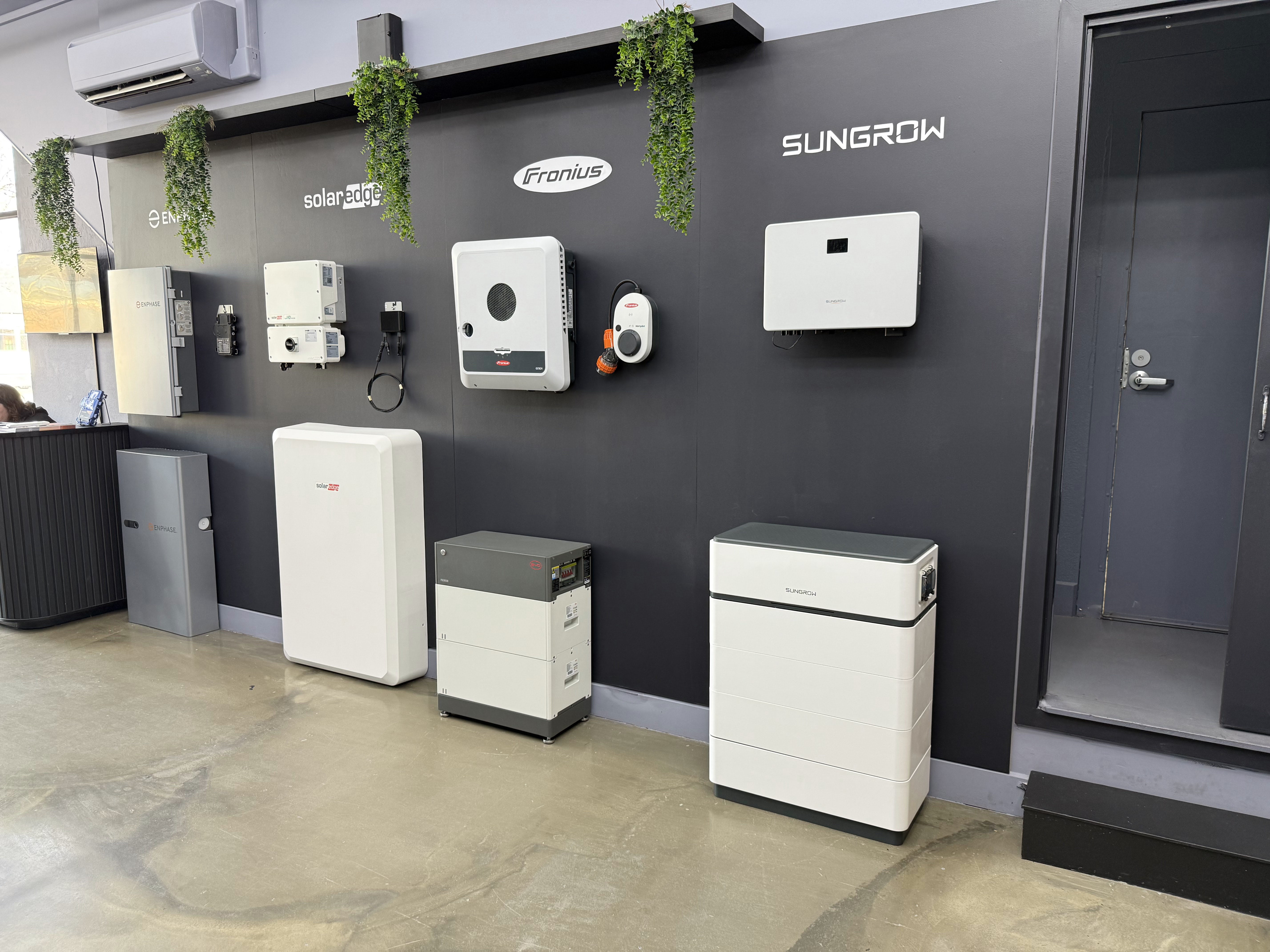
A battery can contain enough energy yet be unable to support an appliance’s starting demand or the combined load at that moment. A refrigerator trip therefore needs a power-capability and fault assessment, not just a look at the charge percentage. Ask qualified personnel to check the appliance, inverter, battery and circuit arrangement together.
Separate starting demand from running energy
A compressor’s brief starting requirement and its energy use across a day are different measurements. Tesla’s system-design guidance explicitly treats motor inrush as a sizing consideration. [1] Its product-specific numerical limits are not universal values for other batteries.
Ask the appliance manufacturer or qualified assessor for the appropriate starting information for your refrigerator. Do not assume every fridge behaves like a generic wattage chart. Model, age, control type and condition can matter. A battery seller should explain how the proposed system was checked against the actual appliance rather than only its average daily energy.
Add the other loads running at the same time
The refrigerator may start while a pump, cooker or another appliance is already operating. List the simultaneous loads on the backup circuits and ask the installer to assess the combination. A trip associated with the fridge does not prove the fridge alone caused it.
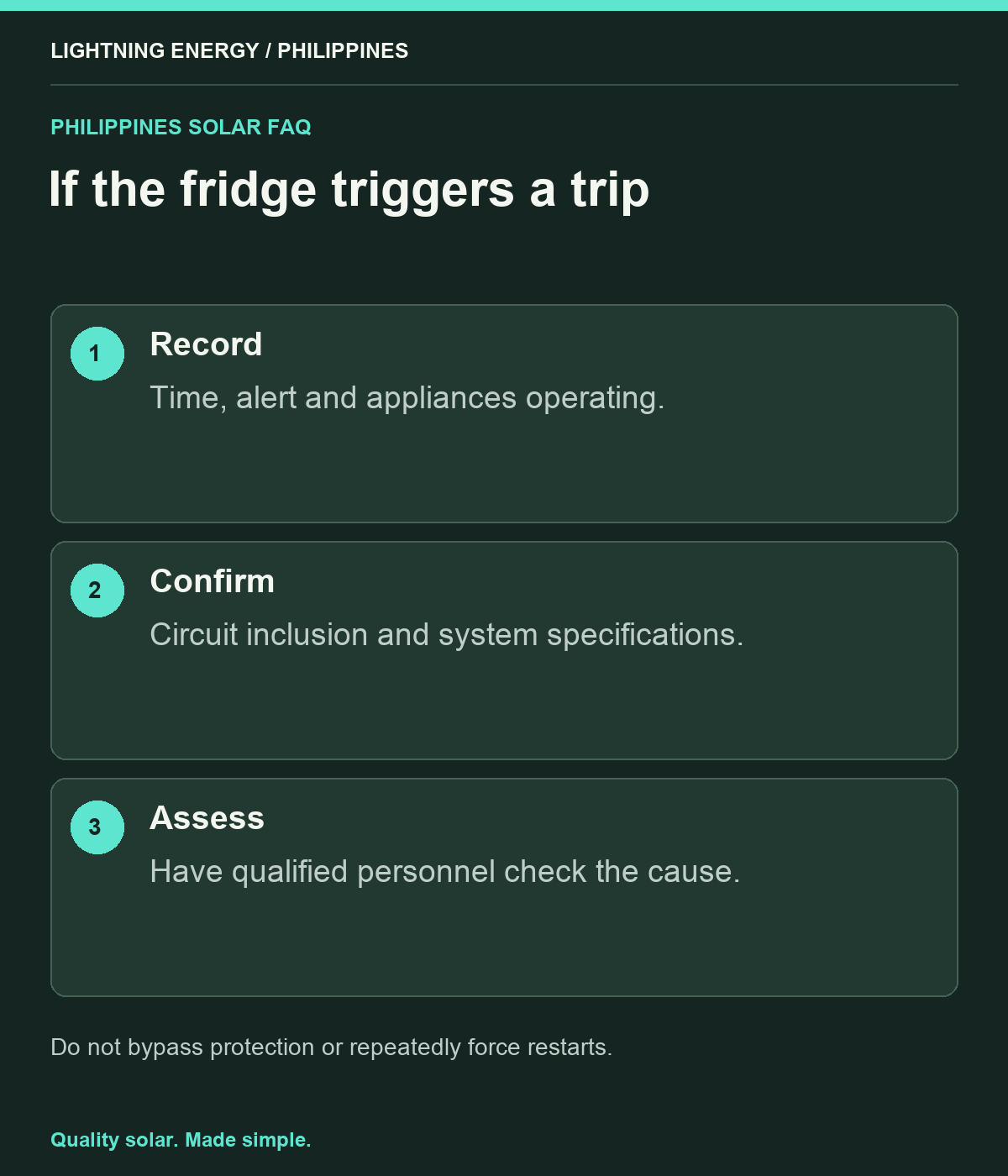
Use an illustrative household log: time, appliances operating, battery charge and exact alert. This helps distinguish overload from low energy or another fault. Do not deliberately repeat trips to collect evidence. If the event recurs, stop the experiment and have the installation and appliance assessed safely.
Check what is actually on the backup circuit
Tesla’s consumer guidance distinguishes selected-load backup from whole-home arrangements. [2] Apply that question to your own system: is the refrigerator outlet included, and what else shares the supported supply?
Ask for a clearly labelled circuit schedule and a demonstration managed by qualified personnel. An outlet working when the grid is present does not establish that it is correctly included during an outage. Do not move extension leads around the house or alter wiring to bypass an excluded circuit. The design should support the intended use directly and safely.
Do not confuse more capacity with more power
Adding battery energy may extend duration without resolving the limiting output capability. Ask whether an expansion changes the supported power, and whether the inverter or configuration remains the bottleneck. Require the answer for the exact compatible arrangement.
For an illustrative comparison, two packages may both store 10 kWh yet support different continuous and starting loads. The shared capacity label does not make them interchangeable. Compare system-level power specifications and the refrigerator’s requirements before buying extra modules in response to a problem that has not been diagnosed.
Agree the safe response to an interruption
Ask for the manufacturer-approved owner procedure if the system reports overload. Keep it distinct from instructions for low state of charge or equipment faults. Do not bypass protection, change breakers or attempt compressor repairs yourself.
If refrigeration is important to household planning, include a separate food-safety and outage plan using appropriate official guidance. Battery backup does not guarantee uninterrupted cooling under every condition. Avoid opening the fridge unnecessarily during an interruption, and do not use an unverified app runtime estimate as the sole basis for deciding whether stored food remains safe.
Test the intended combination before relying on it
At commissioning, have the installer verify the supported appliance combination under an appropriate safe test. Record the result, limitations and any operating sequence the household must follow. Update the assessment when a fridge, pump or other substantial load is replaced.
Lightning Energy Philippines can help compare backup systems against the actual appliances in your home. Bring refrigerator model details and the list of simultaneous loads. The useful outcome is a documented power and energy assessment, with any recurring trip investigated, instead of assuming that a high charge percentage means the system should run anything plugged into it.
Sources & further reading
Sources used for this guide. Policy and product details should be checked for your particular installation.
- Tesla — Backup Loads Supported per Powerwall Quantity, US Design GuideAccessed 27 September 2026
- Tesla — What Can Powerwall Back UpAccessed 27 September 2026