Across Asia
Singapore’s Port Battery: Operations Come Before the Optimisation Software
A port storage project shows why batteries, schedules and operational authority belong in the same conversation.
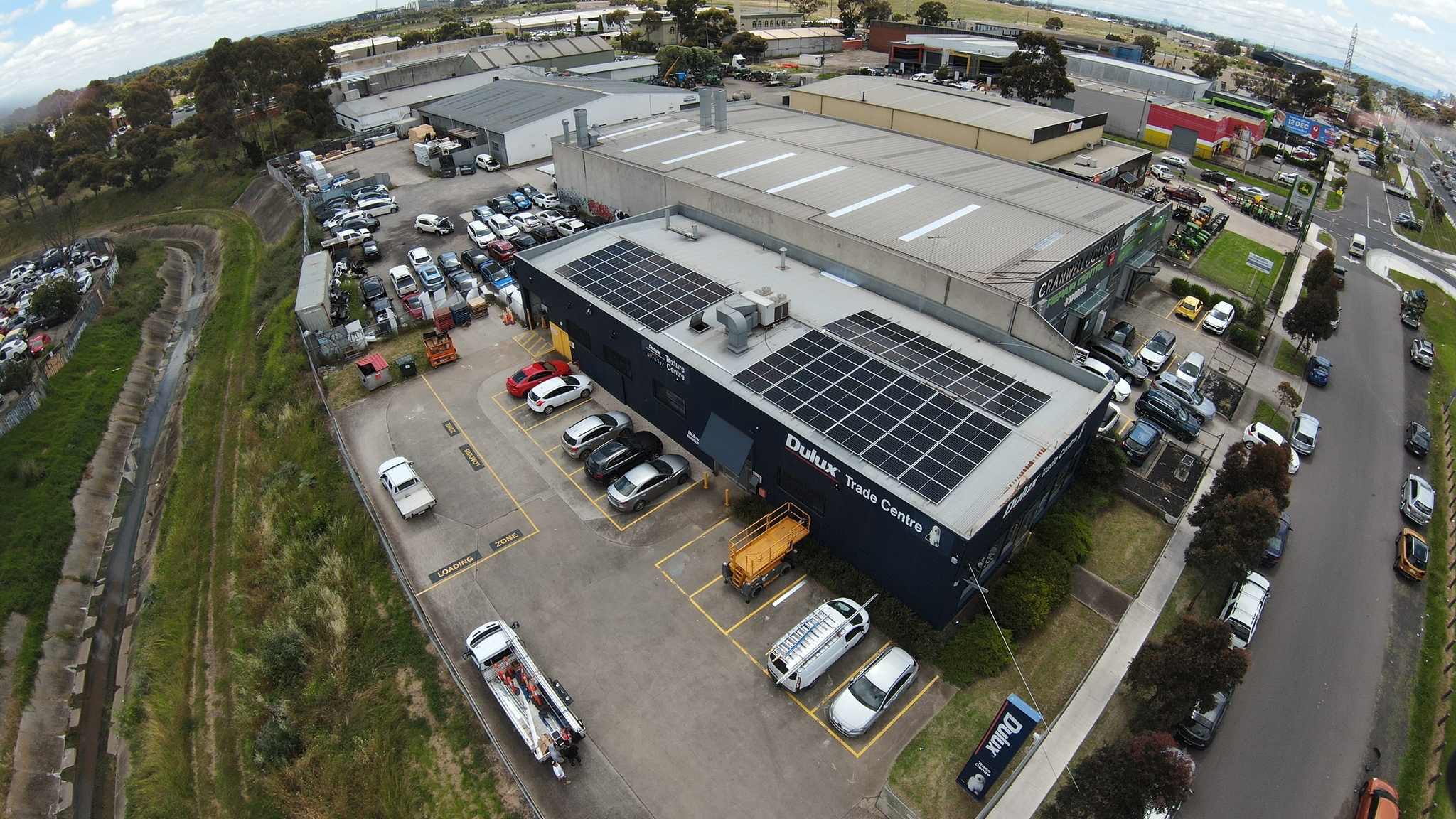
Ports make a useful example of an energy challenge that many smaller businesses recognise: demand changes with the work. Equipment may run in bursts, schedules can move and an apparently ordinary day can become unusually busy.
Singapore’s Pasir Panjang storage announcement offers Philippine warehouse, logistics and industrial owners a practical lesson. Before discussing smart optimisation, define what the operation needs, what the energy system may control and what it must leave alone.
Read the announcement precisely
EMA’s July 2022 announcement describes a port energy management project combining a battery, solar and demand forecasting. [1] It is evidence of a particular planned operating approach, not a verified savings promise for another business. A Philippine depot should first identify its own energy problem. Is the concern an expensive operating pattern, limited supply capacity, continuity for selected services or simply poor visibility of consumption? Those objectives lead to different design questions and should not be bundled into a vague promise of efficiency.
Give the designer a work schedule
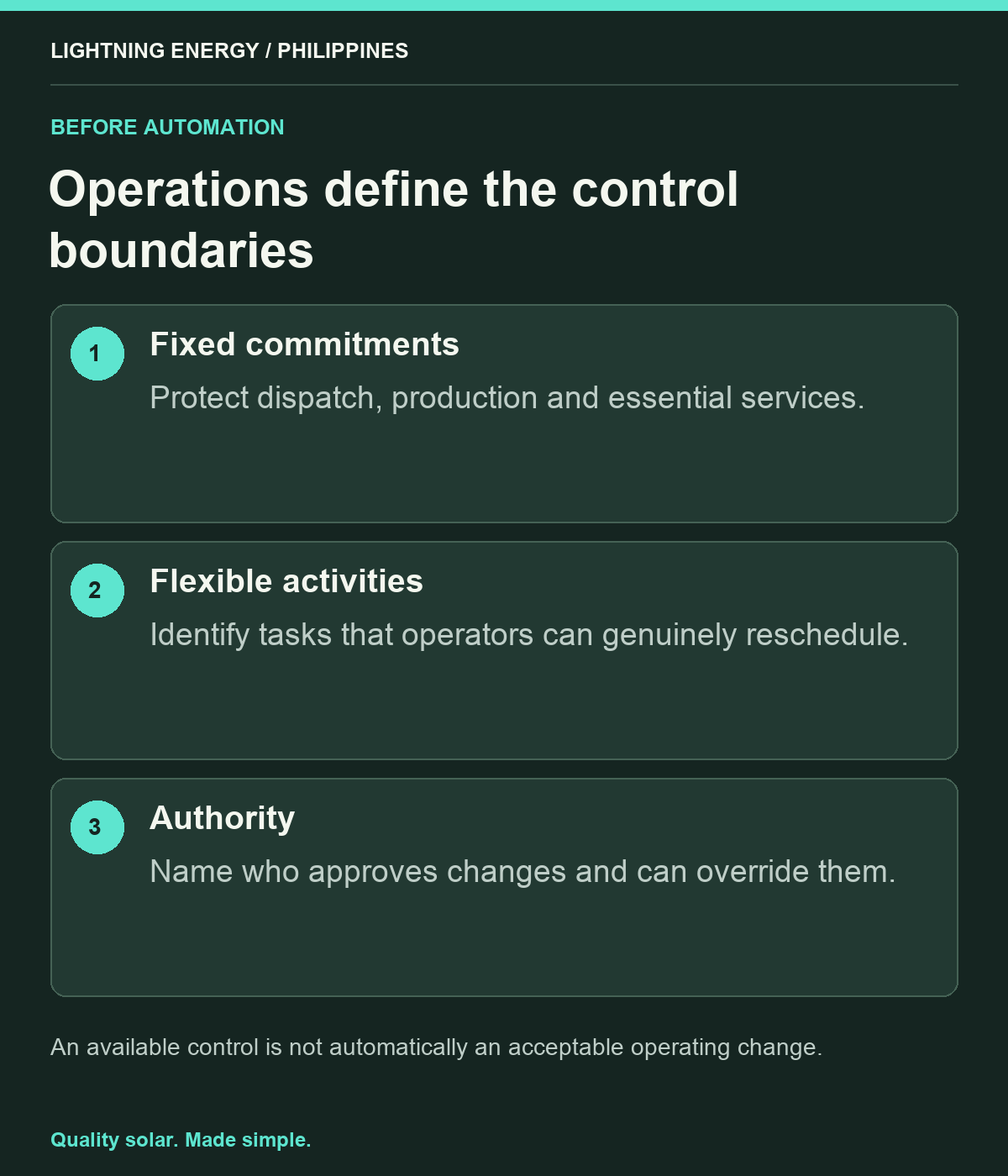
Describe how vehicles, machinery, staff and deliveries use the site through an ordinary week. Mark activities that can move and those tied to safety, customers or production commitments. Then compare that schedule with measured electrical data. A hypothetical loading operation may have flexibility in one charging task but none in a dispatch deadline. The designer should see that distinction before proposing automatic control. A schedule written by the operations team is more useful than assuming every large load is available to shift.
Define permission to act
For each proposed controlled load, name who can approve a schedule change and what limits apply. Decide how operators override a setting and how that action is recorded. A technically available control is not necessarily an operationally acceptable one. Ask for a plain-language description of what the controller will do during ordinary operation, loss of communications and a change in site activity. The relevant specialists should review the detailed design; the owner needs a clear account of its practical consequences.
Separate the battery’s possible jobs
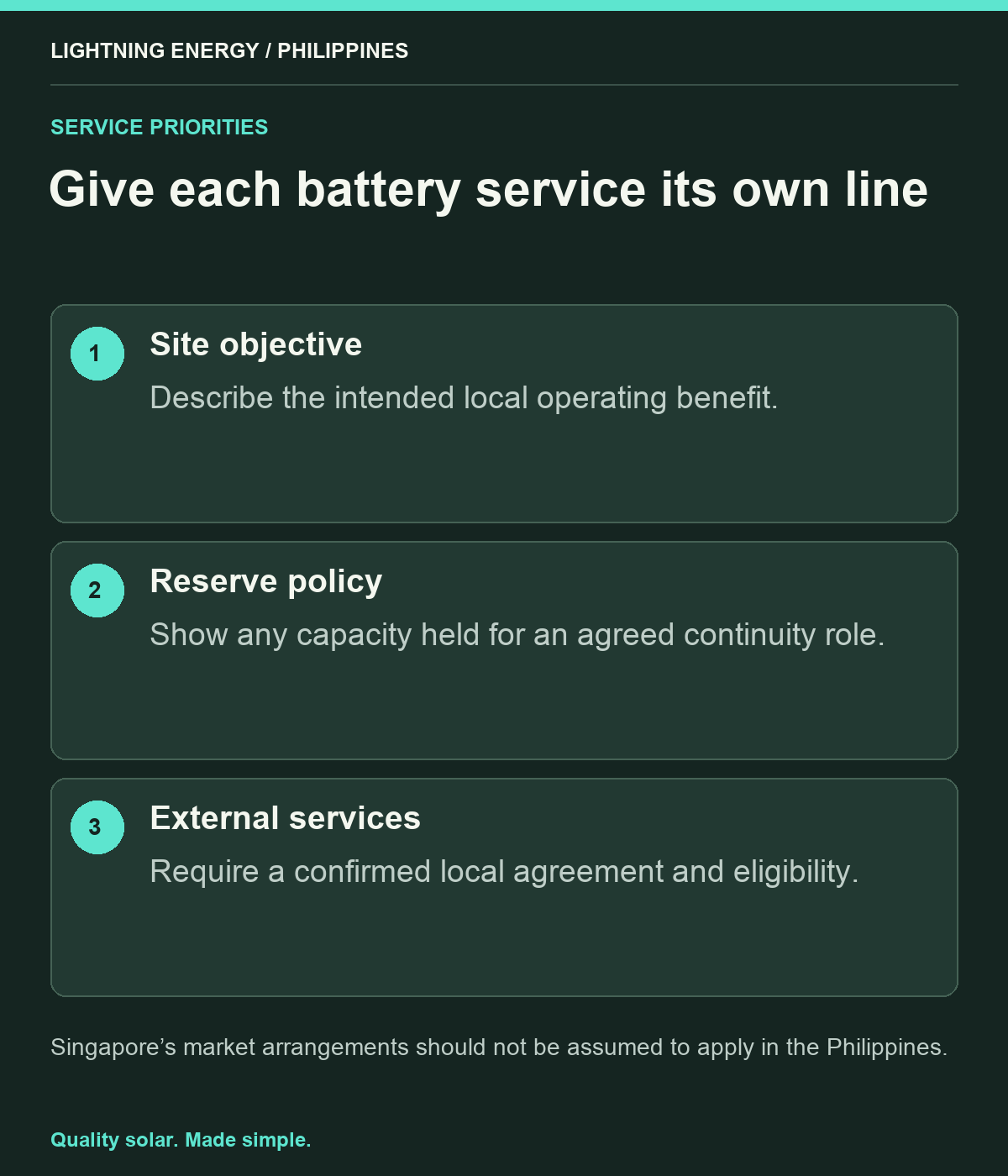
The IEA’s 2026 flexibility review discusses batteries and demand response as distinct contributors to flexible power systems. [2] In a business proposal, list each intended battery service separately and identify any competition between them. A reserve kept for an agreed continuity objective cannot simply be assumed available for every other activity. Ask the modeller to show operating priorities and constraints. Any revenue from external services also needs a confirmed local market and agreement, rather than an assumption imported from Singapore.
Prove the data is good enough
Before relying on a dashboard, confirm what each meter measures, its time interval and whether the site clock and equipment records agree. Ask the project team to explain missing data and unusual events. An owner can help by marking holidays, equipment changes and exceptional operating days. The aim is not to collect data indefinitely. It is to give the assessment a defensible baseline and to avoid attributing every later change in electricity use to the new system.
Commission the operating workflow too
Acceptance should include the agreed equipment checks and a demonstration that staff understand their responsibilities. Walk through a schedule change, an alarm and a planned maintenance interruption with the people who will operate the site. Confirm who receives notifications and who is expected to respond. If a software setting is changed after handover, record the reason and authorisation. These steps make a sophisticated project manageable when the original sales team is no longer involved in everyday decisions.
Scale the idea to the business
A smaller Philippine business does not need to imitate a port installation to learn from it. Start with one documented operating problem, a measured baseline and a proposal that states exactly how success will be assessed. Lightning Energy Philippines can discuss whether solar, storage, scheduling or a combination deserves further investigation. The useful outcome is an energy arrangement that fits the work. More automation is valuable only when the business can understand, authorise and maintain what it is doing.
Sources & further reading
Sources used for this guide. Policy and product details should be checked for your particular installation.
- Singapore EMA: Energy Storage at PSA Pasir Panjang Terminal13 July 2022; accessed 27 September 2026
- IEA: Electricity 2026, Flexibility2026; accessed 27 September 2026